Thatcher suffers second reading defeat over Sunday trading
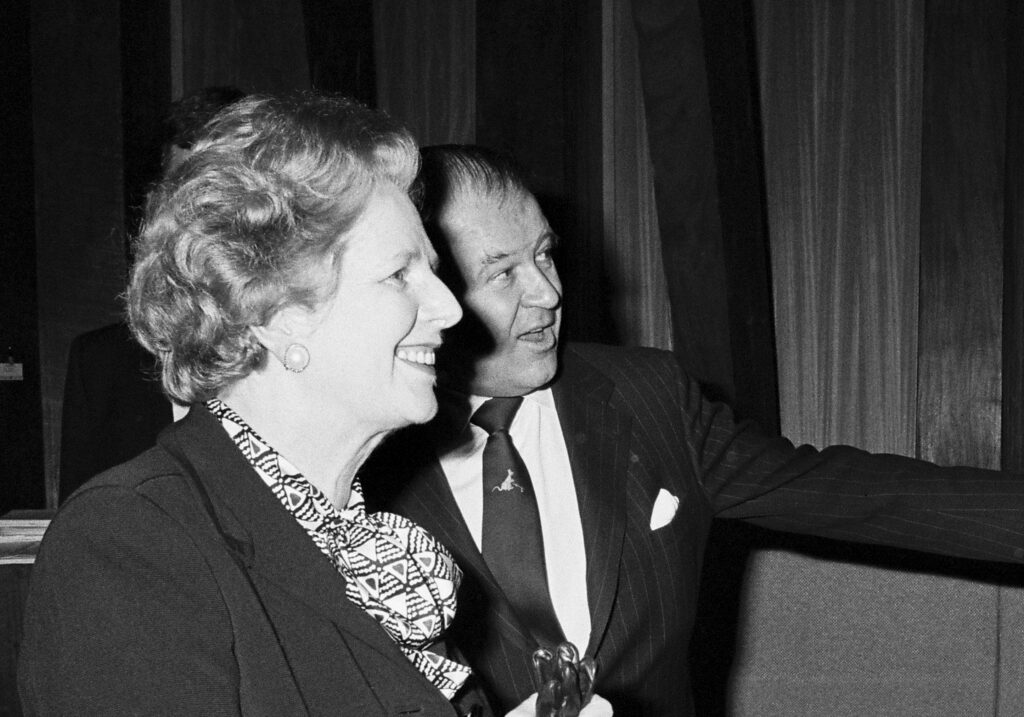
On 14 April 1986, Margaret Thatcher suffered a rare defeat in the House of Commons when the government’s Shops Bill was rejected at its second reading. The bill, which aimed to do away with all government regulation of Sunday shopping in England and Wales, was defeated by 296 votes to 282 – a majority of 14.
At the time, the government boasted a towering parliamentary majority of 140.
The vote remains the last time a government bill has been defeated at its second reading stage, the first parliamentary hurdle for a piece of proposed legislation. The only other government bill to be rejected at this stage since 1924 is the Reduction of Redundancy Rebates Bill (1977). That came during James Callaghan’s tenure as prime minister.
***
The defeat over the Shops Bill was delivered by a rebellion of 72 Conservative MPs, who defied a three-line whip and voted with the opposition.
In rejecting the legislation, the rebels were supported by the Keep Sunday Special campaign, a powerful if somewhat unlikely coalition of religious groups, social conservatives, some prominent food retailers, smaller private businesses and trade unionists. The campaign included those who sought to preserve the sanctity of the Christian Sabbath. Labour MPs, who also voted against the bill en masse, were largely motivated by the concerns voiced by trade unions and fears over eroding shop workers’ rights.
Critical MPs also voiced concerns about the impact of deregulation on small, independent retailers.
During its commons second reading debate, a number of MPs referred to the concerted lobbying on the issue of Sunday trading and the “weight of mail in their postbags.” In total, a reported 32,543 letters were sent to Downing Street on the subject.
The debate was led by the home secretary, Douglas Hurd.
Hurd argued that the majority of Britons no longer believed in a law that said, “broadly, that shops can open when people are at work but not when they are free to go shopping.”
He conceded that while many MPs wanted to “keep Sunday special”, the government saw “no contradiction between believing that the Shops Act 1950 is unworkable and should go and wanting to keep Sunday special.”
The home secretary referred to the owner of a garden centre that conducted two-third of its business on a Sunday.
Hurd added: “His livelihood is now at the mercy and whim or calculation of anyone who can go to court and force his local council to prosecute him for illegal trading. On what possible social, economic or moral grounds should that man be forced out of business?”
He concluded: “The question is not whether Sunday should be kept special but what precisely should be the role of the law in that regard.”
Notably, in an attempt to save the bill, the home secretary promised a “free vote on amendments” during its committee stage for Conservative MPs.
Labour MP Donald Anderson, a patron of the Keep Sunday Special campaign, told the House that “market forces” would turn Sunday into just another “shopping day.”
Anderson added: “[Voters] recognise the effect on shop workers and their families. On any analysis, there will be greater pressures on family life as a result of the measure. Many Conservative members realise that the disintegration of family life today is a major cause of the increase in crime.”
Conservative MP Sir Bernard Braine, another patron of the Keep Sunday Special campaign, argued the bill was “about market shares” not “freedom”.
He condemned the proposed legislation as a ploy to destroy “Sunday as a day set apart for centuries as one of rest, relaxation, recreation and family togetherness”.
Braine told the House: “We who are privileged to sit here have a responsibility to preserve the best of the traditions handed down to us from our predecessors and to cherish them for future generations.
“We are never more than trustees for posterity. Once the special character of Sunday has been destroyed, it cannot be recreated.”
Neil Kinnock, the Labour leader of the opposition, argued that the defeat of the bill demonstrated the “immense distance between the leadership of the Conservative Party and the desires of the British people”.
John Biffen, leader of the commons, responded: “In the light of the decision of the House tonight, it is clear that further progress on the bill is not possible. The government accept that position and have no plans to reintroduce this legislation.”
***
The Shops Bill saga was a demonstration of the limits of Thatcher’s authority. Crucially, it encapsulated the ideological-moral tensions between her liberal economic policy which championed deregulation, and the standing of some more socially conservative Tory MPs.
Thatcher’s parliamentary defeat is arguably under-considered because it fell on the same evening US warplanes bombed targets in Libya, with several taking off from British airbases. The following morning, newspaper coverage was dominated by the US military action.
Charlie Price, the then US ambassador, later joked that Thatcher had given president Ronald Reagan the right to use the UK bases provided he time the attack to coincide with the Shops Bill vote.
The Shops Bill nonetheless marked the only major parliamentary defeat Thatcher suffered during her time in office.
Following the defeat, the government was forced to abandon its plans, and the issue of Sunday trading was not treated again until a compromise measure allowing limited opening hours, set out in the Sunday Trading Act 1994, was passed.
Under the 1994 act, large shops are allowed to open for up to six hours on Sundays between 10:00 am and 6:00 pm. During the act’s passage, the Keep Sunday Special campaign said the measures would lead to an “erosion of family life”.

Politics.co.uk Newsletters
DAILY
Politics@Lunch
WEEKLY
Week in Review
