What are private prisons?
Since the early 1990s, British Governments have issued contracts to private firms for both the construction and the day-to-day running of prisons.
Privately run prisons are also common in the United States of America, Australia and New Zealand.
The privatisation of some prison services was pursued to cope with the problems of overcrowding in the UK’s prisons and to spread the costs of interning offenders. The role of the private sector in the criminal justice system is now substantial, and shows no signs of abating.
HMP Altcourse was the first designed, constructed, managed and financed private prison in the UK, opening its doors to prisoners on 1st December 1997.


At present there are 14 private prisons contractually managed by private companies such as G4S Justice Services, Serco Custodial Services and Sodexo Justice Services. This comprises 14 out of a total of 117 prisons in England and Wales. These are:
Altcourse (G4S), Ashfield (Serco), Birmingham (G4S), Bronzefield (Sodexo), Doncaster (Serco), Dovegate (Serco), Forest Bank (Sodexo), Lowdham Grange (Serco), Oakwood (G4S) Parc (G4S), Peterborough (Sodexo), Rye Hill (G4S), Thameside (Serco) and Northumberland (Sodexo).
Private prisons tend to be newer and larger than those operated by the public sector. In this sense, private prisons fit with the government’s approach of operating fewer larger prisons.
Over the last decade the prison population in England and Wales has remained relatively constant at between 80,000 and 85,000. There has though been an increase in the number of older prisoners, with the number of prisoners aged over 60 increasing from 3,015 in 2011 to 5,082 in 2019.
Private prisons currently house around 15% of the prison population.
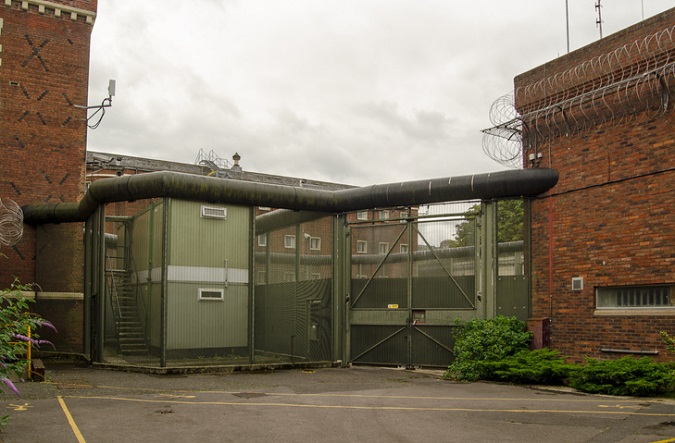
There are currently 14 private prisons in England and Wales
The rise of private prisons
Britain’s prison population has been growing for many years, exposing the insufficiency of the existing prisons estate.
The Conservative Government took the first steps toward privatising prisons in the early 1990s by issuing short-term contracts to security companies to operate a limited number of publicly owned prisons. At that time, private involvement was seen as a preferred alternative to traditional public provision, and ideology featured alongside cost as a motivating factor.
Some of these initially contracted-out prisons, Buckley Hall, Blakenhurst, and the Wolds, have since been returned to the Prison Service.
The Labour Government pursued the use of the private sector, following the recommendations of reports such as Lord Laming’s into the management of the Prison Service. Having monitored the use of private prisons in the US, the Labour Party pursued this agenda through the Private Finance Initiative.
These are so-called DCMF prisons: they are Designed, Constructed, Managed and Financed by the private sector. The contracts run for 25 years, after which the building becomes the property of the Prison Service.
Private prisons are subject to penalties for failure to meet performance targets set by the Government. Conversely, the Prison Service announced in December 2003 that Dartmoor and Liverpool prisons could be handed over to the private sector if they failed to hit performance targets within five years. In the event both stayed in the public sector.
The debate around private prisons
Opposition to private prisons
Opposition to the concept of private prisons is often ideological. Some claim that not only is the concept of prison care antithetical to the notion of commercial business but that it was morally inappropriate to profit from the punishment of offenders. This is the approach of the Prison Officers Association, which launched a campaign ‘Prisons are not for Profit’. The union believes that private prisons tend to operate with lower staffing levels in order to maximise profit and that this inevitably leads to less security in prisons.
Concerns have been expressed about the quality of service provided by private prisons, with a particular criticism that quality is being reduced to improve efficiency. In the early days of private prisons, a June 2003 report by the National Audit Office expressed deep concern about a number of aspects of the service provided by PFI prisons. It pointed to a lack of experienced staff and a high staff turnover. As a result, it argued, the environment in private prisons is generally less safe than in publicly-run prisons, where prison officers on average have more experience.
The report also warned that the terms of the contracts under which private prisons were run had not been properly refined, and concerns had been expressed about the commercial confidentiality that surrounded the terms under which prisons were being run.
There have also been concerns about the level of public grants provided to help with the running of private prisons, which some feel are being directed away from prison improvement.
It has also been claimed that there has been a trend in private prisons to increase electronic surveillance of inmates in order to reduce staff numbers.
Support for private prisons
Those who run private prisons have though stressed the benefits that their provision has been shown to bring. It is argued that private prisons are incentivised to operate more efficiently and can bring benefits to the taxpayer.
It is also argued that the discipline for a private firm to retain its contract, is a force that incentivises the prison company to meet the stipulated requirements in their contracts, such as on prison conditions. It is argued that it is actually publicly run prisons, without that discipline, that are more likely to perform poorly.
The 2003 National Audit Office report concluded that on the whole, private sector involvement had benefited the Prison Service, through competition and the experience that a number of these firms had in managing commercial PFI contracts.
Similarly it has been claimed that many of the private prisons are among the best run in the system, according to reports from the Chief Inspector of Prisons.
It has also been suggested that without the assistance of private finance, the government would have failed to fund the construction of the prisons necessary to house the fast increasing prison population at the turn of the Century.
Statistics
Opinion polling from the polling firm Populus revealed that half of the public oppose privately run prisons. While just 37% describe themselves as comfortable with private prisons, 49% are uncomfortable, including 23% very uncomfortable. The gap is even wider amongst women (32% comfortable, 50% uncomfortable) and the electorally crucial over-65 age group (32% comfortable, 59% uncomfortable)
Quotes
“We maintain our long standing policy, that Government should not abdicate its responsibility for the removal of freedom from its citizens.” – Prison Officers Association
“Our measures will restore confidence in the criminal justice system, re-design prisons for the 21st century, and launch a sentencing and rehabilitation revolution”…”Prison and Rehabilitation Trusts and private sector prisons will be paid by results – with a premium awarded if the offender is not reconvicted within two years.” – Conservative Party – ‘Repair: plan for social reform’.
“It’s clear that the public understands the dangers of putting such a key service as the prison system into the hands of unaccountable companies, who are driven by cutting costs rather than cutting crime”. – Frances Crook, Chief Executive of the Howard League for Penal Reform; commenting on Populus poll showing half of the public opposed to private prisons – 2012