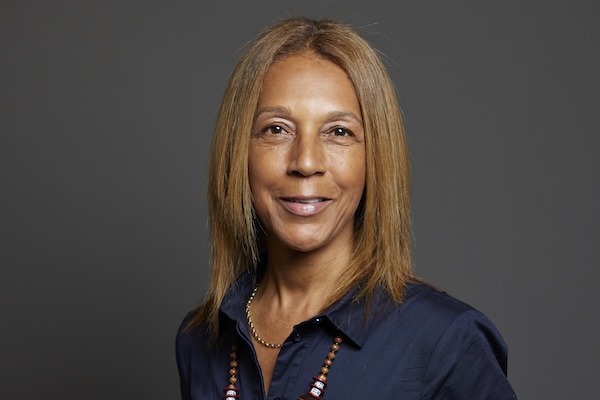
A senior Conservative MP has announced that they will stand down from parliament at the next general election.
Helen Grant, the shadow solicitor general, was first elected to parliament in 2010 as the MP for Maidstone and The Weald, and has represented the redrawn seat of Maidstone and Malling after boundary changes took effect in 2024. In a statement, she described representing the two constituencies as “the greatest privilege of my professional life.”
Grant told her local Conservative association on 10 July that she would not seek re-election as the MP for Maidstone and Malling at the time of the next general election, which is expected in 2029.
Grant explained that, while she remains healthy and cancer-free following major surgery and treatment from 2023 to 2024, the illness had reinforced her view that now is the right time to begin handing over to a successor.


Grant said she had informed Kemi Badenoch, the Conservative leader, of her decision, and also told her she intends to stand down as shadow solicitor general at the next reshuffle. She thanked Badenoch for her leadership and friendship during “one of the most fulfilling periods” of her parliamentary career.
Grant delayed the publication of the statement announcing her decision to stand down following the death of Ann Widdecombe, who she succeeded as the MP for Maidstone and The Weald in 2010.
In the 2024 general election for the new Maidstone and Malling constituency, Grant received 14,146 votes (30.5%). The Labour candidate received 12,472 votes (26.9%), and the Reform UK candidate secured 9,316 votes (20.1%). Grant was duly elected with a majority of 1,674.
Grant was appointed as shadow solicitor general in November 2024 after supporting Badenoch in the 2024 Conservative leadership election. During the campaign, Grant said Badenoch had “that X-factor we rarely see in our politicians”.
Grant stood as a candidate in the House of Commons contest for deputy speaker following the 2024 general election. She won the support of senior parliamentarians Jeremy Hunt, Andrew Mitchell and Chi Onwurah among others.
During the Conservative government under David Cameron, Grant served as parliamentary under-secretary for sport and civil society at the Department for Culture, Media and Sport from October 2013 to March 2015, and jointly as parliamentary under-secretary of state for courts and victims (2012 – 2013) and parliamentary under-secretary of state for women and equalities (2012 – 2013).
Grant was the first ever justice and victims minister. Of her role, Grant wrote in 2012: “I look after the interests of victims and witnesses of any crime, including domestic violence, sexual violence and rape.
“I’ll be called on to speak about a number of issues, from the opening of new rape support centres to government plans to stop bailiffs taking advantage of people.”
As equalities minister, Grant was one of the three frontbenchers responsible for taking the Marriage (Same Sex Couples) Bill through the House of Commons. The bill legalised same-sex marriage in England and Wales.
Grant served as vice-chair of the Conservative party for communities from 2018 to 2020. Under prime minister Boris Johnson, she was appointed UK trade envoy to Nigeria (August 2020 – July 2024) and the prime minister’s special envoy for girls’ education (January 2021 – March 2025).
In January 2021, Grant presented the Football (Regulation) Bill to parliament under the 10-minute rule procedure. Introduced in the wake of financial crises, such as the collapse of Bury FC, the bill called for the creation of an independent regulator to oversee club finances, ensure a fairer distribution of money throughout the football pyramid, and reform the governance of the Football Association.
The Banknote Diversity Bill, which Grant introduced in April 2019, sought to address the fact that no historical ethnic minority figure had ever featured on a UK banknote. The bill would have placed a legal duty on the Bank of England to ensure such representation on future currency designs.
Grant was a member of the House of Commons committees on arms export controls from February 2016 to October 2016, the international development committee from July 2015 to October 2016, and the justice committee from July 2010 to October 2011.
In the 2005 to 2010 parliament, Grant was added to the Tory “A-List” of prospective parliamentary candidates (PPCs), drawn up by Conservative Central Office at the behest of then-party leader David Cameron. The A-List was a centrally-approved priority list of around 100-150 PPCs created as part of Cameron’s bid to modernise the party’s image. The primary goal was to increase the diversity of Conservative MPs by fast-tracking more women and candidates from ethnic minority backgrounds into safe and winnable seats.
Grant was ultimately the first black woman to be selected to defend a Conservative seat; the Maidstone and The Weald constituency had a 14,856-vote Conservative majority at the time. Her election in 2010 made her the Conservative Party’s first black woman MP.
Anne Widdecombe, Grant’s immediate predecessor, described her as someone with “the makings of an excellent parliamentarian and stateswoman, someone I think our people will be very proud of in the years to come.”
Grant initially joined the Labour Party in 2004. In 2008, she denied claims in the Mail on Sunday that she put herself forward as a Labour candidate in Croydon in 2004 for elections in 2006.
Grant joined the Conservative party in 2006, describing David Cameron as the decisive factor.