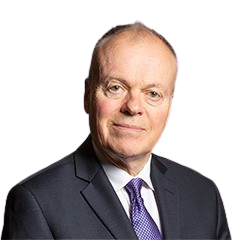
Clive Betts is the Labour MP for Sheffield South East, having first been elected to parliament at the 1992 general election for the predecessor seat of Sheffield Attercliffe.
In the 2024 general election for Sheffield South East, Betts received 18,710 votes, representing 52.3% of the vote share. The Conservative candidate, Caroline Kampila, received 6,252 votes (17.5%), while the Liberal Democrat candidate, Sophie Thornton, secured 3,421 votes (9.6%). Betts was duly elected with a majority of 12,458 votes.
This was an increase from a 4,289-majority at the 2019 election (on slightly different boundaries).
The Sheffield South East constituency covers the south-eastern part of the City of Sheffield, including former industrial areas and mining villages, alongside the Meadowhall shopping centre. Historically, including its predecessor seat Sheffield Attercliffe, it has been a safe Labour seat since 1935.
Political Career
Betts is a member of the House of Commons public accounts committee (since November 2024). The PAC is the oldest and arguably one of the most powerful select committees in the House of Commons. Its primary function is to scrutinise the value for money of public spending, ensuring taxpayers’ money is spent wisely. First established in 1857, the committee does not examine the merits of government policy, only the cost and effectiveness of its implementation.
Betts is also a longstanding member of the panel of chairs (since January 2009). The panel of chairs is made up of MPs chosen by the House of Commons speaker, typically at the beginning of every parliament, to chair public bill committees and other commons general committees. In this capacity, Betts may chair debates in Westminster Hall and may also act as temporary chair during a committee of the whole House.
In February 2025, Betts was appointed to chair a new taskforce to support the growth of the build-to-rent sector.
Prior to the 2024 general election, which saw Labour returned to power after 14 years in opposition, Betts chaired the levelling up, housing and communities select committee (and its predecessors) for 14 years (June 2010 – May 2024). By virtue of this role, Betts served on the liaison committee across the same period.
In 2003, Betts was suspended from the House of Commons for seven days following a report by the committee on standards and privileges relating to the employment of, and assistance provided to, a former male escort concerning his immigration status.
The commons standards and privileges committee said that Betts had acted “extremely foolishly” in agreeing to copy a doctored document, which Brazilian Jose Gasparo hoped would help him extend his stay in the UK.
Betts gave an “unreserved apology” in a personal statement to MPs when the report was published.
Previously, Betts was a government whip under Tony Blair, serving as lord commissioner of the Treasury from 1998 to 2001 and an assistant whip from 1997 to 1998. He was an opposition whip from January 1996 to January 1997.
Betts has served extensively on House of Commons select committees. He has been a member of the finance and services committee (2005-2015), the committee scrutinising the office of the deputy prime minister (2002-2006), the committee on reform of the House of Commons (2009-2010), the Yorkshire and the Humber regional select committee (2009-2010), transport, local government and the regions (2001-2002), and the Treasury committee (1995-1996).
Betts is a patron of LGBT+ Labour – a socialist society formally affiliated with the Labour Party.
Betts is listed as a member of the all-party parliamentary groups (APPGs) for city regions transport, football, local government, the Netherlands, and stem cell transplantation and advanced cellular therapies.
Betts delivered his maiden speech on 6 May 1992.
In it he said: “Just as I believe that local government services are important, I believe in the principle of local democracy, local accountability and subsidiarity. The best government for our people is conducted as close as possible to those who are governed.
“We in this House should recognise that the principle and value of local democracy is an important counterforce to the extremes of centralisation. I hope to argue that case in future.”
Before entering parliament, Betts was elected to Sheffield City Council in 1976, representing Firth Park ward, and served until 1992. He chaired the housing committee for six years and became deputy leader of the council under David Blunkett in 1986.
Betts succeeded Blunkett as leader of Sheffield City Council in 1987, holding the position until his election to parliament in 1992. He unsuccessfully contested Sheffield Hallam in the October 1974 general election and Louth in 1979.
Betts was leader of Sheffield City Council at the time of the Hillsborough disaster in April 1989.
In a commons debate on 17 October 2011, Betts recalled watching from the “directors’ box, at the invitation of the club.”
He told the House: “Normally, when I went to matches at Hillsborough, I was on the Kop.”
He added: “I remember when things started to happen that, initially, there was a feeling that there might be a bit of disturbance in the crowd. We could see people start some movement. People were trying to clamber over the fences…
“I remember simply going back to the directors’ box, being kept abreast of events and just simply sitting with the directors and one or two friends who were there and crying. What else could we do? This was in our city, in my football ground: 96 people had died before our eyes.”
Political Views
Leadership elections and loyalty
Starmer stand down: In May 2026, Betts publicly called for Keir Starmer, the prime minister, to step down/set out a timetable for his departure. The move followed the 2026 local elections and devolved elections to the Scottish Parliament and Senedd Cymru.
Labour deputy leadership 2025: Betts was one of 117 Labour MPs who nominated Lucy Powell for the party’s deputy leadership in September 2025. The election followed the resignation of Angela Rayner, who stepped down as deputy prime minister and deputy party leader after an investigation into her tax affairs. It marked the first time since 2007 that Labour had held a deputy leadership contest while in government.
Powell, the former leader of the House of Commons, was seen as a candidate representing the party’s “soft left”; she was supported by leading soft left figures including Ed Miliband and Andy Burnham. She secured 117 nominations from the Parliamentary Labour Party (PLP), above the 80 required, and went on to win the election – defeating Bridget Phillipson with 54.3% of the vote.
Labour leadership 2020: Betts was one of 82 Labour MPs who nominated Keir Starmer for the party’s leadership in early 2020. The election was triggered by the resignation of Jeremy Corbyn following the party’s defeat in the 2019 general election, which resulted in Labour’s fewest seats in the House of Commons since 1935.
Starmer’s 82 nominations were the highest of any candidate. The shadow Brexit secretary won a decisive victory in the first round with 56.2% of the vote, defeating Rebecca Long-Bailey and Lisa Nandy.
Labour leadership 2015: Betts was one of 68 Labour MPs who nominated Andy Burnham for the party’s leadership in June 2015. The election followed the resignation of Ed Miliband after the party’s defeat in the 2015 general election. It was the first contest held under the “one member, one vote” system, which replaced the previous electoral college.
Burnham, the shadow health secretary, was initially considered the frontrunner. He secured 68 nominations from the Parliamentary Labour Party (PLP), comfortably exceeding the 35 required to reach the final ballot. He ultimately finished second in the contest with 19% of the vote, losing to Jeremy Corbyn in the first round.
Corbyn loyalty list: In March 2016, Betts was labelled as “neutral but not hostile” by the Corbyn leadership in a leaked list which categorised Labour MPs by their perceived loyalty.
Labour leadership 2016: Betts was one of 162 Labour MPs who nominated Owen Smith for the party’s leadership in July 2016. The election was triggered by a challenge to Jeremy Corbyn following the EU referendum, which led to a wave of shadow cabinet resignations and a vote of no confidence supported by 172 MPs. Smith, the former shadow work and pensions secretary, was ultimately defeated by Corbyn, who won with an increased mandate of 61.8% of the vote.
Labour leadership 2010: Betts was one of 33 Labour MPs who nominated Burnham for the party’s leadership in May 2010. The election followed the resignation of Gordon Brown, who stepped down as prime minister and Labour leader after the 2010 general election.
Burnham, the former health secretary, secured 33 nominations from the Parliamentary Labour Party (PLP), the minimum required to reach the final ballot. He ultimately finished fourth in the contest with 10.4% of the vote.
Factional identity and party tradition
Tribune group (2017): Betts was listed among the supporters of the Tribune parliamentary group — a caucus generally described as representing the party’s “soft left”.
The Tribune group was initially formed in 1964 to support the newspaper of the same name. It served as a prominent forum for those parliamentarians situated on the left of the Labour Party – but it split over Tony Benn’s campaign for the deputy leadership in 1981. Benn’s supporters founded the Campaign group – which evolved into the Socialist Campaign Group (SCG). Today, the Bennite SCG is strongly associated with the Labour left tradition.
During the 1980s, the Tribune group emerged as a more natural home for those on Labour’s “soft left”.
In 2017, Efford officially re-launched the group with a new mission statement calling for “opportunity and aspiration” to be placed at the heart of the party’s programme. Efford said he had reformed the group to ensure that the centre-left of the Parliamentary Labour Party (PLP) “have a space in which to put forward ideas and debate which has not been there under successive leaders”.
He added: “The view of Labour MPs at the moment tends to be that too much are just Blairites who want to stab Jeremy Corbyn in the back. We want to show that is not where we are, and that we want to develop our own ideas that represent the centre-left of the party.”
Brexit and Europe
Brexit referendum: Betts supported remain in the 2016 referendum on Britain’s membership of the European Union (EU), and therefore disagreed with a majority of constituents, 66.3% of whom voted to Leave.
Article 50: In February 2017, Betts voted in favour of the European Union (Notification of Withdrawal) Bill. The legislation empowered the prime minister to notify the Council of the European Union of the UK’s intention to withdraw, formally triggering the process set out in Article 50 of the Treaty on European Union. MPs supported the bill by 498 votes to 114 at second reading.
Welfare
Welfare ‘reasoned amendment’ (June 2025): Betts was one of the over 120 Labour MPs to sign the reasoned amendment to the government’s flagship welfare bill which aimed to reject the proposed legislation.
The amendment, in the name of senior Labour MP Dame Meg Hillier, objected to the fact that the bill had not been subject to a “formal consultation with disabled people” and that “250,000 people will be pushed into poverty” as a result of it, according to a government impact assessment.
The motion also called on the government to wait for the publication of the review into the Personal Independence Payment (Pip), helmed by minister Sir Stephen Timms, and the independent review, conducted by Sir Charlie Mayfield, into how the employment of disabled people could be boosted.
Welfare vote (July 2025): Betts voted in favour of the government’s flagship welfare bill at second reading. The vote came after ministers agreed to significant concessions to avoid defeat via a mass rebellion of Labour MPs on 1 July 2025.
Assisted dying
Betts voted in favour of the Terminally Ill Adults (End of Life) Bill, better known as the assisted dying bill, at second reading (November 2024) and third reading (June 2025).
In a statement setting out his position, Betts said: “Assisted dying is a delicate issue and is particularly important to myself and one I have considered for some time. With that said within the assisted dying debate my position is clear: I support assisted dying for those with terminal illnesses.”
He added: “In my life, and in my time in office, I have come across utterly awful stories of long and agonising deaths from those who have a terminal illness with no choice but to suffer for months on end. I totally accept that for some there is relatively little pain and they choose to live out the last months of their lives.
“However, I have seen and heard of those who experience immense pain in their final months. They should have the right in those instances to end their life on their own terms. I believe in those instances, with the appropriate checks and safeguards from medical professionals and legal experts, that there should be a right for those who want to not go through months of pain and suffering to end their life.”
Social values and conscience issues
Same-sex marriage (2013): In February 2013, Betts voted in favour of the Marriage (Same Sex Couples) Bill at its second reading. The landmark piece of legislation, which received its second reading by 400 votes to 175, legalised marriage for same-sex couples in England and Wales.
Abortion decriminalisation (2025): Betts voted in favour of a backbench amendment to the Crime and Policing Bill that sought to decriminalise abortion in England and Wales in June 2025. The amendment, which was passed by a majority of 242 votes, removed women from the threat of prosecution for ending a pregnancy at any stage. As an issue of conscience, MPs were allowed to vote according to their personal beliefs.
Foreign policy and security
Sanctioned (Russia): In April 2022, Betts was among the group of MPs placed on a sanctions list by the Russian government. The measure barred them from entering Russia and was presented by Moscow as a retaliatory response to the UK’s stance on the invasion of Ukraine.
Trident renewal (2016): Betts voted in favour of a government motion calling for the renewal of the Trident nuclear deterrent system in July 2016. The motion, which was passed by 472 votes to 117, committed the UK to constructing a new fleet of submarines to carry the nation’s nuclear weapons. Labour was split over the issue with 140 of its 230 MPs going against leader Jeremy Corbyn and backing the motion.
Syria airstrikes (2015): Betts voted against a government motion to extend UK airstrikes against Isis from Iraq into Syria in December 2015. The motion, which was passed by 397 votes to 223 after a ten-hour debate in the House of Commons, authorised the RAF to conduct strikes against Isis targets in Syria.
Syria airstrikes (2013): Betts voted against the government’s motion on the principle of military intervention in Syria in August 2013. The government motion was defeated by 285 votes to 272, a move which effectively ruled out UK participation in any US-led military strikes.
Iraq War authorisation vote (2003): In March 2003, Betts voted in favour of the government motion authorising military action against Iraq. The vote, one of the most contentious in recent parliamentary history, gave the prime minister, Tony Blair, the authority to join the US-led invasion.
Palestine
Palestinian recognition letter (July 2025): In July 2025, Betts was among the over 254 MPs to sign a cross-party letter calling for the government to immediately recognise the state of Palestine. The letter called on the prime minister and foreign secretary to recognise Palestine at the UN Conference then taking place in New York.
https://x.com/SarahChampionMP/status/1949769513123094568
Ceasefire vote (November 2023): Betts was among 56 Labour MPs to vote in favour of a Scottish National Party (SNP) amendment to the King’s Speech in the House of Commons calling for an “immediate ceasefire” in the Israel-Hamas war – defying the instruction set out by the party’s frontbench. Labour had tabled its own motion, making a more moderate appeal for a “humanitarian pause” in the conflict and ordered its representatives to support that stance.
Palestinian recognition vote (2014): In October 2014, Betts was one of 192 Labour MPs who voted in favour of recognising Palestine as a state. The motion, passed by 274 votes to 12, called on the government to “recognise the state of Palestine alongside the state of Israel as a contribution to securing a negotiated two-state solution”.
Before Politics
Born Clive James Charles Betts on 13 January 1950 in Sheffield. He attended Longley School and King Edward VII School in Sheffield. He studied economics and politics at Pembroke College, University of Cambridge, graduating with a BA degree.
He joined the Labour Party in 1969. Betts worked as an economist, initially for the Trades Union Congress (TUC) from 1971. He later worked for Derbyshire County Council (from 1973) and South Yorkshire County Council (1974-1986), before being appointed an economist with Rotherham Borough Council in 1986.
Personal Life
Betts lives with his partner, James Thomas. According to the register of members’ financial interests (January 2026), he employs Thomas as his senior parliamentary assistant.
In 2007, Betts was identified as one of the 50 “most powerful LGBT people in British politics”, coming 35th.
His entry in Pink News read: “Elected in 1992, Clive Betts was outed by The Sun in 2003.
“As chair of the parliamentary Football Club has tabled motions about homophobia in the game and lent his support to the Gay and Lesbian Football Association World Championship 2008 in London.”
Trivia
Betts is a supporter of Sheffield Wednesday Football Club and also plays cricket. He is a former squash and football player and used to run the Sheffield Marathon.
In March 2021, he became a trustee of the green space charity Fields in Trust.



Comment: Keep technology off the pitch – but on the goal-line
26 February 2013