What are tuition fees?
Universities in England and Northern Ireland are able to charge an annual tuition fee to students of up to £9,000 per year (or £9,250 if the university has a Teaching Excellence Framework). The maximum figure in Wales is £9,000. In Scotland the figure is £9,250 with the notable exemption that Scottish students themselves study for free.
Having completed their degree, a student automatically pays back their tuition fees when their salary surpasses the threshold of £27,295 per year. Students pay 9% of everything earned about £27,295 against their student loan.
Payments are typically deducted and passed on by an employer from a person’s monthly salary. The rate of deductions rises as a person’s salary rises, typically equating to £21 per month at a salary of £29,500, and reaching a cap of £54 per month at a salary of £33,000.
The interest rate on a student loan now varies depending on a person’s earnings. If they earn under £27,295 per year, then the interest rate is inflation as expressed in the Retail Price Index (RPI). This rises to RPI+3% for those earning between £27,295 and £49,130/year, rising gradually within that band (such that someone earning £38,213, the half way point pays RPI+1.5%).


- Due to high inflation in 2023, the rate of interest was capped at 6.9% in March 2023.
Any outstanding debt is cleared after 30 years.
Most universities offer some scholarship and bursary packages of financial support that potential students can apply for. UK domiciled students are also entitled to a maintenance loan, which is designed to help pay for living costs whilst at university.
The cap on tuition fees applies to those with home fee status. The international fees paid by international students can be substantially higher. International students account, numbering around 600,000, account for just under a quarter of all Higher Education students in the UK. Overseas student income contributes significantly to the revenue of UK universities. It has been estimated that non EU student tuition fees accounted for 17% of UK university income in 2020/21.

The tripling in tuition fees since 2006 has nonetheless been been matched by a 40% increase in the numbers going into higher education over the same period.
How high are tuition fees compared to other countries?
The cost of university in the UK is relatively high when compared to international tuition fees.
Much of Europe still sticks with low fees or no fees. Germany, which used to charge fees, has scrapped them.
By contrast the United States of America is generally perceived to have a higher tuition fee level than the UK. In America, top private colleges can charge as much as £30,000 per academic year, albeit the rates charged by state colleges to local students can be lower than those charged in the UK.
In the UK, tuition fees charged to domestic students currently raise around £9 billion per year.
In 2018/19 this accounted for just under 25% of the £39.1 billion costs of the country’s higher education sector.
Students being ‘ripped off’ by tuition fee system, say think tank
Arguments around tuition fees
Higher education funding has been one of the most controversial and divisive political issues of recent years. Although one might expect opinion on the matter to be divided along conventional left-right grounds, historical experience has shown this not always to be the case.
The tuition fees issue has also been a test case of Scottish devolution, with the abolition of fees for Scottish students creating a major fault-line across the British Higher Education system. Debates continue to rage over the fairness of English students being liable for fees while at Scottish universities.
Opposition to Tuition Fees
Those opposed to tuition fees typically deploy a number of arguments.
First amongst these is the argument that a university education offers wider external benefits to society and should be encouraged. It is said that it leads to a more educated and productive workforce, and a population with greater levels of civic engagement. It is suggested that countries with high rates of university education generally have higher levels of productivity and innovation. It is highlighted how an undergraduate from a particular course can directly contribute to high tech industries like pharmaceuticals and artificial intelligence.
Opponents of tuition fees also argue that tuition fees potentially discourage people from entering higher education, and in particular students from low income and financially risk-averse backgrounds. As such, they claim, the policy is exclusive and reinforces the middle class domination of Higher Education. It is also suggested that people are more likely to drop out of university as a result of the financial pressure imposed by tuition fees.
The abolition of tuition fees is also championed as a means of supporting inter generational fairness – or at least inter-generational fairness, for those young people who attend higher education. With the rise of rents and house prices in recent years, it is pointed out how young people are struggling to meet living costs – even in work. It is argued that these issues are then further compounded by the £54 a month charge for student finance.
Criticism of the current system has also been levied at its failure to create a proper market in fees for universities. It is pointed out that most universities charge the maximum capped amount. Dr Gavan Conlon from London Economics in his evidence to the inquiry by the House of Lords Select Committee on Economic Affairs suggested that because the £9,000 fees were backed by Government loans there was ‘no incentive for universities to charge anything other than £9,000’. He further said that institutions charging less could be considered to be offering ‘lower quality qualifications’.
Support for tuition fees
Those who support university tuition fees also defend their position on grounds of equity.
Supporters of tuition fees argue that it is unfair on the majority of the population who have not received the benefits of Higher Education – which are statistically agreed to be fairly substantial in terms of average salaries – to bear the full burden of the costs for those who do. As such, it is argued that shortfalls in Higher Education funding should not be paid for from tax receipts.
It is suggested that a higher education degree acts as a signal to employers that a person has a greater capacity. As a consequence, people who gain a degree, end up with a relatively higher salary. It is thus said that it is only fair that this proportion of the population, who earn more, should pay for the benefit that the qualifications have given them.
Supporters of tuition fees also stress how the introduction of tuition fees has not deterred people accessing higher education as opponents sometimes suggest. Despite tuition fees rising from £3,000 to £9,000 per year between 2006 and 2016, UCAS figures show the numbers in higher education rose from around 500,000 to around over 700,000 in the same period. Moreover, the statistics show that students from all backgrounds are now more likely to go to university than ever before – including those from the poorest backgrounds.
The likely ability of the general taxpayer to adequately fund higher education has also been questioned in the aftermath of the 2020-21 coronavirus pandemic. It has been suggested that lowering or reducing tuition fees would dramatically curtail university expenditure, and lead to a likely cap being put back on student numbers. The cap on numbers of students was removed in 2015.
It is also argued that the UK has a surplus of graduates, evidenced by an Office of National Statistics study that showed how 50% of graduates leave university for jobs that do not require degrees. In contrast, the UK Commission for Skills and Education has reported significant skills shortages in terms of basic ‘core generic skills’ such as literacy, numeracy and communication skills. These skill shortages are prominent in industries like building, health care, plumbing, social care and construction.
It is argued that the problem in the labour market is not a shortage of graduates with arts degrees, but a shortage of people with vocational skills. The argument is made that there is a case for charging students to study at university – allowing actual higher public spending to tackle more basic skill shortages.
It is also claimed that the payment of fees is an important component of the ability of higher education institutions to deliver a quality service. In 2013 Universities UK, published a report that detailed how higher fee income was being used by universities to improve facilities, teaching, advice, student support, learning and social spaces. It also stated that universities had increased the amount that they spent on widening participation in the form of outreach activity and student support.
Finally it is argued that tuition fees force young people to decide appropriately whether higher education is for them, and to both value and demand more from their university experience. It is argued that if higher education was free, it may encourage an undergraduate student to relax too much during their education.
As discussed above, this whole area of political debate, remains highly contentious.
Alternatives to tuition fees
As an alternative to tuition fees, it has been suggested that university course fees be paid from government expenditure and funded by general taxation.
In 2017, the BBC estimated that this approach would cost the UK government around £8 billion per year. This was the Labour Party position going into both the 2017 and 2019 General Elections.
The Liberal Democrats labelled the Labour proposal as a ‘tax cut for the rich and a tax rise for the poor’ given that ‘lower paid’ non graduates would have to contribute to the higher qualifications of ‘higher paid’ graduates.
Potential alternatives to university tuition fees also include a graduate tax, whereby graduates pay a higher rate of income tax. This has previously been advocated by the Labour Mayor of Greater Manchester, Andy Burnham.
The idea of a graduate tax has though been attacked as potentially a blunt instrument given the wide range in graduate salaries, and something that would adequately fail to recover income from student’s who moved abroad later in life.
History of UK tuition fees
Initial introduction of tuition fees
The last half of the Twentieth Century saw higher education (HE) in the UK transformed from an elite system to a mass participation system. Between 1962 and 2002, the participation rate rose from six per cent to around 43 per cent.
This increase in the number of students in Higher Education was not met by proportionate increases in funding for universities and colleges. In 2003, the government maintained that Higher Education was underfunded against its needs by around £9 billion.
However, it had long been argued that it was unfair for the general public, most of whom had not benefited from a university education, to be made to pay for the additional costs of Higher Education, when the principal beneficiaries were the higher-paid graduates themselves.
Throughout the 1990s, the notion that the beneficiaries of Higher Education should pay for some of the costs began to gain widespread support across the political spectrum. The system of maintenance support had itself been overhauled by the creation of the Student Loan Company in 1989.
In 1996, then Prime Minister John Major commissioned an inquiry into long-term university funding, chaired by Sir Ron Dearing. The report, published in July 1997, recommended that students should pay 25 per cent of the costs of tuition. Later that month, the Labour Party’s new Education Secretary David Blunkett introduced a new system of means-tested tuition fees, abolishing at the same time the remnants of the student grant system, something Sir Ron had rejected.
Tuition fees were first paid by students in September 1998. They were flat-rate up-front annual charges, to the value of £1,125 in 2004, for which all students whose parents earned over £32,000 per annum were liable. Those with lower family incomes were liable for reductions or were exempt.
The move was highly divisive within Labour at the time, with many on the left of the party opposed to the notion of student fees in principal, believing they discouraged people from low income backgrounds from pursuing Higher Education.
The move was also particularly unpopular in Scotland, where four-year degree courses were the norm. In July 1999, the Scottish Executive commissioned the Cubie inquiry to examine university funding in Scotland. The resultant report, published in December 1999, recommended that tuition fees in Scotland should be replaced by a graduate endowment scheme, whereby the Scottish Executive would pay the fees.
Ahead of the 2001 general election, the Liberal Democrats (at that time) campaigned on a platform of abolishing tuition fees outright, while Labour claimed in its manifesto that it had made the introduction of top-up fees illegal.
Further reforms to tuition fees
However, just two years after the 2001 General Election, following intense pressure from universities – particularly the prestigious institutions of the Russell Group – the Labour government’s May 2003 White Paper included proposals for a fee increase.
The Higher Education Bill, presented in December 2003, set out the government’s plans for introducing top-up fees. The bill was tremendously divisive for Labour. The Norwich MP Ian Gibson’s early day motion calling for a rethink of the policy attracted 185 MPs’ signatures, casting serious doubt on the government’s ability to carry the bill. However, a series of “seminars” arranged for Labour MPs, and concessions made by Education Secretary Charles Clarke, convinced enough MPs to approve the bill. It was passed into law as the Higher Education Act in July 2004.
In September 2006 it was agreed that universities would be allowed to charge up to £3,000 a year in variable tuition fees, or a top-up course fee. The Labour government gave an undertaking not to review the £3,000 cap until 2009 at the earliest, and to permit increases above this level, other than raising it in line with inflation, only with the approval of both Houses of Parliament.
Increases in tuition fees – 2009 to 2010
In 2009, the Browne review, headed by the former Chief Executive of British Petroleum, Lord Browne, was again set up by the then Labour government to look at the future of higher education funding.
It recommended wide-ranging changes to the system of university funding, including removing the cap on the level of fees that universities can charge, and increasing the income level at which graduates must begin to pay back their loans.
In 2010, the newly elected coalition government followed the recommendations of the Browne review and increased the tuition fee cap to £9,000 a year. This promoted significant student protests in London.
This was not least because many Liberal Democrats, including all the party’s leading figures such as Nick Clegg, Vince Cable and Sir Menzies Campbell, had signed the NUS ‘Vote for Students’ pledge “to vote against any increase in fees in the next Parliament and to pressure the government to introduce a fairer alternative”.
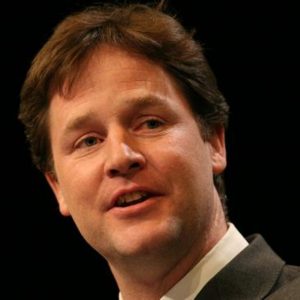
Following Nick Clegg’s U-Turn on tuition fees, the issue was used as a prime stick by the media and political opponents to ‘beat’ the Liberal Democrats for many years.
In March 2011, an application for a Judicial Review in the High Court was lodged by two teenagers, Callum Hurley and Katy Moore, who claimed the increase in tuition fees breached the European Convention on Human Rights. However, their bid to quash the regulations that set out the tuition fees limits was rejected by the High Court in February 2012.
In May 2022 the government announced plans for a new Higher Education Bill. This was designed to improve social mobility by helping peopel to access financial support for higher education. It will ensure university fees are applied more flexibly, but also subject to consultation, require students to obtain certain grades in order to access student finance.
Statistics
The results of the annual Higher Education Policy Unit and the Higher Education Academy student experience study in 2017 showed that just 35% of respondents believed their higher education experience represented ‘good’ or ‘very good’ value for money.
“Average debt on graduation is just over £50,000. This is more than double the average debt students would have been set to face had the system remained unchanged from 2011. The vast majority of this difference is explained by the large increase in tuition fees in 2012, which increased average debt to more than £47,000” – Institute for Fiscal Studies, 2017
Quotes
“There’s no easy way to say this: we made a pledge, we didn’t stick to it – and for that I am sorry” Lib Dem leader Nick Clegg, apologising for breaking his promise not to raise tuition fees: Party Political Broadcast – September 2012.
“How did we get from the idea of a reasonable contribution to the cost of university tuition – the principle of the Blair reform of 2004, for which I was largely responsible – to today’s Frankenstein’s monster of £50,000-plus debts for graduates on modest salaries who can’t remotely afford to pay back these sums while starting families?” – Lord Adonis, former education minister and Labour advisor, writing in 2017.
“Scrapping fees has an attractive simplicity, but this is superficial. The cost would go far beyond the immediate £12.7bn hit to the government’s annual deficit10 from going back to using direct taxpayer spending to fund universities. The policy would throw away the advantages and potential of a properly functioning fee system and ignores why it was first introduced. Student choice would once again be curtailed and the opportunities for those from the lowest- income families would shrink”, 2017 report, ‘Defusing the debt Time Bomb’ report by think tank UK2020
I’m working class and just dropped out of uni: Don’t tell me tuition fees have no effect
University admissions fall down to tuition fees and economic downturn, says IET