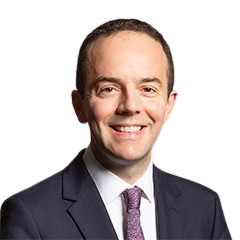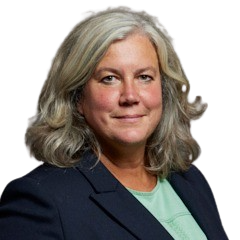
Heidi Alexander is the Labour MP for Swindon South.
Alexander was first elected to parliament at the 2010 election for the constituency of Lewisham East. She served continuously as an MP from 2010 to 2018 before standing down from parliament.
Alexander returned to parliament at the 2024 general election.
In the 2024 general election for the Swindon South constituency, Alexander received 21,676 votes, representing 48.4% of the vote share. The Conservative candidate, Robert Buckland, came second with 12,070 votes (26.9%), while the Reform UK candidate, Catherine Kosidowski, secured 6,194 votes (13.8%). Alexander was duly elected with a majority of 9,606.
The Swindon South constituency is located in Wiltshire. It covers the southern portion of the town alongside nearby villages and farms. Historically a railway town, the area currently hosts corporate headquarters for businesses such as Nationwide and Intel.
Swindon South is traditionally seen as a bellwether seat. Alexander succeeded former conservative cabinet minister Robert Buckland as the constituency’s MP. Buckland held the seat from 2010 to 2024.
Political Career
Alexander currently serves in the cabinet as secretary of state for transport. She assumed this position in November 2024 after the resignation of her predecessor, Louise Haigh. She was retained in this role following the July 2026 cabinet reshuffle conducted by Andy Burnham upon his appointment as prime minister.
Previously, Alexander was minister of state for courts and legal services in the Ministry of Justice from July to November 2024.
Alexander stepped down from parliament in May 2018 to take up the post of deputy mayor of London for transport under Sadiq Khan. During her tenure at City Hall, Alexander acted as deputy chair of Transport for London (TfL). She left this post in December 2021.
Alexander served as chair of Khan’s successful London mayoral campaign in 2016.
Alexander held frontbench positions during her tenure as an MP from 2010 to 2018. She was shadow health secretary from September 2015 to June 2016 and an opposition whip from March 2013 to September 2015. Alexander initially acted as a parliamentary private secretary (PPS) to Mary Creagh as shadow environment secretary. A PPS acts as an unpaid parliamentary assistant, providing a link between the senior frontbencher and backbench MPs.
In June 2016, Alexander was among those to resign from the shadow frontbench in protest at Jeremy Corbyn’s leadership and his approach to the Brexit referendum. She was the first frontbencher to stand down after Hilary Benn’s dismissal as shadow foreign secretary for disloyalty.
In her resignation letter, Alexander said she resigned with a “heavy heart”.
She wrote: “Those who will be hit hardest by the economic shock associated with the vote to leave the EU need a strong opposition, as do those communities who fear rising levels of intolerance, hatred and division.
“More than ever, our country needs an effective opposition which can hold the government to account and which is capable of developing a credible and inspiring alternative to an increasingly right-wing and backward looking Conservative Party.
“As much as I respect you as a man of principle, I do not believe you have the capacity to shape the answers our country is demanding and I believe that if we are to form the next government, a change of leadership is essential.”
In a subsequent Guardian article, published in August 2016, Alexander described Corbyn’s shadow cabinet as “dysfunctional”.
She stated: “I hated being a member of Jeremy’s shadow cabinet – because it was entirely dysfunctional… I hated being part of something so inept, so unprofessional, so shoddy. There was no effort to build a team. Good people recruited to his office soon left.”
Alexander subsequently served as co-chair of the Labour Campaign for the Single Market in which capacity she sought to change the Labour leadership’s position on Brexit. In January 2018, shortly before standing down as an MP, Alexander accused the Labour leadership of failing to formulate a “common and coherent position”.
Alexander has been a member of the House of Commons health and social care select committee (2016-2017) and the committee for communities and local government (2010-2012).
Alexander delivered her maiden speech on 8 June 2010 during a debate on economic affairs and work and pensions.
In it, she said: “I am very proud to represent Lewisham East, which has been my home for the past eight years, and to represent a party that has brought about huge improvements in the lives of ordinary people, but I also know that my party has a significant challenge of renewal and revitalisation ahead of it.”
She added: “If London is to improve its economic competitiveness, the underlying challenge is to tackle the huge inequalities between the haves and the have-nots. Investment in housing and social housing is very important.
“I look forward to hearing from the new frontbench team about its plans for the decent homes programme, and I hope I will soon be in a position to reassure my constituents that much-needed investment in Lewisham homes will be forthcoming.”
Before entering parliament, Alexander served on Lewisham London Borough Council from 2004 until 2010. She served as the borough’s deputy mayor and held the cabinet portfolio for regeneration from 2006 to 2010.
Political views
Leadership elections and loyalty
Labour deputy leadership 2025: Alexander was one of 175 Labour MPs who nominated Bridget Phillipson for the party’s deputy leadership in September 2025. The election followed the resignation of Angela Rayner, who stepped down as deputy prime minister and deputy party leader after an investigation into her tax affairs. It marked the first time since 2007 that Labour had held a deputy leadership contest while in government.
Phillipson, the serving education secretary, was widely viewed as the candidate favoured by Downing Street and the party leadership. She secured 175 nominations from the Parliamentary Labour Party (PLP), comfortably exceeding the 80 required to reach the final ballot. She was ultimately defeated by Lucy Powell.
Labour leadership 2015: Alexander was one of 68 Labour MPs who nominated Andy Burnham for the party’s leadership in June 2015. The election followed the resignation of Ed Miliband after the party’s defeat in the 2015 general election. It was the first contest held under the “one member, one vote” system, which replaced the previous electoral college.
Burnham, the shadow health secretary, was initially considered the frontrunner. He secured 68 nominations from the Parliamentary Labour Party (PLP), comfortably exceeding the 35 required to reach the final ballot. He ultimately finished second in the contest with 19% of the vote, losing to Jeremy Corbyn in the first round.
Labour leadership 2016: Alexander supported Owen Smith for the party’s leadership in July 2016. The election was triggered by a challenge to Jeremy Corbyn following the EU referendum, which led to a wave of shadow cabinet resignations and a vote of no confidence supported by 172 MPs. Smith, the former shadow work and pensions secretary, was ultimately defeated by Corbyn, who won with an increased mandate of 61.8% of the vote.
Labour leadership 2010: Alexander was one of 33 Labour MPs who nominated Burnham for the party’s leadership in May 2010. The election followed the resignation of Gordon Brown, who stepped down as prime minister and Labour leader after the 2010 general election.
Burnham secured 33 nominations from the PLP, the minimum required to reach the final ballot. He ultimately finished fourth in the contest with 10.4% of the vote.
Factional identity and party tradition
Labour Movement for Europe: Alexander was endorsed by the Labour Movement for Europe (LME) in the 2024 general election. Founded in 1981, LME is a pro-European socialist society affiliated with the Labour Party. It campaigns for a close relationship between the United Kingdom and the European Union. The organisation refers to itself as the “home of the pro-Europeans in the Labour and trade union movement”.
Brexit and Europe
Brexit referendum: Alexander supported Remain in the 2016 Brexit referendum, and therefore agreed with a majority of constituents, 64.6% of whom voted to remain.
Article 50: In February 2017, Alexander voted against the European Union (Notification of Withdrawal) Bill. The legislation empowered the prime minister to notify the Council of the European Union of the UK’s intention to withdraw, formally triggering the process set out in Article 50 of the Treaty on European Union. MPs supported the bill by 498 votes to 114 at second reading. In voting against the bill, Alexander defied the party whip – one of 47 Labour MPs to do so.
Welfare
Welfare vote (July 2025): Alexander voted in favour of the government’s flagship welfare bill at second reading. The vote came after ministers agreed to significant concessions to avoid defeat via a mass rebellion of Labour MPs on 1 July 2025.
Assisted dying
Alexander voted in favour of the Terminally Ill Adults (End of Life) Bill, better known as the assisted dying bill, at second reading (November 2024) and third reading (June 2025).
Social values and conscience issues
Abortion decriminalisation (2025): Alexander voted in favour of a backbench amendment to the Crime and Policing Bill that sought to decriminalise abortion in England and Wales in June 2025. The amendment, which was passed by a majority of 242 votes, removed women from the threat of prosecution for ending a pregnancy at any stage. As an issue of conscience, MPs were allowed to vote according to their personal beliefs.
Same-sex marriage (2013): In February 2013, Alexander voted in favour of the Marriage (Same Sex Couples) Bill at its second reading. The landmark piece of legislation, which received its second reading by 400 votes to 175, legalised marriage for same-sex couples in England and Wales.
Foreign policy and security
Trident renewal (2016): Alexander voted in favour of a government motion calling for the renewal of the Trident nuclear deterrent system in July 2016. The motion, which was passed by 472 votes to 117, committed the UK to constructing a new fleet of submarines to carry the nation’s nuclear weapons. Labour was split over the issue with 140 of its 230 MPs going against leader Jeremy Corbyn and backing the motion.
Syria airstrikes (2015): Alexander voted in favour of a government motion to extend UK airstrikes against Isis from Iraq into Syria in December 2015. The motion, which was passed by 397 votes to 223 after a 10-hour debate in the House of Commons, authorised the RAF to conduct strikes against Isis targets in Syria.
Syria airstrikes (2013): Alexander voted against the government’s motion on the principle of military intervention in Syria in August 2013. The government motion was defeated by 285 votes to 272, a move which effectively ruled out UK participation in any US-led military strikes.
Palestine
Palestinian recognition vote (2014): In October 2014, Alexander was one of 192 Labour MPs who voted in favour of recognising Palestine as a state. The motion, passed by 274 votes to 12, called on the government to “recognise the state of Palestine alongside the state of Israel as a contribution to securing a negotiated two-state solution”.
Before Politics
Born on 17 April 1975 in Swindon, Alexander attended Churchfields Comprehensive School and later New College.
She attended Grey College at Durham University, earning a degree in geography and a masters degree on European urban and regional change.
In 1998, Alexander completed a six-month placement working within Cherie Blair’s office at 10 Downing Street.
Alexander then worked as a parliamentary researcher for the Lewisham MP Joan Ruddock between 1999 and 2005.
Afterwards, she managed campaigns for the charity Clothes Aid from 2005 until 2006.
Alexander also served as chair of the economic development company Greater London Enterprise from 2007 until 2008.
Personal Life
Alexander is the daughter of Malcolm, an electrician, and Elaine Alexander.
She married Martin Ballantyne, a public sector lawyer, in 2011.
Trivia
Alexander learned to drive on Swindon’s Magic Roundabout.
She took up cycling to promote active travel during her stint at City Hall.
Heidi Alexander has not written for Politics.co.uk.