Straw: Iraq war was down to me
By Alex Stevenson and Ian Dunt
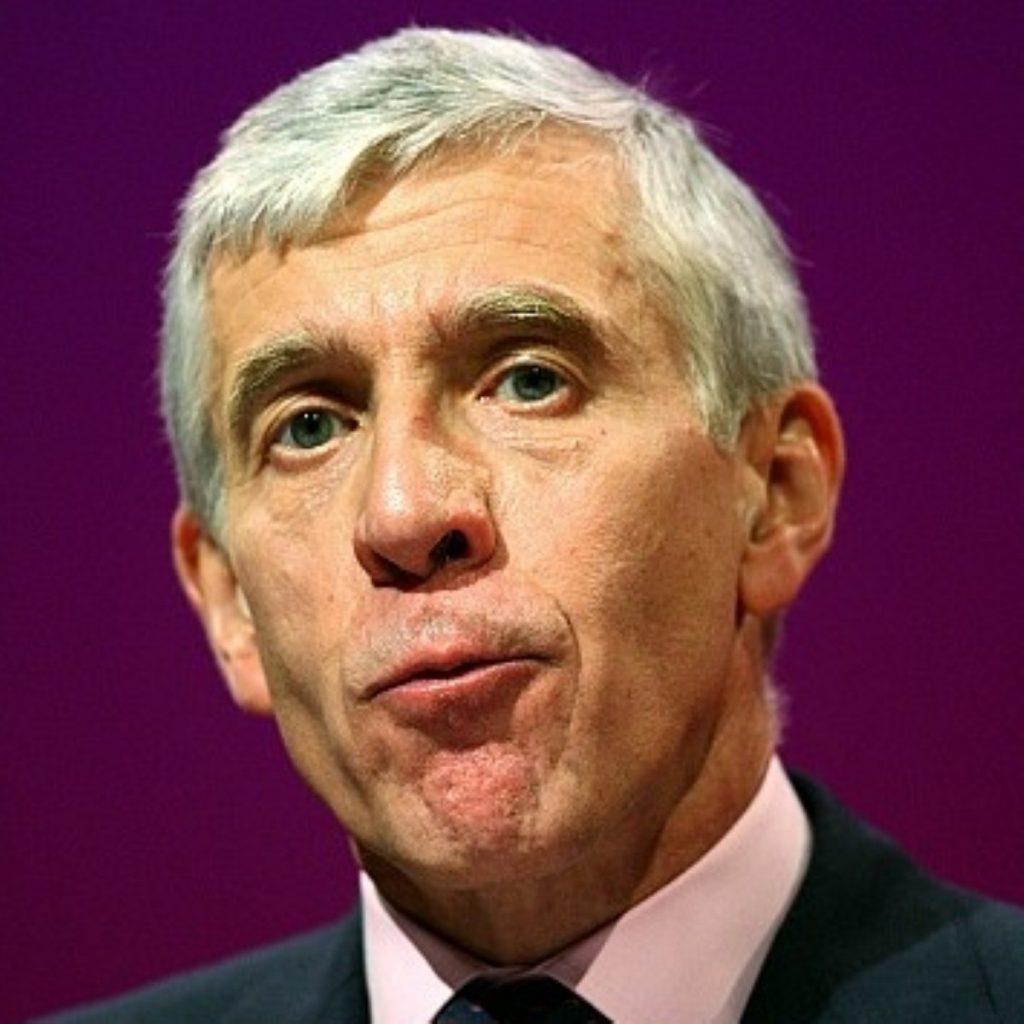
Britain’s military involvement in the Iraq war could not have taken place without Jack Straw’s support, the former foreign secretary has claimed.
Mr Straw told the inquiry in a lengthy written memorandum he did not believe British military involvement would have been possible without his backing because it would have meant there was no majority in favour in Cabinet.
“I was also fully aware that my support for military action was critical,” Mr Straw wrote.


“If I had refused that, the UK’s participation in the military action would not in practice have been possible. There almost certainly would have been no majority either in Cabinet or in the Commons.
“Did I think ‘I’m going to resign over this?’ No, I didn’t,” he continued.
“We all have our bottom lines. In the event I came to the decision I came to and I did so very reluctantly but on what I judged to be the best evidence available at the time.
“That’s my responsibility.”
He admitted that the case for military action in Afghanistan in the aftermath of 9/11 had been much clearer than that for Iraq.
“My decision to support military action in respect of Iraq was the most difficult decision I have ever faced in my life,” Mr Straw added.
“The moral as well as political dilemmas were profoundly difficult.”
While viewing Saddam’s regime as “odious”, Mr Straw revealed he had significantly different views on regime change in Iraq to prime minister Tony Blair.
“It’s no great surprise to know that people at senior levels of government hold strong views and debate those,” he added, before insisting his loyalty prevented him from revealing these concerns at the time.
The current justice secretary, the first sitting Cabinet member to appear before the inquiry, was in a privileged position as head of the Foreign Office throughout the build-up, execution and violent aftermath of the conflict.
He said September 11th 2001 had demonstrated the “astonishing risk” which failed states represented and said that, when combined with the “reality” of George Bush in the White House, British diplomacy faced a real challenge.
He said persuading Mr Bush to adopt a disarmament strategy against Saddam – instead of an outright demand for regime change – in his September 12th speech to the United Nations had been difficult.
“That was quite a significant achievement, above all for secretary [of state] Colin Powell… but also for the work of the UK administration,” Mr Straw added.
Mr Straw told the committee the new American administration had initially treated the British Labour government with suspicion, due to its left-wing roots.
The neo-conservatives were concerned about the “socialist Tony Blair and the rest of us – more socialists, or better socialists – behind him,” Mr Straw said.
Rumours persist that the ex-foreign secretary was demoted from the job to leader of the Commons after officials in the American government took a dislike to his belief that a war with Iran would be “nuts”.
But other theories abound. Many Westminster analysts believe the foreign secretary was sacked after he invited then-US secretary of state Condoleezza Rice to his Blackburn constituency, where she saw the substantial Muslim population there and raised questions about the pressures he would be under.
The theory led some political pundits to describe Mr Straw as one of the first Cabinet ministers to effectively be sacked by an American president.
A recently leaked letter, published by the Sunday Times, showed Mr Straw wrote to Mr Blair a year before the war saying the war could not be justified on the grounds of regime change.
“Regime change per se is no justification for military action; it could form part of the method of any strategy, but not a goal,” Mr Straw writes in the letter.
“Of course, we may want credibly to assert that regime change is an essential part of the strategy by which we have to achieve our ends – that of the elimination of Iraq’s WMD capacity; but the latter has to be the goal.”
Mr Straw also spoke in detail about the UN vote on Iraq, which was derailed when French president Jacques Chirac announced he would not back the conflict in any circumstances – an intervention which evidently irritated Mr Straw.
Efforts to secure the backing of Mexico were complicated when president Vicente Fox suddenly admitted himself to hospital with a back condition, Mr Straw said.
“A chronic condition had not become acute as far as we knew, but it was convenient,” Mr Straw said.
His appearance before the inquiry comes just days after his son’s outspoken comments about his treatment at the hands of Tony Blair.
Will Straw, who threatened to derail his father’s career in the early days of the Labour government when he was duped into trying to sell cannabis to a journalist, said his father’s support for the Iraq war “was the biggest mistake of his political life”.
But the editor of the popular blog Left Foot Forward reserved his most trenchant criticism for the manner in which Jack Straw had been dropped from the Foreign Office, which he described as “unbelievably shoddy”.