UK energy firm, Palmer Energy, signs European supply deal as government chases 27GW storage target
Palmer Energy Technology and Slovakia’s InoBat will supply battery storage systems across Europe. Britain had 7.5GW of grid batteries in 2025 and needs up to 27GW by 2030.
Palmer Energy Technology Ltd (PETL) and the Slovak battery maker InoBat AS signed a collaboration agreement on Tuesday to supply battery energy storage systems across Europe. A battery energy storage system stores electricity and releases it when the grid or a customer needs it.
The agreement has three parts. It sets out which markets each company leads, with PETL leading in the UK and Ireland and InoBat leading in continental Europe and North America. It sets up supply in both directions, so PETL will supply InoBat with storage units in 2026 and from 2027 PETL can buy units from InoBat’s Slovak factory, sold under the BESSMONT brand, once that plant starts production. It also gives InoBat access to PETL’s battery control technology.
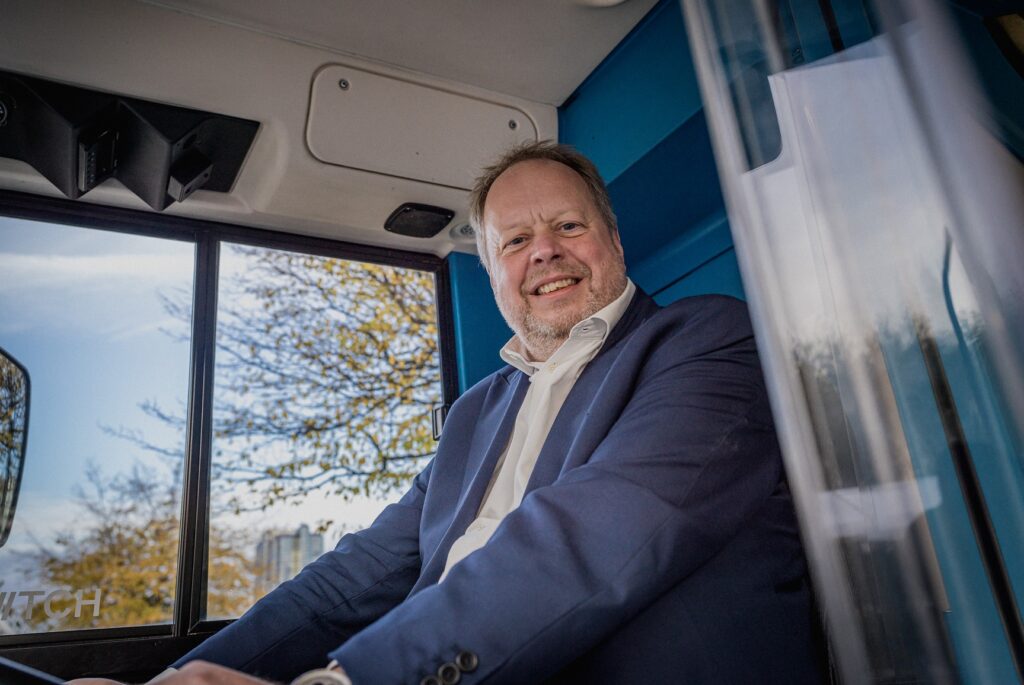
PETL is run by Dr Andy Palmer CMG, the former chief executive of Aston Martin and former chief operating officer of Nissan. The company bought Brill Power Ltd, an Oxford spin-out, in 2025.
Brill Power makes two patented products. A battery management system controls each cell in a battery and keeps the cells in balance, which extends the life of the battery and raises the share of its capacity a customer can use. An energy management system decides when the battery charges and when it discharges. InoBat will fit both into its BESSMONT units. PETL writes the software in Oxford and holds all system data on its own servers in Europe.
The storage gap
The deal comes while the government is well short of its own storage numbers. Grid-scale battery capacity in Great Britain reached 7.5GW in 2025, according to the Department for Energy Security and Net Zero. The Clean Power 2030 Action Plan, published in December 2024, sets a range of 23GW to 27GW of battery capacity by 2030, plus 4GW to 6GW of longer duration storage. Reaching the bottom of that range needs about 3GW of new capacity every year for the rest of the decade.
Planning is not the block. Industry trackers put consented projects at more than 60GW, far above what the 2030 plan calls for. The constraint is grid connections and commissioning. Ministers and Ofgem wrote to the sector in April about the size of the battery queue and are looking at how to protect the connection process from it.
Where the equipment is made
The origin of grid equipment has become a policy question in the past year. In April 2026 the European Commission restricted EU funding, including money from the European Investment Bank, for solar, wind and storage projects that use inverters from countries it treats as high risk, naming China, Russia, Iran and North Korea. Later guidance confirmed that the power conversion systems inside battery storage are covered. In the United States the Federal Communications Commission moved in July 2026 against foreign-produced solar and battery inverters. Both actions rest on the same concern, which is that grid equipment with a network connection can be reached and changed from outside the country.
Both companies are selling into that market. Marián Boček, co-founder and chief executive of InoBat, said: “European customers need stable western based BESS supply chain with cyber security and high level quality of product and services.”
Palmer said: “This agreement gives both companies access to more of the European market. Customers in Europe get a European product with their data stored in Europe.”
InoBat started its energy storage business in 2025. It says it has delivered or contracted 875MWh of utility-scale storage through BESSMONT and that its pipeline is moving towards data centres and power for artificial intelligence. It is also working with partners on sodium-ion batteries, which use no lithium.
The factory capacity in this deal is in Slovakia. The British input is the control software written in Oxford and the units PETL supplies next year. UK cell manufacturing has had a difficult decade since the collapse of Britishvolt in 2023, with AESC expanding in Sunderland and Tata’s Agratas plant under construction in Somerset. The Department for Business and Trade put £542m into the Battery Innovation Programme in June 2025 to support research and manufacturing to 2030.