Review: What Next For Labour?
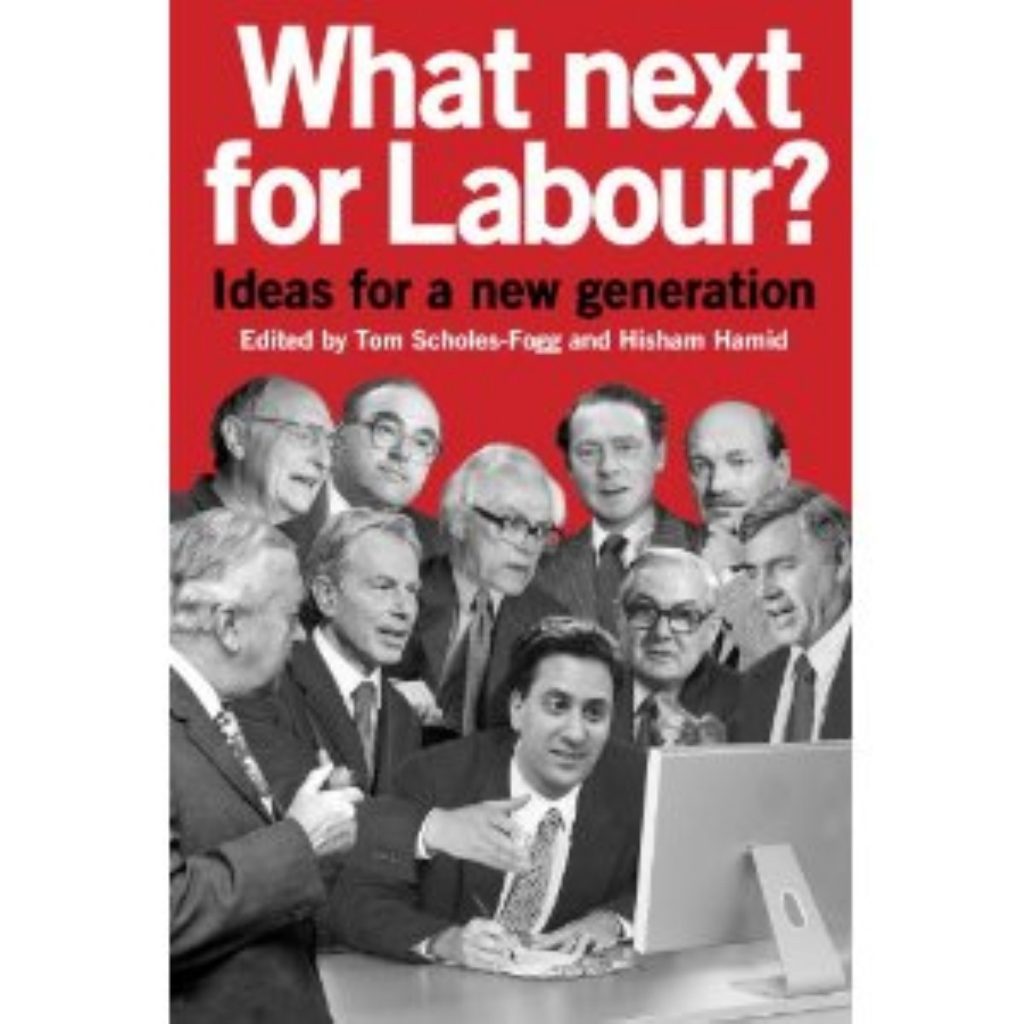
After 13 years of government the Labour party emerged, blinking, into the harsh realities of opposition. Last time this happened it was 1979 and Labour didn't return for 18 years. What Next For Labour? looks at how the party might battle back a bit quicker this time around.
By Phil ScullionFollow @PhilScullion
Thirteen years in charge would be enough to tire anyone out. For a government it is several political lifetimes.
Ask someone on the street what it is Labour stand for and they're likely to look at you blankly.


Wind back to 1997 and where there is now indifference there was real enthusiasm. People knew what the Labour party stood for.
Post election landslide there were drinks receptions in Downing Street featuring the likes of Oasis superstar Noel Gallagher. Once you've got a Gallagher on side your political ascent is pretty much guaranteed.
The trick now for Labour is working out how to recapture the fresh faced excitement of the Blair years. Oasis are no more and Gordon Brown's advances to the Arctic Monkeys didn't go all too well.
In fact one look at Gordon Brown, who during the last general election looked a bit more brachiosaurus than Barack Obama, shows it is a pretty big job, even if the old guard has now been cast out.
Turning the creaking old Labour party around is a task warmed to by Tom Scholes-Fogg and Hisham Hamid in their recently published book What Next For Labour?.
Tom Scholes-Fogg is a suitably youthful Labour activist and prominent blogger, whilst fellow editor Hisham Hamid is a recent convert to Labour, having supported the Liberal Democrats during the 2010 general election.
The two present a collection of views from all across the broad church of the Labour party, delivering a whistlestop tour of activists, MPs and peers' opinions.
What results is a predictable minefield of conflicting visions, policy priorities and ideas.
Contrary to The Purple Book, which features the views of Ed Miliband's frontbench along with the opinions of the shiny new leader himself and numerous other big hitters, What Next For Labour? includes contributions from the far more sheltered corners of the party machine.
Many of these views originate on the ground and the debate is all the richer for it.
In the book's first section a number of arguments are put forward on what has gone wrong and how the Labour party might look to address it.
Peter Watt, former Labour party general secretary (2005-2007) presents an interesting 12-point plan to help reorganise the structure of the party, while demonstrating a particularly fine-tuned understanding of party activism.
Dr Rupa Huq, a sociology lecturer, examines the increasing political significance of contemporary UK suburbia. Not an issue politics.co.uk is going to be examining in too much detail anytime soon, but as it turns out pretty informative and useful.
Perhaps one of the most extreme suggestions contained comes from Lord Temple-Morris, Conservative MP for 24 years, Labour for three and a life peer since 2001.
He proposes that the Labour party think about a name change, with his preferred option being the rather catchy 'Social Democratic and Labour Party of the United Kingdom'. It'd make for a great Twitter hash tag.
In fairness to Lord Temple-Morris his contribution to the book is actually well thought-out and argued. It highlights one of the book's key problems, that a lot of the views here are somewhat introspective.
From his experience within the Conservative party Lord Temple-Morris is able to offer a rather more nuanced view of his adopted party. That makes his advice invaluable just by virtue of being a bit different.
However the contributions throughout the book on issues such as campaigning, law and order, healthcare, equality, education and the green agenda are well put across and digestible.
Considering this is primarily a book on policy it's actually pretty readable. The lack of a specific editorial narrative and the fact some of the contributions actively contradict one another is actually rather conducive to a proper debate.
One unavoidable criticism is that the book could offer a more in-depth analysis of the economy and how Labour should be looking to address Britain's structural deficit.
It's all very well to put forward arguments on how to improve healthcare, education and the environment, but without a clear economic plan it is difficult to see how the Labour party can regain electoral credibility.
If anything the biggest challenge for Labour is to balance the many strong arguments contained in books such as What Next For Labour? in the blogosphere and the corridors of Westminster.
They must do this in such a way as to arrive as a coherent clear alternative to the Conservative party before the supposed fixed-term general election date of 2015.
As Labour are finding out, being in opposition is a totally different game. Gone are the tough decisions on what cut to make. You can be far more everything to everyone.
The trick is to take this huge plethora of ideas and whittle it down to something approaching a simple set of policies on the crest of which a Miliband can ride into Downing Street.
What's next for Labour? is a step towards filling in that blank sheet, but it's still looking like a long old road back to government.
What next for Labour? published by Queensferry, Sept 5th 2011, £9.99, paperback.