Liberal Democrats
The Liberal Democrats (or Lib Dems) are a liberal political party, occupying the centre to centre-left ground in British politics. Formally constituted in 1988, the Lib Dems are the product of a merger between the historic Liberal Party and the Social Democratic Party (SDP).
The Liberal Party was once a dominant force in British politics, producing era-defining statesmen such as William Ewart Gladstone, who served four terms as prime minister between 1868 and 1894, and David Lloyd George, who was prime minister from 1916 to 1922.
Following a prolonged period of electoral decline – as Labour supplanted the party as the principal anti-Conservative force in British politics – the Liberals entered into an electoral alliance with the SDP in 1981, before the two parties formally merged seven years later. The SDP broke away from Labour as a direct response to the party’s shift to the left under Michael Foot’s leadership.
Notable leaders of the Liberal Democrats include Paddy Ashdown (1988-1999), Charles Kennedy (1999-2006) and Nick Clegg (2007-2015).
In 2010, the party entered government as the junior partner in the Conservative–Liberal Democrat coalition. Clegg served as deputy prime minister under David Cameron from 2010 to 2015. The party experienced a sharp decline following the coalition years, collapsing from 57 seats to just eight at the 2015 general election.
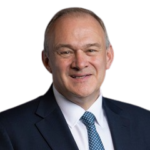
Since 2020, the Liberal Democrats have been led by Sir Ed Davey. Under Davey’s leadership, the party dramatically increased its parliamentary standing at the 2024 general election, securing 72 seats in the House of Commons – a net gain of 64 on the notional 2019 result.
House of Commons representation: The Liberal Democrats returned 72 MPs in the 2024 general election.
House of Lords representation: The Liberal Democrats are the third-largest party group in the House of Lords with over 70 peers.
Scottish Parliament representation: The Liberal Democrats won 10 seats in the 2026 Scottish Parliament election – a net increase of six.
Senedd Cymru representation: The Liberal Democrats won one seat in the 2026 Senedd Cymru election.
Davey’s leadership, 2024 general election and recent developments
Ed Davey was elected as leader of the Liberal Democrats in August 2020. In a contest delayed by the Covid-19 pandemic, Davey secured a comfortable victory over his lone rival, Layla Moran, by 42,756 votes (63.5%) to 24,564 (36.5%).
The leadership vacancy was created by Jo Swinson’s resignation in the wake of the 2019 general election. Swinson, having styled herself as a prospective prime minister, ultimately lost her East Dunbartonshire seat to the Scottish National Party (SNP). The Lib Dem constitution requires the party leader to be a serving MP.
The Liberal Democrats had seen their representation swell to 21 MPs by the end of the 2017-2019 parliament after a series of defections from both the Labour and Conservative parties (several via the short-lived Change UK). However, the public did not respond to the party’s unequivocal “revoke” (Article 50) position on Brexit, the campaign’s principal issue.
Davey, who served for a period as interim co-leader following Swinson’s resignation, was among only 11 Liberal Democrat MPs to be returned to parliament at the 2019 election. The official Liberal Democrat review into the party’s 2019 campaign described it as “a high-speed car crash”.
Davey was the only candidate in the 2020 Lib Dem leadership election who had served in the 2010-2015 coalition government. He held the post of secretary of state for energy and climate change from 2012 to 2015.
Daisy Cooper, the MP for St Albans, was subsequently elected as Liberal Democrat deputy leader by the party’s MPs.
During the 2019-2024 parliament, the Liberal Democrats enjoyed a series of notable by-election victories, including in Chesham and Amersham (2021), North Shropshire (2021), Tiverton and Honiton (2022), and Somerton and Frome (2023). At the North Shropshire by-election, the party secured a 34-point swing from the Conservatives (the seventh largest in British by-election history).
2024 general election
The party’s performance in the 2024 general election established Davey as the most electorally successful Liberal since David Lloyd George, winning 72 seats. Davey’s campaign gained widespread media attention for a series of water-themed stunts.
Evaluation question
Is this unconventional approach necessary for a more minor party to secure coverage, or does it simply risk diminishing the perceived seriousness of the party and its leadership?
These included repeatedly falling off a paddleboard in Windermere to highlight sewage discharge, going down a large water slide to draw attention to children’s mental health, and undertaking a bungee jump in Eastbourne.
Defending his unconventional campaign, Davey said: “Politicians need to take the concerns and interests of voters seriously but I’m not sure they need to take themselves seriously all the time and I’m quite happy to have some fun”.
A central feature of the party’s success at the 2024 general election was its capture of traditional Conservative seats. The party ravaged the so-called “blue wall” of conventionally Conservative, affluent commuter-belt constituencies in southern England.
Evaluation question
Does the Liberal Democrats’ record-breaking 2024 seat tally, achieved on a virtually stagnant national vote share, suggest that the party has finally mastered the mechanics of first past the post?
Davey’s party made six gains in Surrey, five in Sussex, four in Oxfordshire and 11 in Devon and Somerset.
Notably, the Liberal Democrats won the symbolic seats of Witney, previously represented by David Cameron, and Maidenhead, previously represented by Theresa May. The party also ousted four sitting cabinet ministers, including education secretary Gillian Keegan in Chichester, justice secretary Alex Chalk in Cheltenham, and technology secretary Michelle Donelan in Melksham and Devizes.
The party’s capture of ultra-safe Conservative seats extended to areas previously represented by Boris Johnson (Henley), Michael Gove (Bicester and Woodstock) and Nadhim Zahawi (Stratford-on-Avon).
Across the blue wall and beyond, tactical voting played a key role in the party’s electoral resurgence. Of those intending to vote for the Liberal Democrats, an estimated 35% cited tactical reasons – typically to oust an incumbent Tory.
Evaluation question
Does the Liberal Democrats’ record-breaking 2024 seat tally, achieved on a virtually stagnant national vote share, suggest that the party has finally mastered the mechanics of first past the post?
The party also took four seats from the Scottish National Party (SNP) in Scotland.
The Liberal Democrats currently stand as the largest third party in the commons in over a century. However, the party’s national vote share increased by only 0.6 points (11.6% to 12.2%) from 2019 to 2024. This outcome reflected an exceptionally efficient and geographically targeted campaign strategy.
Evaluation question
If a party can dramatically increase its seat count without a significant rise in national vote share, does this highlight a democratic deficit within the first past the post system?
- Seats: Won 11 seats in the 2019 general election and 72 seats in the 2024 general election. This represents a net change of 64 (compared to the notional 2019 result following boundary changes).
- Vote share: 11.6% in 2019 and 12.2% in 2024 – a net change of 0.7%.
- Votes per seat (approximate): It took approximately 336,000 Liberal Democrat votes to secure a seat in 2019 and 49,000 votes in 2024.
Davey was re-elected unopposed as leader in December 2024. (The Lib Dem constitution mandates that a leadership election should be held at least once a parliament.)
Water-themed stunts aside, Davey’s leadership of the Liberal Democrats has been characterised by a focus on issues related to social care. In this regard, Davey is deeply influenced by his personal experiences as a carer for his son and his late mother.
In the wake of the 2024 election, Davey said he would push Labour to be “much bolder” on issues including social care, the NHS and relations with the European Union (EU). The party criticised Keir Starmer’s Labour government over its proposed welfare cuts and its decision to restrict winter fuel payments. Both issues were later the subject of significant U-turns by the government.
The Liberal Democrats continued their upward momentum into the 2025 local elections. The party won control of three new councils and added 163 councillors to their ranks on a projected vote share of 17%. Key victories included gaining majority control in Cambridgeshire, Oxfordshire and Shropshire.
Overall, the Liberal Democrats won more seats than the Conservatives (370) for the second set of local elections in a row.
At the 2026 local elections, the Liberal Democrats won 844 council seats and control of one additional council.
Liberal Democrat frontbench
Ed Davey appointed his first full frontbench following the 2024 general election.
Davey conducted his first reshuffle in September 2025. Notably, Josh Babarinde was replaced as Liberal Democrat justice spokesperson following his election to the position of party president in November 2025. Babarinde formally took up the post of party president on 1 January 2026.
Davey said his new frontbench team would “take the fight to Nigel Farage and stop him turning Britain into a version of Trump’s America.”
The current Liberal Democrat frontbench is as follows.
- Leader of the Liberal Democrats: Ed Davey
- Deputy leader and Treasury spokesperson: Daisy Cooper
- Chief whip: Wendy Chamberlain
- Cabinet office spokesperson: Lisa Smart
- Health and social care spokesperson: Helen Morgan
- Education, children and families spokesperson: Munira Wilson
- Environment, food and rural affairs spokesperson: Tim Farron
- Foreign affairs spokesperson: Calum Miller
- Home affairs spokesperson: Max Wilkinson
- Business spokesperson: Sarah Olney
- Justice spokesperson: Jess Brown-Fuller
- Women and equalities spokesperson: Marie Goldman
- Energy security and net zero spokesperson: Pippa Heylings
- Housing and communities spokesperson: Gideon Amos
- Transport spokesperson: Olly Glover
- Science, innovation and technology spokesperson: Victoria Collins
- Culture, media and sport spokesperson: Anna Sabine
- Defence spokesperson: James MacCleary
- Work and pensions spokesperson: Steve Darling
- Scotland spokesperson: Susan Murray
- Wales spokesperson: David Chadwick
- Northern Ireland spokesperson: Paul Kohler
- London spokesperson: Luke Taylor
- Primary care and cancer spokesperson: Helen Maguire
- Care and carers spokesperson: Alison Bennett
- Mental health spokesperson: Danny Chambers
- Universities and skills spokesperson: Ian Sollom
- Schools spokesperson: Caroline Voaden
- Immigration and asylum spokesperson: Will Forster
- Investment and trade spokesperson: Joshua Reynolds
- International development spokesperson: Monica Harding
- Europe spokesperson: Al Pinkerton
- Local government spokesperson: Zöe Franklin
- Rural affairs spokesperson: Sarah Dyke
- Shadow chief secretary to the Treasury: Charlie Maynard
- Shadow leader of the House of Commons: Bobby Dean
- Shadow attorney general: Ben Maguire
- Deputy chief whip: Tom Morrison
What do the Liberal Democrats stand for?
The Liberal Democrats are broadly positioned on the centre to centre-left of the British political spectrum. The party’s philosophical underpinnings are articulated in the preamble to its federal constitution.
The preamble to the Lib Dem constitution begins: “The Liberal Democrats exist to build and safeguard a fair, free and open society, in which we seek to balance the fundamental values of liberty, equality and community, and in which no-one shall be enslaved by poverty, ignorance or conformity.”
The Liberal Democrat autumn conference in 2021 ratified a policy paper entitled What Liberal Democrats Believe. The paper, an attempt to expand on the constitution’s preamble, was framed around seven “principles and values”.
The party’s core values were described as “liberty, equality, democracy, community, internationalism and environmentalism.”
- Liberty: The right of individuals to make their own decisions about how they live their lives, as long as they do not cause harm to others; our aim is to empower and support individuals to pursue their dreams, to make the most of their talents and to live their lives as they wish.
- Equality, without which true liberty cannot be realised, which requires an active state to: ensure that no one is held back by poverty, poor health, or discrimination, including on the basis of personal characteristics or beliefs; provide access to education or training, and other public services, including a welfare safety net; and guarantee that everyone enjoys equality before the law.
- Democracy, through which every citizen is empowered to make their voice heard, without being dominated by entrenched interests or the power of money; checks and balances, so that those in power cannot abuse their positions for personal gain or political advantage; and a plurality of views, where no individual or organisation is deterred from speaking truth to power.
- Community: Support for a diverse range of organisations that enable individuals to join together in the pursuit of common goals or activities; and the decentralisation of political and economic power to local government and the nations and regions of the UK.
- Human rights: Providing, defending and promoting equal legal rights for everyone to pursue their lives according to their abilities, wishes and means, with no discrimination on the basis of religion or belief, gender, sexuality, age, ethnicity, disability, or minority status in their country of birth or permanent residency.
- Internationalism: Support for a fairer and more equal, tolerant and connected world and collaboration with the UK’s neighbours – including, ultimately, rejoining the EU – in guaranteeing peace and security, tackling the climate and nature emergencies, standing up to corporate power and spreading prosperity around the world.
- Environmentalism: Acting at home and internationally to promote environmentally sustainable means of production and consumption and living in harmony with nature.
The policy paper adds: “Unlike other parties, Liberal Democrats are not obsessed with the divisions between the public and private sectors. We believe in an activist state, taking action to tackle major challenges such as inequality, poverty and the climate emergency, and in the importance of public services and regulation, but we also value the motivation and efficiencies that market forces can deliver.”
These values reflect the party’s ideological foundations of liberalism and social democracy. The stated aim to balance “liberty, equality and community” distinguishes the Liberal Democrats from both classical liberal and collectivist/socialist traditions.
The contemporary agenda of the Liberal Democrats is articulated in the party’s 2024 general election manifesto, titled For a Fair Deal. The manifesto stated the party’s aim to “give everyone the power to make the most of their potential, and real freedom to decide how they live their lives”.
Social policy
In government, Liberal Democrat ministers were instrumental in the passage of the Marriage (Same Sex Couples) Act 2013, which legalised same-sex marriage in England and Wales. Nick Clegg first expressed his support for same-sex marriage in February 2010. In September 2011, Liberal Democrat equalities minister Lynne Featherstone announced a formal consultation on extending civil marriage to same-sex couples.
In the end, only four Liberal Democrat MPs voted against the proposed legislation at its second reading. Speaking after the debate, Clegg said the vote would mark a “landmark for equality in Britain.”
The deputy prime minister added: “The Liberal Democrats have long fought for equal marriage. It is party policy and I am proud that the Liberal Democrats are part of the coalition government that are making it happen.”
The Liberal Democrats have consistently called for the legalisation and regulation of cannabis. The party’s 2024 general election manifesto featured a commitment to introduce a “legal, regulated market for cannabis.”
Pro-European positioning
The Liberal Democrats are generally seen as being the most pro-European force in British politics.
During his tenure as deputy prime minister, Clegg opposed the prospect of a referendum on Britain’s membership of the European Union (EU). He warned that an “arcane debate” about Britain’s relationship with the EU would have a “chilling effect on jobs and growth”. The party, reduced to eight MPs by the 2015 general election, subsequently campaigned for Remain in the 2016 Brexit referendum.
Liberal Democrats embraced their europhile identity during the tumultuous Brexit debates from 2016 to 2019.
Tim Farron, who succeeded Clegg as Lib Dem leader in 2015, opposed the European Union (Notification of Withdrawal) Bill. This legislation gave the prime minister, Theresa May, legal authority to begin the UK’s formal withdrawal from the EU by triggering the process set out in Article 50 of the Treaty on European Union.
Liberal Democrat MPs also opposed May’s Brexit withdrawal agreement on all three occasions. Ahead of the 2019 general election, the party under Jo Swinson’s leadership shifted towards a straightforward “stop Brexit” stance. The Lib Dems, enthused by their strong performance at the 2019 European parliament elections, called for the revocation of Article 50 without a referendum in its general election manifesto. Swinson described herself as “the Liberal Democrat candidate for prime minister”.
The party pivoted from this uncompromising anti-Brexit position in the wake of the 2019 general election. Ed Davey, Swinson’s successor as leader, has instead called for closer ties with the European Union. The Liberal Democrat 2024 general election manifesto said the UK-EU relationship should be placed on a “more formal and stable footing by seeking to join the single market.”
In December 2025, Liberal Democrat Europe spokesperson Al Pinkerton introduced the UK-EU Customs Union (Duty to Negotiate) Bill to parliament under the 10-minute rule procedure. The bill, which received its first reading after the deputy speaker’s casting vote broke a 100-100 tie, sought to mandate the government to enter into negotiations with the European Union to establish a bespoke customs union.
Constitutional reform
The Liberal Democrats have been longstanding supporters of constitutional reform and they remain the most vocal proponent of democratic modernisation in the UK.
The debates over the Representation of the People Act 1918 helped convert the historic Liberal Party to electoral reform. The Liberal manifesto for the 1922 general election featured a commitment calling for the “re-adjustment of our electoral system by the introduction of proportional representation.” After the 1929 general election, the Liberal Party made its support for Ramsay MacDonald’s minority Labour ministry contingent on electoral reform. The party’s leader, David Lloyd George, clarified that his party’s attitude to the government would “be influenced by the line which it took up on the question of electoral reform.”
Electoral reform was central to the ill-fated discussions regarding a Conservative-Liberal Democrat coalition following the February 1974 general election. The issue re-emerged in the successful negotiations that precipitated the formation of the Lib-Con coalition in 2010. The coalition agreement included a commitment to hold a referendum on the alternative vote (AV). While Lib Dem policy supported moving towards a more proportional election system, Clegg backed the “Yes” campaign during the unsuccessful 2011 AV referendum.
The Lib Dem manifesto for the 2024 general election included a commitment to introduce “proportional representation by the single transferable vote for electing MPs, and local councillors in England.”
In December 2024, the House of Commons voted in favour of the Elections (Proportional Representation) Bill, proposed by Sarah Olney, a senior Liberal Democrat MP. Addressing MPs, Olney argued that the existing winner-takes-all first past the post (FPTP) system was “broken and unfair”.
The party’s commitment to constitutional reform goes beyond the electoral system. Under the terms of the Lib-Lab pact, agreed in March 1977, Labour prime minister Jim Callaghan pledged to progress legislation for Scottish and Welsh devolution – a key Liberal demand. Officially, the Liberal Party was committed to a federal constitutional scheme (a more radical form of decentralisation).
This longstanding policy featured in the 2024 manifesto, which called for “a written constitution for a federal United Kingdom with strong voices for England, Wales, Scotland and Northern Ireland”.
In 1990, the Liberal Democrats became the first major UK political party to publish a fully drafted, article-by-article proposal for a written constitution. The party’s 79-article draft document, entitled ‘We, the People’ – Towards a Written Constitution, proposed a federal UK, a proportional voting system, an elected upper chamber and a supreme court.
In the late 1990s, Labour and the Liberal Democrats held a series of talks on constitutional reform. A working group, led by Robin Cook (Labour) and Robert Maclennan (Lib Dems), reported in March 1997. It agreed on proposals such as incorporation of the European Convention on Human Rights (ECHR) into UK law (which would bear fruit as the Human Rights Act 1998); freedom of information legislation (later the Freedom of Information Act 2000); and further constitutional measures including devolution, reform of the House of Lords, as well as a referendum on the voting reform for Westminster elections (to be agreed in a commission – later the ‘Jenkins commission’). Collectively, these proposals were referred to as the Cook/Maclennan agreement.
In government, the Liberal Democrats were the driving force behind the House of Lords Reform Bill 2012/2013. The proposed legislation called for an upper chamber of 450 members (halved from 826), 80% of whom would be elected – with the reforms to be completed by 2025. The remaining 20% of non-elected members (90) would be appointed by a statutory appointments commission on a non-party basis.
The House of Lords Reform Bill was ultimately dropped following a significant rebellion of Conservative MPs.
The Liberal Democrats also support “giving 16- and 17-year-olds the right to vote”, according to the party’s 2024 manifesto.
Donald Trump and populism
Under Ed Davey’s leadership, the party has adopted a strong stance against Donald Trump, who returned to the US presidency in January 2025; influential tech billionaire Elon Musk; and Reform UK, the party led by Nigel Farage.
In his 2025 autumn conference speech, Davey urged voters not to let “Trump’s America become Farage’s Britain”. He warned of a hypothetical “Trump-inspired country”, one in which “social media barons are free to poison young minds with impunity”.
He argued that Reform’s vision of the future was “not one befitting our great United Kingdom”.
Davey added: “There’s a question Nigel Farage is fond of asking. He likes to ask ‘Whose side are you on?’ Well we know the answer, don’t we? Nigel Farage is on the side of Elon Musk, Vladimir Putin and Donald Trump.”
Liberal Democrat traditions and factions
The Liberal Democrats, like any political party, are composed of factions, traditions and ginger groups. These intellectual currents were arguably most salient during the 1990s and 2000s, a period marked by sustained political development and electoral success for the party.
The party’s dual intellectual currents are arguably derived from its heritage as a merged party.
Orange Book liberalism
The so-called Orange Book tradition takes its name from a collection of essays published in September 2004, all penned by a school of Liberal Democrat rising stars. This volume, entitled The Orange Book: Reclaiming Liberalism, broadly championed greater personal choice and market solutions.
Supporters of this tradition, which drew on the party’s classical liberal roots, have been referred to as orange bookers and economic liberals.
Under the leadership of Charles Kennedy (1999-2006), the Liberal Democrats were sometimes characterised as operating to the left of New Labour. The Orange Book sought to reassert the role of economic liberalism within the party, especially with regard to taxation, public service reform and deregulation.
The central thread of the Orange Book, described as the “unofficial manifesto of the Liberal Democrats’ right wing”, was its opposition to a high-tax-high-spend model of service provision.
Contributors to the Orange Book included Nick Clegg, Vince Cable, Ed Davey, Chris Huhne, Susan Kramer, Mark Oaten and Steve Webb. The volume was jointly edited by David Laws and Paul Marshall (the latter of whom has since emerged as a highly influential right-wing media baron).
Laws and Marshall both felt that the “philosophical heritage” of Liberal Democrats was in danger of being neglected in favour of “a philosophy of good intentions, bobbing about unanchored in the muddled middle of British politics”.
Laws denounced “soggy socialism and corporatism” and referred to the NHS as a “second-rate, centralised, state monopoly service”.
The Orange Book strand of Liberal Democrat thought likely provided the intellectual framework for the 2010-2015 coalition.
In March 2008, a paper published by the CentreForum, a liberal think tank, called for greater Conservative-Lib Dem cooperation. The report identified a “significant congruence of opinion” between David Cameron, the Conservative leader, and Clegg.
The report stated: “In the event of a hung parliament, which remains a likely outcome of the next general election, it is now not clear who the Liberal Democrats would prefer to support. The same could not have been said of the party under Paddy Ashdown, Charles Kennedy or Menzies Campbell.”
In government, Clegg and Cameron pursued a common economic programme, as defined by the 2010 coalition agreement. The famous compact outlined that the burden of deficit reduction would be “borne by reduced spending rather than increased taxes.”
The agreement also called for a “‘one-in, one-out’ rule whereby no new regulation is brought in without other regulation being cut by a greater amount.”
Several Orange Book contributors sat around Cameron’s cabinet table alongside Clegg, including Laws, Davey, Cable and Huhne.
Laws addressed the commons from the government dispatch box on 26 May 2010 as the chief secretary to the Treasury. He detailed plans to deliver more than £6 billion of in-year spending cuts. In a notable exchange, Conservative MP Edward Leigh, a longstanding Thatcherite, praised the Liberal Democrat minister for his “unbending Gladstonian Liberalism”.
Laws responded that he believed not only in “Gladstonian Liberalism, but liberalism tinged with the social liberalism about which my party is so passionate.”
In 2012, Laws wrote that without the Orange Book, it would be “much more difficult to imagine the governing Liberal Democrat-Conservative coalition being formed and sustained.”
Laws added: “We felt that the Liberal Democrats had moved too far away from the small ‘l’ ‘liberal’ inheritance of the party, particularly in relation to economic policy and our attitude to public service reform.
“Bluntly, we believed that the Lib Dems were not sufficiently liberal.”
Evaluation question
Does the tension between social and economic liberals create a true ideological broad church, or does it leave the party’s identity unclear?
Tristram Hunt, the historian and onetime Labour MP, has identified the orange bookers with “classical, Gladstonian Liberalism – a belief in the night-watchman state”.
Mark Pack, a former president of the Liberal Democrats, has argued that the Orange Book is not a particularly useful category for understanding the nuances of liberal thought. He points to the fact that Vince Cable, himself a contributor to the volume, is widely regarded as a leading social liberal.
The Liberal Reform group, founded in 2012, espouses the economically liberal ideas associated with the Orange Book tradition. The group supports liberalism that “draws upon the values of entrepreneurship, competition and innovation to deliver a society that empowers individuals through freedom and opportunity.”
Social liberalism
The social liberal tradition in the Liberal Democrats is generally characterised as the intellectual counterweight to the Orange Book school. Social liberals generally embrace an “active state” as a tool for equalising opportunity and addressing inequality.
This tradition is associated with the party’s centre-left inheritance from the Social Democratic Party. But the social liberal school also draws on a longer intellectual lineage.
It draws inspiration from the 1928 “Yellow Book” (Britain’s Industrial Future), published during David Lloyd George’s tenure as Liberal leader, and the foundational work of fellow prominent Liberals William Beveridge and John Maynard Keynes.
The Yellow Book provided the intellectual impetus behind the Liberal Party’s 1929 general election manifesto, entitled We Can Conquer Unemployment. Lloyd George campaigned on a Keynesian programme which called for public works to tackle unemployment.
The Beveridge report, published in 1942, famously identified “five giants on the road of reconstruction”, namely Want, Disease, Ignorance, Squalor and Idleness. The closely argued report contained several references to the “abolition of want”.
William Beveridge, who authored the famous report that bears his name, served as a Liberal MP from 1944 to 1945. John Maynard Keynes was elevated to the House of Lords as a Liberal peer in July 1942.
The social liberal tradition found institutional expression in the centre-left Beveridge Group, which was established in 2001.
In 2003, Alistair Carmichael, a founding member, wrote an article questioning the claim in the policy paper Setting Business Free that the Liberal Democrats should “start with a bias in favour of market solutions”.
Carmichael stated: “Should the party of Beveridge and [John Maynard] Keynes approach issues with a prejudice in favour of the free market system? Should we enter every policy debate with an underlying belief that private is always better than public? I certainly do not think so.”
The Liberal Democrat leadership from 1988 to 2006, under Paddy Ashdown and Charles Kennedy, was broadly seen as occupying the centre-left. Ashdown famously broke with the party’s traditional “equidistance” policy to embrace cooperation with New Labour and Tony Blair. Kennedy later diverged from Ashdown through his criticisms of the New Labour project.
It was this centre-left orthodoxy that the Orange Book sought to challenge.
In 2007, the social liberals published their answer to the Orange Book. The collection of essays, entitled Reinventing the State: Social Liberalism for the 21st Century, represented an attempt to influence the intellectual debate in the party ahead of the 2010 general election. The Guardian described the book as an attempt to “take on the dominant pro-market Orange Book faction”.
Among the contributors was senior Lib Dem frontbencher Chris Huhne, who argued that liberalism should move beyond “laissez-faire” and offer a “more compelling explanation for the failure of [public] services”.
Huhne wrote: “A more compelling explanation for the failure of services is not the lack of markets or quasi-markets but the extent of local accountability and control.”
There was some crossover in authorship between the Orange Book and the 2007 response. Huhne, who contributed to both collections, stood in the 2007 Liberal Democrat leadership election on a broadly centre-left platform. His leadership pitch included a pledge to revive the “anti-establishment edge” of the Liberal Democrats. He said he wanted to lead a party that was “radical, green, honest and angry about the gross unfairness in Britain”.
The 2007 Liberal Democrat leadership election was the closest in the Liberal Democrats’ history. Clegg secured 20,988 votes (50.6%); Huhne won 20,477 votes (49.4%). (It later emerged that approximately 1,300 postal ballots had been delayed in the Christmas post and arrived after the deadline.)
Generally, social liberals were considered to be more sceptical of the coalition government than their Orange Book counterparts. It should be noted, however, that both Huhne and Carmichael served as cabinet ministers during the coalition period.
Tim Farron, a member of the Beveridge Group and a 2007 contributor, emerged as the party’s leading critic of the coalition. In June 2010, Farron said that the Conservatives and Liberal Democrats were “ideologically a poor fit” as coalition partners. “It’s very very odd to be sitting amongst a group of people I spent 20-odd years fighting against”, he added.
In July 2010, Farron referred to many Conservative MPs as “toxic” and criticised Cameron for using his party as “cover” for unpopular decisions.
In 2011, having been elected as the Liberal Democrat president, Farron told the Guardian he had more in common with “your average Labour party member than your average Tory party member.”
Three years later in 2014, Farron was tasked with delivering the annual Beveridge Memorial Lecture. He argued that there was no political market for “a centre-right laissez faire liberal party amongst the British electorate”.
The Liberal Democrat president declared: “I fully count myself as a Beveridge liberal. Mostly because he believed in ambitious government that could improve the lives of its citizens…
“We should be for active, ambitious, liberal government. We’re not for turning the clock back to pre-Thatcher. We’re for saying that Thatcherism’s day has been and gone. It failed, just as the state socialism that preceded it failed.”
Ed Davey’s swashbuckling leadership of the Liberal Democrats has not always lent itself to detailed textual analysis. Moreover, the Orange Book-social liberal divide has softened significantly since the party’s collapse at the 2015 general election.
Nonetheless, Davey’s “fair deal” platform is generally aligned with the social liberal tradition.
In his victory speech upon winning the 2020 leadership election, Davey – a former Orange Book contributor – declared: “I stand for all the things the Liberal Democrats stand for. Social justice, political reform, equality and protecting our environment. I stand for fairness and for fighting to protect the rights of ordinary people.”
The Social Liberal Forum (SLF), founded in 2009, aligns with the social liberal and liberal progressive traditions. Upon the formation of the coalition in 2010, the SLF tabled a conference motion calling on the party hierarchy to pursue policies that address income inequality.
In March 2011, the SLF chair, David Hall-Matthews, warned that the coalition risked recreating “two-party tribalism” in a different form. In an article for Left Foot Forward, he argued that Clegg risked being “remembered as the prime minister’s poodle”.
Paddy Ashdown and ‘equidistance’
Paddy Ashdown was elected as the first leader of the Liberal Democrats in July 1988, shortly after the official Liberal-SDP merger. During his leadership campaign, Ashdown had argued that the Liberal Democrats (then called the Social and Liberal Democrats) should seek to replace the Labour Party as the leading non-Conservative party in British politics.
He dismissed the prospect of any pre-election pacts, declaring: “We’re on our own – we’re going to make it on our own”.
In a speech delivered in November 1991, Ashdown set out his position ahead of the following year’s general election. “Is Labour better than the Tories?”, he asked, “Or are the Tories better than Labour? The answer is simple. They’re just as bad as each other!”
This was a straightforward restatement of his party’s “equidistance” policy, which positioned the Liberal Democrats in the centre ground of British politics. Under this policy, the party remained equally willing – or unwilling – to enter a coalition with either of the two main parties. This position allowed the new party to delineate a distinct political identity, albeit in largely ‘negative’ terms.
Evaluation question
To what extent was the abandonment of equidistance a necessary step to align with anti-Conservative sentiment ahead of the 1997 general election?
The 1992 general election returned the Conservative Party, led by John Major since 1990, to power for a fourth consecutive term with a majority of 21. Ashdown’s party won 20 seats with 17.8% of the vote.
In the wake of the 1992 campaign, Ashdown delivered what became known as the “Chard speech”. Speaking in Chard, a small town in his Yeovil constituency, Ashdown described the role the Lib Dems would seek to play in the coming parliament.
Ashdown defined a threefold mandate for his party: to create “the force powerful enough to remove the Tories; to assemble the policies capable of sustaining a different government; and to draw together the forces in Britain which will bring change and reform.”
He urged his party “to work with others to assemble the ideas around which a non-socialist alternative to the Conservatives can be constructed.”
The Chard speech marked the beginning of the end of the old ‘equidistance’ position.
The shift was formally endorsed by the Liberal Democrat federal executive on 25 May 1995, shortly after the local elections on 4 May, in which the Conservatives suffered a catastrophic defeat, losing over 2,000 councillors and control of dozens of councils.
In an article for the Independent, published on 26 May 1995, Ashdown argued that the recent local elections proved the country had run out of patience with the Conservatives. He explicitly ruled out the prospect of a Con-Lib pact, writing: “If, when the election finally comes, the Conservatives lose their majority in parliament, but seek our support to stay in office, they will not receive it”.
Ashdown added: “Liberal Democrats are the guarantee of change in Britain… Our position now is quite clear: no quarter for the Tories, no let-up on Labour.”
Ashdown and New Labour
The rise of Tony Blair and New Labour presented a clear opportunity for cooperation on the centre-left of British politics.
In April 1996, Ashdown recorded in his diary: “If, as it appears, I have more in common with Blair than he has with his left wing, surely the logical thing is for us to create a new, more powerful alternative force which would be unified around a broadly liberal agenda”.
The shift away from equidistance and towards New Labour provoked controversy within the party. Some Liberal Democrats feared Ashdown’s strategy would alienate traditional voters who were equally opposed to Labour and would undermine the party’s distinct identity. Liberal Democrat MP David Russell Johnston referred to the Chard speech as a “burnt offering”.
The Cook/Maclennan talks from 1996 to 1997 precipitated the creation of a joint programme on constitutional reform. Publicly, however, Ashdown denied any attempt to form a coalition with Labour. He told the Guardian in April 1997: “If you think that the purpose of my life is to snuggle up to Tony Blair so that I can stick my bum on a government Daimler, just get off that idea”.
Cross-party cooperation during the 1997 general election campaign was mostly tacit, despite private discussions over publishing a common programme. Ashdown is said to have drafted successive versions of a Lib-Lab ‘Partnership for Britain’s Future’. Opinion polling, however, suggested that the electoral risks of such explicit co-operation were too great.
The result, a landslide Labour victory, meant Blair could govern comfortably without the need for cooperation with smaller parties. But the contest also marked a watershed moment for the Liberal Democrats. The party increased its representation from 18 to 46 MPs – the best Liberal showing since the days of David Lloyd George.
Blair, notwithstanding his historic 179-seat majority, constituted a ‘Lib-Lab’ cabinet committee. The joint cabinet committee (JCC) included senior Labour and Liberal Democrat politicians, with a remit encompassing constitutional reform proposals. It was attended by Liberal Democrats Alan Beith, Robert Maclennan, Lord Holme, and Menzies Campbell.
Blair was announced as its chair, attending alongside Labour’s John Prescott, Gordon Brown, Robin Cook, Jack Straw and Ann Taylor. Ashdown said the committee heralded a “rational, mature and civilised style of politics… the real beginning of a different style from which we all benefit”.
In December 1997, the JCC launched the Independent Commission on the Voting System, chaired by Lord (Roy) Jenkins, co-founder of the SDP.
The commission reported in September 1998. It proposed a shift from the first past the post electoral system to an alternative vote ‘top-up’ scheme or AV+. Under the system set out by Jenkins commission, 80-85% of the commons would be elected under the alternative vote (AV), a ranked choice, constituency-based system. The remaining 15-20% of MPs – the ‘top-up’ – would be elected under a party-list proportional representation system.
Ashdown referred to the recommendation as “a historic step forward”. But critics of the Lib Dem leader noted his inability to secure a commitment to a more straightforward proportional electoral system, the party’s official policy. Nor did Labour set about implementing the Jenkins commission’s recommendations.
Ashdown later revealed that he and Blair had secretly considered the prospect of forming a coalition government at Westminster for up to 18 months after the 1997 election. He went as far as to propose the reconstruction of the House of Commons to reflect the principles of the new Blair-Ashdown/Lib-Lab “project”.
In a letter to Blair dated 6 July 1998, Ashdown argued that the leaders needed to counter accusations that a coalition would be a “grubby deal between parties, rather than something in the interests of the nation”.
In a September 1998 interview, Ashdown told the Independent: “[Blair] is a man on a journey. What he calls the ‘third way’, I call liberalism.”
He added: “We are in the most fluid period of politics we have seen in the last half-century. The Procrustean beds in which Labour and Tory MPs are forced to lie are manifestly incapable of maintaining them. Sooner or later British politics will be reshaped.”
The Southport Resolution
The 1997 to 1999 period saw Ashdown come under significant internal pressure over his perceived proximity to Blair and the New Labour project. At the Liberal Democrat Spring convention in Southport in March 1998, members passed a resolution that “triple-locked” the party leader.
The “Southport Resolution” established that any “substantial proposal which could affect the party’s independence of political action” now required the assent of 75% of both Liberal Democrat MPs and the party’s federal executive.
Alternatively, a coalition could be endorsed by a simple majority of MPs and the federal executive – but only if a resolution was backed by two-thirds of delegates at a special party conference. If the conference agreed by less than two-thirds, then it could be progressed with the support of a simple majority of party members in a special ballot.
The resolution, drafted by veteran Liberal Gordon Lishman, was designed to stop Ashdown bouncing the party into coalition against its will – as some critics conceived of his approach to the joint cabinet committee.
Charles Kennedy, a Liberal Democrat critic of Lib-Lab intimacy, said the Southport “safeguards” served to reassure “people like me who were extremely anxious” about the prospect of coalition.
This “triple lock” process was later used to approve a coalition deal with the Conservative Party in May 2010, during Nick Clegg’s tenure as Liberal Democrat leader.
Ashdown stood down as Liberal Democrat leader in August 1999. He was succeeded by Kennedy, who effectively suspended the joint cabinet committee in the run-up to the 2001 general election. The JCC was formally wound up in January 2002.
In 2003, Kennedy told the Independent: “I think the box marked ‘JCC’ is going to remain firmly with its lid closed for the rest of this parliament…
“If the phone went this afternoon and he [Blair] put proportional representation on the table, then I would happily agree to a meeting of the JCC to discuss that. But I am not planning my diary on that basis. I don’t think Tony is either.”
As Liberal Democrat leader, Kennedy established himself as a principled critic of New Labour, famously leading the party’s opposition to the Iraq War.
During the 2020 Liberal Democrat leadership contest, Ed Davey said he rejected “the idea of equidistance”.
In a social media post, Davey wrote: “Just as Paddy Ashdown did in the 1990s, I reject the idea of equidistance. I’m an anti-Conservative politician and have spent my life fighting the Tories, and winning.
“That’s how I would lead the party.”
Liberal Democrats organisational structure
The Liberal Democrats are constituted as a federal party. This federation comprises state parties for England (the Liberal Democrats in England), Scotland (the Scottish Liberal Democrats) and Wales (Welsh Liberal Democrats / Democratiaid Rhyddfrydol Cymru).
The “state parties” possess sovereignty in their respective nations, except for powers reserved to the “federal party” as set out in the party’s federal constitution. Reserved powers include the party’s overall strategy; preparations for parliamentary elections, including candidate selection; overall presentation, image and media relations; and international relationships.
The federal party has the power to determine policy in those areas “which might reasonably be expected to fall within the remit of the federal institutions in the context of a federal United Kingdom.”
The state parties have the power to determine policy on all other issues.
The Liberal Democrats in England are themselves a federation of eleven regional parties, which also sit above and support local parties in England. Typically, the local parties align with parliamentary constituencies.
The governing body of the English Liberal Democrats is the English council, which is made up of representatives of all the English regional parties. The council meets three times a year.
At the federal level, the party’s governance and policy direction are managed by several committees.
The principal decision-making bodies include the federal board, which is responsible for co-ordinating and overseeing the implementation of the party’s strategy and the work of the federal party. The body has 16 voting members, including the party leader, the elected party president and the chairs of the three state parties.
The federal policy committee (FPC) is responsible for researching and developing policy and overseeing the federal party’s policy-making process. The other committees include the federal council, the federal finance and resource committee, the federal communications and elections committee.
Party conference
The Liberal Democrat conference, which convenes twice a year in the spring and autumn, is the “sovereign representative body of the party”.
The Liberal Democrats operate a one-member-one-vote system for all members attending the conference. This means that any policy proposal must be approved by the Liberal Democrat conference.
The federal conference committee (FCC) is responsible for organising Liberal Democrat conference.
This highly democratic process can see the party’s membership diverge from the preferences of its leadership.
At the party’s autumn 2023 conference, Liberal Democrat members voted to retain the party’s housebuilding target (380,000 new homes per year) for England. The leadership called for the target to be scrapped in favour of “independently assessed” targets for local authorities, which would be “appropriate for the specific areas’ needs”. The national housing target was therefore included in the party’s manifesto for the 2024 general election.
Devolved party structures
The Scottish Liberal Democrats
Alex Cole-Hamilton was elected as leader of the Scottish Liberal Democrats in August 2021, succeeding Willie Rennie.
In the 2021 Holyrood election, the Scottish Liberal Democrats won four seats (out of 129), securing 6.9% of the constituency vote and 5.1% of the regional vote. As a result, the Scottish Liberal Democrats are the fifth-largest party in the Scottish Parliament.
Jamie Greene defected from the Scottish Conservatives to the Scottish Liberal Democrats in April 2025, taking the party’s representation in the Scottish Parliament to five MSPs.
The Liberal Democrats won 10 seats in the 2026 Scottish Parliament election – a net increase of six.
From 1999 to 2007, the Liberal Democrats served in the Scottish executive/government. The party’s leaders from 1999 to 2007, Jim Wallace and Nicol Stephen, served successively as deputy first minister.
Welsh Liberal Democrats
Jane Dodds was elected as leader of the Welsh Liberal Democrats in November 2017, succeeding Mark Williams.
In the 2021 Senedd Cymru (Welsh Parliament) election, the Welsh Liberal Democrats won one seat (Dodds), with 4.9% of the constituency vote and 4.3% of the regional list vote. They retained the seat in the 2026 Senedd Cymru election.
Welsh Liberal Democrats served in the Welsh executive/government from 2000 to 2003. Between 2016 and 2021, Welsh Liberal Democrat MS Kirsty Williams served as education minister in a Labour-led administration.
Northern Ireland
The Liberal Democrats do not contest elections in Northern Ireland.
Instead, the Liberal Democrats are aligned with the Alliance Party of Northern Ireland (APNI). The Alliance Party is currently the third-largest party in the Northern Ireland Assembly.
Lord Alderdice, who led the Alliance Party from 1987 to 1998, took the Liberal Democrat whip on non-Northern Ireland issues in the House of Lords upon being elevated to the peerage in 1996. From 2010 to 2014, Alderdice served as convenor of the Liberal Democrats in the House of Lords.
There is a separate local party operating in Northern Ireland, known as the Northern Ireland Liberal Democrats.
David Ford, who led the Alliance Party from 2001 to 2016, is among those to hold membership of both the Alliance Party and the Liberal Democrats.
Naomi Long, who served as an Alliance MP from 2010 to 2015, did not take the Liberal Democrat whip as she was not a party member.
How do the Liberal Democrats elect their leader?
Liberal Democrat leaders are elected by a ballot of all party members, conducted by post or electronically, using the single transferable vote (STV) system.
The Liberal Democrat constitution states: “All contested elections shall be conducted by secret ballot and the single transferable vote.”
To be eligible, candidates must be an MP. They must be nominated by not less than 10% of other members of the Liberal Democrat parliamentary party in the House of Commons, not including the candidate themselves, and supported by at least 200 party members in aggregate in not less than 20 local parties.
The federal board sets a spending limit for election expenses during leadership elections, as well as presidential and vice presidential elections.
The constitution of the Liberal Democrats states that a leadership election shall take place at least once per Westminster parliament, provided the leader is not a member of the government. The last Liberal Democrat leadership election was held in 2024. Ed Davey was re-elected unopposed.
A leadership election is automatically triggered if the Liberal Democrat leader ceases to be a member of the House of Commons or Liberal Democrat MPs pass a vote of no confidence.
If the post of Liberal Democrat leader becomes vacant, the party’s deputy leader and president automatically become caretaker co-leaders. After the 2019 general election, in which incumbent leader Jo Swinson lost her place in parliament, Ed Davey (deputy leader) and Baroness Brinton (president) took over as interim leaders.
Who is the president of the Liberal Democrats?
The president of the Liberal Democrats chairs the federal board, the body responsible for the federal party’s strategic direction and administration.
The Liberal Democrat constitution describes the president as the “voice of party members”. They typically chair the formal opening and closing of party conference.
The president also sits on the federal policy committee, the federal conference committee, the federal finance and resources committee, and the federal communications and elections committee among other federal bodies.
Unlike the leader, the president is not required to be an MP. The current incumbent, Josh Babarinde, serves as the MP for Eastbourne, and assumed the post in January 2026.
Like the leader, the president is elected by a ballot of all party members using the single transferable vote system. According to the Liberal Democrat constitution, the president is only eligible for re-election once. They are subject to a fixed term of three years.
The most recent presidential election was held in November 2025. Babarinde defeated Prue Bray with 68.8% of the vote. He assumed office on 1 January 2026, succeeding Lord (Mark) Pack.
Notable previous presidents include Lord Pack (2020-2026), Tim Farron (2011-2015) and Simon Hughes (2005-2009).
The federal board has the power to vote on a motion of no confidence in the party president.
In the event of a leadership vacancy, the president serves as a joint interim leader alongside the deputy leader. The convenor/chairs of the state parties serve ex officio as vice presidents of the party. There is also an elected vice president post that is responsible for working with ethnic minority communities.
Party membership
Membership of the Liberal Democrats reportedly stands at approximately 60,000. This represents a decline from 117,924 at the time of the 2020 leadership election. The party experienced a boost in membership from 2016 to 2020 due to its opposition to Brexit.
Liberal Democrat membership stood at 65,861 at the time of the 2010 presidential election. During the coalition years, it declined to 44,680 (in 2014), before rising again to 60,500 at the time of the 2015 leadership election.
In 2019, Lib Dem membership stood at 126,724. By 2021, this figure had declined to 73,544.
An estimated 243,000 were members of the Liberal Party in 1960. The combined membership of the Liberal Party and SDP stood at an estimated 145,000 in 1983 and 138,000 in 1987 respectively.
Who votes for the Liberal Democrats? (Demographics of support)
The following data is largely drawn from the study of the 2024 general election conducted by Ipsos.
Age: The Liberal Democrats won an estimated 16% of the vote among 18-24 year olds, and 12% from the 65+ age bracket.
YouGov estimated that the median age of a Liberal Democrat voter was 48.
Gender: Liberal Democrat support at the 2024 general election was split evenly between men (12%) and women (13%).
Social class: There was a slightly better performance among AB voters (17%) compared to C2 (10%) and DE (10%). (AB refers to higher and intermediate managerial, administrative and professional occupations; DE to semi-skilled and unskilled manual occupations, as well as the unemployed.) This data suggests that backing was relatively stronger among higher-status occupational groups.
Ethnicity: The Liberal Democrats secured 13% of the vote among white voters, compared with 8% among ethnic minority voters as a whole and just 6% among Black voters, according to Ipsos.
Brexit: The Liberal Democrats won 17% of those who voted Remain in the 2016 referendum on Britain’s membership of the EU. The party placed third among those who voted Remain, narrowly behind the Conservatives (18%). Labour won 46% of this group.
The Liberal Democrats secured only 7% of the vote among those who voted to leave the EU in the 2016 Brexit referendum.
Education: The Liberal Democrats performed strongly among voters with degrees (16%) or other types of qualifications (13%). Support for the party fell sharply among voters with no qualifications (4%).
The Liberal Democrats in coalition: 2010 to 2015
The 2010 general election resulted in the country’s first hung parliament (following an election) since February 1974, ending 13 years of majority Labour government. The Conservatives won 306 seats with 36.1% of the vote, a net gain of 96 MPs compared to the notional 2005 result. The Labour Party, led by prime minister Gordon Brown, lost 91 seats, returning 258 MPs on a 29.0% vote share.
The Liberal Democrats, having secured 57 seats, held the balance of power in the House of Commons.
The inconclusive result triggered five days of intense negotiations between the parties.
In the wake of the election, Clegg was the first to move. He indicated that the Conservative Party, as the party which had won the most seats, should have the first opportunity to begin negotiations. Clegg said that he believed the Tories had gained the “first right” to attempt to form a government.
David Cameron, the Conservative leader, responded with a “big, open and comprehensive offer to the Liberal Democrats”.
In a speech, Cameron stated: “I want us to work together in tackling our country’s big and urgent problems – the debt crisis, our deep social problems and our broken political system.”
A Labour-Lib Dem coalition was considered as a possibility, likely with the support of smaller nationalist parties, and negotiations were held to this effect. For a period, the Liberal Democrats were in simultaneous negotiations with both the governing Labour Party and the opposition Conservative Party. But the most viable path to a stable government was provided by a formal arrangement between the Conservatives and the Liberal Democrats.
On the evening of 11 May, Brown resigned as prime minister, and David Cameron entered 10 Downing Street.
Cameron and Clegg then formally presented their new coalition government to the nation on 12 May 2010, at a joint press conference in the Downing Street rose garden. This inaugural coalition press conference coincided with the publication of a seven-page document outlining the initial “Conservative–Liberal Democrat coalition agreement”.
Under this arrangement, Clegg was appointed as deputy prime minister.
In the foreword, the deal stated: “These are the issues that needed to be resolved between us in order for us to work together as a strong and stable government”.
The document, which would serve as the terms of reference governing the coalition, detailed the key compromises made by both parties. The central agreement was a commitment to tackle the UK’s budget deficit, with an emergency budget promised within 50 days.
Key concessions to the Liberal Democrats included a referendum on changing the electoral system to the alternative vote (AV) and a commitment to legislate for five-year fixed-term parliaments. For their part, the Conservatives secured agreement on policies such as placing a cap on non-EU immigration and allowing new providers to enter the state schooling system. The document also specified areas where the parties could, in effect, “agree to disagree” such as on the renewal of the Trident nuclear deterrent and on education funding.
A final longer agreement, entitled The Coalition: our programme for government, was published on 20 May.
The cabinet initially featured five Liberal Democrat MPs, including Clegg as deputy prime minister, Vince Cable as business secretary, David Laws as chief secretary to the Treasury, Chris Huhne as energy and climate change secretary and Danny Alexander as secretary of state for Scotland.
To manage the relationship and make key strategic decisions, a core group known as the “quad” was established. This consisted of the prime minister, the deputy prime minister, the chancellor (George Osborne), and the chief secretary to the Treasury. Alexander succeeded Laws as chief secretary to the Treasury shortly after the coalition began its life. The quad was set up to resolve policy disagreements, so compromises could be taken to the wider cabinet.
In December 2010, Clegg was among 27 Liberal Democrat MPs who voted to triple maximum tuition fees in England from £3,000 to £9,000 per year. (21 Lib Dem MPs voted against the proposals at the time, including former leaders Charles Kennedy and Menzies Campbell.) The vote passed with a majority of 21.
The episode triggered student protests – as well as a catastrophic collapse in the Liberal Democrats standing in the polls. Before the 2010 general election, Liberal Democrat candidates, including Clegg himself, signed a high-profile ‘Vote for Students’ pledge by the National Union of Students (NUS), vowing to vote against any rise in fees.
The vow stated: “I pledge to vote against any increase in fees in the next parliament and to pressure the government to introduce a fairer alternative.”
Clegg also campaigned in 2010 on a platform of restoring trust in politics. One memorable Liberal Democrat election broadcast urged voters to “Say goodbye to broken promises”.
The most obvious moment of Liberal Democrat-Conservative tension during the coalition came with the 2011 referendum on the alternative vote. This referendum led to the incongruous political situation of the two governing parties openly campaigning against each other. The “No” campaign, led by senior Conservative figures, argued that AV was a complicated, expensive, and unfair system. The “Yes” campaign was championed by the Liberal Democrats.
However, AV was a more modest reform than the Liberal Democrats’ preferred system of proportional representation – Clegg even described it as a “miserable little compromise” before the 2010 general election.
The sometimes acrimonious nature of the campaign and the Yes campaign’s overwhelming defeat (by 68% to 32%) created some bitterness within the coalition. The No campaign had ruthlessly sought to associate AV in the public mind with the Liberal Democrats and their unpopular leader. One poster pictured Clegg holding a sign saying he would oppose any increase in tuition fees, with the message: “AV will lead to more broken promises”. In his 2019 memoir, For the Record, Cameron suggested the anti-AV campaign could be summed up in three ‘Cs’: “costly”, “complicated” and “Clegg”.
Responding to the result, Clegg said the outcome was a “bitter blow” at the end of a “disappointing day” following election results elsewhere. The AV referendum coincided with elections to the Scottish parliament, national assembly for Wales, Northern Ireland assembly and local authorities across England.
Coalition tensions over AV were further exacerbated in 2012 when the government abandoned plans for House of Lords reform, after a large Conservative backbench rebellion. This led to the Liberal Democrats withdrawing support for proposed boundary changes.
In 2012, Clegg responded to criticism over his U-turn on tuition fees with a broadcast statement. He argued that, as the junior partner of a coalition government, the Liberal Democrats were forced to make unpalatable compromises. He apologised for making a “promise we were not absolutely sure we could deliver”.
Clegg concluded: “When we’re wrong we hold our hands up. But when we’re right we hold our heads up too. We were right to leave the comfort of opposition to face the realities of government.
“And I know we are fighting for the right things, day in, day out, too: rebuilding our economy to make it strong; changing the tax system to make it fair; defending the vulnerable in these tough times.
“That’s what my party believes in. That’s what I believe in. And, if we’ve lost your trust, that’s how I hope we can start to win it back.”
The apology represented the culmination of a protracted political journey for Clegg, who initially rejected the need for contrition. On 5 December 2010, Clegg said he believed in the tuition fees hike, telling the Independent: “I really think we will look back in 10 or 15 years’ time and think, actually that was quite a brave and bold and socially progressive thing to do.”
Clegg’s statement inspired a series of unflattering spoofs. The most famous was curated by the satirical website, The Poke, which remixed the statement into a viral tune, “The Nick Clegg Apology Song”.
Clegg subsequently gave permission for the auto-tuned version of his apology to be released as a single on iTunes, requesting that all profits be given to the Children’s Hospital Charity in Sheffield (where he was an MP). The song reached number 143 in the UK singles chart.
The coalition served a full five-year term – a feat many commentators initially believed was unlikely back in May 2010.
But the electoral consequences for the Liberal Democrats as the coalition’s junior partner were severe.
In the 2015 general election, the Conservative Party won a narrow outright majority. The Liberal Democrats saw their parliamentary party collapse from 57 MPs to just eight.
History and emergence as a significant force
Whig origins
The Liberal Democrats can trace their political lineage to the development of the old Whig party in the 17th century. The Whig faction played a central role in the Glorious Revolution of 1688/89 and the development of constitutional monarchy.
The Whigs emerged as the principal defenders of parliamentary supremacy, while their opponents, the Tories, defined themselves by their support for divine-right monarchy and the established church.
The Whig supremacy of the early 18th century, spearheaded by the first prime minister, Robert Walpole, secured the Hanoverian succession and a period of relative political stability.
In the late 18th century, the Whigs adopted a more radical character. Under the leadership of Charles James Fox, Whigs championed reform of the corrupt electoral system, while opposing the repressive measures pursued by the Pitt administration in response to the rise of radicalism and continental revolution.
Earl Grey, the Whig prime minister from 1830 to 1834, oversaw the passage of the Great Reform Act. This landmark act fundamentally rearranged the political system by disenfranchising “rotten boroughs” and granting representation to growing industrial towns – a belated legislative acknowledgment of the social changes wreaked by the Industrial Revolution.
The formation of the Liberal Party
In November 1834, King William IV dismissed the Whig ministry of Lord Melbourne. William objected to the appointment of Lord John Russell as chancellor in Melbourne’s government, believing Russell to be a radical. Russell had drafted the 1832 Reform Act and helped steer it through parliament. It marked the last time a British monarch would sack a prime minister who commanded a parliamentary majority.
The sovereign subsequently sent for Robert Peel, a Conservative.
In June 1846, during Peel’s second ministry, the decision to repeal the Corn Laws, a longstanding protectionist measure, split the ruling Conservative Party. Peel’s act of career suicide passed the commons with a majority of 98, with two-thirds of his own MPs voting against the government. Those Conservatives who remained loyal to Peel, known as the pro-free trade Peelites, included the Earl of Aberdeen and William Ewart Gladstone.
On 2 July 1850, Peel died from the injuries he suffered while horseback riding on Constitution Hill in London. Aberdeen emerged as the leading Peelite figure in parliament.
The Whigs and the Peelites combined to defeat Benjamin Disraeli’s budget in December 1852. Disraeli, who had risen to prominence for his vitriolic attacks on Peel and his followers, remarked: “Yes! I know what I have to face. I have to face a coalition.”
He added: “This too I know, that England does not love coalitions.”
Queen Victoria appointed Aberdeen as prime minister at the head of a Whig-Peelite government. The new administration, which featured Gladstone (Peelite), Russell (Whig) and Viscount Palmerston (Whig), was labelled the “Coalition of All the Talents”.
But the Aberdeen coalition was soon destroyed by its mismanagement of the Crimean War (1853-1856). Russell resigned as he could not vote against an effective no-confidence motion in the government.
Queen Victoria, after exhausting possible alternatives, appointed Palmerston as prime minister. Palmerston formed a government on 6 February 1855 with leading Peelites in tow. However, after three short weeks, Gladstone and Graham were among those to resign when the prime minister declined to resist a proposed inquiry into the conduct of the Crimean War.
Palmerston’s first ministry survived until February 1858, when a Conservative administration led by the Earl of Derby and Disraeli in the commons returned to power.
The formation of the Liberals as a cohesive political unit can be traced to a meeting at Willis’ Rooms, St James’s Street, on 6 June 1859. It was there that the Peelites committed to a parliamentary alliance to defeat Derby’s government, paving the way for a second Palmerston administration.
Of that fateful gathering in June 1859, the Times reported: “A meeting of the Liberal members of the House of Commons was held yesterday afternoon, at Willis’s Rooms, and was attended by 274 gentlemen, representing the various sections of that party.”
Russell “expressed his opinion that in the event of a Liberal government being formed it was essential that the three great sections of that party the old Whigs, the Peelites, and the advanced Liberals [radicals] should each be represented in it.”
The first truly Liberal government, led by Palmerston from 1859 to 1865 and Russell from 1865 to 1866, was a formal fusion of the Whig, Peelite and Radical parliamentarians. Gladstone served throughout this period as chancellor of the exchequer.
Gladstone and the Liberal Unionist split
The Liberals returned to power following the 1868 general election under Gladstone’s leadership.
Gladstone’s first ministry was responsible for the Irish Church Act 1869, which separated the Church of Ireland from the Church of England and disestablished the former; the Elementary Education Act 1870, which laid the foundations for a national system of primary education; the University Tests Act 1871, which removed the Anglican requirement for posts and degrees at the UK’s leading universities; the Trade Union Act 1871, which granted trade unions legal status and protection for the first time; and the Ballot Act 1872, which introduced the secret ballot for parliamentary and municipal elections.
Furthermore, Gladstone oversaw the professionalisation of the civil service through the implementation of the Northcote-Trevelyan Report.
Gladstone exerted his greatest influence on the character and direction of the Liberal Party in his later ministries.
The Third Reform Act 1884, passed during Gladstone’s second ministry, extended the household and lodger franchises in boroughs (urban constituencies) to the counties (historically rural constituencies). It added approximately two million voters to the electoral roll, increasing the total electorate from three million to over five million.
The enlarged electorate was first tested at the 1885 general election. Notably, Charles Stewart Parnell’s Irish Parliamentary Party (IPP) increased its representation from 63 seats to 85 seats.
Upon leaving office as prime minister for a second time, Gladstone had become convinced that granting home rule would be necessary to pacify Ireland and strengthen the union. News of the Grand Old Man’s conversion, circulated via the famous Hawarden Kite, precipitated his return as prime minister. The IPP, which held the balance of power in the commons, swung behind Gladstone.
Introducing the Government of Ireland Bill on 8 April 1886, Gladstone argued home rule would end Irish obstructionism, restore the dignity of parliament and secure the “social peace, the fame, the power, and the permanence of the Empire”. Gladstone returned to the commons on 7/8 June. Addressing the House, he famously beseeched his opponents to “think well, think wisely, think not for the moment, but for the years that are to come, before you reject this bill.”
The first home rule showdown in 1886 marked the beginning of a permanent schism within the Liberal Party. A powerful faction, led by Joseph Chamberlain and the Marquess of Hartington, broke away to form the Liberal Unionists. This new grouping feared home rule would destabilise the British Empire by injecting the possibility of self-determination; Chamberlain, a radical supporter of the Third Reform Act, had resigned from Gladstone’s cabinet on these terms. (It was John Bright, a Liberal Unionist, who popularised the slogan: “Home rule means Rome rule”.)
The Liberal Unionists thereafter began to act as a unified bloc with the Conservative Party.
Gladstone’s response to the defeat of his 1886 Home Rule Bill was to dissolve parliament. The subsequent general election produced a transformed political landscape. A new Conservative–Liberal Unionist alliance returned 393 MPs (316 Conservatives and 78 Liberal Unionists), an increase of 146 seats. Gladstone’s Liberals were reduced from 319 seats to 192.
The Liberal Party, which had held power for 18 of the 27 years since 1859, was consigned to opposition for most of the next two decades. It would only be in power for three of the next 19 years.
The Liberals returned to government in 1892. Gladstone, prime minister for a fourth time, again attempted to legislate for Irish home rule. The Second Irish Home Rule Bill (1893) provided for continued Irish representation in the UK parliament and passed the commons by 34 votes. But the scheme met its end in the Lords; peers rejected the bill overwhelmingly by 419 votes to 41.
Gladstone had his last audience with Queen Victoria on 28 February 1894. The palace sent for the Earl of Rosebery, the foreign secretary, who assumed office on 5 March.
The Liberal Unionists officially fused with the Conservative Party in 1912. This official coalescence produced the Conservative and Unionist Party as it stands today.
The Edwardian Liberal Party
Liberalism struggled to recover from Gladstone’s retirement in 1894. Rosebery’s succession was resented by his rivals in the Liberal Party. William Harcourt, the chancellor of the exchequer and commons leader, was furious to have been denied the premiership.
In the 1880s and 90s, the Liberal Party was profoundly divided over how to respond to the growing popular enthusiasm for empire. One section of the Liberal parliamentary party believed the government should pursue a foreign policy that eschewed jingoism, true to the historic slogan: “peace, retrenchment and reform”. This tendency, represented by ‘radical’ Liberals such as Harcourt and David Lloyd George, was inherently sceptical of overseas expansion, military entanglements, and imperial domination.
An opposing faction believed the Liberals should positively embrace empire – fearful, in part, of the electoral consequences of an ‘unpatriotic’ stance. ‘Liberal imperialists’ also bemoaned ‘faddism’ and the embrace of so-called sectional interests (Welsh and Irish policy): supposed cul de sacs associated with Gladstone’s premiership. The faction, a minority tendency in the parliamentary party, was associated with senior figures such as Rosebery and H. H. Asquith.
Those who did not share such enthusiasm for imperial policy were condemned as “little Englanders”.
In his first speech in office, Rosebery summarily announced that home rule for Ireland would be delayed until England, the “predominant member of the partnership of the three kingdoms”, could be convinced of its merits. The comments sparked fury among Gladstonian Liberals and the Irish nationalist bloc.
Between his riven cabinet, the fracturing Liberal hierarchy, and a Tory/Unionist-dominated House of Lords – Rosebery was destined to lead a short-lived, unhappy administration. A debate in the House of Commons over Rosebery’s proposal to erect a statue of Oliver Cromwell culminated in a symbolic if typical defeat. On 17 June 1895, MPs voted by 220 to 83 not to grant any public money towards the project. The source of the Liberal Party’s majority, the Irish nationalist bloc, unsurprisingly voted against the statue.
On 20 June, the government lost a vote in committee on army supply – specifically regarding the adequacy of cordite reserves – by 132 votes to 125. Rosebery chose to interpret the result, a familiar defeat, as a vote of censure in his entire administration.
The Marquess of Salisbury was invited to form a minority administration. He accepted and promptly called a general election, which resulted in a decisive victory for the Conservative Party, ushering in a decade of Conservative and Unionist dominance.
From 1895 to 1899, the Liberal Party cycled through three leaders. Harcourt initially succeeded Rosebery but soon resigned. Reflecting on his resignation, Harcourt wrote: “A party rent by sectional disputes and personal interests is one which no man can consent to lead, either with credit to himself or advantage to the country.”
Henry Campbell-Bannerman, who neither identified passionately with the Liberal imperialist nor little Englander elements of his party, emerged as Liberal leader in 1899.
Campbell-Bannerman led the Liberals into the 1900 ‘Khaki Election’, so-called because it coincided with a surge in patriotic sentiment arising from the Second Boer War (1899–1902). The conflict naturally exacerbated the Liberal Party’s imperialist-little Englander divide.
During the 1900 general election campaign, the Conservative and Unionist government portrayed the Liberals as unpatriotic. The colonial secretary, one Joseph Chamberlain, infamously argued that “a vote for the Liberal is a vote for the Boer”.
The election result, a landslide victory for the Conservative and Liberal Unionists, was a demonstration of imperialism’s political potency. The Liberals won just 183 seats, barely improving on their rotten performance at the 1895 general election.
The end of the Boer War in May 1902 diminished the salience of the Liberal imperialist-‘little Englander’ divide. At the same time, the trade and education policies of the Conservative-Unionist government from 1902 to 1905 – now led by Arthur Balfour – helped unify the Liberal opposition.
But animosities and doubts about Campbell-Bannerman’s leadership – especially regarding his foreign policy – persisted. Concerns were also raised regarding the health of the likely next prime minister and his capacity to fulfil the responsibilities of high office.
In 1905, leading Liberal imperialists Asquith, Richard Haldane and Edward Grey agreed a plan to undermine Campbell-Bannerman’s leadership. The terms of the so-called Relugas Compact, named after Grey’s Scottish lodge, stipulated that the conspirators would refuse cabinet office under Campbell-Bannerman unless he accepted a peerage, thereby forfeiting his seat in the House of Commons.
The scheme sought Asquith’s appointment as leader of the commons, where he could shape the image and policy of the government. Grey confronted Campbell-Bannerman with this plan. But it was to no avail.
Campbell-Bannerman, resisting the pressure to step down, was invited to form a government as prime minister in December 1905. But Balfour’s gambit, to sow division by ceding government to the Liberals, badly backfired. Asquith accepted the post of chancellor of the exchequer without seeking to enforce the terms of the Relugas Compact. Grey and Haldane were eventually persuaded to take up the posts of foreign secretary and war secretary respectively. David Lloyd George, a leading little Englander or pro-Boer Liberal, was appointed as president of the Board of Trade in the new ministry.
At the 1906 general election, a mostly united Liberal Party gained 214 seats. Balfour’s Conservative/Unionist alliance was reduced to 156 MPs.
Suffering from ill-health, Campbell-Bannerman resigned as prime minister on 4 April 1908. He died weeks later on 22 April, aged 71. Asquith was appointed as Campbell-Bannerman’s successor.
Liberalism and Labour
On 13 January 1893, a conference of delegates from socialist societies, trade unions and local labour groups gathered in Bradford to form the Independent Labour Party (ILP). The new party was formed in an atmosphere of growing disillusionment with the Liberal Party, which many in the labour movement felt was failing to adequately represent working-class interests in parliament.
The conference was attended by Keir Hardie, who had won a seat in parliament as the independent MP for West Ham South the previous year. Hardie was elected as the ILP’s first chairman.
Hardie, alongside two other independent candidates (John Burns in Battersea and Havelock Wilson in Middlesbrough), was first elected to parliament in 1892. Both Hardie and Burns were elected with the support of the Liberal Party.
The ILP would go on to play a pivotal role in the founding of the Labour Representation Committee (LRC) in 1900, the forerunner of the modern Labour Party.
The LRC’s initial electoral impact was modest. It supported 15 candidates in the 1900 general election, winning 62,698 votes (1.3%) and two MPs (Hardie and Richard Bell). Nonetheless, the committee laid the foundation for a fundamental realignment of British politics.
Between 1902 and 1903, the LRC acquired three additional MPs across a series of by-elections. Notably, the future Labour leader and founding delegate of the LRC, Arthur Henderson, won the 1903 Barnard Castle by-election with 3,370 votes (35.4%) – a majority of 47 over the Conservative candidate.
Henderson was the first candidate to win against both Conservative and Liberal candidates.
Labour candidates David Shackleton and Will Crooks won the Clitheroe (1902) and Woolwich (1903) by-elections respectively. Both were elected as Lib-Lab MPs.
These by-election campaigns and increased tension between the LRC and Liberal Party were crucial factors behind the formation of the secret Gladstone-MacDonald pact in 1903. Under the terms of this informal arrangement, agreed between Ramsay MacDonald and Liberal chief whip Herbert Gladstone, Liberal candidates would not stand against LRC candidates in 50 constituencies at the 1906 general election.
The pact greatly aided the political and electoral development of the LRC.
One senior Liberal realised the inherent risk of such an arrangement. The chairman of the Northern Liberal Association likened the idea behind the pact as akin to “nursing into life a serpent which would sting our party to death”.
Critically, Labour faced no obligation to stand down its candidates in seats on behalf of the Liberal Party.
The LRC secured 29 MPs at the 1906 general election. The Gladstone-MacDonald pact had provided organised labour with a crucial bridgehead in parliament. In the wake of the contest, the LRC was reconstituted as the Labour Party and Hardie was narrowly elected as its chairman.
The People’s Budget and Parliament Act 1911
The landslide Liberal victory at the 1906 general election, after a long period of Unionist domination in parliament, was always likely to lead to a clash between the commons and House of Lords. In 1906, only 88 members of the Lords out of 602 were considered Liberals.
On 26 June 1907, with tensions rising between the Houses, Liberal MPs passed a resolution declaring that the Lords’ veto should be curtailed.
The resolution, in the name of Campbell-Bannerman, affirmed that “the power of the other House to alter or reject bills passed by this House should be so restricted by law as to secure that within the limits of a single parliament the final decision of the commons shall prevail.”
During the debate, Lloyd George memorably referred to the Lords as Balfour’s “poodle.”
On 29 April 1909, Lloyd George, who succeeded Asquith as chancellor of the exchequer, introduced the famous People’s Budget to the House of Commons. It was a radical fiscal package designed to fund naval expansion with the construction of new Dreadnought battleships, as well as sweeping new social welfare programmes.
In his budget statement, which lasted a full five hours, Lloyd George recognised the observation that no chancellor had ever imposed such “heavy taxes in a time of peace”. But he described his proposals as a “war budget” that would raise “money to wage implacable warfare against poverty and squalidness”.
The most contentious element of the People’s Budget was the introduction of land value duties. The measure faced fierce and unyielding opposition – spearheaded by the Conservative leader in the commons, Arthur Balfour. Speaking at third reading, Balfour said the fiscal package was “socialistic” because it “undermine[d] private property”.
On 4 November, some six months after Lloyd George’s budget statement, the Finance Bill cleared the commons by 379 votes to 149. It then made its way to the House of Lords. For over 250 years, it had been a constitutional convention that the House of Lords did not amend Money Bills.
On 22 November 1909, the Conservative leader in the Lords, the Marquess of Lansdowne, broke with precedent. He moved a reasoned amendment to the Finance Bill at its second reading. He posited that the Lords was “not justified in giving its consent to this bill until it has been submitted to the judgment of the country.”
After a week of debate, peers in the Conservative-dominated chamber divided. They rejected the bill by a decisive margin of 350 votes to 75.
This move precipitated a protracted constitutional crisis, shaped two general election campaigns and culminated in the overhaul of the relationship between the two Houses of Parliament.
The Liberals fought the January 1910 general election on a peers vs the people platform. The Conservatives, meanwhile, campaigned on “tariff reform” (protectionism) as the alternative to the “socialist budget”. Asquith, in a campaign speech at the Albert Hall, insisted that the “absolute” veto of the House of Lords must go. He said the commons had been asked to choose between “legislative sterility and dissolution”.
On 10 August 1911, the Parliament Bill passed the Lords by 131 votes to 114 – a majority of 17. It received royal assent eight days later. It was Asquith’s threat to pack the Lords – reluctantly accepted by King George V – that ensured its passage.
The Parliament Act introduced two key changes. It established a new legal category of bills called money bills. These bills could be passed without the Lords’ consent after a maximum delay of one month. Secondly, for other public bills, it replaced the Lords’ absolute veto with a power to delay legislation for a maximum of two years, spread over three parliamentary sessions.
The two general elections held in 1910 both produced hung parliaments.
As expected, the Parliament Act 1911 was first used to resolve the constitutional standoff over the Government of Ireland Act 1914 – legislation that provided for Irish home rule.
Under the terms of the Parliament Act, the Government of Ireland Bill (passed by the commons in 1912) was delayed for two years. But two years was too long for the island of Ireland and the European continent. War and revolution meant the Government of Ireland Act 1914 never came into force.
The Lloyd George-Asquith schism
On 3 August 1914, the House of Commons debated the prospect of European conflict. The foreign secretary, Sir Edward Grey, declared that, with Germany and Russia already at war, the “peace of Europe cannot be preserved”. He insisted the government had “consistently worked with a single mind, with all the earnestness in our power, to preserve peace”, but that the present crisis had begun to force the issue of war.
Grey returned to the dispatch box to update the House on correspondence from the Belgian government. Germany, he said, had delivered “a note proposing to Belgium friendly neutrality, covering free passage on Belgian territory… and threatening, in case of refusal, to treat Belgium as an enemy.”
Grey added: “I can only say that the government are prepared to take into grave consideration the information which it has received. I make no further comment upon it.”
Disagreements over the government’s conduct during the First World War ultimately fractured the Liberal Party.
In May 1915, Asquith began the process of forming a wartime coalition government, bringing an end to the last all-Liberal Party administration in British history. Two key developments informed Asquith’s decision-making. The first was the shell crisis, a “scandal” exposed by the Times newspaper which reported that the British Expeditionary Force was being hampered by a critical shortage of artillery shells on the western front. The newspaper directly cited the disastrous defeat at the Battle of Aubers Ridge on 9 May 1915.
The second, and more immediate, trigger was the abrupt resignation of the first sea lord, Admiral Lord Fisher, on 15 May. Fisher resigned in protest at the Dardanelles campaign, an amphibious assault on Gallipoli championed by the first lord of the admiralty, his ministerial superior, Winston Churchill.
Asquith was now faced with accusations of mishandling the war effort, a collapse in political support, and the prospect of a far longer war than had been anticipated. He was confronted by the Conservative leader, Andrew Bonar Law, and the chancellor of the exchequer, Lloyd George.
Asquith was persuaded to form a new Liberal-Conservative coalition government, with Lloyd George serving as minister for munitions. By 25 May, the new government, including prominent Conservatives such as Bonar Law, Austen Chamberlain, and Arthur Balfour, was in place. Arthur Henderson became the first Labourite to accept and hold a cabinet post as president of the Board of Education.
The coalition government, as constituted in May 1915, lasted for only one year.
From 1915 to 1916, Lloyd George’s mobilisation of British industry displayed both his political dynamism and administrative acumen. In July 1916, after Lord Kitchener was killed along with 736 others when HMS Hampshire struck a German mine while en route to Russia, Lloyd George was appointed secretary of state for war.
A power struggle between Lloyd George and Asquith followed over the prospect of a streamlined ‘war cabinet’. Faced with the collapse of his coalition, Asquith’s response was to resign. It was a decision born of political aggression, not submission: he did not believe that either Lloyd George or Bonar Law could form a viable administration.
On the evening of 7 December 1916, Lloyd George was appointed as prime minister. He formed a small, five-member war cabinet, excluding most of the old Liberal leadership. The council featured three Conservatives, including Law as chancellor of the exchequer and commons leader, and Henderson. That left just Lloyd George to make up the numbers.
As a result, the Liberals bisected: the Lloyd George-supporting faction was now allied with the Conservatives. (Winston Churchill joined the government in 1917.) Asquith continued to lead the Liberal Party from the opposition benches.
The Liberal split, meanwhile, was not remedied in time for the watershed 1918 general election. 127 Coalition Liberals, identified with special coupons, were elected – alongside 379 Conservatives. Asquith’s Liberal opposition won just 36 seats.
Asquith himself lost his seat of East Fife, which he had held since 1886, by a margin of 2,002 votes. The coalition did not stand in East Fife, but the former prime minister found himself bested by a “non-couponed” Unionist candidate. The result was interpreted as punishment for his perceived failings during the war.
Asquith returned to parliament at the 1920 Paisley by-election and was subsequently restored as Liberal leader. But the 1918 general election effectively confirmed the decline of the Liberal Party.
The Labour Party, fighting independently, won 57 seats and polled 2.3 million votes. In terms of vote share, Labour placed second in the 1918 election – surpassing both Liberal factions.
The 1922 general election was the last to be contested with the Liberals divided between factions allied to Asquith and Lloyd George. It resulted in Labour supplanting Asquith’s Liberals as the main opposition party.
Lloyd George resigned as prime minister on 19 October 1922, having been turfed out of office by his critics in the Conservative Party. He remains the last Liberal to have held the office of prime minister.
The rise of Labour and Ramsay MacDonald
The 1923 election represented something of a return to form for Asquith’s Liberal Party.
The election produced a hung parliament with the reunited Liberals left holding the balance of power. At a party meeting on 18 December 1923, Asquith set out his decision to support a minority Labour government. In his speech to the National Liberal Club, Asquith argued that if “a Labour government is ever to be tried in this country, as it will be, sooner or later, it could hardly be tried under safer conditions.”
Asquith hoped that the experience of an unstable Labour administration, led by Ramsay MacDonald as prime minister, would discredit the party in the eyes of the electorate. The Liberals therefore supported a Labour amendment to the first king’s speech of the new parliament, which was carried by 328 votes to 256. The division precipitated Stanley Baldwin’s resignation as prime minister.
Addressing the commons on 17 January 1924, Asquith said that Labour’s likely assumption of power was not “an ordinary case of the transfer of power from one party to another. It means, for the first time, the installation of a socialist government in the seats of the mighty.”
Austen Chamberlain, a senior Conservative MP, argued that Asquith’s decision had sealed the fate of the Liberal Party.
Chamberlain declared: “He will go down to history as the last prime minister of a Liberal administration. He has sung the swan song of the Liberal Party.”
In late 1924, the first Labour government collapsed over its decision not to prosecute J. R. Campbell, the acting editor of the Workers’ Weekly, the official newspaper of the Communist Party of Great Britain (CPGB). The attorney general, Sir Patrick Hastings, had initially advised the prosecution of Campbell under the Incitement to Mutiny Act of 1797.
A motion in the House of Commons, moved by former Liberal home secretary and attorney general John Simon on 8 October 1924, called for a select committee to be “appointed to investigate and report upon the circumstances leading up to the withdrawal of the proceedings recently instituted by the Director of Public Prosecutions against Mr Campbell”.
Asquith actively supported the motion, helping to collapse the government he helped bring into being. It passed by 364 votes to 198.
MacDonald immediately requested the dissolution of parliament, leading to the 1924 general election. The outgoing prime minister is said to have gambled, correctly, that a Conservative victory would mainly come at the expense of the Liberals.
He was right. The infamous “Zinoviev letter”, later accepted as a fraud, inspired a surge in anti-socialist sentiment. The anti-socialist vote coalesced around Baldwin’s Conservatives.
The 1924 election saw the Labour Party lose 40 seats. Baldwin returned as prime minister at the head of a majority Conservative government, having gained 154 seats. Asquith’s Liberal Party, meanwhile, was reduced to 40 seats – a net loss of 118.
Asquith lost his seat for the second time in six years. The Labour candidate for the Paisley constituency, Edward Mitchell, secured a majority of 2,228 over the former prime minister.
The 1924 general election was Asquith’s last campaign. He accepted a peerage as 1st Earl of Oxford and Asquith shortly thereafter.
The National Government
Labour emerged as the largest party for the first time at the 1929 general election with 287 seats on 33.3% of the vote. The Conservatives under Baldwin secured 260 seats on 38.1%. The Liberal Party, led by a returning David Lloyd George, won 59 seats on 23.6% of the vote. (It would mark the last time when a third party polled more than one-fifth of the popular vote until 1983.)
In the hung parliament, Lloyd George’s Liberals once again held the balance of power and tentatively agreed to prop up a minority Labour administration under MacDonald. On 13 June 1929, Lloyd George told a meeting of Liberal parliamentarians that the “mandate of the government would end as soon as it failed to pursue a Liberal policy.”
He clarified that his party’s attitude to the government would “be influenced by the line which it took up on the question of electoral reform.”
Several Liberal MPs, led by Simon, opposed the Liberal Party’s support for the minority Labour government. Simon subsequently resigned the Liberal whip and sat as an independent over Labour’s proposal to introduce a new land tax.
The second MacDonald ministry survived from 1929 to 1931 with ad hoc support from Lloyd George’s Liberal bloc. In return, the government introduced the Representation of the People (No. 2) Bill, which proposed the introduction of the alternative vote for elections to the House of Commons. The bill ultimately secured its third reading in the House of Commons on 2 June 1931, by 278 votes to 228.
However, MacDonald’s government soon split, fatally, over a proposed package of austerity measures.
With the government paralysed, unable to steer Britain through the Great Depression, MacDonald travelled to Buckingham Palace on 24 August 1931 to tender his resignation to King George V.
The usual procedure would have seen the king accept MacDonald’s resignation and send for Baldwin as leader of the opposition. But in a crucial, constitutionally innovative intervention, George V persuaded MacDonald to stay on as prime minister. He was urged to construct and lead a cross-party government in the national interest, tasked with steering the country through the financial emergency.
The new, smaller emergency cabinet announced on 25 August was composed of 10 members. It featured MacDonald and three other senior Labourites, alongside four Conservatives and two Liberals.
Herbert Samuel, acting leader of the Liberal Party at the time, became home secretary. Lloyd George was absent from the political frontline due to a serious prostate operation; but the former prime minister offered his support to the new National Government.
The National Government’s first test came in a House of Commons debate on the economic situation, which was treated as a vote of confidence in the new ministry. Godfrey Collins, a Liberal National MP, referred to MacDonald’s decision to form the National Government as a “larger, straighter, and a more courageous act than the act of Sir Robert Peel many years ago.”
MPs agreed the motion before them by 309 votes to 249, expressing confidence in MacDonald’s administration.
The Labour Party denounced MacDonald’s effective defection as an act of betrayal. The first Labour prime minister, who first stood for the party at the 1895 election, was excoriated as a traitor and expelled by his erstwhile comrades. But the crisis also shattered the Liberal Party, which eventually split into three factions over support for the administration and the adoption of protectionist trade policies.
Initially, in the spirit of the times, both the official Liberals under Samuel and the breakaway bloc under John Simon expressed their support for the National Government. But splits emerged over the prospect of a general election, which MacDonald was convinced to call by his new Conservative allies.
Samuel threatened to resign from the National Government over the decision to trigger a snap election, fearing it would entrench Conservative dominance and usher in a turn towards protectionism. In the end, Samuel remained in the National Government on the condition that the official Liberal Party could stand on a separate, pro-free trade election platform. This arrangement gave rise to the first formal “agreement to differ” in British political history; the temporary, targeted suspension of collective responsibility allowed Samuelite Liberal ministers to dissent from the National Government’s position on free trade and protection.
At the same time, Simon’s Liberal group remained closely allied to the government, willing to back MacDonald’s ministry even if it meant accepting protectionist measures. Simon soon established the Liberal National Party (later National Liberal Party) to contest the 1931 election as an effective extension of the Conservative Party.
Meanwhile, Lloyd George was vehemently opposed to the prospect of a general election. He established a small, largely familial group known as the Independent Liberals, who opposed the National Government outright. Of the six Independent Liberals who stood in the 1931 election, four were either members of, or married into, the Lloyd George clan. Like Samuel, Lloyd George was motivated by his support for free trade – that longstanding Liberal shibboleth.
The October 1931 general election produced a crushing landslide victory for the National Government, campaigning for a so-called ‘Doctor’s mandate’ to rescue Britain from the Great Depression. The coalition captured two-thirds of the votes cast and won 554 (90.1%) of the 615 available commons seats.
Simon’s Liberal Nationals won 35 seats. Samuel’s official Liberal Party won 33 seats. Lloyd George’s Independent Liberals won four seats.
Following the election, Simon was appointed as foreign secretary. Subsequent attempts to reunite the official Liberal and Liberal National factions proved unsuccessful.
The Samuelite-Simonite schism proved permanent.
In October 1932, Samuel and the mainstream Liberals resigned as ministers in the National Government over the Ottawa Agreements, which established a protectionist system of “imperial preference”. The Samuelites officially crossed the floor to the opposition benches in November 1933.
In the 1935 general election, just 17 mainstream Liberal MPs were elected. Samuel, who lost his seat, was not among them. Simon’s Liberal Nationals returned 33 MPs, while Lloyd George’s Independent Liberals returned four.
Under Archibald Sinclair’s leadership (1935-1945), the independent and mainstream Liberals reunited. Sinclair held office in Winston Churchill’s wartime coalition as secretary of state for air.
But the Liberal decline continued in the immediate aftermath of the Second World War.
The 1945 general election produced the first majority Labour government under Clement Attlee as prime minister. Sinclair was among the nine Liberals who lost their seats.
The Woolton-Teviot Agreement in 1947 effectively merged Simon’s National Liberals with the Conservatives at constituency level.
In the two general elections held in 1950 and 1951, the Liberal Party won nine and six seats respectively.
Liberal revival
At the 1959 general election, the Liberal Party, now led by Jo Grimond, increased its share of the vote to 5.9%, but failed to increase its representation in parliament.
A subsequent by-election in the constituency Orpington, precipitated by the appointment of Donald Sumner, the incumbent Conservative MP, as a county court judge, resulted in a stunning Liberal victory.
In March 1962, the Liberal candidate, Eric Lubbock, overturned a Conservative majority of 14,760 from the 1959 general election to win the seat by 7,855 votes – a swing of nearly 22 points. The Conservatives had held the seat since its creation in 1945.
The famous Orpington by-election pointed to a possible Liberal revival; it marked only the second Liberal by-election victory since 1929. As far as Harold Macmillan’s Conservative government was concerned, the result was catastrophic.
The Liberals won nine seats at the 1964 general election on an 11.2% vote share. The party’s “revival” was ultimately more limited than the comeback foreseen by the Orpington by-election.
The Liberal Party achieved its next notable breakthrough at the February 1974 general election under Jeremy Thorpe’s leadership. The February 1974 election, called by the Conservative prime minister, Edward Heath, produced a hung parliament – the first since 1929. That was Britain’s inconclusive answer to Heath’s defiant challenge: “Who governs Britain?”
Arguably the most dramatic story was the Liberal performance. Having fielded their greatest number of candidates since 1906, Thorpe’s party gained over six million votes – 19.3% of the total. Under the first past the post electoral system, this translated to only 14 seats. The strong Liberal performance saw the Conservative share of the vote drop by 8.2%, and Labour’s by 5.8%.
Heath initially offered the Liberals a coalition with a cabinet seat for their leader and another “speaker’s conference to consider the desirability and possibility of a change in our electoral arrangements.”
Thorpe, under pressure from Liberal activists, could not accept these terms. Labour leader Wilson, meanwhile, insisted that he would not be attempting to agree any deals with rival parties. The unstable parliamentary arithmetic, with Labour 17 seats short of a majority, made another election effectively inevitable. It followed in October of the same year; 1974 therefore became the first year to feature two general elections since 1910.
The Liberal Party won 13 seats and 18.3% of the vote in the October 1974 general election.
Shortly after entering Downing Street, the new Labour prime minister, Jim Callaghan, found his parliamentary majority eroded due to a series of by-election defeats. He initially sought to remain in office through an agreement known as the “Lib-Lab Pact”.
A joint statement announcing the Lib-Lab pact was issued on 23 March 1977. It confirmed the creation of a joint consultative committee, established under the leader of the House, Michael Foot, to examine policy before it reached the floor of the House.
The pact ended in the summer of 1978, after 15 months, depriving the government of 13 crucial parliamentary votes. It came as Callaghan ruled out the possibility of an autumn election. Labour was left to rely on ad-hoc support and an often innovative whipping operation.
On 28 March 1979, the Labour government was defeated by a single vote in a motion of no confidence. The successful no-confidence motion – passed by 311 votes to 310 – led directly to the 1979 general election. The Liberal Party, led by David Steel, voted against the government.
SDP-Liberal merger
The 1979 general election produced a majority Conservative government under Margaret Thatcher as prime minister. The Liberals secured 11 seats on 13.8% of the vote.
On 10 November 1980, Michael Foot was elected leader of the Labour Party, securing a narrow victory over his main rival, Denis Healey, in the final ballot of Labour MPs. Healey, who served as chancellor of the exchequer from 1974 to 1979, was widely viewed as Callaghan’s social democratic heir. Foot, first elected as part of Labour’s post-war landslide in 1945, was firmly identified with the party left.
The 1980 leadership election came as a schism widened within Labour between an insurgent, increasingly influential grassroots movement, often associated with Tony Benn, and the social democratic tradition associated with Callaghan and Healey. Benn, who stood in the 1976 Labour leadership election, criticised both Foot and Healey for participating in the 1980 contest. He argued that no election should take place until the party had agreed a new method for choosing its leader. Delegates at Labour’s recent autumn conference called for a special gathering to agree these procedures.
Grassroots pressure for procedural change culminated at the dramatic Wembley conference in January 1981. The leadership election procedure agreed by delegates apportioned the vote between the trade unions/affiliates (40%), the constituency parties (30%), and the Parliamentary Labour Party (PLP) (30%).
This vote represented the final impetus for the creation of the Social Democratic Party (SDP). The famous ‘Limehouse Declaration’ (January 1981) was issued as an immediate reaction to the rule changes agreed at Labour’s Wembley conference. The Limehouse Declaration, signed by former cabinet ministers Roy Jenkins, David Owen, Shirley Williams and Bill Rodgers, was also a response to the Labour Party’s pronounced shift to the left under Foot’s leadership.
The declaration announced the formation of a “council for social democracy”.
The opening paragraph of the Limehouse Declaration stated: “The calamitous outcome of the Labour Party Wembley conference demands a new start in British politics. A handful of trade union leaders can now dictate the choice of a future prime minister.
“The conference disaster is the culmination of a long process by which the Labour Party has moved steadily away from its roots in the people of this country and its commitment to parliamentary government.”
The declaration added: “We do not believe in the politics of an inert centre merely representing the lowest common denominator between two extremes.
“We want more, not less, radical change in our society, but with a greater stability of direction.”
The SDP soon forged an alliance with Steel’s Liberal Party. In total, 28 Labour MPs defected to the SDP over the course of 1981. The new SDP-Liberal ‘Alliance’ also posed a major threat to the Conservative Party under Thatcher’s leadership.
On 22 October, Bill Pitt – the SDP-endorsed Liberal candidate – won the Croydon North West by-election on a swing of 24.2 points.
In November, Shirley Williams won the Crosby by-election – the first time an SDP candidate had won a parliamentary seat. The contest was triggered by the death of the incumbent Conservative MP, Sir Graham Page, who had held the Merseyside seat since 1953. Page had won a majority of 19,272 votes at the 1979 general election.
In March 1982, Roy Jenkins won the Glasgow Hillhead by-election. Jenkins later emerged as the leader of the SDP, and therefore de facto co-leader of the SDP-Liberal Alliance alongside Steel.
The SDP, however, was unable to sustain a dominant position heading into the 1983 general election. In the final years of the 1979-1983 parliament, Thatcher’s standing strengthened significantly, bolstered by the surge of support following the Falklands War.
The SDP-Liberal alliance secured 25.4% of the popular vote at the 1983 general election – a mere 2.2 points short of Labour. Under the first past the post electoral system, this yielded only 23 seats. Williams was the most prominent SDP casualty, losing her Crosby seat. Bill Rodgers lost his seat of Stockton North.
Labour won 209 seats (down 60 on the 1979 general election).
The SDP-Liberal alliance failed to improve its standing at the 1987 general election. The alliance, now led by David Owen and Steel, won 22.6% of the popular vote and 22 seats – a net loss of one. Roy Jenkins lost his seat. Williams and Rodgers, both seeking a parliamentary comeback, were defeated. Owen became the last member of the original ‘gang of four’ standing.
The Alliance’s second successive failure to “break the mould” of British politics prompted a strategic rethink. After years of electoral cooperation, the Social Democratic and Liberal parties agreed to an official merger.
The merger process was fraught with political difficulties. The formal coalescence was vehemently opposed by David Owen, who refused to lead his party into the merger. Owen dismissed the new entity as a “ghastly mess, a disaster and a shambles”.
In his resignation statement, delivered after 57.4% of the SDP membership voted in favour of a full merger, Owen said: “We [the SDP] are now deeply and predictably split”. Owen subsequently led a small breakaway group which continued for a short time under the SDP name. Jenkins, Rodgers and Williams all supported the proposed merger.
The SDP-Liberal negotiations proved protracted and acrimonious. A new name for the party was a conspicuous sticking point. The SDP preferred to maintain the “social democratic” label, while the Liberals wanted to keep the word “liberal”.
Michael Meadowcroft, the former Liberal MP and a member of the party’s negotiating team, stormed out of the talks, citing the mooted commitment to Nato in the constitutional preamble for the merged party. He went on to co-found and lead the breakaway Liberal Party.
An initial policy document, formulated principally by Steel and the SDP’s new leader, Robert Maclennan, was leaked to the press. The widely derided document had to be withdrawn on the day it was due to be released. Embarrassingly, a specially convened press conference to launch the new party was cancelled with one hour’s notice.
The document, officially titled Voices and Choices for All, departed from previous Alliance positions. Liberal Party president Des Wilson dismissed the document (and coined its nickname) by declaring it was “as dead as John Cleese’s parrot”. The saga bolstered Steel’s reputation for possessing a poor grasp of policy detail and almost derailed the merger altogether.
A new policy programme, A Democracy of Conscience, relied heavily on the 1987 Alliance manifesto. It won the endorsement of both the Social Democratic and Liberal parties.
The Social and Liberal Democrats (SLD), the party’s new name, were initially helmed by Steel and Maclennan as interim leaders. Paddy Ashdown, a former Royal Marine, was elected as the first leader of the Social and Liberal Democrats on 28 July 1988.
An electoral baptism for the new party was provided for at the 1989 Richmond by-election. The Social and Liberal Democrats won 22.1% of the vote – behind the continuity SDP candidate, Mike Potter (32.2%), and the Conservative candidate, William Hague (37.2%).
In October 1989, the party was renamed the Liberal Democrats – the unwieldy “Social and Liberal Democrats” had been cruelly reduced to “Salads” by its critics.
In 1990, the continuity SDP collapsed after finishing seventh out of eight candidates in the Bootle by-election. Owen’s outfit, which won just 155 votes, was outperformed by Screaming Lord Sutch’s Official Monster Raving Loony Party. Sutch quipped that he would be willing to form an alliance with Owen’s beleaguered party.
The Liberal Democrats won 17.8% of the vote and 20 seats at the 1992 general election.

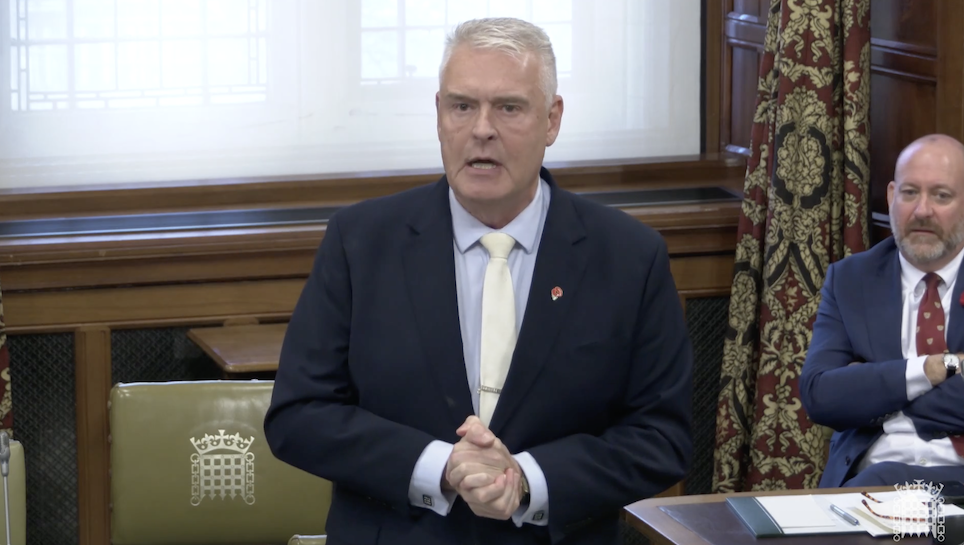

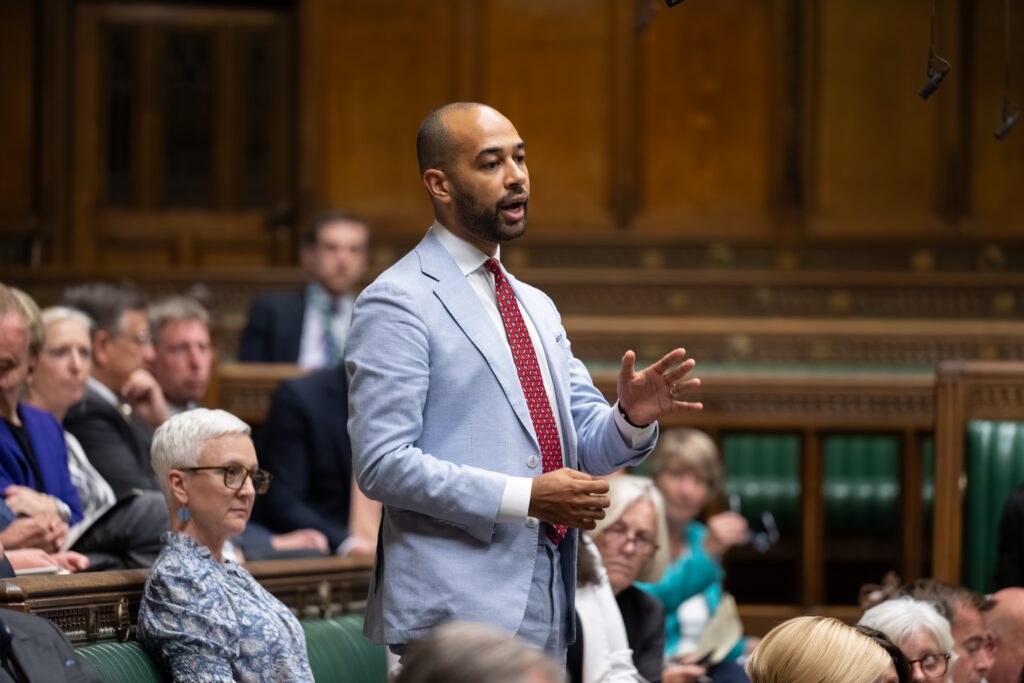
- Compare the Liberal Democrats’ role in the 2010-2015 coalition with the Lib-Lab pact of 1977-1978, assessing the different levels of influence and electoral risk associated with formal versus informal agreements.
- Examine the impact of the 2011 alternative vote (AV) referendum on the Conservative-Liberal Democrat coalition, and to what extent the bitter campaign dynamics between the two governing parties affected their relationship for the remainder of the 2010-2015 parliament.
- Research the circumstances surrounding the resignation of Charles Kennedy as Liberal Democrat leader in 2006, assessing the role of the parliamentary party in his departure.
- Research the political and strategic implications of the Liberal Democrats’ decision to abandon the policy of ‘equidistance’ in the mid-1990s.
- Evaluate the view that Labour and the Conservatives continue to command the political landscape.
- ‘Two-party dominance in Britain is a thing of the past.’ Analyse and evaluate this statement.
- ‘The United Kingdom is now a fragmented multi-party democracy trapped within a two-party electoral system.’ Analyse and evaluate this statement.
- Evaluate the view that political participation in the UK has fallen to crisis levels.
- Coalition government → The first UK hung parliament since 1974 led to a formal Conservative-Liberal Democrat coalition. The administration, which included Liberal Democrat leader Nick Clegg as deputy prime minister, served a full term from 2010 to 2015.
- Tactical voting → Tactical voting was a central feature of the party’s 2024 success in the “blue wall”. An estimated 35% of those intending to vote for the party cited tactical reasons, typically to oust an incumbent Conservative.
- Codified/written constitution → The Liberal Democrats champion sweeping constitutional change and support the replacement of unwritten rules with a single, codified document that clearly defines the boundaries of the political system. This was captured in the party’s We, the People document. Meanwhile, the Cook-Maclennan pre-election agreement with Labour helped lay the groundwork for the Human Rights Act 1998, the Freedom of Information Act 2000 and the Jenkins commission on electoral reform.
- Labour → The party was formally constituted in 1988 through a merger between the historic Liberal Party and the Social Democratic Party (SDP), which was itself formed after a group of senior Labour Party politicians split from the party in response to its perceived shift to the left.