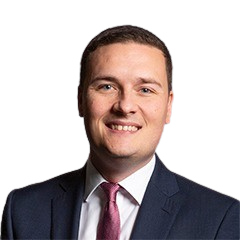
Jo Swinson served as leader of the Liberal Democrats from July to December 2019.
The first woman to serve as leader of the Liberal Democrats, Swinson was the MP for East Dunbartonshire from 2005 to 2015 and again from 2017 to 2019.
Swinson was the youngest member of parliament upon her inaugural election in 2005, and went on to serve as a minister in the Conservative-Liberal Democrat coalition government (2010-2015).
Swinson’s brief leadership tenure was dominated by Brexit and the December 2019 general election. Campaigning on an anti-Brexit platform, Swinson lost her own parliamentary seat by 149 votes, forcing her resignation as leader under party rules.
Jo Swinson’s political career (2001-2019)
Swinson joined the Liberal Democrats at the age of 17 and first stood for parliament, unsuccessfully, at the 2001 general election.
Swinson entered parliament as the MP for East Dunbartonshire at the 2005 general election, gaining the seat from Labour with a majority of 4,061. As the youngest MP in the commons, she assumed the title of “baby of the House”.
Swinson served on the House of Commons environmental audit committee (2007-2010), and held a series of spokesperson roles. She was the Liberal Democrat culture, media and sport spokesperson (2005-2006), Scotland spokesperson (2006-2007), women and equality spokesperson (2007) and foreign affairs spokesperson (2008-2010).
Swinson endorsed Nick Clegg in the 2007 Liberal Democrat leadership election.
Swinson was re-elected in 2010 with a reduced majority of 2,184. In the Conservative-Liberal Democrat coalition government, Swinson served as parliamentary private secretary (PPS) to Clegg, the deputy prime minister (2010-2012). A PPS acts as an unpaid parliamentary assistant, providing a link between the senior frontbencher and backbench MPs. The role is widely regarded as the first step on the ministerial ladder.
Swinson later served as parliamentary under-secretary for employment relations, consumer and postal affairs and parliamentary under-secretary of state for women and equalities (both 2012-2015).
In February 2013, Swinson voted in favour of the Marriage (Same Sex Couples) Bill at its second reading. The landmark piece of legislation, which received its second reading by 400 votes to 175, legalised marriage for same-sex couples in England and Wales.
Swinson voted in favour of the government’s motion on the principle of military intervention in Syria in August 2013. The government motion was defeated by 285 votes to 272, a move which effectively ruled out UK participation in any US-led military strikes.
Swinson lost her seat in the 2015 general election as part of the Scottish National Party (SNP) landslide and Liberal Democrat collapse. The SNP candidate, John Nicolson, won 22,093 votes (40.3%) and a majority of 2,167 over Swinson.
Swinson regained the East Dunbartonshire seat at the 2017 general election, having spent two years outside of parliament. She was elected unopposed as Liberal Democrat deputy leader, serving under Sir Vince Cable from 2017 to 2019.
The 2017-2019 parliament was dominated by the battles over Brexit and the terms of Britain’s departure from the European Union. During this period, the Liberal Democrats adopted an unapologetic pro-Remain positioning.
On 17 July 2018, Swinson was at the centre of a “pairing” controversy over the Trade Bill, a piece of Brexit-related legislation. Swinson was absent from Westminster as she was on maternity leave; her designated pair was the then-Conservative Party chairman and minister without portfolio, Brandon Lewis. However, Lewis broke the pairing agreement by voting in two crucial divisions on the Trade Bill, one on remaining in the customs union post-Brexit, which the government won by just six votes, and another on medicine regulation, which it lost.
In a post to Twitter (now X), Swinson stated: “Just how low will your govt stoop Theresa May. When [leader of the House] Andrea Leadsom delayed proxy voting motions, she assured those of us who were pregnant that we would be paired when necessary. Today your [government broke that agreement”.
On 29 January 2019, MPs agreed a proxy voting scheme for MPs who are new parents without a division. During the debate, Swinson said that proxy voting was a chance to secure a “genuinely modern parliament.”
The Liberal Democrats were rewarded for its pro-Remain/Rejoin stance in the 2019 European Parliament elections, surging into second place with 20.3% of the vote and 16 seats (up 15).
In the wake of the European Parliament elections, Cable stood down as leader of the Liberal Democrats. Cable, who had previously indicated his intention to resign after the elections, was succeeded by Swinson on 22 July 2019.
Swinson defeated Ed Davey in the 2019 Liberal Democrat leadership election with 47,997 votes (62.8%).
Swinson’s tenure as Liberal Democrat leader, which lasted less than five months, was dominated by Brexit and the battles that preceded the 2019 general election.
The Liberal Democrats saw their representation swell to 21 MPs by the end of the 2017-2019 parliament after a series of defections from both the Labour and Conservative parties (several via the short-lived Change UK).
In the 2019 general election campaign, Swinson described herself as “the Liberal Democrat candidate for prime minister”. The Liberal Democrats also embraced an uncompromising “revoke” (Article 50) position on Brexit, the campaign’s principal issue. Enthused by the party’s strong performance at the 2019 European parliament elections, Swinson vowed to cancel Brexit entirely if the Liberal Democrats were elected with a majority government.
The Liberal Democrats only won 11 seats in the 2019 general election. Swinson was not one of them. She lost her East Dunbartonshire seat to the SNP’s Amy Callaghan by just 149 votes.
The Liberal Democrat constitution requires the party leader to be a serving MP and Swinson was therefore compelled to stand down.
The official Liberal Democrat review into the party’s 2019 campaign described it as “a high-speed car crash”. The “revoke” position, the review held, meant the party “effectively ignored” the biggest group of voters, namely those who were neither fervently Remain or Leave.
What is Jo Swinson doing now?
After her narrow defeat in the 2019 general election, Swinson stepped back from frontline politics.
In July 2020, she accepted the position of visiting professor at Cranfield School of Management.
Upon taking up the position, Swinson said: “I’m delighted to be joining Cranfield School of Management and I’m looking forward to helping develop their thinking on issues that I have championed throughout my career such as gender equality and the role of technology in the workplace”.
In September 2020, Swinson was named as director of Partners for a New Economy (P4NE). P4NE describes itself as an international donor collaborative focused on transforming the economic system to deliver positive environmental and social outcomes.
In 2023, Swinson published a book titled Knocking on the Door: The Change We Can Make When We Get Involved.
Swinson has appeared in the media as a political pundit, including on the BBC One programme, Newsnight.
Before Politics
Joanne Kate Swinson was born on 5 February 1980 in Glasgow. She attended Douglas Academy, a state comprehensive school in Milngavie. She studied management at the London School of Economics (LSE), graduating in 2000.
After graduating, Swinson worked in marketing and public relations, including for Viking FM, a commercial radio station based in Hull.
Personal Life
In 2011, Swinson married Duncan Hames, who was also a Liberal Democrat MP at the time (representing Chippenham from 2010-2015). The couple have two sons, born in 2013 and 2018.
Swinson suffers from a severe peanut allergy and experienced an anaphylactic shock requiring hospital treatment in 2013 after inadvertently eating a biscuit containing peanuts.
Trivia
Swinson was the youngest MP upon her election in 2005 and the first woman to lead the Liberal Democrats.
Jo Swinson has not written for Politics.co.uk.