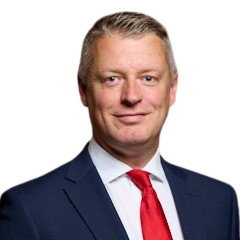
Sir Nick Clegg served as deputy prime minister of the United Kingdom of Great Britain and Northern Ireland from 2010 to 2017 in the Conservative-Liberal Democrat coalition government.
Clegg was elected as leader of the Liberal Democrats in 2007 and resigned after his party suffered significant losses in the 2015 general election.
Clegg subsequently lost his own parliamentary seat (Sheffield Hallam) in the 2017 general election.
After leaving frontline politics, Clegg was appointed president of global affairs for Meta (the parent company of Facebook, Instagram, and WhatsApp). He originally joined the company (then known as Facebook) in October 2018 as a vice-president. Clegg was central to Meta’s efforts to manage its global reputation.
Clegg left Meta in 2025.
In the 2018 New Year’s Honours list, Clegg received a knighthood for political and public service.
Nick Clegg and Meta (2018-2025)
In October 2018, Clegg was appointed as vice-president for global affairs and communications at Facebook (renamed Meta in 2021). His recruitment followed controversies such as the Cambridge Analytica data scandal, criticism over its handling of acquisitions like WhatsApp and growing concerns about “fake news” and disinformation on its platforms.
Clegg was influential in establishing Meta’s independent oversight board, designed to handle contentious content moderation decisions.
In February 2022, Clegg was promoted to president of global affairs, reporting directly to Meta CEO Mark Zuckerberg.
At the time, Zuckerberg stated that Clegg would “lead our company on all our policy matters”, including interactions with governments, shaping internal policies and “making the case publicly for our products and our work”.
Zuckerberg commented: “As Nick takes on this new leadership role, it will enable me to focus more of my energy on leading the company as we build new products for the future, and it will support Sheryl as she continues to focus on the success of our business.”
Clegg’s responsibilities covered contemporary tech policy issues including artificial intelligence (AI) development and ethics, content moderation, data privacy, election integrity and competition regulation across Meta’s global operations.
Clegg was credited with improving Meta’s reputation in the political world. He positioned himself as a middle-man between Zuckerberg and global governments.
In January 2025, Clegg announced he would be standing down as Meta’s president of global affairs. The move followed Donald Trump’s victory in the 2024 US presidential election. According to reports, Clegg’s stake in Meta was worth $28.3 million at the time of his resignation. He also received a reported annual salary of about £3 million.
Nick Clegg: deputy prime minister (2010-2015)
The 2010 general election resulted in the country’s first hung parliament (following an election) since February 1974, ending 13 years of majority Labour government. The Conservatives won 306 seats with 36.1% of the vote, a net gain of 96 MPs compared to the notional 2005 result. The Labour Party, led by prime minister Gordon Brown, lost 91 seats, returning 258 MPs on a 29.0% vote share.
The Liberal Democrats, having secured 57 seats, held the balance of power in the House of Commons.
The inconclusive result triggered five days of intense negotiations between the parties.
In the wake of the election, Clegg was the first to move. He indicated that the Conservative Party, as the party which had won the most seats, should have the first opportunity to begin negotiations. Clegg said that he believed the Tories had gained the “first right” to attempt to form a government.
David Cameron, the Conservative leader, responded with a “big, open and comprehensive offer to the Liberal Democrats”.
In a speech, Cameron stated: “I want us to work together in tackling our country’s big and urgent problems – the debt crisis, our deep social problems and our broken political system.”
A Labour-Lib Dem coalition was considered as a possibility, likely with the support of smaller nationalist parties, and negotiations were held to this effect. For a period, the Liberal Democrats were in simultaneous negotiations with both the governing Labour Party and the opposition Conservative Party. But the most viable path to a stable government was provided by a formal arrangement between the Conservatives and the Liberal Democrats.
On the evening of 11 May, Brown resigned as prime minister, and David Cameron entered 10 Downing Street.
Cameron and Clegg then formally presented their new coalition government to the nation on 12 May 2010, at a joint press conference in the Downing Street rose garden. This inaugural coalition press conference coincided with the publication of a seven-page document outlining the initial “Conservative–Liberal Democrat coalition agreement”.
Under this arrangement, Clegg was appointed as deputy prime minister.
In the foreword, the deal stated: “These are the issues that needed to be resolved between us in order for us to work together as a strong and stable government”.
The document, which would serve as the terms of reference governing the coalition, detailed the key compromises made by both parties. The central agreement was a commitment to tackle the UK’s budget deficit, with an emergency budget promised within 50 days.
Key concessions to the Liberal Democrats included a referendum on changing the electoral system to the alternative vote (AV) and a commitment to legislate for five-year fixed-term parliaments. For their part, the Conservatives secured agreement on policies such as placing a cap on non-EU immigration and allowing new providers to enter the state schooling system. The document also specified areas where the parties could, in effect, “agree to disagree” such as on the renewal of the Trident nuclear deterrent and on education funding.
A final longer agreement, entitled The Coalition: our programme for government, was published on 20 May.
The cabinet initially featured five Liberal Democrat MPs, including Clegg as deputy prime minister, Vince Cable as business secretary, David Laws as chief secretary to the Treasury, Chris Huhne as energy and climate change secretary and Danny Alexander as secretary of state for Scotland.
To manage the relationship and make key strategic decisions, a core group known as the “quad” was established. This consisted of the prime minister, the deputy prime minister, the chancellor (George Osborne), and the chief secretary to the Treasury. Alexander succeeded Laws as chief secretary to the Treasury shortly after the coalition began its life. The quad was set up to resolve policy disagreements, so compromises could be taken to the wider cabinet.
The defining economic programme of the Cameron-Clegg coalition was “austerity”, aimed at eliminating the structural deficit following the 2008 financial crisis. In the October 2010 spending review, George Osborne, the chancellor, announced £81 billion in departmental budget cuts.
In December 2010, Clegg was among 27 Liberal Democrat MPs who voted to triple maximum tuition fees in England from £3,000 to £9,000 per year. (21 Lib Dem MPs voted against the proposals at the time, including former leaders Charles Kennedy and Menzies Campbell.) The vote passed with a majority of 21.
The episode triggered student protests – as well as a catastrophic collapse in the Liberal Democrats standing in the polls. Before the 2010 general election, Liberal Democrat candidates, including Clegg himself, signed a high-profile ‘Vote for Students’ pledge by the National Union of Students (NUS), vowing to vote against any rise in fees.
The vow stated: “I pledge to vote against any increase in fees in the next parliament and to pressure the government to introduce a fairer alternative.”
Clegg also campaigned in 2010 on a platform of restoring trust in politics. One memorable Liberal Democrat election broadcast urged voters to “Say goodbye to broken promises”.
The most obvious moment of Liberal Democrat-Conservative tension during the coalition came with the 2011 referendum on the alternative vote. This referendum led to the incongruous political situation of the two governing parties openly campaigning against each other. The “No” campaign, led by senior Conservative figures, argued that AV was a complicated, expensive, and unfair system. The “Yes” campaign was championed by the Liberal Democrats.
However, AV was a more modest reform than the Liberal Democrats’ preferred system of proportional representation – Clegg even described it as a “miserable little compromise” before the 2010 general election.
The sometimes acrimonious nature of the campaign and the Yes campaign’s overwhelming defeat (by 68% to 32%) created some bitterness within the coalition. The No campaign had ruthlessly sought to associate AV in the public mind with the Liberal Democrats and their unpopular leader. One poster pictured Clegg holding a sign saying he would oppose any increase in tuition fees, with the message: “AV will lead to more broken promises”. In his 2019 memoir, For the Record, Cameron suggested the anti-AV campaign could be summed up in three ‘Cs’: “costly”, “complicated” and “Clegg”.
Responding to the result, Clegg said the outcome was a “bitter blow” at the end of a “disappointing day” following election results elsewhere. The AV referendum coincided with elections to the Scottish parliament, national assembly for Wales, Northern Ireland assembly and local authorities across England.
Coalition tensions over AV were further exacerbated in 2012 when the government abandoned plans for House of Lords reform, after a large Conservative backbench rebellion. On 10 July 2012, 91 Conservative backbenchers rebelled against the House of Lords Reform Bill – the largest rebellion of the 2010-2015 parliament. At the time, it also marked the largest rebellion by government MPs on the second reading of any bill since the Second World War.
In a statement on 6 August 2012, Clegg confirmed the government would withdraw the bill, accusing the Conservatives of “breaking” the coalition contract. He announced that the Liberal Democrats would retaliate by instructing its MPs to oppose the Conservative-driven boundary changes.
In 2012, Clegg responded to criticism over his U-turn on tuition fees with a broadcast statement. He argued that, as the junior partner of a coalition government, the Liberal Democrats were forced to make unpalatable compromises. He apologised for making a “promise we were not absolutely sure we could deliver”.
Clegg concluded: “When we’re wrong we hold our hands up. But when we’re right we hold our heads up too. We were right to leave the comfort of opposition to face the realities of government.
“And I know we are fighting for the right things, day in, day out, too: rebuilding our economy to make it strong; changing the tax system to make it fair; defending the vulnerable in these tough times.
“That’s what my party believes in. That’s what I believe in. And, if we’ve lost your trust, that’s how I hope we can start to win it back.”
The apology represented the culmination of a protracted political journey for Clegg, who initially rejected the need for contrition. On 5 December 2010, Clegg said he believed in the tuition fees hike, telling the Independent: “I really think we will look back in 10 or 15 years’ time and think, actually that was quite a brave and bold and socially progressive thing to do.”
Clegg’s statement inspired a series of unflattering spoofs. The most famous was curated by the satirical website, The Poke, which remixed the statement into a viral tune, “The Nick Clegg Apology Song”.
Clegg subsequently gave permission for the auto-tuned version of his apology to be released as a single on iTunes, requesting that all profits be given to the Children’s Hospital Charity in Sheffield (where he was an MP). The song reached number 143 in the UK singles chart.
In an attempt to recapture the spirit of the 2010 Rose Garden love-in, Cameron and Clegg conducted a joint press conference in January 2013. They insisted that the coalition would last a parliamentary term, giving Britain “strong, stable and determined leadership”. The conference coincided with the publication of a 46-page review of the coalition’s performance.
On 5 February 2013, the House of Commons voted in favour of legalising same-sex marriage in England and Wales by a decisive majority. MPs approved the second reading of the Marriage (Same Sex Couples) Bill by 400 votes to 175 – a majority of 225. A consultation on extending civil marriage to same-sex couples was first announced by Liberal Democrat equalities minister Lynne Featherstone at her party’s conference in 2011.
In a statement after the 2013 vote, Clegg said: “I genuinely believe that we will look back on today as a landmark for equality in Britain.
“Tonight’s vote shows parliament is very strongly in favour of equal marriage. No matter who you are and who you love, we are all equal. Marriage is about love and commitment, and it should no longer be denied to people just because they are gay.
“The Liberal Democrats have long fought for equal marriage. It is party policy and I am proud that the Liberal Democrats are part of the coalition government that are making it happen.”
Clegg voted in favour of the government’s motion on the principle of military intervention in Syria in August 2013. The government motion was defeated by 285 votes to 272, a move which effectively ruled out UK participation in any US-led military strikes.
In the end, the coalition did serve a full five-year term – a feat many commentators initially believed was unlikely back in May 2010.
But the electoral consequences for the Liberal Democrats as the coalition’s junior partner were severe.
In the 2015 general election, the Conservative Party won a narrow outright majority. The Liberal Democrats saw their parliamentary party collapse from 57 MPs to just eight.
Clegg responded by announcing his resignation as Liberal Democrat leader.
In a statement, Clegg said the result was “immeasurably more crushing and unkind” than he had feared.
The outgoing Liberal Democrat leader stated: “I always expected this election to be exceptionally difficult for the Liberal Democrats, given the heavy responsibilities we’ve had to bear in government in the most challenging of circumstances.
“But clearly results have been immeasurably more crushing and unkind than I could ever have feared. For that, of course, I must take responsibility and therefore I announce I will be resigning as leader of the Liberal Democrats.”
Nick Clegg’s late-political career (2015-2017)
Clegg served as a Liberal Democrat spokesperson from 2016 to 2017, covering the Brexit (exiting the European Union) and international trade briefs.
Clegg voted in favour of a government motion to extend UK airstrikes against Isis from Iraq into Syria in December 2015. The motion, which was passed by 397 votes to 223 after a 10-hour debate in the House of Commons, authorised the RAF to conduct strikes against Isis targets in Syria.
Clegg voted against a government motion calling for the renewal of the Trident nuclear deterrent system in July 2016. The motion, which was passed by 472 votes to 117, committed the UK to constructing a new fleet of submarines to carry the nation’s nuclear weapons. Labour was split over the issue with 140 of its 230 MPs going against leader Jeremy Corbyn and backing the motion.
In February 2017, Clegg voted against the European Union (Notification of Withdrawal) Bill. The legislation empowered the prime minister to notify the Council of the European Union of the UK’s intention to withdraw, formally triggering the process set out in Article 50 of the Treaty on European Union. MPs supported the bill by 498 votes to 114 at second reading.
Clegg lost his seat at the 2017 general election. In the Sheffield Hallam constituency, he won 19,756 votes (34.7%), while Labour candidate Jared O’Mara won 21,881 votes (38.4%).
In a speech following the declaration of the Sheffield Hallam result, Clegg said he had “never shirked from the political battlefield”. He warned of the “agonising” future ahead for the next government that seeks to unite a divided country.
He added: “It is a parliament, which in my judgement, will not only face the excruciating task of trying to assemble a sensible government for this country, but it will need to deal with the agonising decisions which we face as a country as we navigate our way towards Brexit.”
Nick Clegg’s rise to prominence (1999-2010)
Clegg was elected as a member of the European Parliament (MEP) for the East Midlands region from 1999 to 2004.
Clegg was elected to the UK parliament as the MP for Sheffield Hallam in South Yorkshire at the 2005 general election. In the House of Commons, he held senior spokesperson roles for the Liberal Democrats, including home affairs (2006-2007).
In September 2007, Clegg vowed to stand for his party’s leadership whenever the incumbent, Sir Menzies “Ming” Campbell, stood down. At the time, Campbell was facing questions over his age. “If you are asking me would I throw my hat in the ring if there was vacancy in the future, I probably would”, Clegg said.
Campbell resigned in October 2007, triggering a second Liberal Democrat leadership contest in as many years. (Campbell succeeded Charles Kennedy as Lib Dem leader in 2006.)
There were two candidates in the 2007 Liberal Democrat leadership election: Clegg and Chris Huhne. The contest between Clegg, aged 40, and Huhne, 53, was generally expected to be a good-natured affair, fought between two figures associated with the party’s “Orange Book” wing. Both candidates had first been elected to parliament in 2005 and were former MEPs.
Clegg’s 2007 candidacy was endorsed by Paddy Ashdown, Liberal Democrat leader from 1988 to 1999. He was the favoured candidate among Lib Dem MPs, securing the support of Danny Alexander, Ed Davey, Jo Swinson and Tim Farron among others.
Huhne was seen as appealing to the left-wing of the Liberal Democrats. But the candidates nonetheless shared common positions on the environment, ID cards and the war in Iraq.
The most notable episode of the contest came during a televised debate on the BBC’s Politics Show. Presenter Jon Sopel produced a briefing document authored by a member of Huhne’s team titled “Calamity Clegg”. The dossier accused Clegg of having “flip-flopped” on issues ranging from the Trident nuclear deterrent to NHS reform. Huhne sought to dissociate himself from the document, insisting he had not seen it. But he then proceeded to attack Clegg on the substance of the dossier.
In a heated exchange, Clegg accused his rival of trying to create “synthetic differences” which “our opponents will use against us”.
On 18 December 2007, Clegg was named the new leader of the Liberal Democrats, defeating Huhne by a margin of just 511 votes. The ballot of the party’s membership was the closest in Liberal Democrat history. Clegg secured 20,988 votes (50.6%); Huhne won 20,477 votes (49.4%).
In his acceptance speech, Clegg declared: “My election as leader today marks a new beginning. Today is about two things: ambition and change.
“Renewed ambition for the Lib Dems, renewed ambition to reach out to the millions of people who I know share our instincts and values but do not yet vote for us. It is about renewed ambition for Britain.”
The fragility of Clegg’s mandate was revealed shortly after the result. It emerged that approximately 1,300 postal ballots had been delayed in the Christmas post and arrived after the deadline. An unofficial count of these late papers suggested that, had they been included, Huhne would have won the leadership. The delay was likened to the “hanging chads” fiasco of the 2000 US presidential election.
Nevertheless, Huhne accepted the result. “Nick Clegg won fair and square on the rules counting the ballot papers that arrived in by the deadline. There is no question of any re-run”, he stated.
Clegg re-appointed Huhne to the Liberal Democrat frontbench as home affairs spokesperson.
Clegg’s early tenure as Liberal Democrat leader was considered “lacklustre”. It included a profile in GQ magazine, conducted by Piers Morgan in March 2008. In the interview, Clegg answered a question regarding his sexual history by stating he had slept with “no more than 30” women.
Morgan asked: “Ever had any complaints?”
After Clegg responded “Oh God yes, of course”, Morgan added: “What would your wife say?”
Clegg stated: “I think she’d be very content and happy.”
Clegg expressed his support for same-sex marriage in February 2010.
Clegg led the Liberal Democrats into the 2010 general election. The campaign was notable for featuring the first-ever televised debates between the main party leaders. In the first of three debates was on 15 April 2010, Clegg was widely seen to have outdebated his opponents. His revelatory performance even inspired a political phenomenon dubbed “Cleggmania” which, temporarily at least, upended the established two-party dynamic.
As the least known of the three leaders, Clegg seized the opportunity provided by the debate to present himself as a fresh alternative to the “old parties”. For much of the event, Brown and Cameron focused their attacks on each other, creating space for Clegg to exploit.
At one point, the Lib Dem leader interjected: “The more they attack each other, the more they sound exactly the same.”
In the days that followed the debate, Cleggmania fundamentally altered the dynamics of the campaign. The Conservative and Labour parties were forced to directly respond to the third party’s new prominence. All of a sudden, Liberal Democrat policies received a level of media scrutiny usually reserved for the two main parties.
A YouGov poll, published on 20 April, placed the Liberal Democrats on 34%, one point above the Conservatives and six points ahead of Labour. Another opinion poll suggested Clegg was almost as popular as Sir Winston Churchill.
In the 2010 election, Clegg campaigned on a platform of restoring trust in politics. One memorable Liberal Democrat election broadcast urged voters to “Say goodbye to broken promises”.
Speaking directly into camera, Clegg stated: “Broken promises – there have been too many in the last few years… Our nation has been littered with them, a trail of broken promises… This election is different to other elections. The trail of broken promises can come to an end.”
Cleggmania, in the end, was an ephemeral phenomenon. The party won 57 seats, down 5, at the 2010 general election; its final share of the vote (23%) marked a one point improvement on the 2005 election.
How old is Nick Clegg?
Sir Nicholas William Peter Clegg was born on 7 January 1967.
Before politics
Clegg attended Westminster School in London and studied social anthropology at Robinson College, Cambridge University, graduating in 1989.
Clegg conducted further studies at the University of Minnesota and at the College of Europe in Bruges.
Before entering politics, Clegg worked briefly as a trainee journalist for The Nation magazine in New York. He won the David Thomas Prize from the Financial Times for young writers in 1993.
Clegg subsequently worked for the European Commission from 1994 and in the office of the EU’s Trade Commissioner, Sir Leon Brittan.
Brittan, a former Conservative cabinet minister who was at the centre of the 1985/1986 “Westland affair”, initially attempted to recruit Clegg to the Tory cause – but later recommended him to Paddy Ashdown, the then leader of the Liberal Democrats.
Personal life
Clegg is married to Miriam González Durántez, a successful international trade lawyer originally from Spain. They married in 2000 and have three sons.
Trivia: things you may not know about Nick Clegg
Clegg is multilingual, fluent in English, Dutch (his mother’s native language), French, German and Spanish.
Hermance van den Wall Bake, Clegg’s Dutch mother, spent several years as a child interned in a Japanese civilian prisoner-of-war camp in Batavia (now Jakarta, Indonesia) during the Second World War.
Clegg’s paternal grandmother was a Russian aristocrat who fled the Bolshevik Revolution.
Nick Clegg has not written for Politics.co.uk.