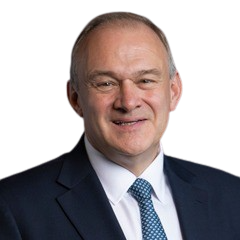
Charles Kennedy served as leader of the Liberal Democrats from 1999 to 2006.
Kennedy was first elected to parliament as the MP FOR Ross, Skye and Lochaber in 1983, representing the Social Democratic Party (SDP). He emerged as a leading proponent of a merger between the Liberal Party and the SDP after the 1987 election.
Kennedy led the Liberal Democrats into the 2001 and 2005 general elections, increasing the party’s standing on both occasions. He was deposed as leader after concerns arose over his health.
Kennedy was unseated as the MP for Ross, Skye and Lochaber as part of the 2015 Scottish National Party (SNP) landslide and Liberal Democrat collapse. He died just weeks later at the age of 55.
Leader of the Liberal Democrats (1999-2006)
In the wake of the 1997 general election, Kennedy emerged as a sceptic of Labour-Liberal Democrat cooperation.
Kennedy endorsed the so-called “Southport Resolution”, adopted at the party’s Spring conference in March 1998, which stipulated that any “substantial proposal” affecting the party’s independent political action would require the support of 75% of both Liberal Democrat MPs and members of the federal executive. Kennedy said the Southport “safeguards” served to reassure “people like me who were extremely anxious” about the prospect of coalition.
Lib-Lab cooperation was pursued enthusiastically by Paddy Ashdown, the leader of the Liberal Democrats from 1988 to 1999, during Tony Blair’s tenure as Labour leader. At the time, Kennedy was described as “Ashdown’s Hezza” – the Michael Heseltine to Ashdown’s Margaret Thatcher.
In January 1999, Ashdown announced he would stand down as Liberal Democrat leader after 11 years in post. His perceived closeness to New Labour had begun to aggravate Liberal Democrat MPs and members.
Five candidates contested the 1999 Liberal Democrat leadership election, but it was Kennedy who emerged as the frontrunner. At the time, Kennedy was known as “Chatshow Charlie” for his affable media profile, burnished by appearances on Have I Got News for You. Among his supporters, Kennedy counted Vince Cable, Menzies Campbell, Jim Wallace, Roy Jenkins, Shirley Williams and Nick Clegg.
Kennedy still came in for some criticism during the campaign. His style sometimes came across as “a little too jokey and relaxed”, even for his allies. Critics dubbed him “inaction man” – an inversion of Ashdown’s nickname.
In the first round of voting, Kennedy secured 44.6% of the vote, ahead of Simon Hughes (31.8%), Malcolm Bruce (9.1%), Jackie Ballard (7.8%) and David Rendel (6.7%). After the elimination of the lower-placed candidates and the redistribution of preferences, Kennedy won the final round against Hughes with 28,425 votes (56.6%) to Hughes’ 21,833 (43.4%).
In his acceptance speech, Kennedy paid tribute to Ashdown but signalled a desire to carve out a distinct identity for the Liberal Democrats. Pledging to fight for a “fairer Britain”, he argued that his party was “not being heard by New Labour for sure”. He vowed to reconnect with those people who “don’t feel connected with politics”, adding: “That difference is needed more than ever”.
Kennedy rowed back on Ashdown’s project of Lib-Lab cooperation. He effectively suspended the joint cabinet committee (JCC) of senior Labour and Liberal Democrat politicians in the run-up to the 2001 general election. The JCC was formally wound up in January 2002.
In 2003, Kennedy told the Independent: “I think the box marked ‘JCC’ is going to remain firmly with its lid closed for the rest of this parliament.”
He added: “We do much better if we don’t get into hung parliaments and coalitions because it just muddies the water and blunts our message completely.
“Far better to put your case forward crisply, cleanly, invite people to support it and say ‘However many votes and MPs we get, we will use that influence to push forward as much of that agenda as we can’.”
The Liberal Democrats won 52 seats in the 2001 general election – a net increase of six. The result, which built on the party’s strong showing in 1997, helped establish the Liberal Democrats as a real alternative to Labour and the Conservatives. Kennedy’s persona attracted arguably outsized media coverage during the campaign.
Opposition to the Iraq War
Kennedy’s tenure as Liberal Democrat leader is largely remembered for his principled opposition to the 2003 Iraq War – which distinguished the party from both Labour and the Conservatives.
On 15 February 2003, Kennedy addressed what is believed to be the largest political demonstration in British history, as over one million people marched through central London to protest against the prospect of a war with Iraq. The event was part of a coordinated global day of action that reportedly saw over 20 million demonstrate in cities worldwide. Kennedy, in his contribution, pointed to “misleading” and “inconclusive” evidence provided by the government.
Kennedy said he had been asking questions related to a possible war in Iraq for months, receiving only “confusing, alarming” answers from the prime minister.
He added: “So I have joined you here today and I have been asking these questions for months in Parliament because I am not persuaded by the case for war. The arguments have been contradictory and inconsistent and the information has all too often been misleading as well as inconclusive.”
Kennedy said he was not a “pacifist” nor “anti-American”, but expressed his worry about the Bush administration. He insisted that “without a second United Nations resolution based on authoritative fact from the weapons inspectorate I can assure you there is no way in all conscience that the Liberal Democrats either could or should support a war and we will not.”
Kennedy concluded: “Our country has a principled and a responsible role to play on the world stage but to do so we have to pursue international justice through the United Nations and our government has got to take its people with them. It’s patently failing and that is my message for you today.”
On 18 March 2003, as the House of Commons voted to authorise military action against Iraq, Liberal Democrat MPs supported an amendment declaring that the case for war had not yet been established. A total of 139 Labour, 53 Liberal Democrat and 15 Conservative MPs backed the amendment. The government’s unamended motion authorising military action against Iraq passed by 412 votes to 149.
Under Kennedy’s leadership, the Liberal Democrats won 62 seats and 22.0% of the vote in the 2005 general election.
During the 2005 general election campaign, the confidential 13-page legal advice provided by the attorney general, Lord Goldsmith, to the prime minister in 2003 regarding the legality of the Iraq war, was published in full. The disclosure revealed the attorney general had privately counselled that a court “might well conclude” military action in Iraq was illegal without a second United Nations resolution.
Kennedy argued the account given by the prime minister in the build-up to war did “not square” with the latest revelations.
On the evening of 28 April, all three leaders of the main parties faced a Question Time election special programme. Kennedy challenged Blair’s description of the findings as a “damp squib”, telling him to “go and describe these findings as a damp squib to the families of the service personnel who gave their lives in Iraq.”
Kennedy also led opposition to the Blair government’s proposal to allow police to detain terror suspects for up to 90 days without charge. The 90-day amendment, introduced during the Terrorism Bill’s report stage in November 2005, was defeated by 322 votes to 291 – a majority of 31. It marked Blair’s first major commons defeat as prime minister. Kennedy warned that the prime minister would be seen as a “lame duck” in the wake of the vote, and accused him of behaving in a “quasi-dictatorial way”.
Health concerns and resignation (2006)
Despite the party’s improved position following the 2005 general election, doubts about Kennedy’s leadership arose during the course of the campaign. He faced further pressure after David Cameron’s election as leader of the Conservative Party in December 2005.
Kennedy, who previously denied a drink problem, initially called a leadership contest and indicated his intention to stand for re-election.
In a statement, Kennedy said: “Over the past 18 months I’ve been coming to terms with and seeking to cope with a drink problem, and I’ve come to learn through that process that a drink problem is a serious problem indeed.
“It’s serious for yourself and it’s serious for those around you. I’ve sought professional help and I believe today that this issue is essentially resolved.”
The statement came as just over a half of Kennedy’s frontbench colleagues signed a letter saying they no longer had confidence in his leadership. Some 48 hours later, Kennedy announced his resignation as Liberal Democrat leader. “It is clear now that such support is not reflected strongly enough across the parliamentary party in the House of Commons itself”, he said in a further statement.
Kennedy added: “The interests of our party have to come first. That is where my personal, my political and my constitutional duty lies.”
Sir Menzies “Ming” Campbell succeeded Kennedy as leader on 2 March 2006. In his victory speech, Campbell pledged to “modernise” the party and lead it “back to government”.
It did not take long for concerns to arise over Campbell’s position. His performances at prime minister’s questions (PMQs) came under criticism, forcing Campbell to confirm he was “perfectly confident” of meeting the challenges of leadership.
As early as July 2006, rumours arose that Kennedy could return as Liberal Democrat leader. Kennedy, however, dismissed talk that he was preparing to mount a challenge for his old job as “fanciful”.
Campbell announced he would stand down as Liberal Democrat leader in October 2007. He was succeeded by Nick Clegg.
Charles Kennedy’s late political career (2006-2015)
Kennedy did not support the formation of the Liberal Democrat-Conservative coalition in 2010, which resulted in Nick Clegg’s appointment as deputy prime minister.
In an article for the Observer, published on 16 May 2010, Kennedy warned of the risks of “a subsequent assimilation within the Conservative fold.”
He added: “Like many others I was keen to explore the possibilities of a so-called ‘progressive coalition’, despite all the obvious difficulties and drawbacks. It remains a matter of profound disappointment that there was insufficient reciprocal will within the Labour party – and they should not be allowed to pose in opposition purity as a result.”
In December 2010, Kennedy was among the 21 Liberal Democrat MPs who voted against plans to triple maximum tuition fees in England from £3,000 to £9,000 per year.
Kennedy lost his seat in parliament at the 2015 general election. He had represented the constituency of Ross, Skye and Lochaber (and its predecessors) for 32 years.
Death, tributes and legacy
Kennedy died on 1 June 2015 at his home in Fort William at the age of 55.
Kennedy’s family said in a statement: “It is with great sadness, and an enormous sense of shock, that we announce the death of Charles Kennedy.
“We are obviously devastated at the loss. Charles was a fine man, a talented politician, and a loving father to his young son.”
Nick Clegg, the outgoing leader of the Liberal Democrats, said that Kennedy had “more political talent in his little finger than the rest of us put together.”
He said: “Charles devoted his life to public service, yet he had an unusual gift for speaking about politics with humour and humility which touched people well beyond the world of politics.
“He was one of the most gentle and unflappable politicians I have ever known, yet he was immensely courageous too – not least when he spoke for the country against the invasion of Iraq.”
John Bercow, the speaker of the House of Commons, stated: “Charles Kennedy spent almost his entire adult life as a member of parliament. He was assuredly at home in this place, yet perhaps happiest beyond it. He was a man of deep progressive principle, but a man also blessed with the popular touch.
“He was a good talker, but an even better listener. Above all and perhaps most strikingly, Charles had the rare ability to reach out to millions of people of all political persuasions and of none across the country who were untouched by, and in many cases actively hostile to, politics.”
David Cameron, the prime minister, said: “Charles Kennedy will be remembered for his success, for his principle and intellect, and above all for his incredible warmth and good humour…
“Charles Kennedy played a pivotal role in bringing together two parties, the Social Democratic party and the Liberals, becoming president of the Liberal Democrats in 1990 and party leader from 1999 to 2006. As leader, he took the Liberal Democrats to the best election result for a third party in British politics for nearly 100 years.”
On 5 June, Kennedy’s family announced that his death was caused by a major haemorrhage linked to his alcoholism.
In their statement Kennedy’s family said the Procurator Fiscal’s post-mortem report “makes clear his (death) was a consequence of his battle with alcoholism”.
They added: “We are grateful to the many friends and also medical experts who sought to help down the years but ultimately this was an illness Charles could not conquer despite all the efforts he and others made.”
Charles Kennedy: rise to prominence (1983-1999)
Kennedy joined the Labour Party at the age of 15, but left in 1981 upon the formation of the Social Democratic Party (SDP). He stood for parliament as an SDP candidate at the 1983 general election in the Scottish seat of Ross, Cromarty and Skye. He won the seat, deposing the Conservative incumbent with 13,528 votes (38.5%) and a majority of 1,704.
At the age of 23, he became the youngest sitting MP and the “baby of the House”.
Kennedy supported the merger of the Social Democratic Party with the Liberal Party, which eventually came to pass in 1988.
Under the leadership of Paddy Ashdown, Kennedy held a series of spokesperson roles. He was the Liberal Democrat spokesperson for health (1989-1992), foreign and commonwealth affairs (1992-1997) and environment, food and rural affairs (1997-1999)
Kennedy also held the position of party president from 1990 to 1994.
Early life and background
Charles Peter Kennedy was born on 25 November 1959 in Inverness, Scotland. He grew up in a crofter’s cottage in the Scottish Highlands.
Kennedy attended Lochaber High School in Fort William and studied politics and philosophy at the University of Glasgow. He served as president of the Glasgow University Union from 1980 to 1981.
Kennedy worked as a journalist for BBC Scotland after graduating in 1982.
Personal Life
Kennedy married Sarah Gurling in July 2002. The couple had one son, Donald, born in 2005.
Kennedy and Gurling separated in August 2010 and divorced in December 2010.
Kennedy began a relationship with Carole Macdonald late in his life.
Trivia
Kennedy appeared on the television panel show Have I Got News for You nine times, leading to the nickname “Chatshow Charlie”.
In 2004, Kennedy featured in a special Christmas edition of EastEnders.
Charles Kennedy has not written for Politics.co.uk.