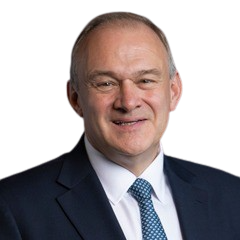
Paddy Ashdown served as the leader of the Liberal Democrats from 1988 to 1999.
First elected to parliament at the 1983 general election, Ashdown took charge of the party in the aftermath of the acrimonious merger between the Liberal Party and the Social Democratic Party (SDP), completed in 1988.
Ashdown guided the Liberal Democrats through the 1992 and 1997 general elections, helping to establish the party as a third force in British politics. He served as MP for Yeovil from 1983 until 2001.
As leader, Ashdown championed close cooperation between Labour and the Liberal Democrats, shifting away from ideological “equidistance”. This platform helped shape the new party’s identity as a progressive force, but became a source of internal friction among some Liberal Democrat MPs and activists.
Following his resignation as Liberal Democrat leader, Ashdown was elevated to the peerage as Lord Ashdown of Norton-sub-Hamdon. He accepted the post of the high representative for Bosnia and Herzegovina, serving in this role from 2002 to 2006.
Ashdown died on 22 December, aged 77, following a short illness.
Election as Liberal Democrat leader (1988)
On 28 July 1988, Ashdown was elected as the first leader of the Social and Liberal Democrats (SLD) – the party formed just four months earlier from the merger of the Liberal Party and the Social Democratic Party.
The creation of the SLD, later renamed the Liberal Democrats, in March 1988 had been a fraught and deeply chaotic process following years of electoral cooperation as the SDP-Liberal Alliance. The SDP was first formed in 1981 by the “Gang of Four” of former Labour figures – David Owen, Roy Jenkins, Shirley Williams, and Bill Rodgers – who broke away in protest at the party’s direction under the leadership of Michael Foot. Following the 1987 general election, a formal SDP-Liberal merger was supported by the incumbent Liberal leader, David Steel, and the bulk of the SDP, now led by Robert Maclennan.
However, David Owen expressed his vehement opposition, resigning as leader of the SDP in August 1987 after the party’s conference voted in favour of pursuing a full merger. Owen dismissed the proposed entity as a “ghastly mess, a disaster and a shambles”.
The merger negotiations proved immensely acrimonious – characterised by bitter infighting and a series of false dawns. When the SLD was finally formed under the interim joint-leadership of Steel and Maclennan, it faced significant internal divisions and external credibility issues. Owen simply refused to join the new party and formed a small breakaway faction known as the “continuing SDP”.
The SLD finished a poor third in the July 1988 Kensington by-election on 10.8%, down 6.5 points on the 1987 general election.
Neither Steel nor Maclennan stood in the 1988 leadership contest. Instead, the election pitted Ashdown, the MP for Yeovil and a former Royal Marine, against Alan Beith, the MP for Berwick-upon-Tweed, who was seen as representing the more traditional Liberal wing of the party.
Commentators almost universally referred to the inaugural Social and Liberal Democrats leadership battle as “bland”, despite the intellectual and stylistic divides on show. The dynamic Ashdown, seen as the favourite candidate of ex‐SDP members, campaigned on a platform of attempting to replace the Labour Party as the leading non-Conservative party in British politics.
Ashdown, 47, proposed a clear break with the traditions of both the SDP and Liberals – as well as the bitter merger negotiations. He argued the party should adopt a “forward looking” message, suggesting a name change along these lines: “the Democrats”. Beith was a former Liberal chief whip and deputy leader; his campaign criticised Ashdown for being “outside the Liberal tradition”.
Ashdown won 71.9% of the vote (41,401 votes) compared to Beith’s 28.1% (16,202 votes). Ashdown had established himself as the frontrunner, but his margin of victory exceeded expectations.
In his first press conference as leader, Ashdown said his bruised and divided party must “look beyond” internal politics “to the concerns of our nation”. He proposed a “decent, effective and responsible” alternative to Thatcherism. He dismissed the prospect of any pre-election pacts, declaring: “We’re on our own – we’re going to make it on our own”.
In an article for the Guardian, published 29 July 1988, Ashdown looked forward to the “end of a bruising and often damaging period in the fortunes of the Social and Liberal Democrats.” He called for “new thinking and imagination” to establish a unique “feel” of the new party.
He wrote: “It will, I hope, be different from both the old Liberals and the old SDP, whilst a clear inheritor of both traditions. A party committed to the human values and concerned with the human condition, of course.
“But forward looking, capable of taking the tough decision, technocratic and concerned with efficiency and enterprise as well.”
Building a third force (1988-1992)
Ashdown initially suffered a series of electoral setbacks as leader of the Liberal Democrats.
At the 1989 Richmond by-election, the continuing SDP candidate, Mike Potter, secured second place on 32.2%. The Social and Liberal Democrats won 22.1% of the vote. (Both parties finished behind the Conservative candidate, William Hague.) Ashdown’s party also failed to return any MEPs in the June 1989 European parliament election, recording just 6.4% of the vote.
In October 1989, the party was renamed the Liberal Democrats – the unwieldy “Social and Liberal Democrats” had been reduced to “Salads” by its critics.
In May 1990, Owen formally wound up his lingering SDP outfit. It finished seventh out of eight candidates in the Bootle by-election, winning just 155 votes. Owen’s outfit had been outperformed by Screaming Lord Sutch’s Official Monster Raving Loony Party. Sutch quipped that he would be willing to form an alliance with Owen’s beleaguered party.
The Liberal Democrats secured a symbolic victory in the Eastbourne by-election on 18 October 1990, overturning a 16,923-vote Conservative majority. The result confirmed the political trouble facing Margaret Thatcher’s government and likely accelerated her defenestration as Tory leader. It was a major political shock given the constituency’s long history as a Conservative stronghold. Significantly, the Liberal Democrats were not regarded as a serious threat at the time of the by-election.
The Eastbourne victory was also notable in light of Thatcher’s mockery of the Liberal Democrats at the 1990 Conservative Party conference. Addressing Tory delegates on 12 October, Thatcher ridiculed the Liberal Democrats’ new logo: the so-called “bird of liberty”. She likened it to Monty Python’s famous”dead parrot” sketch.
After the Eastbourne result, the Liberal Democrats secured further by-election victories in Ribble Valley (March 1991) and Kincardine and Deeside (November 1991).
Ashdown initially pursued a strategy of “equidistance” between Labour and the Conservatives, prioritising the need to forge a clear political identity. This strategy held that the Liberal Democrats were ideologically positioned in the centre ground and equally willing/unwilling to form a coalition with either of the two main parties. It allowed the new party to articulate a political identity, albeit in ‘negative’ terms.
In a speech delivered in November 1991, Ashdown set out his position ahead of the following year’s general election. “Is Labour better than the Tories?”, he asked, “Or are the Tories better than Labour? The answer is simple. They’re just as bad as each other!”
The Liberal Democrats secured 20 seats (down two) at the 1992 general election on 17.8% of the vote.
Following the 1992 campaign, Ashdown delivered what became known as the “Chard speech”. Speaking in Chard, a small town in his Yeovil constituency, Ashdown described the role his party would seek to play in the coming parliament. He defined a threefold mandate for the Liberal Democrats: to create “the force powerful enough to remove the Tories; to assemble the policies capable of sustaining a different government; and to draw together the forces in Britain which will bring change and reform.”
Ashdown urged his party “to work with others to assemble the ideas around which a non-socialist alternative to the Conservatives can be constructed.” The speech marked the beginning of the end of the old equidistance position.
Relationship with Blair and Lib-Lab cooperation (1994-1999)
The rise of Tony Blair and New Labour appeared to present an opportunity for progressive cooperation.
Upon Blair’s election as Labour leader, Ashdown recorded in his diary: “I have been building the party to fill a certain gap in politics, which I know is there and which would give us real electoral pull. But then along comes Blair with all the power of Labour behind him, and fills exactly the space I have been aiming at for the last seven years.”
On 4 May 1995, the Conservatives suffered a catastrophic defeat in the local elections, losing over 2,000 councillors and control of dozens of councils. Some weeks later on 25 May, the Liberal Democrat federal executive formally endorsed the prospect of anti-Conservative cooperation. In an article for the Independent, published on 26 May, Ashdown argued that the recent local elections proved the country had run out of patience with the Conservatives. He explicitly ruled out the prospect of a Con-Lib pact, writing: “If, when the election finally comes, the Conservatives lose their majority in parliament, but seek our support to stay in office, they will not receive it”.
In the piece, entitled “Why I won’t let Major in”, Ashdown added: “Liberal Democrats are the guarantee of change in Britain… Our position now is quite clear: no quarter for the Tories, no let-up on Labour.”
The shift from equidistance was not approved without controversy. Some within the party feared it would alienate traditional voters who were equally opposed to Labour and would undermine the party’s distinct identity. One Liberal Democrat MP, David Russell Johnston, referred to the Chard speech as a “burnt offering”; and in November 1996, Elizabeth Lynne, the MP for Rochdale, alongside 16 senior Liberal Democrats, including local council leaders and parliamentary candidates, wrote to Ashdown to protest the party’s direction.
But Ashdown unapologetically, and increasingly publicly, embraced progressive cooperation.
In March 1996, the Liberal Democrat and Labour parties began a series of talks on constitutional reform, led by Robin Cook (Labour) and Robert Maclennan (Liberal Democrats). The group reported in March 1997. It agreed on proposals such as incorporation of the European Convention on Human Rights (ECHR) into UK law – which would bear fruit as the Human Rights Act 1998; freedom of information legislation – later the Freedom of Information Act 2000; and further constitutional reforms, including devolution, reform of the House of Lords, as well as a referendum on the voting reform for Westminster elections (to be agreed in a commission – later the ‘Jenkins commission’). Collectively, these proposals were referred to as the Cook/Maclennan agreement.
Publicly, Ashdown denied any attempt to form a coalition with Labour. He told the Guardian in April 1997: “If you think that the purpose of my life is to snuggle up to Tony Blair so that I can stick my bum on a government Daimler, just get off that idea”.
Cross-party cooperation during the 1997 general election campaign was mostly tacit, despite private discussions over publishing a common programme. Ashdown is said to have drafted successive versions of a Lib-Lab ‘Partnership for Britain’s Future’. Opinion polling, however, suggested that the electoral risks of such explicit co-operation were too great.
The extent of tactical voting, implicitly encouraged by the Liberal Democrat and Labour campaigns, was unprecedented at the 1997 election. But the result, a landslide Labour victory, meant Blair could govern comfortably without the need for cooperation with smaller parties.
The 1997 general election also marked a watershed moment for the Liberal Democrats. The party increased its representation from 18 to 46 MPs – the best Liberal showing since the days of David Lloyd George.
Blair, notwithstanding his historic 179-seat majority, constituted a ‘Lib-Lab’ cabinet committee. The joint cabinet committee (JCC) included senior Labour and Liberal Democrat politicians, with a remit encompassing constitutional reform proposals. It was attended by Liberal Democrats Alan Beith, Robert Maclennan, Lord Holme, and Menzies Campbell. Ashdown said the committee heralded a “rational, mature and civilised style of politics… the real beginning of a different style from which we all benefit”.
In December 1997, the JCC launched the Independent Commission on the Voting System, chaired by Lord (Roy) Jenkins, co-founder of the SDP. The so-called Jenkins commission was given a broad terms of reference, allowing it to “consider and recommend any appropriate system or combination of systems in recommending an alternative to the present system for parliamentary elections to be put before the people in the government’s referendum.” The commission reported in September 1998. It proposed a shift from the first past the post electoral system to an alternative vote ‘top-up’ scheme or AV+. Under the system set out by Jenkins commission, 80-85% of the commons would be elected under the alternative vote (AV), a ranked choice, constituency-based system. The remaining 15-20% of MPs – the ‘top-up’ – would be elected under a party-list proportional representation system.
Ashdown referred to the recommendation as “a historic step forward”. But critics of the Lib Dem leader noted his inability to secure a commitment to a more straightforward proportional electoral system, the party’s official policy. Nor did Labour set about implementing the Jenkins commission’s recommendations.
Ashdown later revealed that he and Blair had secretly considered the prospect of forming a coalition government at Westminster for up to 18 months after the 1997 election. He went as far as to propose the reconstruction of the House of Commons to reflect the principles of the new Blair-Ashdown/Lib-Lab “project”. In a letter to Blair dated 6 July 1998, Ashdown argued that the leaders needed to counter accusations that a coalition would be a “grubby deal between parties, rather than something in the interests of the nation”.
In a September 1998 interview, Ashdown told the Independent: “[Blair] is a man on a journey. What he calls the ‘third way’, I call liberalism.”
Resignation as leader (1999)
The 1997 to 1999 period saw Ashdown come under significant internal pressure over his perceived proximity to Blair and the New Labour project.
At the Liberal Democrat Spring convention in Southport in March 1998, members passed a resolution that “triple-locked” the party leader. The “Southport Resolution” established that any “substantial proposal which could affect the party’s independence of political action” now required the assent of 75% of both Liberal Democrat MPs and the party’s federal executive. The resolution, drafted by veteran Liberal Gordon Lishman, was designed to stop Ashdown bouncing the party into coalition against its will – as some critics conceived of his approach to the joint cabinet committee.
Some of Ashdown’s internal critics argued that his alleged achievements – such as devolution, freedom of information and reform of the Lords – would have been supported by Blair in any case, notwithstanding Liberal Democrat pressure.
Ashdown stepped down as Liberal Democrat leader in August 1999. He maintained that his resignation had long been telegraphed to allies, including Blair as prime minister, but it took Westminster by surprise.
In his resignation letter, Ashdown stated: “This has not been an easy decision to make. I shall lay all this down with great sadness. But also with some sense of achievement.”
He told BBC News: “The party was a wreckage 11 years ago. When I hand the party over I want to make sure it is firmly and properly established and it is a strong party going on the up.
“Too many leaders go when they are kicked out or carried out. I have always said that I will go when people say, ‘Why are you going?’ not ‘Why aren’t you going?’.”
Under Ashdown’s leadership, the Liberal Democrats overtook the Conservatives to become the second largest party in local government with 4,600 councillors.
Ashdown was succeeded as leader by Charles Kennedy, a critic of Lib-Lab cooperation. Kennedy was previously described as “Ashdown’s Hezza” – the Michael Heseltine to his Margaret Thatcher. Unsurprisingly then, the new Lib Dem leader was not considered to be Ashdown’s preferred successor.
Commenting on Kennedy’s victory, Ashdown said: “I am very proud that the party has shown its democratic nature in this all-member ballot.
“I have full confidence in Charles Kennedy, who has all of the abilities necessary to lead the party and to take it from strength to strength. I have no doubt that the party will now unite behind the new leader.”
Kennedy effectively suspended the joint cabinet committee in the run-up to the 2001 general election. The JCC was formally wound up in January 2002.
In November 1999, Ashdown told BBC Radio 4 that discussions over a possible Lib-Lab coalition continued for some time after the 1997 general election – despite Blair’s landslide majority.
Ashdown stated: “It’s true to say that Tony Blair and I had planned and prepared for the possibility of a coalition cabinet. And it’s true to say that the size of the Labour majority disturbed those plans.
“It’s not true however to say – it may not generally be known – that all thoughts of a coalition cabinet vanished at that point. I said to the prime minister – incidentally before I said to anyone else except my wife – that this Rubicon of the two parties working together in government was a Rubicon I still wanted to cross.
“And I believe he wanted to cross it. And I believe it could be crossed in this parliament. And on at least two occasions there were moments when that could have been done, for which we jointly prepared.
“It could have happened in the autumn of that year [1997] and it could have happened around the Jenkins proposals on proportional representation [in October 1998].”
Paddy Ashdown: late political career
Ashdown stood down as the MP for Yeovil in May 2001, and was elevated to the House of Lords in July.
During the war in Bosnia and Herzegovina, Ashdown emerged as a prominent advocate for robust international intervention. He made numerous visits to the country both during and after the conflict, and was appointed high representative for Bosnia and Herzegovina on 27 May 2002. He oversaw the implementation of the Dayton peace agreement, serving in this role until January 2006.
In June 2007, it was reported that the new prime minister, Gordon Brown, had offered Ashdown a role in cabinet as Northern Ireland secretary. The Liberal Democrats accused Brown of “trying to stitch us up… dump on us… divide us” and Ashdown reportedly rejected the post.
Ashdown chaired the Liberal Democrats’ 2015 general election campaign. Nick Clegg, Ashdown’s successor as leader and deputy prime minister, said it was “great” to have him back.
Ashdown pledged to “eat my hat” if the 2015 exit poll, which placed the Liberal Democrats on 10 seats, was correct. In the end, the party won eight seats.
Ashdown was later presented with and ate a chocolate hat on the BBC programme Question Time.
Death, tributes and legacy
Ashdown was diagnosed with bladder cancer in October 2018. He died on 22 December 2018 at Southmead Hospital in Bristol at the age of 77.
A Liberal Democrat spokesperson said: “He will be desperately missed by everyone at the Liberal Democrats as a dear friend and colleague, and remembered as someone who made an immeasurable contribution to furthering the cause of liberalism.”
Vince Cable, the incumbent Liberal Democrat leader, said that it was “a hugely sad day for the Liberal Democrats and for the very many people across political and public life who had immense affection and respect for [Ashdown].
“He was famous for his politics but his talents extended well beyond that arena. RIP.”
Theresa May, the prime minister, wrote: “It is with great sadness that I have learned of the passing of Lord Ashdown. He dedicated his life to public service and he will be sorely missed. My thoughts and condolences are with his family and friends at this difficult time.”
David Cameron, the prime minister from 2010 to 2016, said: “Paddy was a thoroughly decent, compassionate, knowledgable and thoughtful human being. The UK, liberal democracy and rational, moderate, cross-party debate have lost a great advocate. My thoughts are with Paddy’s family and friends. He will be sorely missed.”
In a statement, Tony Blair said: “He was one of the most talented politicians never to hold high office but as Leader of the Liberal Democrats he nonetheless had a major impact on British political life.”
Four former prime ministers, Cameron, Blair Sir John Major and Gordon Brown, attended a thanksgiving service on 10 September 2019.
In his address, Major described Ashdown as a political opponent who had become a friend, tracing his life from “boisterous young Marine” to “elder statesman”.
Major said: “He was always an internationalist, wedded to reason and consensus and dismissive of tribal politics. A man for ideals, not shabby deals. Not one moment of Paddy’s life and time was ever wasted. Your duty is done. At ease, Paddy, at ease.”
Nick Clegg read from a funeral oration, attributed to Pericles: “Our constitution is called a democracy, because power is in the hands, not of a minority, but of the whole people.”
Early life and rise to prominence
Jeremy John Durham Ashdown was born on 27 February 1941 in New Delhi, British India. He attended Garth House Preparatory School in Bangor and Bedford School in England. He left school before taking his A-levels.
Ashdown’s father was an officer in the Indian Army.
Ashdown joined the Royal Marines in 1959 and served until 1972, retiring with the rank of captain. He served in the Special Boat Section and saw active service in Borneo and the Persian Gulf.
In 1967, Ashdown went to Hong Kong to undertake an interpreter’s course in Chinese.
After leaving the Royal Marines in 1972, he joined the Secret Intelligence Service, working under diplomatic cover for the Foreign and Commonwealth Office in Geneva, Switzerland.
Before entering parliament, Ashdown worked for Normalair Garrett, part of the Westland Group, and then as a personnel manager for Tescan. Following six months of unemployment, he became a youth worker with the Dorset County Council.
Ashdown stood as the Liberal Democrat candidate for Yeovil in the 1979 general election, placing second with 19,939 votes (30.5%). He was elected to parliament as the MP for Yeovil four years later in 1983 with a majority of 3,406, carrying over 50% of the vote.
Shortly after entering the House of Commons, Ashdown was appointed as the SDP-Liberal Alliance spokesman on trade and industry. He was appointed education spokesperson in 1987.
Personal life
Ashdown married Jane Courtenay in 1962. They had two children, Simon and Katharine.
In 1992, Ashdown disclosed an affair with his secretary, Patricia Howard, which had occurred five years earlier. His marriage survived the revelation.
Following the revelation of his affair, the press nicknamed him “Paddy Pantsdown”.
Trivia
Ashdown was awarded a KBE in 2000, a GCMG in 2006, and was made a Member of the Order of the Companions of Honour in 2015.
He was fluent in Mandarin, Malay, German, French and Bosnian.
Paddy Ashdown has not written for Politics.co.uk.