A new Prime Minister brings a new opportunity for social care. We can’t afford to waste it.
By Kat Hall, Director of Bay Care Group and founder of Care About Care

For more than two decades, social care has occupied a familiar place in our politics: everyone agrees that it needs reform, yet meaningful change never quite arrives.
Governments have come and gone. White Papers have been published and reviews have been commissioned. Meanwhile, the pressures facing the people who rely on care and those who provide it have continued to grow.
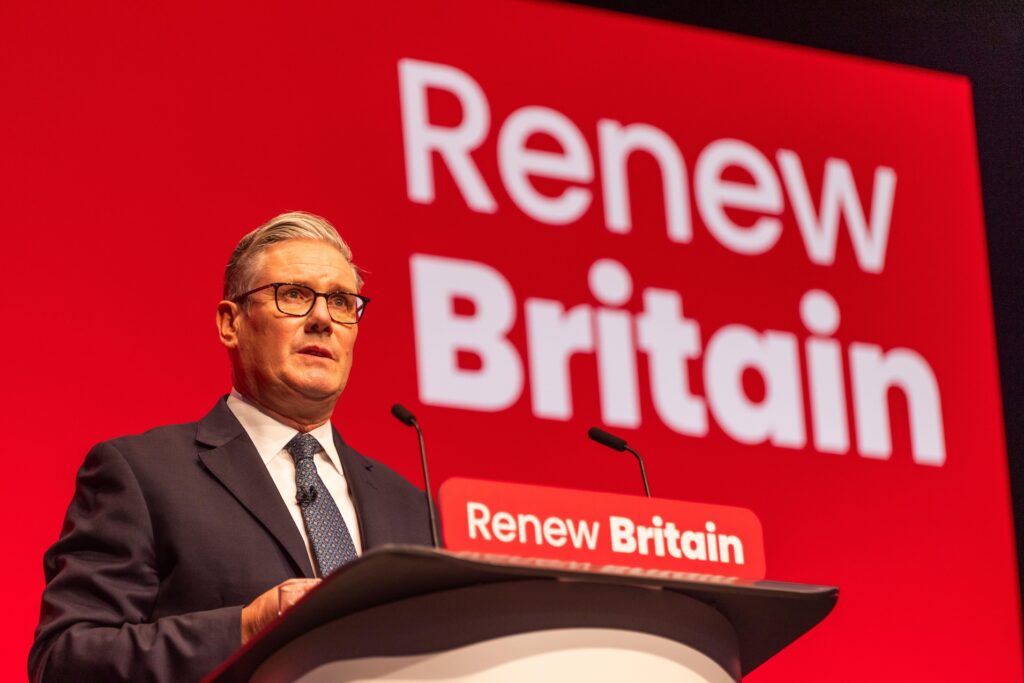
The election of Andy Burnham as Prime Minister presents a unique opportunity to change that. Throughout his leadership campaign, he spoke frankly about the importance of social care, recognising not only the extraordinary work carried out by care workers every day, but also the central role the sector plays in supporting the NHS and enabling people to live independently.
Since his election, the Prime Minister has sought to demonstrate that his commitment would be matched by action. Launching Baroness Casey’s ‘Big Conversation on Care’ last month, he acknowledged that successive governments have too often viewed social care as “too risky, too difficult and too complicated” to tackle, and committed to working across party lines to deliver reform. After decades in which social care has repeatedly slipped down the political agenda, this shift in tone is both significant and welcome.
For too long, social care has been viewed primarily as a cost to be managed, rather than as one of the country’s most valuable public services and one of its most significant economic assets.
Today, our sector supports almost one million people to live good lives, employs some 1.6 million workers and contributes almost £78 billion to England’s economy every year. It generates more economic value than tourism or telecommunications, while creating employment opportunities in every community across the country.
Yet despite this contribution, providers continue to face rising employment costs, workforce shortages, increasing complexity of care and funding that too often fails to reflect the true cost of delivering high-quality services.
The consequences are felt far beyond the sector itself. When care packages cannot be commissioned, people remain in hospital unnecessarily. Families leave employment to care for loved one. NHS waiting lists grow. And communities lose trusted local providers that have often served generations of families.
The new Government has rightly committed to reforming social care. The launch of the Casey Commission’s ‘Big Conversation’, alongside the proposed Fair Pay Agreement, represent an important opportunity to build a stronger, fairer social care system and recognise care as the skilled profession it has always been. The Prime Minister is also right to highlight the consequences of inaction, not only for care workers and families, but for an NHS that cannot function effectively without a strong and sustainable care sector.
But reform cannot simply become another long-term destination while today’s challenges continue to deepen. The first Fair Pay Agreement is not expected until 2028. The Casey Commission will take time to report and longer still to implement. In the meantime, providers must continue delivering care every day while managing increasing costs and growing demand.
That is why the Care About Care campaign has been established. Supported by Providers Unite and the National Care Association, the campaign is bringing together providers, care workers and members of the public behind three practical measures that can strengthen the sector while longer-term reform is developed.
First, an immediate pay rise for care workers through a Workforce Support Fund that reverses the recent Employer National Insurance increase for care providers and ringfences the savings for frontline care worker pay. That’s £625 per year straight into the pockets of care workers.
Second, a properly funded Fair Cost of Care, ensuring providers receive payments that genuinely reflect the cost of delivering high-quality care and are paid promptly by commissioners. It’s not right that 30% of councils commission care at a rate below the cost of employing a care worker at the legal minimum wage, while 81% of providers have experienced late payments which add additional costs.
Third, investment in local providers through a new British Care Fund, helping community-based providers modernise facilities and invest in new technology.
Without immediate action, there is a real risk that many providers simply will not be in a position to benefit from the reforms currently being designed, with provider failure having a potential devastating impact on care teams and the people they support. If the Government wants the Casey Commission to succeed, it must ensure there is a resilient sector capable of delivering its recommendations when they arrive.
That is why so many organisations from across the sector have come behind the Care About Care campaign. The aim is not simply to highlight the challenges facing social care, but to demonstrate its value to society and to encourage a more constructive conversation about the practical steps needed now.
The Prime Minister deserves credit for putting social care back at the heart of the national conversation. The launch of the ‘Big Conversation on Care’ gives providers, care workers and families a genuine opportunity to help shape the future of the system. That conversation now needs to be matched by bridging action.
Alongside longer-term reform, ministers have an opportunity to take practical decisions that stabilise the sector today, support the workforce and give providers the confidence to invest in the future. If the Government can pair ambition with immediate action, it could achieve something that has for so long eluded successive administrations: lasting, meaningful reform of social care.