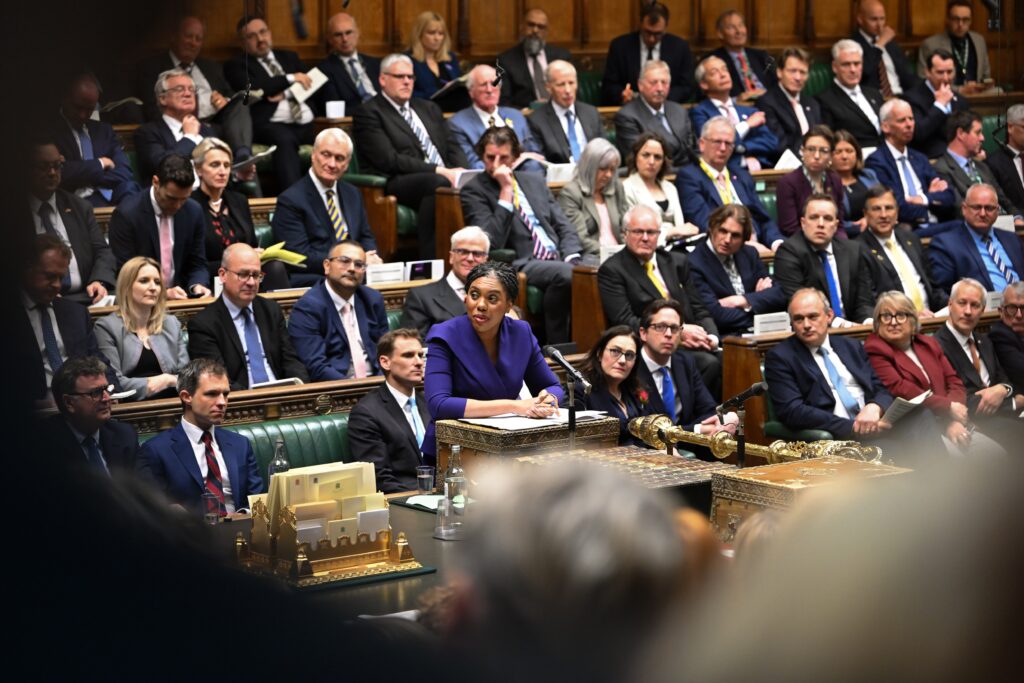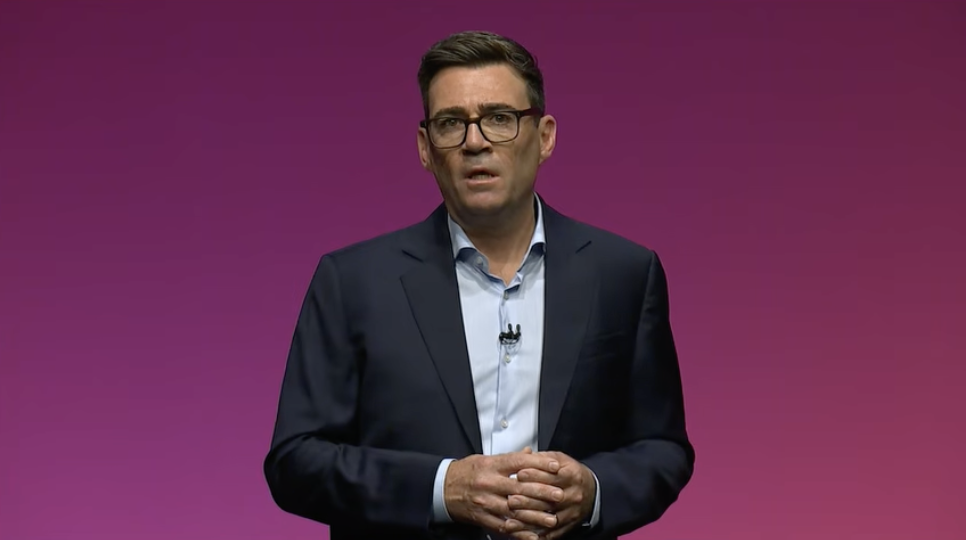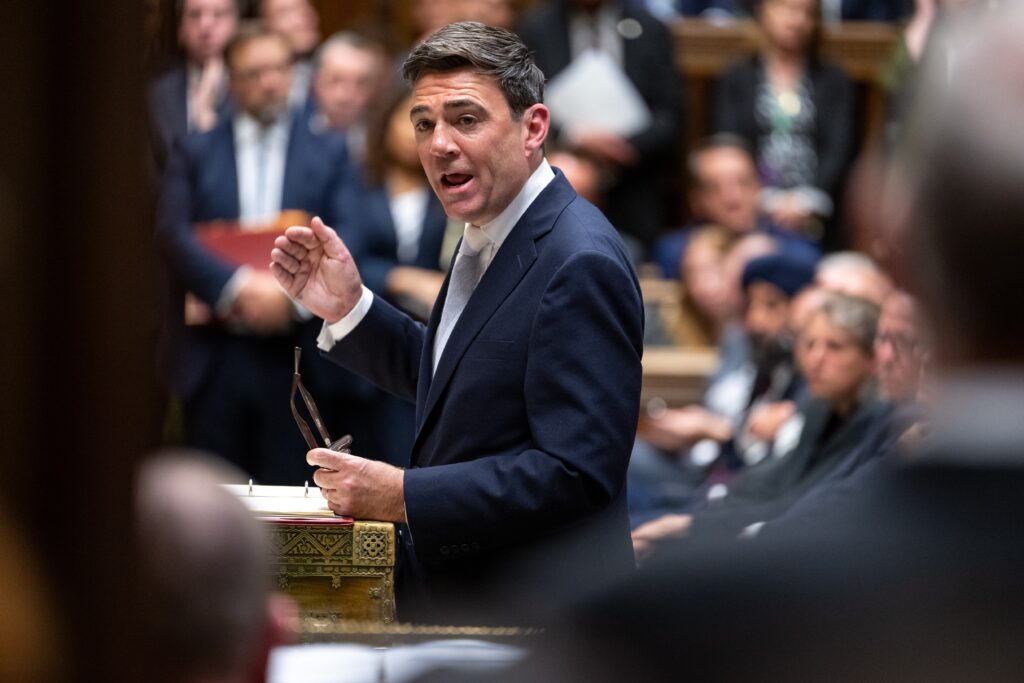
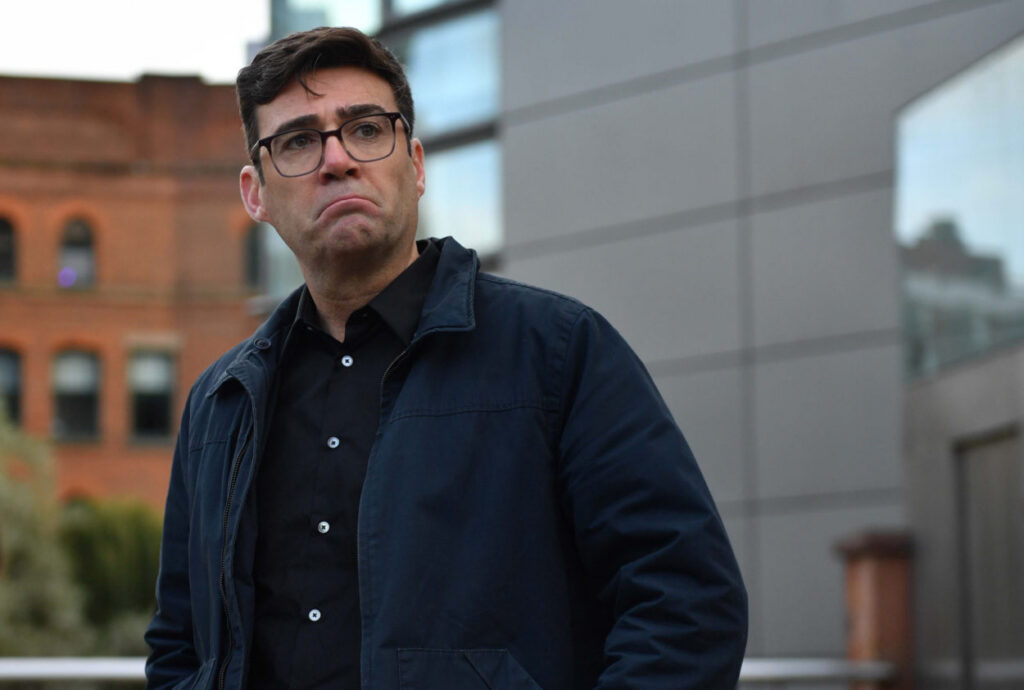
Andy Burnham’s sensational announcement that he will once again seek a return to parliament sealed a day of immense political drama.
The move marks Burnham’s second attempt at a parliamentary comeback, after Labour’s national executive committee (NEC), Starmer-in-council, thwarted his prospective candidacy for the February 2026 Gorton and Denton by-election. That contest proceeded without Burnham and resulted in a symbolic victory for Zack Polanski’s Green Party.
The Gorton and Denton contest followed the resignation of Mike Amesbury as the incumbent MP. Amesbury was handed a 10-week prison term after punching a constituent in Frodsham, Cheshire, which was reduced to a suspended sentence after an appeal.
This time, Burnham’s route back to parliament has been carefully choreographed.
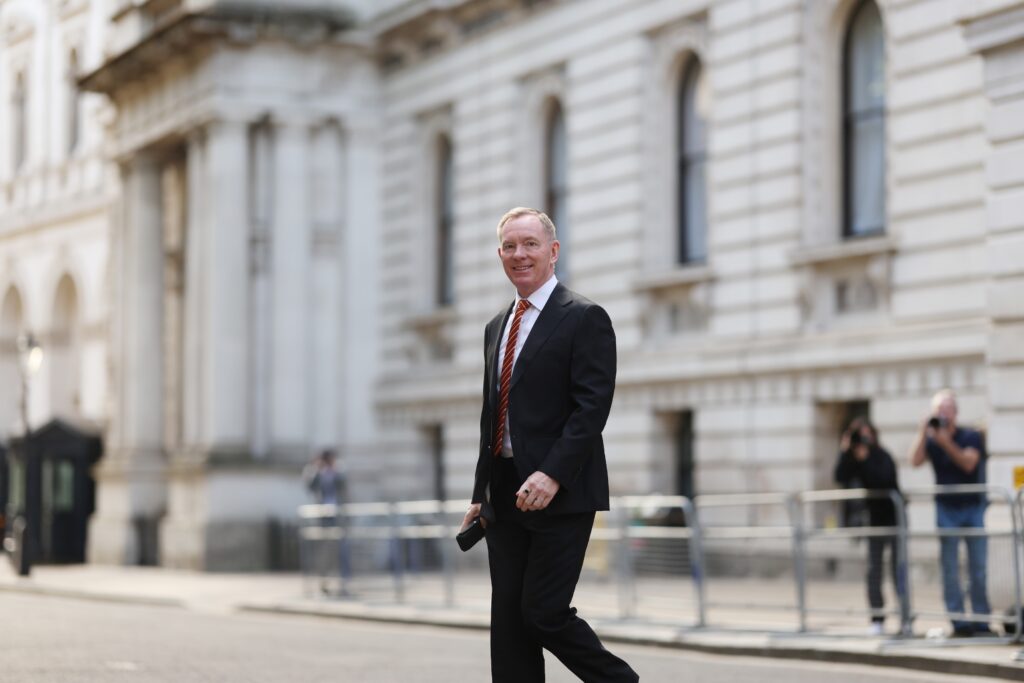
On Thursday afternoon, Josh Simons, the former director of the Starmer-aligned Labour Together group, announced he would stand down as MP for Makerfield with the explicit intention of enabling Burnham to replace him.
Simons’ move piled further pressure on Downing Street after Wes Streeting, the newly resigned health secretary, pointedly called for a future Labour contest to contain “the best possible field of candidates”.
Keir Starmer’s political authority has diminished markedly since he blocked Burnham in Gorton and Denton. And it has already been announced that Downing Street will no longer stand in the Greater Manchester mayor’s way.
But the absence of a Downing Street edict does not guarantee Burnham’s smooth return. If Starmer will not block Burnham, the electorate of Makerfield – and the insurgent Reform UK – just might.
At the 2024 general election, Reform UK candidate Robert Kenyon polled 12,803 votes (31.8%) in Makerfield. Simons secured a majority of 5,399 over Kenyon in second place. Two years later, Reform won 24 out of the 25 seats up for grabs on Wigan Borough Council in the 2026 local elections.
As such, the by-election amounts to a proof-of-concept contest for Burnham. If he can thwart Farage in Makerfield, the momentum could yet carry him all the way to 10 Downing Street. The so-called “king of the North” would be welcomed to Westminster with a coronation.
The circumstances make for what must surely be the most consequential by-election in a generation.
But as Burnham prepares for his prime ministerial primary, the case of Patrick Gordon Walker will loom large in his mind and wider coverage.
In 1965, the newly appointed foreign secretary lost the Leyton by-election that had likewise been arranged to secure his return to parliament. It remains a case study in how a constituency – notwithstanding the machinations at Westminster and the designs of a given candidate – can chart its own course.
The 1965 Leyton by-election: a cautionary tale for Andy Burnham
The 1964 general election returned Harold Wilson’s Labour Party to power after 13 years of Conservative government, winning 317 seats on 44.1% of the vote. But the victory was narrow; Wilson’s working parliamentary majority of just four seats was the smallest since 1847.
Walker, who had served as shadow foreign secretary since February 1963, was one of four incumbent Labour MPs to lose their seats. He was defeated in Smethwick by 1,774 votes.
The Conservative campaign in Smethwick was centred on extreme hostility to Commonwealth immigration. Supporters of the Tory candidate, Peter Griffiths, were reported to have used the slogan “If you want a n***** for a neighbour, vote Labour.”
Griffiths refused to condemn the slogan and, in the wake of the campaign, Malcolm X visited Marshall Street in Smethwick. The trip came just days before he was assassinated in New York City.
Wilson, meanwhile, appointed Walker to the cabinet as foreign secretary.
In a commons speech on 3 November 1964, Wilson’s admission that Walker could not take part in the queen’s speech debate provoked laughter from Conservative MPs.
The prime minister, who did not appreciate the Tory response, immediately condemned the “utterly squalid” Conservative campaign in Smethwick. The party’s tactics, he said, would “leave a lasting brand of shame on the Conservative Party”.
Wilson asked if Alec Douglas-Home, the former prime minister and Conservative leader of the opposition, was “proud” of the new Tory MP for Smethwick.
He declared: “Does he now intend to take [Griffiths] to his bosom? Will the Conservative whip be extended to him, because if he does accept him as a colleague he will make this clear: he will betray the principles which not only his party but the nation have hitherto had the right to proclaim.
“And if he does not, if he takes what I think is the right course… the Smethwick Conservatives can have the satisfaction of having topped the poll, and of having sent here as their member one who, until a further general election restores him to oblivion, will serve his term here as a parliamentary leper.”
A series of Conservative MPs responded by objecting to the term “parliamentary leper”. A total of 25 opposition MPs reportedly walked out after Wilson’s diatribe, and at least 25 more then signed a motion of censure against the prime minister. Four Labour MPs responded by tabling a tongue-in-cheek motion that censured Wilson for “a cruel and unmerited slight on lepers.”
The 1965 Leyton by-election was engineered to provide Walker with a swift return to the House of Commons.
Leyton, represented by Reginald Sorensen since 1935, was thought to be a Labour stronghold. Sorensen, the popular local MP, had secured a majority of 7,926 votes in the 1964 general election. He was raised to the peerage to prepare the way for a by-election.
At one point on the campaign trail, Walker reportedly remarked to an American: “Secretary of state [Dean] Rusk doesn’t have to do this, does he?”
But he maintained that he did not object to having to campaign, adding: “Foreign policy should be related to the people.
“And one can be so much more effective politically if one is elected. I think that is one reason for the problems of your secretaries of state with the Senate.”
In the end, the Conservative candidate, Ronald Buxton, won the Leyton by-election with 16,544 votes – a majority of just 205 votes over Walker.
The result, dubbed “the most astonishing election result since the war”, dealt a significant political blow to Wilson.
The prime minister was asked if the contest represented a “condemnation” of the government’s first 100 days in office.
He responded: “No, it was a disappointment of course. I think there were obvious local factors in it, for example any constituency that has been represented faithfully and well by a good local resident may feel a certain objection to a by-election being caused and a stranger coming in.”
Wilson added: “But I think the main thing we faced in a national sense was this – that for our first three months we decided that whatever needed to be done was going to be done, popular or not. We had taken over a very grim economic situation.
“We thought it right to put the country on its feet again, even if that meant political unpopularity…
“For example, we had, as almost our first act, and I’m proud of it, decided to increase old age pensions, and we did it in the middle of an economic crisis. But of course, for reasons we all know, the pensions couldn’t be paid until March”.
Buxton’s victory forced Walker to resign as foreign secretary. His brief tenure marked one of the very few occasions in British political history when a cabinet minister sat neither in the commons or Lords.
The by-election also reduced Wilson’s already razor-thin parliamentary majority from four to two. (The election of a Conservative MP as speaker of the commons raised this back to three).
Wilson responded by appointing Michael Stewart as the new foreign secretary. Stewart had served as education secretary since the 1964 general election.
In the commons, Douglas-Home labelled the Leyton by-election as the “best epitaph on the 100 days of socialist government”.
He declared: “Now we have had the surprises – and more than enough of them, if I may say so. The dynamism about which the prime minister spoke has been the dynamism of the bull in the china shop.
“The pronouncements of the government and their methods of proceeding have made confusion worse confounded, though I must now announce that the honeymoon is over, and for the best of all possible reasons – that the promises have proved false and the solemn vows undertaken at the general election have been dishonoured.”
Labour MP William Hamilton told the House: “I believe that the first lesson which we on this side and the opposition have to learn from the Leyton result is that we must not take the electorate for granted.
“We should not insult them by using them for purely party political convenience.”
Hamilton said the by-election was “little more than a crude attempt at ballot rigging”.
On the same day as the Leyton contest, 21 January 1965, a by-election for the constituency of Nuneaton was held in similar circumstances. Frank Cousins, who had been appointed to lead the new Ministry of Technology following the 1964 by-election, was returned as a Labour MP.
Cousins, previously the secretary general of the Transport and General Workers Union, emerged with a majority of 5,241 votes (down from 11,702 at the 1964 election).
Two years later, Labour won a landslide 98-seat majority at the 1966 election.
Walker was returned as the MP for Leyton with a majority of 8,646 votes. He sat in the cabinet from 1967 to 1968, first as minister without portfolio, then as secretary of state for education and science.