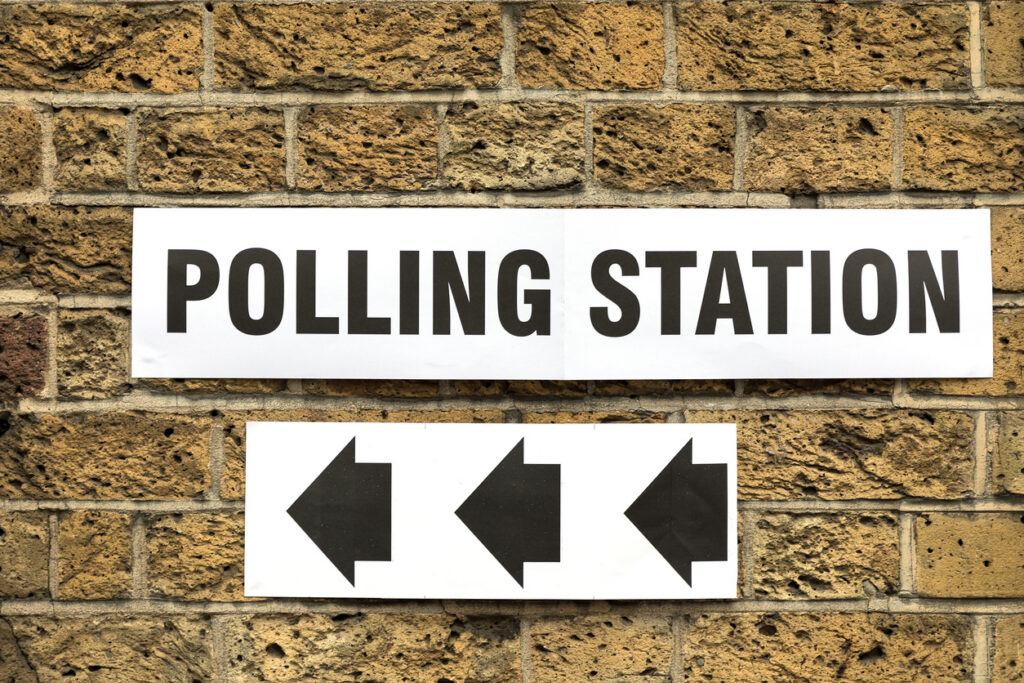
The current voting age for UK-wide general elections is 18. However, in Scotland and Wales, the voting age for devolved and local elections has already been lowered to 16.
The Labour Party’s 2024 general election manifesto included a commitment to lower the voting age to 16 for all elections across the UK.
In July 2025, the government released a strategy paper entitled Restoring trust in our democracy: Our strategy for modern and secure elections. The paper signalled the Labour government’s commitment to legislating so that 16 and 17 year olds could vote at the next general election.
This proposed legislation, the Representation of the People Bill, was introduced in the House of Commons on 12 February 2026. In all, the bill includes provisions covering voting age reform, electoral registration, voter identification rules, and political finance regulation.
Its foremost component would represent the most significant extension of the franchise since the voting age was reduced from 21 to 18 in 1969.
The case for lowering the voting age to 16
Advocates of lowering the voting age argue that 16- and 17-year-olds already shoulder significant responsibilities in society. At this age, individuals can consent to medical treatment, pay income tax, marry or enter a civil partnership and even join the armed forces. Proponents argue that there is a disconnect between the responsibilities placed upon 16 and 17-year-olds and their lack of political voice.
Evaluation question
How far does the principle of ‘no taxation without representation’ strengthen the democratic case for extending the franchise to 16- and 17-year-olds?
The government’s July 2025 strategy paper argued that “16- and 17-year-olds can work, pay tax, serve in the military, and contribute in so many ways to our society. It is right and fair that they should be able to vote.”
Lowering the voting age is also framed as a strategy to strengthen democratic participation. Those who begin voting at 16 may be more likely to continue participating, potentially increasing turnout over the long term.
The Labour Party’s 2024 general election manifesto argued that lowering the voting age to 16 would “increase the engagement of young people in our vibrant democracy”.
The 2025 strategy paper added: “By engaging voters early, when they are young, and allowing them to have a say in shaping their future, we will build the foundations for their lifelong participation in our electoral processes.”
The experience of “votes at 16” in Scotland and Wales is now used as a key piece of evidence by campaigners. Turnout among 16- and 17-year-olds was around 75% when they were included in the franchise for the 2014 Scottish independence referendum. A total of 109,533 16- and 17-year-olds registered – constituting an estimated 89% of those eligible. Moreover, 97% of those 16-17 year olds who reported having voted said that they would vote again in future elections and referendums. As a result, the Scottish Parliament unanimously passed legislation in 2015 to lower the voting age to 16 for all Holyrood and local elections.
Such data challenges assumptions that 16- and 17-year-olds are apathetic or disengaged.
Evaluation question
To what extent did the high turnout of 16- and 17-year-olds in the 2014 Scottish independence referendum demonstrate their political maturity, as opposed to reflecting the unique, highly charged nature of a single-issue constitutional event?
The case against lowering the voting age to 16
Opponents of lowering the voting age argue that most 16- and 17-year-olds are still in full-time education and have limited experience of the workplace, taxation, housing or long-term financial responsibility. Opponents suggest that the age of 18, which marks the legal transition to adulthood in most areas of life, is the appropriate age to acquire voting rights.
Evaluation question
Given that 18 remains the standard age for legal and financial independence in the UK, to what extent does granting voting rights at 16 risk separating political maturity from practical adult responsibility?
Critics also question whether lowering the voting age would meaningfully increase participation. Youth turnout is already significantly lower than that of older voters. At the 2024 general election, turnout among 18-24-year-olds was estimated at around 37%, compared with more than 70% among those aged over 65. It is argued that simply extending the franchise will not solve the underlying problem of youth disengagement.
A further argument advanced by opponents is that 16- and 17-year-olds may be more susceptible to influence from parents, teachers or peer groups. Most 16- and 17-year-olds still live at home and remain financially dependent on their families.
Some critics argue that the push for votes at 16 is politically motivated. Polling evidence consistently shows that younger voters are more likely to support Labour, the Greens or the Liberal Democrats than the Conservatives or Reform. Opponents argue that lowering the voting age would disproportionately enfranchise a demographic more sympathetic to left-of-centre parties.
During the 2024 general election campaign, Rishi Sunak, the Conservative leader and prime minister, argued that Labour wanted to lower the voting age to “entrench” its power.
In February 2025, Reform UK leader Nigel Farage accused Labour of trying to “rig future elections” by lowering the voting age.
Evaluation question
To what extent can reforms to the franchise by a progressive government be understood as enhancing democratic participation, and when do concerns about gerrymandering become legitimate?
The impact of giving 16 and 17-year-olds the vote
In 2014, it was estimated that there were 1,534,192 16 and 17 year olds in the United Kingdom. This compared to the voting age population of 50,909,098. On these figures, lowering the voting age to 16 would thereby increase the electorate by some 3%.
In recent years, election polling has consistently shown that young people are considerably more left-wing than older people. This trend has become even more entrenched over the last decade.
In the 2024 general election, a study by Ipsos suggested that 41% of those aged between 18 and 24 voted for the Labour Party, 19% for the Green Party, 16% for Liberal Democrats, 8% for Reform and only 5% for the Conservatives. Among the electorate as a whole, 34% voted for Labour and 7% for the Green, while 24% voted Conservative and 14% voted Reform.
Some constituencies, notably urban areas, also contain a far higher number of 16 and 17 year olds than some rural constituencies. As such, it is far from straightforward to directly project the impact of extending the franchise to 16 and 17 year olds on overall election results. In younger constituencies, however, the change would be more noticeable, and in a small number of closely fought marginals it could be enough to alter the outcome.
Analysis of the 2017 general election by the Office for National Statistics (ONS) found that there were 88 constituencies where the number of 16- and 17-year-olds was greater than the winning margin.
What countries have a voting age of 16?
While 18 remains the most common voting age around the world, a growing number of countries have a lower age.
Voting age of 16 (national elections)
- Austria
- Malta
- Brazil (voting is optional at 16-17 and compulsory for those aged 18-70)
- Ecuador (optional at 16-17 and compulsory for those aged 18-65)
- Argentina (optional at 16-17 and compulsory for those aged 18-70)
In Scotland and Wales, 16- and 17-year-olds can vote in devolved parliament and local government elections.
Voting age of 17
- Indonesia (17, or younger if married)
- Greece (17 for national elections; those that turn 17 in the year of the elections can also vote)
Voting age above 18
- Taiwan (20 for national elections)
- Singapore (21)
The campaign to lower the voting age to 16 in Britain
1985-1999
In January 1985, Liberal MP Jim Wallace proposed a bill under the 10-minute rule, which called for the creation of a framework “within which young people can participate more fully in the affairs of their community and the decisions that affect or shape their lives”.
He called for the voting age to be lowered, arguing that young people “have an important stake in the future, and what they lack in experience may be more than compensated for by the fresh ideas that they can bring forward.”
Wallace added: “A number of causes now coming to the fore in politics – for example, environmental concern – were espoused by young people long before they gained political respectability.”
In 1999, Liberal Democrat MP Simon Hughes proposed an amendment to the Representation of the People Bill to lower the voting age to 16. Hughes argued that lowering the age would “engage many people who feel alienated” and help “deal with apathy in this country.”
The minister on duty, Mike O’Brien, spoke against the amendment. He stated that “there is more likely to be a higher percentage of people aged 18 who are able to exercise judgment properly with maturity and independence than of those aged 16.”
O’Brien added: “18 is the most common voting age throughout the world, and we believe that it is still the most appropriate minimum age.”
The amendment was defeated by 434 votes to 36 – a majority of 398. I was supported by Liberal Democrat MPs, including future leaders Charles Kennedy and Menzies Campbell, as well as a handful of Labour MPs, notably Tony Benn, Jeremy Corbyn and John McDonnell.
2003-2010
In January 2003, the Votes at 16 Coalition was founded to campaign for the extension of the franchise to 16- and 17-year-olds. This alliance grew to include organisations such as the Electoral Reform Society and the National Union of Students.
In April 2004, the Electoral Commission recommended that the voting age should stay at 18 after a 12-month review. Research was undertaken by ICM in November 2003, measuring the views of those of voting age and younger.
Sam Younger, the then chairman of the Electoral Commission, stated: “The evidence from the review suggests that while many young people under 18 would feel ready to vote, there are just as many who feel that 16 is too young.
“The majority of the representative cross-section of young people responding to the ICM research made it clear that they don’t feel ready for the responsibility of voting at 16 and that has helped inform our recommendations.”
In 2005, a 10-minute rule bill proposed by Liberal Democrat MP Stephen Williams was defeated by 136 votes to 128 – a majority of eight. In his commons speech, Williams argued that “one of the few silver linings of the Iraq war is that young people take an interest in the chamber’s deliberations and the fundamental decisions that we can make in this place.”
He concluded: “I believe that young people are informed, engaged and ready to vote.”
Conservative MP and future speaker John Bercow, who had spoken against the amendment proposed by Hughes in 1999, was among those who supported the bill when the House divided. A total of three Tory MPs backed the bill.
Three years later, a bill proposed by Labour MP Julie Morgan was “talked out” by Conservative opponents. Addressing the commons, Morgan argued that “time was right” to lower the voting age and compared the campaign to the suffragette movement, stating: “There were lots of people who argued against that as well.”
She added: “I hope one day when 16-year-olds can vote, we will look back and think how ridiculous it was that there was a time when they couldn’t vote.”
Conservative MP Stewart Jackson dismissed the proposal as a “politically correct gimmick that has no evidential basis”
In July 2008, the Labour Party’s National Policy Forum (NPF) backed votes at 16.
Labour’s 2010 general election manifesto featured this commitment “to widen the franchise to 16 and 17 year olds.” The party committed to providing a free vote in government time on the proposal.
2013-2022
The Scottish Independence Referendum (Franchise) Act 2013 lowered the voting age to 16 for the 2014 referendum. This came about with the agreement of the UK Conservative government, led by David Cameron as prime minister.
The high engagement level in the 2014 Scottish independence referendum, with 75% of 16- and 17-year-olds turning out to vote, inspired the passage of the Scottish Elections (Reduction of Voting Age) Act 2015, which enfranchised young people for all Scottish Parliament and local elections.
In 2017, Jim McMahon introduced the Representation of the People (Young People’s Enfranchisement and Education) Bill. During a fiery debate in November 2017, McMahon stated: “We believe the best way to run a democracy is to extend the franchise and include people.”
In the end, the Representation of the People (Young People’s Enfranchisement) Bill was debated for a little less than an hour and a half, running out of time. Labour MP Jonathan Reynolds accused Conservative MPs of “making ridiculous points of order to try and filibuster”.
Tory MP Bernard Jenkin pointed to polling by YouGov in 2013 suggesting that 60% were against lowering the voting age.
Labour MP Peter Kyle’s Representation of the People (Young People’s Enfranchisement) Bill, also introduced in the 2017-2019 parliament, aimed to reduce the voting age to 16.
The all-party parliamentary group (APPG) on votes at 16 was formed in 2018. It was co-chaired by Conservative MP Peter Bottomley, Labour MP Vicky Foxcroft, Scottish National Party (SNP) MP Alison Thewliss, Liberal Democrat MP Wendy Chamberlain, Plaid Cymru MP Liz Saville Roberts and Green MP Caroline Lucas.
McMahon led a Westminster Hall debate on lowering the voting age in April 2019. He argued that there is “no real age test when it comes to participation in our democratic and civic institutions. It should be about spirit, commitment and making the effort to be an active citizen taking part in our democracy.”
In January 2020, the Senedd passed legislation to lower the voting age for devolved government and local government elections. This meant 16- and 17-year-olds participated in the 2021 Senedd election.
The Representation of the People (Young People’s Enfranchisement) Bill, introduced by Labour peer Lord Adonis in 2022, called for the voting age to be reduced to 16. Three years previously in 2019, speaking in a House of Lords debate on a possible second Brexit referendum, Adonis said that voting in any referendum should be extended to 16 and 17 year-olds, “because there is no group whose future is more at stake”.
History of the voting age
The Fourth Reform Act (1918)
The Representation of the People Act 1918 abolished property qualifications for men over 21 and, for the first time, extended the vote to women aged over 30. It also provided a “soldier’s vote” for those aged 19 who had seen active service, while disenfranchising conscientious objectors until 1926.
During the passage of the bill, the home secretary, George Cave, noted that the decision to extend manhood suffrage excited “no emotion whatever”.
He declared: “Today the proposed addition excites no emotion whatever, except a feeling of satisfaction that, by making this addition, we shall approach nearer to the ideal of representative government, namely, to make parliament a mirror of the nation.”
However, Conservative MP John Gretton moved that the voting age should be raised to 25, arguing that a man had not “attained his full capacity” at 21. He argued that no “man or woman should be allowed to exercise the great function of electing a government… until the character is formed and there is, in addition, some experience of the conditions of life.”
Frederick Banbury, a fellow Conservative MP, attempted to revive the ownership qualification (for land valued at £5 or more), which he described as “one of the oldest qualifications in this country.”
Irish nationalist MP Jeremiah MacVeagh referred to Banbury as the “only Tory left in the House.”
Banbury responded: “I am not ashamed of it. I only wish there were one or two more.”
Banbury’s amendment was rejected by 228 votes to 35.
Cave characterised the decision to extend the vote to women aged over 30 as a “fair compromise” that had been “accepted by the advocates of women’s suffrage”. He warned that an attempt to lower the age to 21 would be viewed as an “amendment moved against the bill” and would force the government to “consider the whole position with regard to the bill.”
Philip Snowden, a lifelong suffragist, admitted the “compromise” was the only way to unite the House. He expressed his fear that “any change made in the nature of that compromise the unity which manifested itself so magnificently in the division lobby last night would be at once dissolved.”
An amendment to lower the voting age to 21 universally was rejected by 291 votes to 25 – a majority of 266.
The effect of the 1918 act was transformative. The 8.5 million newly enfranchised women accounted for 43% of the new electorate.
The Fifth Reform Act (1928)
The Representation of the People (Equal Franchise) Act 1928, passed by Stanley Baldwin’s Conservative government, granted the vote to all women over the age of 21 across all elections (municipal and parliamentary).
The Conservative Party won a landslide 209-seat majority at the 1924 general election, in which it had campaigned for “equal political rights for men and women”.
An election communication read: “The Unionist party is in favour of equal political rights for men and women, and desires that the question of an extension of the franchise should, if possible, be settled by agreement. With this view they would, if returned to power, propose that the matter be referred to a [speaker’s] conference of all political parties on the lines of the Ullswater Committee [a previous commission on London government].”
Speaking at the bill’s second reading debate, the home secretary, Sir William Joynson-Hicks, argued the proposals were the “logical conclusion of a series of reform bills, beginning with that of [Great Reform Act] 1832.” Addressing possible objections, Joynson-Hicks acknowledged the bill would create a female majority of around two million, but argued the “experiment” of women’s suffrage since 1918 had been “amply justified.”
The 1928 act, sometimes referred to as the Fifth Reform Act, added a further five million women to the electoral roll and made women a majority (52.7%) of the electorate for the subsequent general election. There were 14 million women eligible to vote compared with 11.25 million men.
The general election of May 1929 was often referred to as the ‘Flapper election’ due to the large numbers of newly enfranchised young women. The Daily Mail newspaper had previously ran a prominent campaign against the so-called “flapper vote”.
The Sixth Reform Act (1969)
The Representation of the People Act 1969 (or Sixth Reform Act) lowered the voting age in the United Kingdom from 21 to 18. The act made Britain the first major democratic state to enfranchise citizens at 18.
The reform was the culmination of a growing consensus that the “age of majority”, the legal threshold at which a person is considered an adult, should be lowered to reflect societal changes. But it followed a convoluted political pathway.
In 1965, the issue of the voting age was referred to a speaker’s conference. A previous speaker’s conference in 1944 had rejected any lowering of the voting age.
The conference, interrupted by the 1966 general election and the death of a speaker (Sir Harry Hylton-Foster), recommended reducing the age only to 20. This position was agreed by 24 votes to one. A resolution, supported by the Labour Party, to reduce the age to 18 was rejected 22 votes to three.
The Labour Party’s general election manifesto for the 1966 election stated: “The Labour Party has proposed to the speaker’s conference the introduction of Votes at [18], to add a necessary political dimension to the increasingly important economic and social position of young people”.
Labour won a landslide 98-seat majority at the 1966 election.
James Callaghan, the home secretary, responded to the speaker’s conference report in a commons statement in July 1968. He cautiously confirmed that the government would overrule its findings on the voting age issue.
Callaghan told MPs: “The government have already announced their acceptance of the recommendation of the Latey committee that the age of majority should in future be 18, and the government accordingly recommend in the [newly published] white paper that the minimum age for voting should also be reduced to 18 years.”
During the committee stage of the Representation of the People Bill, an amendment in the name of George Strauss, a Labour MP who had been a member of the speaker’s conference, was moved to lower the age, not to 18, but to 20. It was rejected by 275 votes to 121.
18-year-olds voted for the first time in the general election of June 1970.
Additional resources
- Votes at 16 Campaign: https://www.votesat16.org/
- House of Commons Library: The next elections bill? https://commonslibrary.parliament.uk/the-next-elections-bill/
- House of Lords Library – Votes at 16: https://lordslibrary.parliament.uk/votes-at-16/

