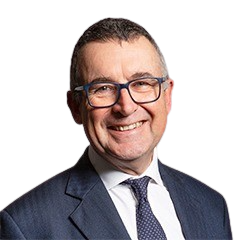
Sir Bernard Jenkin is the Conservative MP for Harwich and North Essex, having represented the seat since the 2010 general election. He was first elected to parliament in 1992 for the Colchester North constituency, which he represented until its abolition in 1997, and then served as MP for North Essex from 1997 to 2010 before boundary changes created his current seat. He is one of the longest-serving Conservative MPs.
In the 2024 general election, Jenkin received 16,522 votes (34.4%). The Labour candidate received 15,360 votes (32.0%), and the Reform UK candidate secured 9,806 votes (20.4%). Jenkin was duly re-elected with a significantly reduced majority of 1,162.
The Harwich and North Essex constituency covers the north-eastern corner of Essex, including the port town of Harwich, the smaller port of Brightlingsea, the town of Wivenhoe near Colchester, and numerous surrounding villages. The main campus of the University of Essex is located within the constituency. This area has historically been safe Conservative territory.
Political Career
Jenkin is a long-serving parliamentarian but has never held a government ministerial post. Instead, he is known for his influential role in parliamentary scrutiny, most notably having chaired the high-profile liaison committee from May 2020 until the 2024 general election. This so-called “super committee” is composed of the cross-party chairs of all the other commons select committees. It has a broad oversight role, but is best known for its questioning of the prime minister in sessions that take place two or three times a year.
Jenkin is currently a member of the liaison committee, having served on it in every parliament since 2010 (appointed July 2010). He sits on the committee by virtue of his role as chair of the statutory instruments (joint committee). This committee, composed of MPs and peers, checks whether a piece of secondary legislation (a statutory instrument) is legally sound. It examines if the SI complies with the powers given in its parent act (a piece of primary legislation) and if its drafting is clear. It may make recommendations regarding an SI if it identifies an issue.
At the beginning of the parliament elected in 2024, Jenkin stood unsuccessfully for election as chair of the public administration and constitutional affairs committee. In the contest, the results of which were announced in September 2024, Jenkin secured 227 votes, placing second. They were ultimately defeated by Simon Hoare, who won the support of 302 colleagues.
Jenkin previously held senior roles in opposition, serving as shadow secretary of state for defence under Iain Duncan Smith (2001-2003) and before that as shadow minister for transport under William Hague (1998-2001). He also held other shadow roles covering energy and constitutional affairs earlier in his career.
A prominent eurosceptic throughout his career, Jenkin was one of the Conservative rebels who opposed the Maastricht Treaty. The Maastricht Treaty, which entailed a significant deepening of European integration, badly divided the Conservative Party under John Major’s leadership – triggering rolling rebellions from a determined group of eurosceptic backbenchers.
Jenkin signed the landmark early day motion (EDM), titled “Future Development of the EEC”, in June 1992. The EDM, brought forward by Conservative MP Michael Spicer, was tabled after Denmark had rejected the Maastricht Treaty by 50.7% to 49.3% in a referendum. It stated simply that “this House urges Her Majesty’s Government to use the decision to postpone the passage of the European Communities (Amendment) Bill as an opportunity to make a fresh start with the future development of the EEC”.
A total of 26 of the 62 Conservative MPs elected in 1992 signed it – including Jenkin, John Whittingdale, Iain Duncan Smith, Alan Duncan, Geoffrey Clifton-Brown, David Lidlington, Cheryl Gillan, Liam Fox, Nigel Evans and Michael Fabricant.
The EDM helped catalyse the creation of a new collective of eurosceptic Conservative MPs, namely the Fresh Start Group (FSG). The FSG effectively rebranded as the European Research Group (ERG) in 1994.
Jenkin is listed as a member of the all-party parliamentary group (APPG) for patient safety.
Jenkin’s service of parliamentary committees extends to the committee on standards and privileges (2020-2024), the public accounts committee (2020-2021), the public administration committee (as chair, 2010-2019), the defence committee (2006-2010) and the social security committee (1993-1997) among others.
In his capacity as a member of the privileges committee, Jenkin was part of the investigation into whether Boris Johnson, the former prime minister, had deliberately misled the commons in his assurances that all pandemic rules and guidance had been followed in Downing Street.
Johnson was famously called before the cross-party MPs, including Jenkin, to deliver evidence under oath. Jenkin was one of four Conservative MPs on the committee (alongside Alberto Costa, Sir Charles Walker and Andy Carter).
The committee focused focused on six gatherings between May 2020 and January 2021, and statements Johnson made to parliament about them: a gathering in the No 10 garden on 20 May 2020; Johnson’s birthday gathering on 19 June 2020; leaving celebrations on 13 November 2020, 27 November 2020 and 14 January 2021, and “cheese and wine” Friday night press office gatherings.
On 9 June 2023, Johnson announced his resignation as an MP after receiving a draft of the committee’s final report. In a statement, the former prime minister Johnson branded the committee a “kangaroo court” and claimed its year-long inquiry had delivered “what is intended to be the final knife-thrust in a protracted political assassination”.
The 106-page final report of the privileges committee, published a week later on 15 June 2023, found that Johnson committed “repeated contempts of parliament”.
On 19 June 2023, the House of Commons voted 354 to 7 in support of the report, with a large number of abstentions.
The committee subsequently published a special report on 29 June, concerning a “co-ordinated campaign of interference” in its work. This report named several Johnson allies, including former ministers Priti Patel, Jacob Rees-Mogg and Nadine Dorries, accusing them of attempting to undermine the committee’s credibility and influence the outcome of the inquiry.
Jenkin delivered his maiden speech on 8 May 1992.
In it, he said: “North Colchester is such a diverse constituency that, if the government has a problem relating to a particular issue, it is likely to affect that constituency. The garrison, for example, is the pride of the town, but it now faces the perceived threat of the ‘Options for Change’ proposals.
“The university – one of the fastest-expanding universities in the United Kingdom, particularly in the field of research – is under strain in connection with a capital programme, but, despite its youth, it has already fathered some distinguished alumni.”
He added: “There is some concern that voluntary transfers of public housing stock can have bad consequences for taxpayers generally.
“It has become a cliché to say that an Englishman’s home is his castle, but I invite all councillors in North Colchester to work together to that fundamental and, indeed, democratic end.”
Jenkin was knighted in the 2018 New Year Honours for political and public service.
Political Views
Leadership elections and loyalty
Tory leadership 2024: Jenkin supported Kemi Badenoch’s candidacy in the 2024 Conservative Party leadership election. The contest was triggered by the resignation of Rishi Sunak following the party’s defeat in the 2024 general election.
Badenoch, the then-shadow housing secretary, was seen as a leading figure on the party’s right wing. After finishing first in the final parliamentary ballot with 42 votes, she defeated Robert Jenrick in the membership vote with 53,806 votes (56.5%). Badenoch was declared Conservative leader on 2 November.
Tory leadership 2022 (I): Jenkin supported Suella Braverman’s candidacy in the Conservative Party’s July-September 2022 leadership election. The contest was triggered by the resignation of Boris Johnson following the mass exodus of more than 60 frontbenchers.
Braverman, the attorney general, announced her candidacy before Johnson had officially resigned. She positioned herself as a staunch Brexiteer on the party’s right wing, calling for the UK’s withdrawal from the European Court of Human Rights (ECHR). She was eliminated in the second parliamentary ballot on 14 July after receiving 27 votes.
Tory leadership 2019: Jenkin supported Boris Johnson for the party’s leadership in 2019. The election was triggered by the resignation of Theresa May following her inability to secure a Brexit deal acceptable to the Conservative Party.
Johnson, the former foreign secretary and mayor of London, campaigned on the central pledge to “deliver Brexit” by 31 October 2019, “deal or no deal”. He thereby positioned himself as the candidate best-placed to break the parliamentary deadlock. Johnson secured 114 votes in the first parliamentary ballot, and reached 160 votes in the final MP round. In the subsequent ballot of the party membership, Johnson won a decisive victory with 92,153 votes (66.4%).
Tory leadership 2016: Jenkin supported Andrea Leadsom for the party’s leadership in July 2016. The election was triggered by the resignation of David Cameron following the UK’s vote to leave the European Union.
Leadsom, the minister of state for energy and climate change, emerged as a leading “Leave” candidate, securing 66 votes in the first ballot and 84 in the second. She withdrew from the contest on 11 July before the membership vote could take place.
Factional identity and party tradition
European Research Group: Jenkin has been a long-standing member of the European Research Group (ERG). During the Conservative Party’s last stint in government, the ERG emerged as a highly influential Tory faction composed of staunchly eurosceptic MPs. Founded in the 1990s, the group played a pivotal role in shaping the UK’s exit from the European Union, consistently advocating for a “hard” Brexit.
Its members were generally and often stridently critical of the withdrawal agreement negotiated by Theresa May. Chaired variously by Mark Francois, Jacob Rees-Mogg, Steve Baker and Suella Braverman, the group proved instrumental in May’s downfall as prime minister.
Conservative Environment Network: Jenkin is listed as a member of the Conservative Environment Network (CEN) parliamentary caucus. CEN is an independent forum for conservatives that supports conservation and decarbonisation. It calls for the environment to be given a higher profile at the heart of policy making, describing “biodiversity loss, climate change, and wasteful resource use are threats to our national security”, and promotes “market-based policies” to environmental challenges. Members of its parliamentary caucus, such as Jenkin, are thought to generally align with the group’s “green” message and environmentalism.
Blue Collar Conservatives: Jenkin was previously listed as a member of the Blue Collar Conservatives group. This faction within the Conservative party was founded in 2012 by the former cabinet minister Esther McVey, but came to greater prominence following the 2019 general election. The group aimed to “champion working people and develop a conservative agenda to benefit the voters and communities most neglected by Labour”. In October 2022, McVey was succeeded by Lee Anderson as the group’s chair.
Brexit and Europe
Brexit referendum: Jenkin supported Leave in the 2016 Brexit referendum, and therefore agreed with a majority of constituents, 59% of whom also voted to Leave.
Article 50: In February 2017, Jenkin voted in favour of the European Union (Notification of Withdrawal) Bill. The legislation empowered the prime minister to notify the Council of the European Union of the UK’s intention to withdraw, formally triggering the process set out in Article 50 of the Treaty on European Union. MPs supported the bill by 498 votes to 114 at second reading.
Leave Means Leave: Jenkin was a supporter of Leave Means Leave, a cross-party eurosceptic pressure group established in the aftermath of the 2016 EU referendum. The group, which described itself as “the campaign for a clean Brexit”, set out its opposition to any withdrawal agreement that it believed would keep the UK tied to EU rules and institutions – a position often referred to as a “hard Brexit”.
Brexit spartan: Jenkin was one of the 28 so-called “Brexit spartans”, a group of hardline Eurosceptic Conservative MPs who voted against then-prime minister Theresa May’s Brexit withdrawal agreement on all three occasions it was put to parliament in 2019. The so-called “spartans” argued that May’s deal did not represent a genuine departure from the European Union. Their steadfast opposition was a critical factor in May’s resignation as prime minister.
Customs union vote (2025): In December 2025, Jenkin voted against the UK-EU Customs Union (Duty to Negotiate) Bill. The bill, introduced under the ten-minute rule procedure by Liberal Democrat Europe spokesperson Al Pinkerton, sought to mandate the government to enter into negotiations with the European Union to establish a bespoke customs union.
Assisted dying
Jenkin voted against the Terminally Ill Adults (End of Life) Bill, better known as the assisted dying bill, at both second reading (November 2024) and third reading (June 2025).
Social values and conscience issues
Abortion decriminalisation (2025): Jenkin voted against a backbench amendment to the Crime and Policing Bill that sought to decriminalise abortion in England and Wales in June 2025. The amendment, which was passed by a majority of 242 votes, removed women from the threat of prosecution for ending a pregnancy at any stage. As an issue of conscience, MPs were allowed to vote according to their personal beliefs.
Same-sex marriage (2013): In February 2013, Jenkin was one of the 131 Conservative MPs to vote in favour of the Marriage (Same Sex Couples) Bill at its second reading. The landmark piece of legislation, which received its second reading by 400 votes to 175, legalised marriage for same-sex couples in England and Wales.
Foreign policy and security
Trident renewal (2016): Jenkin voted in favour of a government motion calling for the renewal of the Trident nuclear deterrent system in July 2016. The motion, which was passed by 472 votes to 117, committed the UK to constructing a new fleet of submarines to carry the nation’s nuclear weapons.
Syria airstrikes (2015): Jenkin voted in favour of a government motion to extend UK airstrikes against Isis from Iraq into Syria in December 2015. The motion, which was passed by 397 votes to 223 after a ten-hour debate in the House of Commons, authorised the RAF to conduct strikes against Isis targets in Syria.
Syria airstrikes (2013): Jenkin voted in favour of the government’s motion on the principle of military intervention in Syria in August 2013. The government motion was defeated by 285 votes to 272, a move which effectively ruled out UK participation in any US-led military strikes.
Iraq War authorisation vote (2003): In March 2003, Jenkin voted in favour of the government motion authorising military action against Iraq. The vote, one of the most contentious in recent parliamentary history, gave the prime minister, Tony Blair, the authority to join the US-led invasion.
Sanctioned (Russia): In April 2022, Jenkin was among the group of MPs placed on a sanctions list by the Russian government. The measure barred them from entering Russia and was presented by Moscow as a retaliatory response to the UK’s stance on the invasion of Ukraine.
Before Politics
Born in 1959, Sir Bernard Jenkin’s father was Patrick Jenkin (later Lord Jenkin of Roding), who served as a Conservative cabinet minister under Margaret Thatcher.
Sir Bernard attended Highgate School in London, followed by William Ellis School. He studied English Literature at Corpus Christi College, Cambridge University, graduating in 1982. He served as President of the Cambridge Union in 1982.
Prior to entering parliament, he worked in commerce. His roles included positions in sales and marketing with the Ford Motor Company Ltd and managing roles at the venture capital provider 3i plc and Legal & General Ventures Ltd.
Personal Life
Jenkin married Anne Strutt in 1988. His wife was appointed to the House of Lords as Baroness Jenkin of Kennington, a Conservative life peer, in 2011. They have two sons.
Trivia
Jenkin is reportedly a long time acquaintance of screenwriter Richard Curtis, who often includes a character named Bernard in his work.
Curtis is said to have dated Baroness Jenkin when the pair were at Oxford.
Bernard Jenkin has not written for Politics.co.uk.