SNP
The Scottish National Party (SNP) is a social democratic political party that campaigns for Scottish independence. It is the largest party in the Scottish Parliament and forms the Scottish government.
For nearly two decades, the SNP has dominated the Scottish political landscape. It has formed the government in the devolved Scottish Parliament since 2007, while achieving significant, albeit recently diminished, representation at Westminster.
The SNP is the largest party in the Scottish Parliament with 58 members of the Scottish Parliament (MSPs). The dissolution of the Bute House Agreement, a formal cooperation agreement established in August 2021 that saw pro-independence Scottish Green Party MSPs take on ministerial roles in the SNP-led Scottish government, returned the SNP to the status of a minority government in the Scottish Parliament.
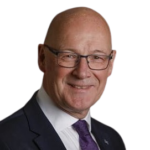
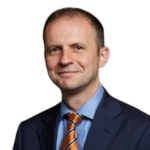
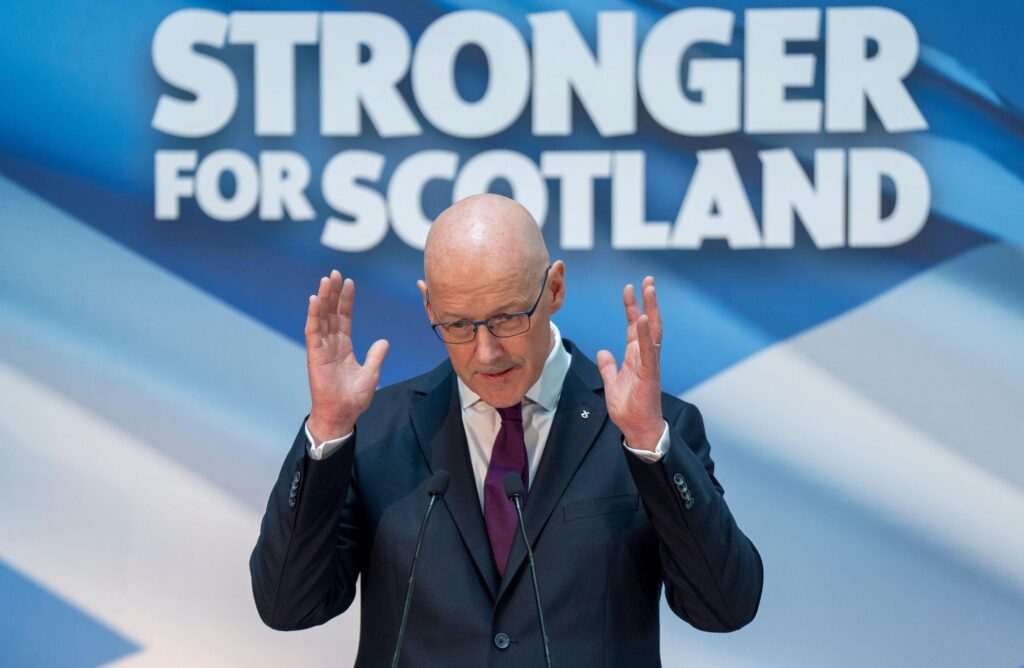
The party is currently led by John Swinney, who serves as first minister of Scotland.
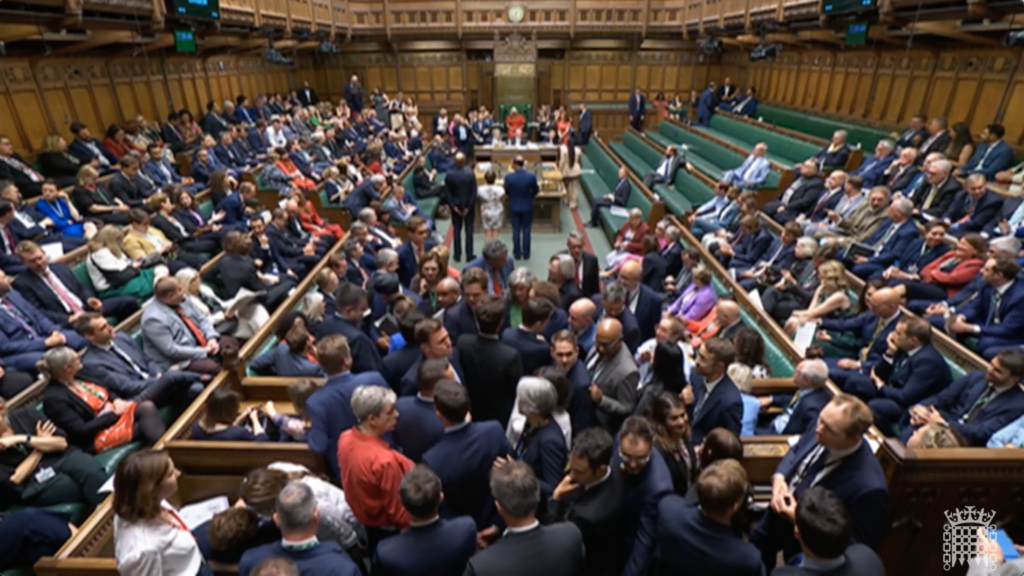
The 2024 general election marked a substantial reduction in SNP representation at Westminster. The party only secured nine out of 57 seats in Scotland. As a result, the party lost its status as third largest-party at Westminster (to the Liberal Democrats); Labour’s revival in Scotland also meant the SNP was reduced to the second-largest Scottish party in the House of Commons.
Stephen Flynn has led the SNP at Westminster since December 2022, when he succeeded Ian Blackford.
In the wake of the 2014 Scottish independence referendum, the SNP secured a dramatic breakthrough at Westminster at the 2015 general election. The party won an unprecedented 56 out of Scotland’s 59 seats, supplanting Labour as the largest party in Scotland.
House of Commons representation: Nine.
House of Lords representation: Zero.
Scottish Parliament representation: The SNP won 58 seats in the 2026 Scottish Parliament election – a net reduction of six.
The rise of SNP Scotland: 2007-2026
From 1999 to 2007, the SNP served as the official opposition in the Scottish Parliament. In the 2007 Holyrood election, the SNP emerged as the largest party, winning 47 seats and unseating the Labour Party, which had governed Scotland since the dawn of devolution.
Alex Salmond, the leader of the SNP since September 2004, was appointed as the first non-Labour first minister of Scotland. From 2007 to 2011, Salmond led a minority SNP government.
Four years later in 2011, the SNP won an unprecedented overall majority in the Scottish Parliament election, confounding pollsters and expectations. The SNP secured 69 of the 129 seats at Holyrood – a majority of four. It was an outcome that the parliament’s additional member voting system was designed to prevent. Under Holyrood’s additional member system (AMS), voters in Scotland are given two ballots: one to elect 73 constituency members under the first past the post (FPTP) system; and a second to elect 56 ‘additional’ MSPs, seven for each of eight regions. In 2011, the SNP took 45.4% of the constituency vote and 44.7% of the regional vote, increasing its number of MSPs by 22 (compared to the notional 2007 base, adjusted for boundary changes).
David Cameron, the prime minister, congratulated the SNP leader for an “emphatic win”.
The result fundamentally altered the constitutional debate in the UK, setting Scotland on a direct path to the 2014 independence referendum. In January 2012, after Cameron called for greater clarity as to the SNP’s intentions, Salmond set out his intention to hold an independence referendum in the autumn of 2014. The UK government did not stand in its Scottish counterpart’s way.
The people of Scotland voted to remain part of the United Kingdom in the Scottish independence referendum, a central pledge of the SNP. The ‘No’ campaign won with 2,001,926 votes (55.3%) against 1,617,989 votes (44.7%) for the ‘Yes’ campaign. The result was delivered on an exceptionally high national turnout of 84.6%.
The defeat of the independence cause in 2014 precipitated Salmond’s resignation as SNP leader and first minister. He was replaced in both roles by Nicola Sturgeon.
Brexit and ‘IndyRef2’
The SNP’s electoral surge continued through to the 2015 general election, when the party won 56 out of 59 available seats. Labour was the principal victim of this latest expression of nationalist sentiment, collapsing from 40 seats in Scotland to just one.
Cameron survived the 2014 Scottish independence referendum, and secured a shock Conservative majority at the 2015 general election. However, his manifesto contained a promise to hold a potentially more tricky plebiscite. In the 2016 referendum on Britain’s membership of the EU, Scotland and the SNP supported the ‘Remain’ position. England and the United Kingdom as a whole voted by 52% to 48% in favour of ‘Leave’.
From 2016 to 2024, the SNP remained electorally dominant in Scotland. In the 2019 general election, the SNP secured 48 out of 59 seats.
Buoyed by polls that suggested that a majority of Scottish voters favoured independence, the SNP went into the 2021 Scottish Parliament elections actively campaigning for a second referendum on Scottish Independence. The SNP won 64 of the 129 seats, one short of an overall majority.
From 2021 to 2024, the SNP governed with the support of the pro-independence Scottish Green Party through a power-sharing deal known as the Bute House Agreement. Two Green MSPs, Patrick Harvie and Lorna Slater, were appointed as ministers. Under the deal, Green ministers attended cabinet meetings at least twice a year.
This coalition government, citing its electoral mandate, formally initiated its campaign for a second independence referendum. In June 2022, Sturgeon unveiled a series of papers titled Building a New Scotland, which were designed to build a fresh case for independence. She announced her intention to hold a consultative referendum on 19 October 2023.
However, the crucial question of the legality of the Scottish Parliament legislating for such a referendum without the consent of the UK parliament remained a significant obstacle. The Scotland Act 1998, which established the Scottish Parliament, reserves matters relating to the Union of the Kingdoms of Scotland and England to the UK parliament in Westminster.
The fall of Nicola Sturgeon
To proceed with a legally binding referendum, a Section 30 order from the UK government would be required, a power the Conservative government at Westminster, under successive prime ministers Boris Johnson, Liz Truss, and Rishi Sunak, consistently refused to grant.
In an attempt to circumvent this, the Scottish government sought a ruling from the UK’s supreme court on whether the Scottish Parliament had the authority to legislate for a consultative referendum on its own. In November 2022, the supreme court delivered an unanimous verdict, ruling that the Scottish Parliament does not have the power to legislate for a referendum on Scottish independence without the consent of the UK parliament. The court determined that any referendum, even a consultative one, would relate to the reserved matter of the Union and was therefore outside the legislative competence of Holyrood.
This ruling was a significant blow to the SNP’s strategy. In response, Nicola Sturgeon declared that the 2024 UK general election would be treated as a “de facto referendum” on Scottish independence. This new approach was met with some internal debate within the SNP.
In December 2022, Ian Blackford announced his intention to stand down as SNP leader in the House of Commons after weeks of speculation about his position. Reports suggested forces within the SNP group at Westminster, supportive of Stephen Flynn’s prospective candidacy, had applied pressure on Blackford to quit his post. At the time, Flynn dismissed suggestions he was “on manoeuvres” – supported by a band of “men in grey kilts” – with a view to ousting Blackford.
Flynn, who entered parliament at the 2019 election, was elevated as leader of the SNP group just five days later, defeating Glasgow Central MP Alison Thewliss by 26 votes to 17 in a ballot of the party’s MPs. Thewliss, seen as close to Sturgeon and Blackford, had not been expected to stand, but was reported to have entered the contest after claims that Flynn intended to overhaul much of the SNP’s frontbench team at Westminster.
Flynn’s accession was characterised as a symbolic changing of the guard in Scottish nationalism.
The political landscape of Scottish nationalism saw a further significant shift in February 2023, when Sturgeon, after eight years as first minister, announced her resignation citing the personal toll of leadership and the need for a fresh voice. Sturgeon’s departure followed the controversy over the Gender Recognition Reform Bill, which sought to amend the Gender Recognition Act 2004, making it simpler for people to change their gender without having to obtain a medical diagnosis. The UK government at Westminster, led by Rishi Sunak, intervened to block the bill from receiving royal assent, making use – for the first time – of a section 35 order under the Scotland Act 1998.
On top of this, the ongoing developments of Operation Branchform – a Police Scotland investigation into the SNP’s finances and the handling of funds raised for a future independence referendum campaign – were an increasingly destabilising backdrop. The probe, launched in 2021, intensified in early 2023. In the days before Sturgeon’s resignation, former SNP treasurer Douglas Chapman was among those reported to be contacted by the police.
In March 2023, the SNP chief executive and Sturgeon’s husband, Peter Murrell, resigned in the face of a no confidence vote. In his resignation statement, Murrell took responsibility after the party’s head of communications, Murray Foote, rubbished accurate reports about a fall in SNP membership.
In April and June 2023 respectively, Murrell and Sturgeon were arrested by Police Scotland in connection with Operation Branchform. They were both released without charge. In April 2024, Murrell was re-arrested and charged with embezzlement. He appeared in court on 20 March 2025. At this time, Police Scotland also confirmed that its inquiries into Sturgeon had concluded.
Sturgeon’s successors: Yousaf and Swinney
Humza Yousaf defeated rivals Kate Forbes and Ash Regan in the 2023 SNP leadership election, succeeding Sturgeon as first minister.
Yousaf secured 26,032 votes (52.1%) in the second round. He narrowly defeated Forbes, who secured 23,890 votes (47.9%). Regan was defeated in the first round, having only secured 5,599 votes (11.1%). Regan had resigned from the Scottish government in October 2022 over the Gender Recognition Reform Bill. In her resignation statement, Regan said her “conscience” could not allow her to vote for the gender reform proposals.
In April 2024, Yousaf’s disastrous decision to end the power-sharing agreement with the Scottish Greens led to a vote of no confidence. The Scottish Greens, the SNP’s former pro-independence partners in government, were lined up to vote against Yousaf, alongside the Scottish Conservatives, Scottish Labour and the Scottish Liberal Democrats.
The Alba Party, which had one MSP in Ash Regan (who had since defected from the SNP), appeared to hold the casting vote. Alba was formed by Alex Salmond in 2021. Its formation was fuelled by a breakdown in the relationship between Salmond and Nicola Sturgeon, then the first minister of Scotland. In 2019, Salmond was arrested and charged with sexual assault and attempted rape for allegations that were said to have occurred during his tenure as first minister. In March 2020, Salmond was acquitted of all charges at trial.
In the ‘no-confidence’ vote in Yousaf’s government, if Regan sided with the SNP, the result would have been a 64-64 tie. According to precedent, the parliament’s presiding officer would then have cast their deciding vote against the motion of no-confidence. At the time, Salmond referred to Regan as the “most powerful MSP in the Scottish Parliament”.
On 28 April, Salmond said his party was “prepared to assist” Yousaf “as long as independence is restored as the key priority of the Scottish government.” The intervention came after Yousaf reportedly ruled out a pro-independence SNP-Alba pact.
On 29 April, Yousaf resigned as first minister of Scotland, saying he was not willing “to trade my values and principles – or do deals with whomever – simply for retaining power.”
The no-confidence vote in the Scottish government was subsequently rejected by 70 votes to 58. In the wake of Yousaf’s resignation, the Scottish Greens voted against the motion.
Following Yousaf’s brief tenure, John Swinney, a veteran of the SNP and a former deputy first minister under both Salmond and Sturgeon, was elected as the new leader of the SNP unopposed and became Scotland’s first minister in May 2024 – just weeks before a UK general election was called for 4 July. Swinney appointed Forbes as deputy first minister.
On 10 May, Swinney admitted that the SNP government’s proposed gender recognition reforms could not be “implemented.”
Swinney entered the 2024 general election campaign seeking to steady the ship. The SNP’s manifesto continued to foreground independence, with the first page declaring: “VOTE SNP FOR SCOTLAND TO BECOME AN INDEPENDENT COUNTRY.”
The official strategy, carried over from his predecessors, stated that winning a majority of the 57 Scottish seats at Westminster would empower the Scottish government to begin immediate negotiations with the UK government on independence.
The results of the 2024 general election marked a seismic shift in the Scottish political landscape and a severe setback for the independence movement. The SNP’s long-held electoral dominance crumbled as the party’s representation at Westminster was decimated, falling from 48 to just 9 seats. In a dramatic reversal of fortunes, the Labour Party surged back to prominence in its former heartland, winning 37 seats and becoming the largest Scottish party at Westminster for the first time since 2010. The SNP’s share of the vote fell by 15 points to 30%, while Labour’s rose by over 16 points to 35.3%.
In the wake of this crushing defeat, Swinney conceded that the SNP had “failed to convince people of the urgency of independence” and that the party’s strategy would have to be fundamentally rethought. The “de facto referendum” plan was rendered irrelevant, and the immediate prospect of another independence vote vanished.
In October 2025, SNP members endorsed a conference motion that said the 2026 Holyrood election should be fought on a “clear platform of national independence” and that winning a majority would be “the only uncontested way to deliver a new vote on Scotland’s future”.
In the 2026 Scottish Parliament election, the SNP won 58 seats – a net loss of six. Scottish Labour lost five seats, winning a total of 17. On 19 May, Swinney was re-appointed first minister.
Stephen Flynn, the SNP’s leader at Westminster, won election to the Scottish Parliament in May 2026. He subsequently resigned his commons seat. Dave Doogan was elected as his successor as the SNP’s leader at Westminster unanimously.
What does the SNP stand for?
The SNP is broadly positioned on the centre-left of the political spectrum as a social democratic and civic nationalist force. Its primary and overriding political objective is Scottish independence – the end of the 1707 Act of Union and the establishment of Scotland as an independent, sovereign state.
The aims of the SNP are set out in the party’s constitution.
The party’s principal aim is described as “independence for Scotland”, which the constitution defines as “the restoration of Scottish national sovereignty by restoration of full powers to the Scottish Parliament, so that its authority is limited only by the sovereign power of the people of Scotland to bind it with a written constitution and by such agreements as it may freely enter into with other nations or states or international organisations for the purpose of furthering international cooperation, world peace and the protection of the environment.”
Civic nationalism
The SNP’s support for independence is rooted in “civic nationalism”, which defines Scottishness by a sense of shared citizenship and an attachment to Scottish society rather than by ethnicity or birthplace. Speaking in 2017, Sturgeon summed up this worldview, saying that “if Scotland is your home and you live here and you feel you have a stake in the country, you are Scottish and you have as much say over the future of the country as I do.”
She added: “And that is a civic, open, inclusive view of the world that is so far removed from what you would rightly fear.”
She further defined the SNP’s nationalism as “outward looking and internationalist, not inward looking and insular.”
Both Sturgeon and Humza Yousaf, former first ministers, have expressed support for removing the word “national” from the Scottish National Party name on these grounds.
Scottish independence
The core argument for independence is the principle of self-determination. This is the idea that the people of Scotland, as a distinct nation, should make their own decisions.
In 2002, the SNP produced a draft constitution for a future independent Scotland. The document, entitled A Constitution for a Free Scotland, declared the right of the people of Scotland to “self-determination and national sovereignty.” It proposed the dissolution of the 1707 Anglo-Scottish union, a reduction in the voting age to 16, the maintenance of the personal union with the sovereign (styled as the “Queen/King of Scots”), a prime minister elected by a unicameral, fixed-term parliament, a minority veto procedure (whereby two-fifths of parliamentarians could delay proposed legislation), and the introduction of proportional representation for elections.
The party’s manifesto for the historic 2011 election stated that Scottish independence, “at its most basic… is the ability to take our own decisions, in the same way as other countries.”
The SNP added: “With independence we can work together to make Scotland a more ambitious and dynamic country. We will be able to create an environment where our existing and new private industries can grow more easily.”
The SNP, led by Alex Salmond, articulated its support for a “social union to replace the current political union.”
Between 2022 and 2025, the Scottish government published a series of papers, titled Building a New Scotland, setting out the case for independence.
The monarchy
The SNP has proposed maintaining the king as head of state of an independent Scotland. Some in Scottish nationalist circles oppose this idea. Upon the death of Queen Elizabeth II in September 2022, John Swinney (as deputy first minister) was asked about the SNP’s position on the monarchy.
He responded: “As a representative of the mainstream opinion on the question of independence, my party’s position is that the monarch up until Thursday it was Her Majesty the queen it is now His Majesty the king should be the head of state of an independent Scotland.
“It’s what we argued in the referendum in 2014, and it’s what we will continue to argue.”
A Building a New Scotland paper published in June 2023 proposed a referendum on the question of the monarchy in the event of Scottish independence.
The document stated: “It is the Scottish government’s policy that independence in itself would not result in a change to the head of state, and that initially an independent Scotland would remain a constitutional monarchy.
“This would be the case for as long as the people of Scotland wish to retain the monarchy. The Scottish government believes that the constitutional convention is the appropriate place to consider other models for the head of state of an independent country.”
Humza Yousaf, the then first minister, then clarified that the conclusion of the constitutional convention could be “put to [the] people in a referendum”.
Europe and Brexit
Central to the SNP case for independence is that Scotland’s political values are different from those of the rest of the UK, particularly England. This argument has been sharpened since the 2016 Brexit referendum. The SNP, which campaigned for Britain to remain in the European Union (EU), is a strong europhile force.
Since the Brexit referendum, the SNP has styled rejoining the EU as a core benefit of Scottish independence. As first minister, Nicola Sturgeon argued that Britain’s withdrawal from the European Union suggested a “material change in circumstances” since the 2014 independence referendum.
The party’s manifesto for the 2024 general election called for an “independent Scotland in the EU”. This line echoed the prominent “Independence in Europe” slogan, which the SNP adopted as its official policy during the 1980s.
This stance reversed the SNP’s previous opposition to membership of what was then the European Economic Community (EEC). The party supported withdrawing from the EEC during the 1975 referendum, held during Harold Wilson’s tenure as prime minister. Billy Wolfe, the SNP leader from 1969 to 1979, argued that continuing membership of the EEC would mean “a political dark age of remote control and undemocratic government”.
Defence
A more recent political reevaluation came over the SNP’s stance on Nato. In October 2012, the party voted to ditch its longstanding opposition to the defence pact, approving a conference motion which said an independent Scotland should become a member of the organisation. Gordon Wilson, the SNP’s leader from 1979 to 1990, previously tried to persuade the party to adopt a pro-NATO stance.
The 2012 conference resolution, approved by 426 votes to 332, stated: “On independence, Scotland will inherit its treaty obligations with Nato. An SNP government will maintain Nato membership subject to an agreement that Scotland will not host nuclear weapons and Nato continues to respect the right of members to only take part in UN sanctioned operations.”
Two MSPs, John Finnie and Jean Urquhart, resigned from the SNP over the policy change. The SNP’s youth wing, Young Scots for Independence (YSI), initially opposed the change. The YSI reversed its opposition in 2022, citing “unprovoked Russian aggression.”
The SNP is unequivocal in its opposition to nuclear weapons, and the stationing of the UK nuclear deterrent at the Faslane naval base in Scotland, in particular. The party’s 2024 manifesto said it “has never and will never support the retention or renewal of Trident”.
Social democracy
The SNP identifies as an “anti-austerity” party, advocating for a strong role for the state in providing public services and tackling inequality. The SNP’s 2024 manifesto said the party would protect the NHS from “the twin threats of Westminster privatisation and austerity”.
The SNP’s flagship policies, implemented since the party secured power in 2007, reflect the party’s progressive and social democratic positioning. During its tenure in government, the SNP has overseen the abolition of the graduate endowment charge, the end of NHS prescription charges and the introduction of the Scottish Child Payment.
The party’s 2024 manifesto described its commitment to tackling climate change and nature loss as “unwavering”. Its 2024-2025 programme for government voiced support for a “green industrial revolution” as the basis for a “just transition to a net zero future.”
SNP traditions and factions
The SNP’s central platform is defined by its support for Scottish independence. But around this common creed, the party can be described as a “broad church” which must navigate strategic and ideological divisions.
Gradualists versus fundamentalists
The gradualist-fundamentalist divide is one of the most enduring fault lines within the SNP.
Fundamentalists (sometimes shortened to “fundies”) have traditionally favoured a more uncompromising and immediate pursuit of independence. Historically, this meant prioritising constitutional change above all else and resisting attempts to dilute the party’s message with detailed policy programmes on devolved matters. In earlier decades, some fundamentalists were sceptical of devolution.
The SNP shifted towards fundamentalism in the wake of the failed 1979 Scottish devolution referendum.
Since the dawn of devolution, gradualism and support for a step-by-step approach to independence has been in the ascendant in the SNP. This position argues that building electoral credibility, demonstrating competence in government, and expanding the powers of the Scottish Parliament can strengthen the case for independence over time. This wing, associated with the leadership of Alex Salmond in particular, has generally been more comfortable with devolution as a platform for governance and a strategic staging post on the road to independence.
The implicit power of the fundamentalist instinct of the SNP has been exhibited in recent years, as successive first ministers have struggled to articulate a coherent strategy for delivering independence within the current constitutional framework. The party embraced a more fundamentalist footing in response to the 2016 Brexit referendum.
Sturgeon’s plan to hold a consultative referendum on 19 of October 2023 was thwarted by a supreme court ruling in November 2022. The party subsequently embraced a “de facto referendum” strategy, arguing that the next UK general election should serve as a proxy plebiscite on independence. External and internal critics questioned the practicality of this approach.
In her memoir, published in 2025, Sturgeon referred to the de facto referendum strategy as “perhaps my biggest mistake” and suggested that it was a key reason for her resignation.
The former first minister wrote: “I feared that I was now in danger of driving the independence car … into a brick wall. I didn’t want to do that and preferred to give a new leader the option of finding a different way forward.”
The 79 Group
Historically, fundamentalist-leaning SNP figures preferred to foreground the independence issue at the expense of a more wide-ranging ideological programme.
The 79 Group, named after the year of its formation, was a prominent left-wing ginger group/faction in the SNP. Formed in the wake of the first devolution referendum, the faction counted a young Alex Salmond among its founding members. It called for the establishment of a “socialist and republican Scotland”, and embraced direct action campaigning tactics.
At the time, Salmond argued that only a “party willing to call for civil disobedience, primarily through organised labour, will be able to effectively back a democratic Scottish majority for a parliament.”
The traditional leadership of the SNP resisted the adoption of left-right politics, and the Campaign for Nationalism in Scotland was founded in opposition to the 79 Group.
At the SNP’s conference in 1982, Gordon Wilson persuaded his party to ban factions, effectively expelling the 79 Group, which refused to cease its activities, and its membership.
Wilson stated: “Those of us who put Scotland and the party above narrow personal or political obsessions cannot and will not tolerate behaviour which is divisive and harmful.”
The Campaign for Nationalism in Scotland wound up. The 79 group members were largely readmitted in later years. Some of its leading figures, notably Salmond, went on to hold prominent positions in the party.
SNP’s organisational structure
The SNP is an unincorporated association governed by its constitution, which was extensively revised in 2018 to reflect the party’s growth into a mass-membership organisation in the wake of the 2014 independence referendum.
The aim of the review was to ensure “that the party continues to draw together the talents of all of the peoples of Scotland from all of the areas of Scotland.” The current structure is designed to draw together “the talents of all of the peoples of Scotland.”
National Executive Committee (NEC)
The National Executive Committee (NEC) of the SNP is the party’s central governing body. Under the SNP constitution, it is responsible for “the strategic management and political direction of the party” and “ensuring the decisions of national conference are implemented”.
It oversees assets, party finances, and the employment and direction of staff.
The NEC is composed of the party’s national office bearers (including the party president, leader, depute leader and treasurer), two parliamentarians elected by the party conference, 16 regional members (who are not parliamentarians), as well as a member representing each official affiliated organisation, such as the Trade Union Group and Young Scots for Independence.
The SNP’s business convenor chairs the NEC.
National conference
The SNP’s annual conference is described under the constitution as the “supreme governing and policy-making body of the party”.
It is responsible for determining SNP policy and holding the NEC to account.
The conference is attended by delegates from every branch and constituency association, SNP parliamentarians and councillors, and delegates from the affiliated organisations. All elections conducted at conference use the “single transferable voting system”.
National assembly and policy development
Under Article 19.1 (a) of the SNP constitution, the national assembly exists to provide “a forum for members of the party to exchange ideas for attaining the aims of the party”.
The assembly considers party policy and agrees draft resolutions for consideration by the policy development committee. Any member of the party is entitled to attend any meeting of the national assembly.
The policy development committee, co-convened by the depute leader and the policy development convener, is responsible for developing “policy ideas from national assembly with a view to having them debated in a resolution at national conference”.
The conference committee sets the agenda for the SNP’s conference based on resolutions and amendments proposed for debate.
National office bearers
The party’s national leadership is composed of several key roles. The “national office bearers” are elected at the party’s annual conference, excluding the leader, depute leader and business convenor.
The SNP presidency is an “honorary position in the party”; election to the post is said to serve as recognition of distinguished service to the party.
Under the constitution, the SNP leader is responsible for setting the political direction of the party, leading election campaigns, as well as approving manifestos.
The depute leader is responsible for directing the SNP’s policy-making process and manifesto preparation.
The national secretary is described as the “guardian of the constitution”; the national treasurer oversees “the sound management of the party’s finances”; and the business convenor, a position appointed by the leader, serves as chair of the NEC and national conference, while overseeing the party’s operations.
Local and regional organisation
The grassroots structure of the SNP is organised into branches, which are described as “the basic level of organisation for the party”. Branches that are centred around a single Scottish Parliament constituency form a constituency association, which is responsible for coordinating the party’s electoral activities.
There is a regional steering committee for each Scottish parliamentary electoral region, which facilitates cross-constituency business and campaigning. The regional steering committee is attended by council group leaders, MSPs relevant to the region and MPs where any part of their constituency is within the region. They are co-chaired by the members of the NEC elected for that region.
How does the SNP elect its leader?
The offices of leader and depute leader are available for election annually in advance of the annual party conference.
A challenger must secure the support of “at least 100 members, who must be drawn from a minimum of 20 branches”. MPs or MSPs do not have a special role in the leadership election process. Incumbents are automatically deemed nominated for re-election.
If just one candidate crosses the 100 nomination threshold, they become leader.
If a contest is triggered, the election is conducted via a ballot of all members. The ballot, which typically follows a period of campaigning and membership hustings, is conducted using the single transferable vote system on a one member, one vote basis.
Should a vacancy arise due to resignation or death, the NEC fixes a specific timetable and process for a stand-alone election. A leadership election in the event of a vacancy is conducted according to the aforementioned rules.
During a vacancy in the leadership, the depute leader acts as an interim leader until a successor is elected.
SNP membership
Membership of the SNP is open to individuals aged 16 and over who “endorse the aims of the party” (Scottish independence).
The party also offers associate membership for those under 16 and for specific groups, such as asylum seekers, who may be granted membership without a subscription fee.
Members of the SNP can vote in elections for leader and depute leader, contribute towards policy development, vote to select party candidates, and attend the national conference and national assembly.
SNP membership saw a historic surge following the 2014 independence referendum. The party’s membership, which stood at 20,000 in 2013, peaked at approximately 125,000 in 2019.
In recent years, the SNP’s membership has been in free fall. The party recorded a membership of 119,000 in 2021, 85,000 at the end of 2022, 72,186 in March 2023, and 64,525 in June 2024.
Parliamentary candidate selection
The SNP NEC is responsible for drawing up a list of approved candidates for elections. Individuals who wish to be included on the approved list must meet assessment criteria set out by the NEC in a process managed by the candidate assessment committee.
Once a member is on the approved register, the selection for a specific constituency is decided by a ballot of all members resident within that electoral area.
The NEC is responsible for establishing and maintaining a “strategy to deliver equality of opportunity in the selection of candidates.” Under the constitution, the NEC is instructed to aim for a 50/50 gender balance in approving candidates.
History and emergence as a significant force
The birth of the SNP (1934–1945)
The Scottish National Party (SNP) was founded at a meeting in Glasgow in April 1934, creating a single political entity dedicated to achieving self-government for Scotland. The new party was formed from the merger of the National Party of Scotland (founded 1928), a generally radical group supportive of Scottish self-determination, and the more moderate Scottish Party (1932). The coalescence came after the parties collaborated in the 1933 Kilmarnock by-election, supporting the joint candidacy of Sir Alexander MacEwen.
The merger was intended to unite the home rule movement into a more coherent and effective political force. The writer and politician Robert Bontine Cunninghame Graham was appointed as the party’s first president, with MacEwen as its first chairman (leader).
MacEwen told the SNP’s inaugural meeting: “This is a historic day in the Scottish national movement. The fusion of the two parties was not brought about by pressure or by intrigue.
“It was a spontaneous movement resulting from the desire of people of different shades of opinion to work together for the cause of self-government.”
The new party did not initially support the “revision of the Act of Union [1707]” (Scottish independence), instead advocating home rule/devolution. In January 1934, the National Party of Scotland and the Scottish Party agreed a resolution that committed both parties to the “establishment of a parliament in Scotland, which shall be the final authority on all Scottish affairs, including taxation and finance.”
John MacCormick, a leading figure in the National Party of Scotland (NPS), favoured this position in order to make the merger possible.
Upon its founding, the SNP was a mostly fringe presence in Scottish politics. In its first test, the 1935 general election, the party contested eight seats, won none and lost five deposits with a combined total of 25,652 votes (1.3%). For decades, the SNP was beset by internal divisions over ideology, goals, policies and strategy. Its defining issue was whether to prioritise devolution, the moderate or gradualist position, or outright independence, the fundamentalist position.
MacCormick, a supporter of the former position, left the party in 1942, having failed to convince the SNP of his stance. (MacCormick was also a member of the Labour Party – dual membership was permitted in the SNP until 1940). MacCormick went on to form the Scottish Covenant Association. The movement, which gathered two million signatures on a petition demanding home rule, was non-partisan and cross-party. It provided the principal impetus for the Scottish autonomist movement in this period, stealing that mantle from the SNP.
MacCormick and the Scottish Covenant Association movement were involved in the famous Stone of Scone Christmas raid in 1950.
Divisions arose over the SNP’s approach to the Second World War. Douglas Young, SNP leader from 1942-1945, is best known for his anti-conscriptionism. During this period, he was imprisoned for refusing to be conscripted and vilified by critics as undermining the British war effort. MacCormick was seen as the lead figure in the SNP’s pro-war faction.
The pro-independence SNP won its first parliamentary seat in 1945 when Dr Robert McIntyre was returned at the Motherwell by‐election. Following the death of the constituency’s previous MP, James Walker, the main parties had agreed a truce – owing to the unusual wartime conditions.
The SNP and McIntyre, who led the SNP from 1947 to 1956, went on to lose Motherwell in the general election that followed 84 days later.
The SNP fought few seats in the 1950s, winning 0.3% and 0.5% of the Scottish vote in the 1951 and 1955 elections respectively.
Hamilton and the development of Scottish nationalism
The SNP has had continuous parliamentary representation since 1967, when Winnie Ewing secured a famous victory in the Hamilton by-election. The SNP’s Hamilton breakthrough came a full 22 years after McIntyre took his seat as the MP for Motherwell.
In the 1966 general election, the SNP won 5% of the vote across Scotland, having contested just 23 of the 71 Scottish seats. Ahead of the Hamilton by-election, the SNP leadership reportedly told Ewing merely to “try to come a good second in order to encourage the members.”
Ewing, a Glasgow solicitor, ran an energetic 18-month campaign. The result, announced in the early hours of 3 November, shocked the political establishment. Ewing secured 18,397 votes (46.0%), defeating the Labour candidate, Alexander Wilson, who received 16,598 votes (41.5%).
In the wake of her victory, Ewing declared: “Stop the world, Scotland wants to get on.”
Ewing failed to retain Hamilton at the subsequent 1970 general election, losing by a majority of 8,582. But her 1967 victory had an immediate impact. It provided the SNP with hitherto elusive electoral credibility and publicity. In 1970, the SNP won its first seat in a general election. This came with Donald Stewart’s capture of the Western Isles constituency.
The SNP’s breakthrough in Hamilton – considered alongside Plaid Cymru’s success in Carmarthen – led to the establishment of the Royal Commission on the Constitution (the Kilbrandon Commission) by the Labour government in 1969. The commission’s work constituted the first major study of the constitutional challenges posed by multi-national governance and rising national consciousness.
The report rejected both independence and federalism for the constituent nations of the UK, instead recommending legislative devolution for Scotland and Wales in the form of elected assemblies.
The February 1974 election saw a surge in support for the nationalist parties. The SNP’s representation rose from one seat to seven seats; its share of the vote doubled to 21.9%. Plaid Cymru won seats (two) for the first time at a general election.
The October 1974 election returned Harold Wilson’s Labour government with a small majority, which withered over the course of the parliament. The SNP once again improved its standing, securing 11 MPs and 30% of the vote north of the border. James Callaghan, who succeeded Wilson as prime minister in 1976, responded with the Scotland Act 1978 and the Wales Act 1978 – both of which provided for the establishment of devolved assemblies, subject to post-legislative referenda.
SNP MPs withdrew their support for James Callaghan’s minority Labour government in the aftermath of the 1979 Scottish devolution referendum – which was lost, effectively, on a technicality.
In Scotland, a narrow majority of 51.6% (1,230,937 votes) voted in favour of the proposed devolution scheme, with 48.4% (1,153,502) voting against. On a turnout of 63.8%, however, the ‘Yes’ vote represented only 32.9% of the electorate; this failed to meet the threshold set by the so-called “40% clause”, which required at least 40% of the total registered electorate to vote ‘Yes’ for the Scotland Act to be implemented.
A vote of no confidence in Callaghan’s government followed, and with it the 1979 general election. In that contest, the SNP was reduced to 9 seats.
The SNP, led by Gordon Wilson, won just two seats at the 1983 general election; four years later, as Britain once again returned a Conservative majority government, the SNP won three seats. Wilson lost his seat.
The party responded with a notable return to form at the 1988 Glasgow Govan by-election, which the SNP won with 14,677 votes (48.8%). The SNP candidate, Jim Sillars, was a former Labour MP, who had broken with the party in 1976 to establish the Scottish Labour Party (SLP).
The euphoria of the Govan by-election is said to have shaped the SNP’s decision not to take part in the Scottish Constitutional Convention (SCC), which sat from 1989 to 1995. The SNP withdrew from talks about the convention’s remit in protest at the refusal to consider independence as a constitutional option.
The SNP did not improve its standing at the 1992 general election, winning three seats.
Some SNP figures, notably Isobel Lindsay, supported the work of the SCC. A member of the party’s national executive body, she resigned from the party over the issue.
The SCC produced two reports, Towards Scotland’s Parliament (1992) and Scotland’s Parliament, Scotland’s Right (1995), the latter of which provided a blueprint for the devolution scheme adopted by New Labour in the late 1990s.
The devolution era: a parliament reconvened
On 11 September 1997, Scotland voted emphatically in favour of a devolved parliament with tax-varying powers. The 1997 referendum also asked two separate questions: one to gauge opinion on the principle of a parliament and another to determine opinion on tax-varying powers.
On the first question, 1,775,045 voters (74.3%) voted ‘Yes’. 614,400 (25.7%) voted ‘No’.
On the second question regarding tax-varying powers, 1,512,889 voters (63.5%) voted ‘Yes’. 870,263 (36.5%) voted ‘No’.
The SNP supported the official ‘Yes’ campaign, Scotland Forward (styled ‘Scotland FORward’).
Composed of 129 elected representatives and located opposite Holyrood Palace in Edinburgh, the Scottish Parliament gained the power to legislate across a range of policy areas. The first elections to the Scottish Parliament were held in May 1999. On 12 May, the Scottish Parliament officially convened – or “re-convened” in the words of the mother of the new house and SNP icon Winnie Ewing.
Opening the session, the Ewing declared: “I want to start with the words that I have always wanted either to say or to hear someone else say – the Scottish Parliament, which adjourned on 25 March 1707 is hereby reconvened.”
In the formal vote for first minister, Donald Dewar defeated the SNP leader, Alex Salmond, by 71 votes to 35. The SNP had won 35 seats at the 1999 Scottish Parliament election, making it the legislature’s second-largest party.
Responding to Dewar’s election, Salmond said: “I would like to be the first to congratulate Donald on his elevation to the position of Scotland’s first first minister. It is no small thing to be the first minister of Scotland in its first Administration for 300 years.”
He added: “In congratulating Donald today, I dedicate my party to being an innovative and determined opposition. In many ways, such an opposition is every bit as important to a new democracy as the administration itself.”
Dewar announced his first cabinet in May 1999, which included two Liberal Democrat MSPs. Jim Wallace became deputy first minister and minister for justice; fellow Liberal Democrat Ross Finnie became minister for rural affairs. This Lib-Lab partnership proved remarkably stable, lasting through two elections and three different Labour first ministers (Dewar, Henry McLeish, and Jack McConnell) until 2007.
Throughout this period, until the 2007 Scottish Parliament election, the SNP served as the official opposition.



- Investigate the impact of the Royal Commission on the Constitution (the Kilbrandon commission) established in 1969, and the extent to which its 1973 report was accepted.
- Examine the significance of Winnie Ewing’s 1967 Hamilton by-election victory, investigating how it led to the Kilbrandon commission’s formal study on devolution.
- Compare the legislative and political reasons for the failure of the 1979 Scottish devolution referendum with the overwhelming success of the 1997 referendum.
- Evaluate the view that Labour and the Conservatives continue to command the political landscape.
- ‘Two-party dominance in Britain is a thing of the past.’ Analyse and evaluate this statement.
- ‘The United Kingdom is now a fragmented multi-party democracy trapped within a two-party electoral system.’ Analyse and evaluate this statement.
- Evaluate the view that political participation in the UK has fallen to crisis levels.
- Scottish independence → The party’s primary and overriding political objective is achieving Scottish independence, seeking to end the 1707 Act of Union and establish Scotland as an independent, sovereign state based on the principles of civic nationalism.
- Scottish government → Since 2007, the Scottish Government has been led predominantly by the SNP. The “gradualist” wing of the SNP generally argues that demonstrating competent governance in Edinburgh is the most effective route to achieving independence.