The prime minister argues that leaving the EU has caused permanent harm to the economy. His whole case is founded on invented narratives.
It is based on pure conjecture: on what some economists believed might have happened, not on facts or real outcomes. The National Bureau of Economic Research (NBER) modelled that UK GDP was 6% to 8% lower by 2025 than otherwise. Like all forecasts, this rested on assumptions. Did it include the benefits of lighter regulation on tech and financial services, or that UK government EU contributions are now virtually nil, down from £12.6 billion in 2020? No.
They created a ‘doppelgänger’ Britain imagined from baskets of other economies. In one version, the US makes up more than 60% of that imaginary Britain. No such method can separate the effect of leaving the EU from the real shocks that have hit different economies differently since 2016: the pandemic, the energy shock and, in America’s case, a vast fiscal stimulus and AI investment boom on a scale no European economy has seen.
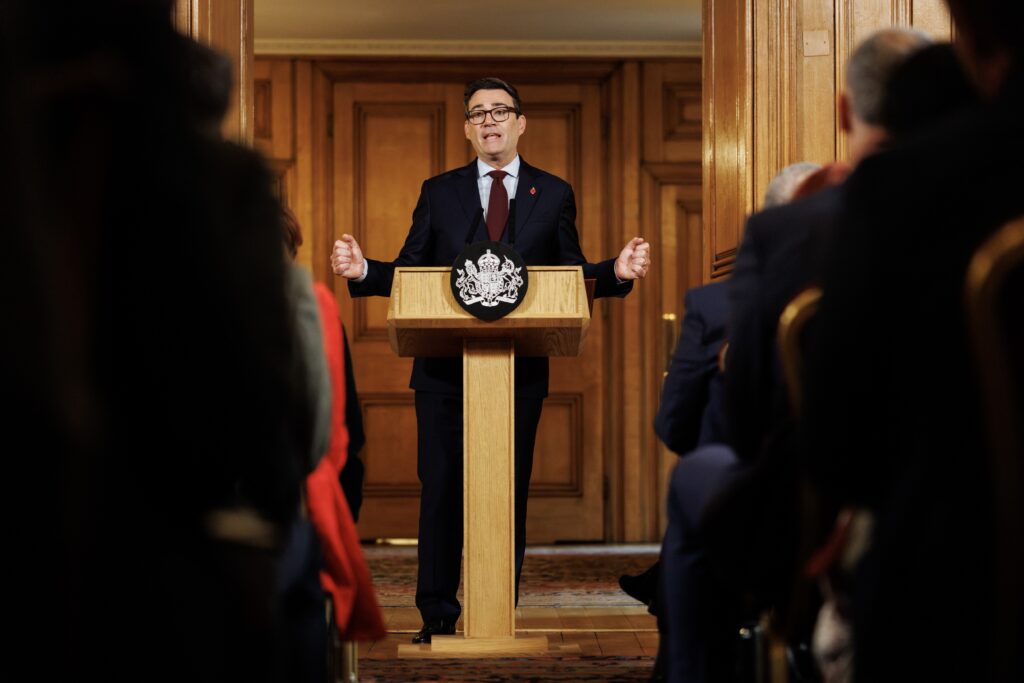
The Office for Budget Responsibility (OBR) maintains that the UK’s new trading relationship will “reduce long-run productivity by 4% relative to remaining in the EU”. That conjecture was invented in March 2020, before anyone knew what would be in the new Trade and Cooperation Agreement – the best free trade agreement (FTA) that the EU has ever done with any third country, with no tariffs and no quotas. Moreover, the OBR has done no forecasting of its own. It just averaged a bunch of 13 earlier studies published between 2016 and 2019. Nobody serious would be planning and investing their own money based on forecasts six-to-10 years out of date, but Andy Burnham and the rejoiners are doing just that.
What has actually happened? Between 2016 and 2025, the UK economy grew by 12.2%, keeping pace with France (11.8%) and far outstripping Germany (6.2%). Since we left the single market in 2021, the UK has grown by 7.9% – against 6.8% in France and 1.1% in Germany. Wolfgang Münchau, a commentator on European economics who advocated Remain in 2016, concludes: “Brexit was largely a macroeconomic non-event.” There was economic disruption caused by uncertainty after the 2016 referendum, but made much worse by so many MPs trying to reverse the vote.
Outside the EU, we are free to do things differently, and it shows. The reason why the IMF has recently upgraded the UK’s forecasts is that the UK is benefiting from freedom outside the EU. Britain’s tech sector far exceeds that of France or Germany, and is the third most valuable in the world, after the US and China, contributing more than five percentage points of our total growth. The EU has overregulated tech. In the City, we have started to unpick EU over-regulation. Before Covid, the City of London employed some 500,000 people; today, over 680,000 people are employed in the City.
UK exports continue to grow. Most UK exports go outside the EU and are growing more quickly than exports to the EU, but this has long been the case, because the single market has proved a failure. It has declined relative to the rest of the world. The EU has lost share of global GDP since 1992, from 30% then to 17% now, while the US has maintained 25% over the same period.
UK services exports are booming. Outside the EU, the value of services exports to the EU is growing faster (up 28%) than to the rest of the world (up 26%). So no Brexit problem there.
Even while we were in the single market, UK goods exports to the EU grew by only 35% in real terms between 1997 and 2019 (about 1.4% a year), yet goods exports to non-EU countries grew more than twice as fast, by 85%, without any trade deals with other countries (which the UK now enjoys). UK goods exports to the EU declined as a share of UK GDP from over 10% but are now under 5.9% of GDP. It would be crazy for the EU to regulate the 94% of the economy that is not involved in exporting goods to the EU.
Burnham claims that the exit deal was “far harder” than promised in the referendum, but leading Vote Leave campaigner Michael Gove was clear during the campaign: “We should be outside the single market … That way we are not governed by the rules that the European Court of Justice imposes on us which cost businesses and restrict freedom.”
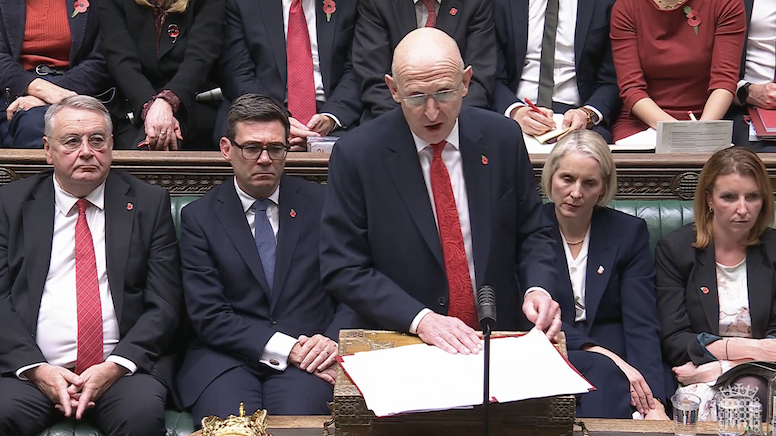
Labour’s trade secretary, Jonathan Reynolds, has warned against rejoining even the customs union, telling the Financial Times that the UK has an “incredibly successful trade policy” outside the EU. The economies included in the CPTPP account for approximately 14% of global GDP; add the other 61 countries with UK FTAs, and the opportunities for exports far exceed the EU. All those deals would have to be torn up. More recently, Reynolds told Politico that “constitutional questions” around the EU are causing “uncertainty for business.”
Burnham argues that leaving the EU caused the ‘Boriswave’ of immigration, but migration from outside the EU never had anything to do with the EU. The prime minister also claims that small boat crossings only started “after Brexit”, but Labour’s home secretary, Shabana Mahmood, has described that as “a bit of a stretch”.
If Burnham wants an “honest conversation” about the UK’s future relationship with the EU, he should start with himself.
Major caught on tape calling eurosceptic ministers ‘bastards’