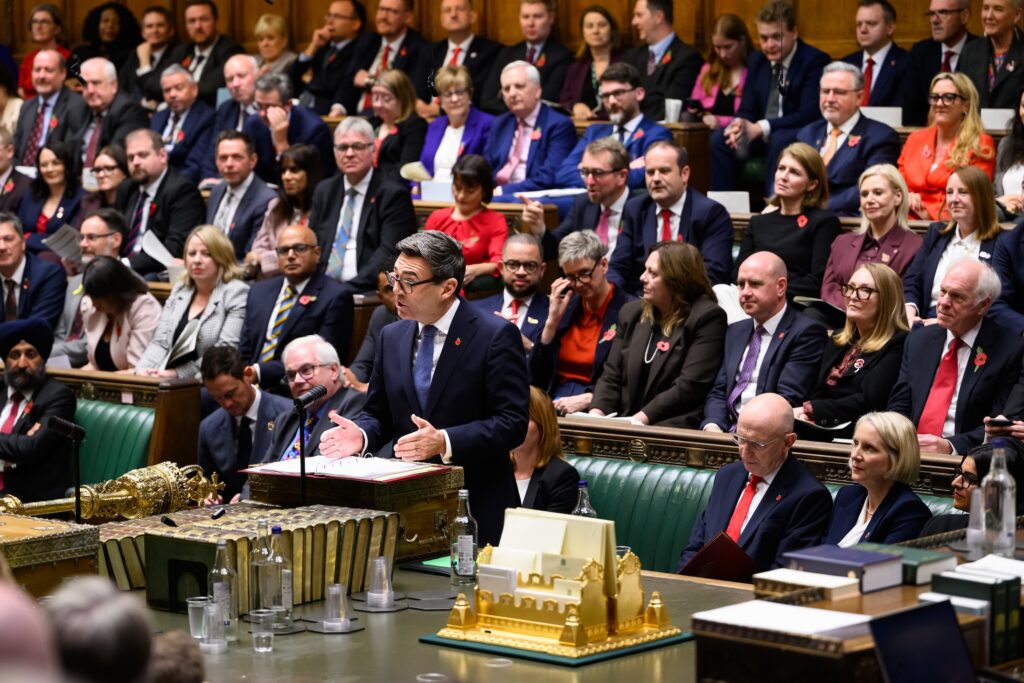
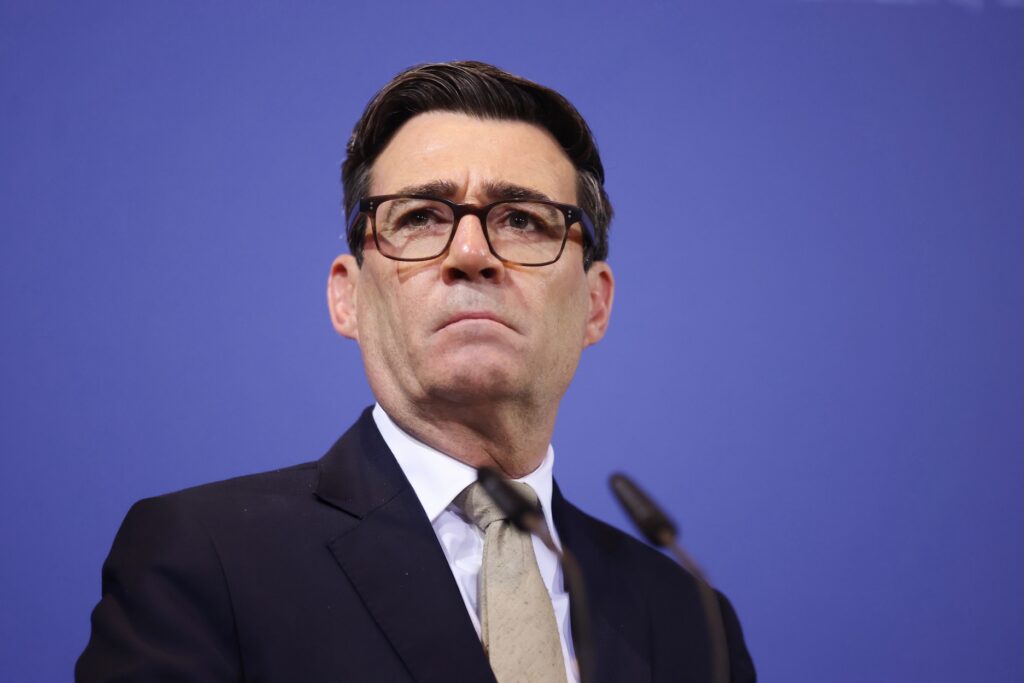
Andy Burnham sought to distinguish himself from his predecessor by signalling a more permissive approach to party management. His intervention during the 2025 conference season blamed a “climate of fear”, presided over by Keir Starmer as prime minister, for stifling debate. Burnham returned to the theme during the more formal stages of his leadership candidacy.
At a hustings of Labour MPs in July, he emphasised that “the Labour movement is, and always has been, a broad church”, pledging to create “a team and culture where everyone is valued, seen and listened to.” The prime minister has even mused about doing away with Westminster’s whipping system.
The promise of greater engagement and tolerance of dissent was a nod to Burnham’s broad political coalition. The prime minister has made a virtue of accommodating the rival tendencies that carried him to power. And the approach, so far, has proved relatively straightforward to sustain.
The publication of the Milburn report this week was flagged as the first potential flashpoint of Burnham’s leadership. Yet, one by one, the MPs who brought Starmer’s government to its knees 18 months ago over its attempt at welfare reform lined up in the commons to welcome Milburn’s proposals. Of the 32 rebels who defied Starmer and spoke in the commons on Tuesday, only eight expressed reservations about the proposed reforms. Even Rachael Maskell, who spearheaded the resistance to Starmer’s welfare bill after his comprehensive capitulation, welcomed “the proposition before us today”. Nor has Burnham’s reassessment of the Brexit settlement prompted a significant internal backlash, despite lingering concerns among some MPs about the risks of reopening the question.
Starmer forced into U-turn on welfare bill after major backbench rebellion
Brexit and welfare reform – the two policy issues that have generated the greatest internal discord in Labour over the past decade – have so far failed to produce a serious rupture between Burnham’s leadership and the parliamentary party.
The Rosebank faultline
The focus on these issues has arguably obscured a more consequential flashpoint: the dispute over Rosebank. This question now risks forcing the competing elements of Burnham’s political coalition into open confrontation.
Rosebank – the UK’s largest untapped oilfield, 80 miles northwest of Shetland – is awaiting a formal decision after a previous approval under the Conservatives was overturned by a Scottish court, because the environmental assessment had failed to account the effect on the climate of burning any fossil fuels extracted. Ministers have publicly refused to be drawn on their thinking about Rosebank, insisting that the decision must be reached through a “quasi-judicial” process, formally led by energy secretary Miatta Fahnbulleh. Last month, the government approved production at the Jackdaw gas field in the North Sea, but government spokespeople maintain that decision has no bearing on the judgement over Rosebank.
The reliance on the “quasi-judicial” nature of the Rosebank decision has not stopped Labour MPs on both sides of the argument from organising concerted lobbying efforts. A private letter to Burnham opposing the project has been signed by at least 75 Labour MPs, according to the Sunday Times. A recent Guardian report suggests it could reach 100 signatories. The Financial Times, meanwhile, has placed support for approving Rosebank at around 80 MPs.
Taken together, these reports suggest that a substantial portion of the PLP have placed themselves on one side of a zero-sum decision.
The disagreement cuts across the parliamentary party, the ministerial ranks and the cabinet. Before entering parliament, Fahnbulleh called drilling in the North Sea “irresponsible and short-sighted” and declared that “we can’t have any new oil or gas fields”. The energy secretary is seen as a protege of her predecessor, Ed Miliband, who once branded Rosebank “climate vandalism”.
In a Westminster Hall debate last week, a total of 18 Labour MPs voiced opposition or concern regarding the possible approval of the Rosebank oilfield. Among the Labour MPs who spoke against Rosebank in Westminster Hall were three parliamentary private secretaries (PPSs) at the Foreign, Commonwealth and Development Office – Miliband’s department – namely Anna Gelderd, Laura Kyrke-Smith and Chris Murray. Three further PPSs, Olivia Blake, Steve Witherden and Mary Kelly Foy, backed an early day motion (EDM) in June which urged the government to reject Rosebank.
Uma Kumaran, now a Foreign Office minister, is another member of the frontbench that is on the record opposing Rosebank. She told a June Westminster Hall debate that Rosebank could produce the “equivalent of 70% of the UK’s annual emissions of carbon dioxide” and urged the government to ensure “Rosebank does not happen”.
At cabinet rank, both the chancellor, John Healey, and business secretary, Jonathan Reynolds, are said to strongly support Rosebank. The project’s approval is also factored into the government’s fiscal projections; expected tax revenues from the oilfield were included in the revenue forecasts published by the Office for Budget Responsibility (OBR) alongside the autumn budget.
In recent parliamentary debates, among the Labour MPs to have publicly backed Rosebank are former minister Al Carns, Jonathan Brash of the Blue Labour group, and Luke Akehurst and Steve Yemm, both members of the Red Wall Caucus.
There is also a clear Scottish dimension. A prominent part of the lobbying in favour of Rosebank has come from Scottish Labour MPs and figures. Shortly after his election as Scottish Labour leader in September, Michael Marra told reporters that he wants “Rosebank and Jackdaw to be approved”, adding: “It’s the biggest issue in my region in terms of people’s voting intention. We need to have a more rational policy position that delivers for the Scottish economy and Scottish jobs.”
Torcuil Crichton (Na h-Eileanan an Iar), Richard Baker (Glenrothes and Mid Fife) and Graeme Downie (Dunfermline and Dollar) have all argued in favour of approval in recent weeks. According to the Times, backbench Labour MPs have invoked the prospect of “electoral oblivion” in Scotland as part of their efforts to persuade Fahnbulleh to approve the oilfield.
Burnham’s Rosebank tests
The arguments against Rosebank have centred on the government’s climate commitments. Chris Ward, a former minister and close Starmer ally, warned in October that the Jackdaw and Rosebank decisions risk sending the wrong message “about how serious we are about tackling the climate emergency and protecting our hard-won international reputation as a world leader on climate change.” Ministers insisted that the decision to approve Jackdaw did not represent a retreat from the government’s commitment to tackling climate change. While most Labour MPs accepted that distinction, Rosebank has plainly proved a more divisive proposition.
The scale of opposition, and the terms in which critics have framed the dispute, have turned the decision into a wider test of the government’s commitment to its climate ambitions. It comes after Burnham promised to show leadership “in a world where climate issues have taken too much of a backseat” at Cop31 earlier this month.
Then there is the broader political calculation. Labour’s recovery in the polls under Burnham has been achieved, in large part, by bringing back voters who had drifted towards the Greens and other progressive alternatives. Rosebank risks destabilising that consolidation of Labour’s left flank, giving progressive voters fresh reason to question whether the party still reflects their priorities on a totemic issue. This could create an opening for the Greens to reassert their climate credentials; the Liberal Democrats have also placed a renewed emphasis on environmentally minded voters in recent months. Labour MP Andrew Lewin told Politics.co.uk this week that approving Rosebank would see his party pay a “high political price with voters who want to continue to see climate leadership.”
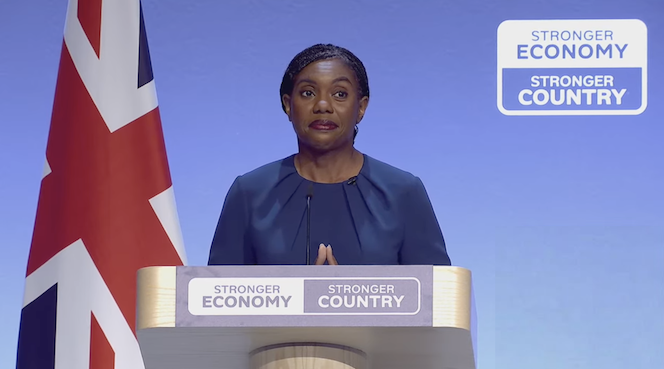
The Conservatives have also sought to make Rosebank an issue for the government, with Kemi Badenoch regularly citing the decision as a test of Labour’s approach to energy security and growth. If Burnham approves Jackdaw but rejects Rosebank, Badenoch is likely to seize on the distinction to reinforce Conservative claims that he is too easily swayed by his backbenchers and insufficiently serious about growth. Badenoch has raised North Sea oil and gas in four out of the seven encounters she has had with Burnham at prime minister’s questions.
Burnham’s decision on Rosebank is being characterised as a totemic test, then. But what exactly is it a test of: the government’s economic credibility, its approach to energy security, its climate credentials, the importance it attaches to Scottish interests, its determination to retain progressive voters, Burnham’s authority?
Rosebank has become a proxy for a series of competing questions about the direction of Burnham’s government. And there is a potential danger for Burnham in either direction. Approving Rosebank would raise fresh questions about his commitment to tackling climate change and alienate a sizeable section of his party and progressive voters; rejecting it could reinforce Conservative attacks over growth and energy security, and likewise leave a significant part of his party feeling ignored.
Before Burnham can pass his “Rosebank test”, then, he must calculate which tests he is prepared to fail. It is a decision that requires the government to establish which of several conflicting priorities takes precedence.
The limits of consensus
Whatever the outcome, a large section of Labour is likely to feel that its priorities have been passed over. Because of the competing interests at play, it will establish something about the relative influence of different groups within Burnham’s government and the parliamentary party.
For a government still establishing its political identity, this point takes on particular significance. MPs and voters will look to Rosebank to discern its ideological direction; the scale of the lobbying suggests that MPs recognise the importance of shaping the government’s programme at this formative stage.
Burnham’s leadership was built on the promise that Labour’s competing traditions could coexist. He assembled a broad coalition of caucuses and political traditions, encouraging each to project its own hopes onto his premiership. That breadth remains a source of strength, but it also points to a source of potential instability. At some point, he will have to disappoint parts of the coalition that brought him to power.
So far, Burnham has pursued his own political agenda without provoking the sort of internal confrontation that characterised the lowest moments of Starmer’s premiership. But Rosebank will force a choice. He must create winners and losers, and manage the political fallout. The decision looks set to reveal faultlines within Burnham’s broad church.