The Green Party’s history has been marked by electoral frustration, political obscurity and sustained periods of internal conflict – punctuated by intermittent surges in support. Zack Polanski’s leadership has raised the prospect of breaking that pattern, but recent setbacks point to a familiar story.
Since Polanski was elected leader in a landslide vote in September 2025, the Greens’ ambitions and political character have been transformed. The party has sought to establish itself as a more prominent and combative force, sharpening its appeal by challenging Labour on the left. The spotlight on the party – and its vulnerabilities under Polanski – has intensified accordingly.
Polanski declared his candidacy for the Holborn and St Pancras by-election only days after Keir Starmer, the recently defenestrated former prime minister, announced his resignation as an MP. It was a gamble, but also an opportunity to put Green issues at the top of the agenda heading into conference season – while reminding Labour of the threat posed by the party. Polanski’s pitch to voters would rest on the promise of holding Andy Burnham to account and pressing him to pursue a more progressive agenda.
Polanski achieved the Green Party’s second-best by-election result in its history, winning 8,928 votes (32.8%) to place second in a historic Labour stronghold. But the defeat inevitably raises questions about the strategic sense of challenging Labour during Andy Burnham’s political honeymoon.
The result has only reinforced a wider narrative of political miscalculation on Polanski’s part.
‘You are welcome’: Lib Dem MPs urge Greens to defect after ‘Zionism is racism’ vote
Polanski’s handling of the Green Party conference in Brighton last week represented a serious strategic and political misstep. Rather than engage directly with the motion declaring Zionism a form of racism, Polanski used the by-election campaign as a pretext to sidestep proceedings. Activists were encouraged to join him campaigning in Holborn and St Pancras, leaving the conference’s highly organised pro-motion faction free to defeat an amendment that would have softened the wording and secure the motion’s passage. According to a scathing statement from Green MP Siân Berry, the party’s parliamentarians were also “persuaded not to campaign publicly” against the motion because the conference clashed with by-election campaigning.
In any case, the motion – and Polanski’s management of it – have generated a deluge of deeply negative headlines. Berry argued that the saga had done “genuine damage” to the Green Party’s reputation.
Polanski has also faced criticism over his social media activity, with reports from earlier this year pointing to internal unease over his online presence. In May, he apologised for sharing a post criticising the police response to the Golders Green attack after the Metropolitan Police commissioner, Mark Rowley, accused him of amplifying “inaccurate and misinformed commentary”. In July, he came under further scrutiny after he mistakenly shared an Instagram post featuring a man wearing a black T-shirt with the message “We’re only making plans for Nigel” and an image of a guillotine. This time, Polanski refused to apologise.
These setbacks must now be considered against the backdrop of the Burnham bounce and a broader revival in Labour’s political fortunes. For the prime minister, the Greens’ relative decline in recent months – culminating in Polanski’s defeat in Holborn and St Pancras – represents a vindication of his political strategy. Polling analysis by Luke Tryl of More in Common suggests that, at the party’s peak under Polanski in April 2026, more than one in 10 voters who backed Labour in 2024 were supporting the Greens. That share has since fallen to one in 20.
The character of ‘eco-populism’
The problems facing the Green leadership run deeper than a series of isolated misjudgements in a crowded and volatile political landscape, however. They are rooted in the strategy that powered the party’s rise, and in the tensions Polanski’s platform has brought to the surface.
Polanski’s pitch to Green members in 2025 was highly persuasive for several reasons.
With progressive discontent with the Starmer government mounting, he promised to deliver greater “cut-through” for the Greens with a highly visible political strategy. He advocated ending the co-leadership structure that had stewarded the Greens through a period of electoral expansion since 2016, and deliberately downplayed the party’s institutional responsibilities at Westminster. He focused instead on expanding the party’s reach through extra-parliamentary activism and more powerful storytelling.
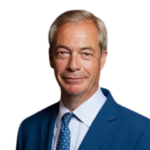
This strategy, which Polanski referred to as “eco-populism”, was reminiscent of Nigel Farage’s approach as leader of Reform UK. Polanski did not resile from this comparison.
Pointedly, Polanski’s platform marked a decisive rupture with the Greens’ established strategy. As co-leaders from 2021 to 2025, Adrian Ramsay and Carla Denyer pursued a “Westminster through town halls” approach, prioritising steady growth by building on local gains. Polanski, by contrast, immediately pitched himself as a national political player.
As the political opportunities for the Greens proliferated under Starmer, Polanski’s platform provided a source of considerable success. The Gorton and Denton by-election in February 2026 – the Greens’ first-ever by-election victory – presented an apparent proof of concept. By positioning the Greens as insurgents assailing Labour from the left, Polanski showed his party could make progress in constituencies where they previously had little presence.
Green Party secures first by-election victory in Gorton and Denton
But the political landscape has since shifted, and the unravelling of Polanski’s insurgency in recent months has exposed the pitfalls of “eco-populism”.
The pitfalls of ‘eco-populism’
Polanski’s platform delivered visibility, members and momentum. But it did so by taking on risks that were easy to overlook while Labour was weak and disillusionment among progressives was high. Those risks are now all too apparent.
His social media missteps, for instance, are bound up with a strategy that is effectively sustained by constant online engagement. Polanski’s prolific posting helps keep the Greens in the national conversation, but it also leaves the party exposed to the consequences of ill-judged interventions.
The Greens’ positioning as a vehicle for progressive discontent, meanwhile, has proved vulnerable to changing political circumstances. Populism draws its strength from disenchantment with the established order. When the political conditions that help sustain discontent begin to shift, its appeal becomes harder to maintain. Polanski once promised to supplant Labour as the main force on the left. That claim, insofar as it was ever tenable, depended on Labour’s continued weakness. If Burnham succeeds in consolidating a large portion of the progressive vote, the threat the Greens pose – and their purpose under Polanski – would be diminished.
Polanski’s transformation of the Greens has also had significant consequences for its internal politics. The surge in membership under his leadership – which coincided with the collapse of Your Party – has brought activists into the Greens with their own ideological priorities and goals. In many ways, such growth was central to the strategy’s success. But its consequences were visible at Green conference. The group behind the “Zionism is racism” motion was able to exploit the party’s open structures to shape its policy without apparent regard for the wider political consequences or its national strategy. In the wake of the Holborn and St Pancras by-election, former Green leader Caroline Lucas highlighted her party’s exposure to “entryism” in an article for the New Statesman.
As such, Green figures who never fully embraced Polanski’s platform have now been emboldened to challenge it. Speaking to BBC Newsnight on Thursday, while she stopped short of calling for Polanski to stand down, Lucas said his leadership had been “frankly missing” over the conference motion and that “the jury is out” on whether he would address the failings. Her position is further evidence that Green grandees and the party’s seemingly inexhaustible supply of former leaders and co-leaders are growing bolder in their criticism of Polanski.
This dynamic could become more pronounced as Green MPs respond to their own electoral incentives. Adrian Ramsay and Ellie Chowns represent constituencies where the Conservatives are the Greens’ principal opposition. Having defeated Tory incumbents in rural territory in 2024, their continued presence in parliament relies on a different coalition from the one Polanski has constructed. One possible consequence of recent struggles is that the Green group in parliament, which Chowns leads, could begin to act more as an independent unit.
Labour wins historic landslide as Conservative Party collapses
The Green brand
Eco-populism gave the party a clear brand. But in transforming the Greens into a more visible and polarising political force, it has also given the party a brand problem.
The Greens’ favourability, and Polanski’s own, has slipped markedly in recent months. YouGov polling published before Green conference found that the party’s net favourability has fallen from +5 to -19 over the course of Polanski’s leadership. On top of this, More in Common polling published before polls closed in the Holborn and St Pancras by-election found Polanski is now the least popular major UK party leader, with a net approval of -28, down four points. That puts him below Nigel Farage (-24) and far below Andy Burnham (+16).
Here, the parallel with Farage becomes uncomfortable for the Greens. Polanski has argued that his party can learn from the Reform leader’s ability to cut through and mobilise disillusioned voters. But Farage’s missteps and tendency to retreat into his political comfort zone by playing to the Reform base have also pushed opponents to unite against the party. Likewise, rows such as the one over “Zionism is racism” risk doing the same for Polanski by encouraging anti-Green tactical voting.
There are caveats, of course. The Greens still derive support from a constituency of voters to Labour’s left, many of whom have been enthused by Polanski’s leadership. The Greens have broken out of their traditional electoral limits under Polanski, and the result in Holborn and St Pancras underlines that they are not going away. Nor do recent setbacks mean that eco-populism has run its course. The analysis here leaves room for a reversal of both the Burnham bounce and the Greens’ decline.
But Polanski will need to manage the tensions his eco-populist strategy has created before further setbacks and internal discord harden into a crisis of confidence in his leadership.