Green Party votes to adopt formal leadership structure
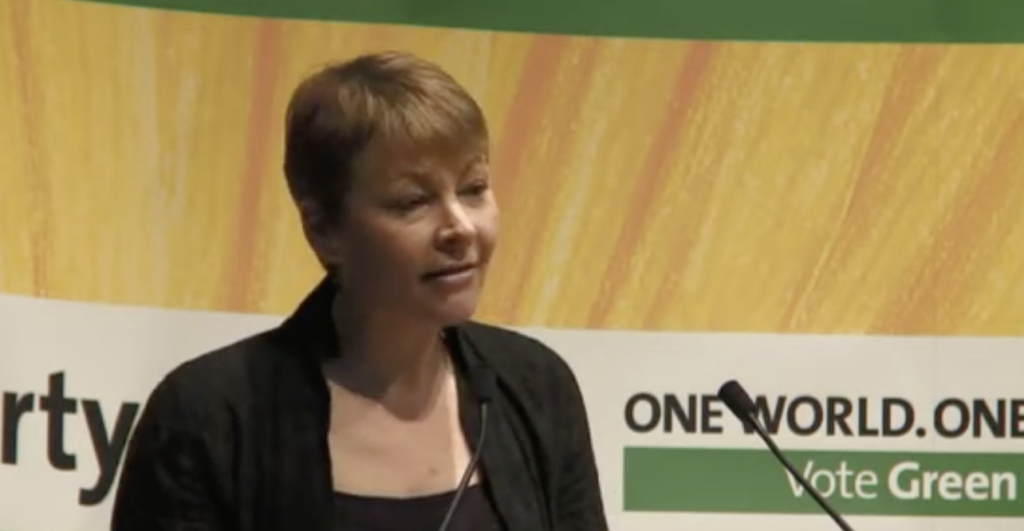
On 30 November 2007, the Green Party of England and Wales (GPEW) announced the results of an internal referendum to replace its “principal speaker” model with a formal leader and deputy leader structure.
The motion was carried by 73% of participating members, comfortably surpassing the two-thirds majority required for constitutional change. On a turnout of 48.3%, 2,634 members voted in favour of the reforms, with 963 opposed.
The decision marked a definitive shift from the party’s decentralist roots toward a more conventional internal hierarchy.
***
The 2007 referendum was the culmination of a decades-long struggle between Green “fundamentalists” (fundis), who were instinctively sceptical of a traditional party hierarchy, and so-called “realists” (realos), who supported a more conventional, centralised leadership structure.
The realo-fundi split also reflected a broader ideological dispute between “electoralist” pragmatic figures, who prioritised electoral viability and institutional effectiveness, and “idealist” members aligned with more explicitly socialist and/or libertarian traditions.
This friction dates back the party’s earliest incarnation as PEOPLE, before its rebranding as the Ecology Party in 1975.
At the 1979 general election, following a professionalisation drive led by Jonathon Porritt and Jonathan Tyler, Ecology fielded 53 candidates, gambling £50,000 in deposits to secure a five-minute party political broadcast. It paid off. Ecology (or “ECO”) averaged 1.5% in the seats it contested.
The national exposure saw membership jump tenfold from 550 in 1978 to 5,000 in 1980.
This “first green surge” had significant implications for the character of the party, attracting activists committed to alternative lifestyles and direct action. The Ecology Party’s 1979 conference, held at Keele University, reportedly descended into chaos, as an influx of new members led to proposals and amendments being introduced spontaneously from the floor.
In 1980, the party’s executive committee opted for three co-chairs rather than a single figurehead who would serve as a de facto leader. The national executive committee was also renamed the Ecology Party Council. The structure provided something of a workable balance between the party’s managerialist and decentralist tendencies.
In September 1985, the party rebranded once more as the Green Party. This move followed the success of Die Grünen in West Germany, which had won representation (27 seats) in the Bundestag in the 1983 federal election.
The realo-fundi tension reemerged with the creation of the Party Organisation Working Group (POWG), which proposed constitutional amendments to create a more streamlined party hierarchy. The POWG scheme was ultimately defeated. Tyler, a leading proponent of the reforms, alongside fellow party organiser and economist Paul Ekins, responded by establishing the Maingreen group. Maingreen’s strategy, which included recruiting supporters from outside the party, provoked further internal resentment. Tyler and Ekins ultimately resigned their membership.
The 1989 European Parliament elections were marked by a major breakthrough for the newly rebranded Green Party. The Greens, standing a full slate of 79 candidates, won 2,292,695 votes – 14.5% of the overall national vote. It was the highest share ever won by any European Green party in a national contest at that time. Significantly, the Greens placed third overall, outperforming the Social and Liberal Democrats (soon to be rebranded as the Liberal Democrats) in all but one seat and supplanting the party nationally. The SLD won only 944,861 votes (5.9%).
During the campaign, leading Green activist Sara Parkin came to national attention, and was treated by the media as the party’s de facto figurehead. The Greens once again experienced a surge in membership, peaking at a reported 18,523 in July 1990.
However, Parkin later remarked that the party “was not prepared to succeed” in the wake of the 1989 European Parliament elections. Rather, it was in “the grips of all sorts of arguments about whether we should be a political party at all.”
She added: “They appointed 32 speakers after the election, and the media ended up losing interest. I think that may well have contributed to the sort of deflating in the early 1990s.”
***
At the turn of the decade, the party separated, amicably, into three autonomous entities: the Green Party of England and Wales (GPEW), the Scottish Green Party, and the Green Party Northern Ireland. The Wales Green Party became a quasi-autonomous body under the GPEW umbrella.
The splits reflected the movement’s overall commitment to decentralisation.
At around this time, however, a reformist faction launched the “Green 2000” initiative to streamline the decentralised party’s governance. The group, led by Parkin and supported by Porritt, called for the replacement of the large party council with a smaller executive. It was argued that the reforms would see Green MPs elected by the year 2000.
The decentralists contended that the changes were “towards the hierarchy and centralisation characteristic of conventional parties.”
The reform proposals were initially defeated at the party’s 1990 conference. But a year later in 1991, they were reintroduced (under the Green 2000 name) and endorsed by a four to one majority – aided by a series of proxy votes from those beyond the conference hall.
The reforms streamlined the party’s internal structure, reducing the number of principal speakers from six to two (one male and one female) while establishing a 10-member national executive committee. A 28-member regional council was also created to oversee and hold the executive to account. In addition, the changes replaced the decentralist three co-chairs structure with a single party chair.
The first 10-member national executive was dominated by Green 2000 supporters. Parkin and David Icke, a BBC sports presenter and ex-Coventry goalkeeper, initially rose to prominence as the party’s principal speakers.
The reformist push caused significant somatic damage to the party.
Between 1990 and 1992, the party lost over half its members (5,500). Moreover, Icke went on to create considerable embarrassment for the party after claiming to be “the son of God” and predicting that the world would end in 1997. Icke, who joined the party in 1987, left in a blaze of negative publicity in 1991.
In August 1992, Parkin announced that she would not stand again for the post of chair of the party’s executive. In her resignation letter, Parkin wrote that she saw “no point in squandering my time, energy and spirit fighting endless redundant skirmishes behind the Green Party barricades”, and that she had been “forced to the conclusion that the Green Party is a liability to green politics.”
Parkin had clashed with Derek Wall, a fellow party principal speaker and leading “fundi”. Mallen Baker, a former Green co-chair, welcomed Parkin’s resignation, saying she had proved to be “politically incompetent” and “ineffectual”.
Baker, who was subsequently elected as a principal speaker, added: “Just because she is one of our best known faces and looks good on television does not mean she can be allowed to run the party badly.”
***
In the 1994 European Parliament elections, the Greens won only 3.2% of the vote – a remarkable downturn from the party’s performance in 1989.
After the 1992 election, the Greens shifted to a “Westminster through town halls” strategy, building a base of local councillors in strongholds like Oxford, Norwich and Brighton. In 1993, Caroline Lucas was elected as a Green councillor in Oxford. The party made further gains in 1995 and 1996.
The introduction of proportional representation for the 1999 European Parliament elections finally provided the Greens with their first national breakthrough. Lucas (South East England) and Jean Lambert (London) were elected as the UK’s first Green MEPs. Overall, the Greens averaged 6.3% of the vote. This breakthrough was followed by seats in the London Assembly. Darren Johnson and Jenny Jones were elected in 2000 as the first Green MLAs. Johnson stood as the Green Party’s London mayoral candidate in 2000 and 2004.
In the 2005 general election, Green candidate and principal speaker Keith Taylor won 22% of the vote in Brighton Pavilion – the party’s best-ever performance in a Westminster constituency. The result pushed the Liberal Democrats into fourth place. Nationally, the party secured more than 1% of the vote for the first time. The party won 256,020 votes in total, compared with 166,477 in 2001.
Two years later, the Greens held an internal referendum on replacing its “principal speaker” model with a formal leader and deputy leader structure. (The proposed changes would allow for two co-leaders if a pair of candidates wanted to stand on a joint-ticket.) Previously, motions to introduce a formal leadership team had achieved a majority at Green conference, but fallen short of the necessary two-thirds majority for approving a constitutional change. Writing in the New Statesman in March 2007, Siân Berry, then serving as a principal speaker, argued that the absence of a clear figurehead had become a “barrier to communicating with people”.
Supporters of the pro-leader position included Berry, Lucas, Porritt, and Johnson. Lucas, the female principal speaker of the party from 2003 to 2006, argued that the referendum offered the opportunity to “demonstrate that alternative models of leadership are possible – not top-down and authoritarian, but inspirational and persuasive.”
She added: “Given the scale and urgency of the Green message, we owe it to ourselves, and to the electorate, to make our Party as effective as we can – I believe that developing authentic leadership models is a major part of that process.”
Porritt, the onetime chair of the Ecology Party, contended that the Greens urgently needed “a clear, passionate and persuasive leader out there, doing the job in a way that both the public and the media can relate to much more easily than is the case today.”
Johnson, the male principal speaker from 2001 to 2003, characterised the lack of a single leader as “just a ridiculous barrier in terms of getting our really important message across”.
Derek Wall, then the male principal speaker, and Jenny Jones, a Green member of the London Assembly, were among those who resisted the move. Wall warned his party not to get “sucked in and domesticated” by adopting a conventional figurehead.
He added: “Socialism led to Stalin and Tony Blair. The Romans deposed their kings, built a republic and replaced it with empire. Jesus preached humility but under Constantine was used to christen an autocracy.
“The history of struggle is one of repetition, with radicals bought off, killed off or brainwashed into submission… Politics can be like a gerbil cage. You go up and up and up to the top slot but with compromises to get there you crash back like the fallen radicals.”
Wall maintained that if the Greens won “power but at the cost of our ideals, that really would be a catastrophe.”
Jones argued that the party in London had proved “that you don’t need a leader to get good media coverage.”
She said that the case for a leader represented a “naive and forlorn hope, offering an imaginary cure for our problems as a party, regardless of the real problems that will still need tackling.”
Jones added: “There is a real danger that electing a leader will weaken the party, reduce our commitment to green values, and substitute the ‘eco’ of serious ecological commitment with the dreary ‘ego’ of conventional, shallow, careerist British politics.”
The Green MLA argued that the lack of a leader was “embedded in our founding principles of spurning hierarchies and encouraging participation”.
The Green Empowerment campaign outlined a full 10 reasons why adopting a formal leader would be a bad idea. It argued that electing the “wrong” leader – defined as someone “with no charisma, a loose cannon, out of line with policy, inflexible, reinforcing stereotypes” – would be a “disaster”, and that a single spokesperson would have “no constitutional powers so would have little respect from those inside or outside the party who expect a leader in the conventional sense of the word”.
Responding to the referendum result, Wall said the outcome had “put our future leaders on notice that the membership expects a more focused, more effective party, with a leadership team that is truly accountable to the membership in a real and effective manner.”
***
In September 2008, Lucas was overwhelmingly elected as the first leader of the Green Party of England and Wales with 92.4% of the vote.
At the same time, Adrian Ramsay was elected as the first deputy leader of the GPEW. (Two years later in 2010, Ramsay defeated a challenge from Wall, winning 73.4% of the vote.)
The party achieved some success in the 2008 London mayoral election. Berry placed fourth with 77,347 votes (3.2%).
At the 2010 general election, Lucas was elected as the MP for Brighton Pavilion, securing a majority of 1,252. Lucas had been selected, not without controversy, to stand in Brighton by a 55-45% margin.
Upon Lucas’ selection, one member responded: “The Greens have blown it. Half of us wanted Keith [Taylor] – and now we’ve been landed with an over-ambitious outsider who has parachuted herself into our city. I thought the Greens were better than this.”
Lucas’ 2010 victory marked the end of the party’s 37-year journey from a fringe movement formed in a Coventry pub to an elected force in the House of Commons.

Politics.co.uk Newsletters
DAILY
Politics@Lunch
WEEKLY
Week in Review
