Charles Kennedy elected Liberal Democrat leader
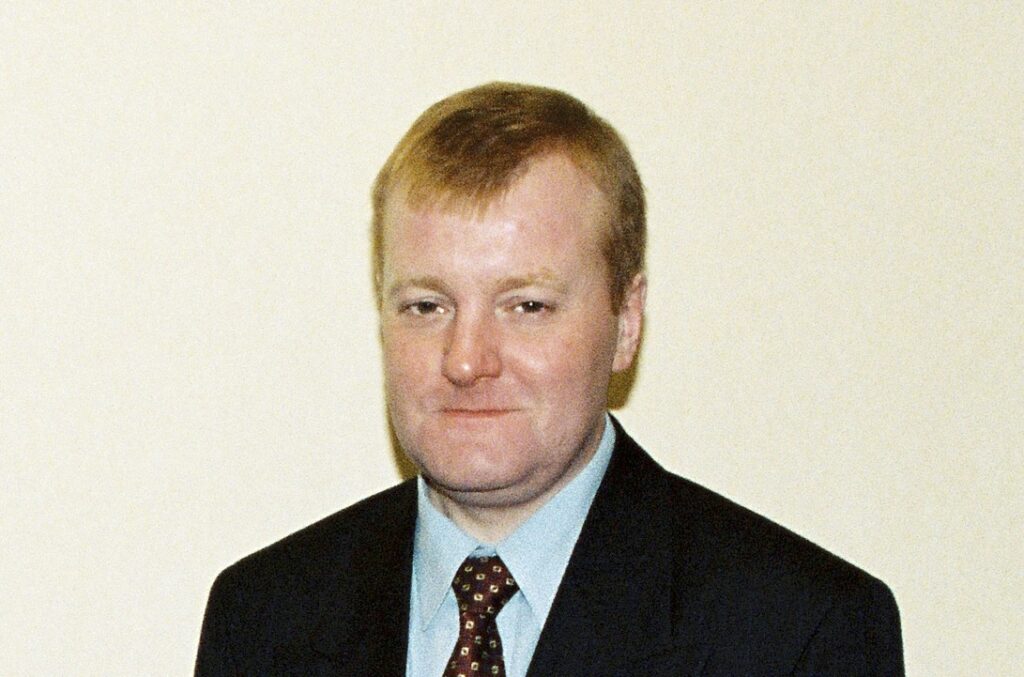
On 9 August 1999, Charles Kennedy was declared leader of the Liberal Democrats, succeeding Paddy Ashdown. Kennedy, the MP for Ross, Skye and Inverness West, won a clear victory over his main rival, Simon Hughes, in the ballot of party members.
The leadership contest was triggered by Ashdown’s decision in January 1999 to step down after 11 years as leader. At the 1997 general election, the Liberal Democrats increased their representation from 18 to 46 MPs – the best Liberal showing since the days of David Lloyd George. But Ashdown’s tenure as leader since the 1997 election had been complicated by criticism over his proximity to Tony Blair, the prime minister, and New Labour.
After the 1997 election, Blair – notwithstanding his historic 179-seat majority – had constituted a “Lib-Lab” joint cabinet committee (JCC) with a remit encompassing constitutional reform proposals. It was attended by senior Labour and Liberal Democrat figures, including Alan Beith, Robert Maclennan, Lord Holme, and Menzies Campbell.
Ashdown’s perceived closeness to New Labour had begun to aggravate Liberal Democrat MPs and members. The 1999 leadership election, therefore, largely centred on a debate about the party’s future strategic direction and its degree of independence from Labour.
***
Five candidates contested the 1999 Liberal Democrat leadership election, which used an all-member postal ballot under the alternative vote (AV) system.
Kennedy quickly emerged as the frontrunner. Known as “Chatshow Charlie” for his affable media profile, burnished by appearances on Have I Got News for You, he was seen as generally sceptical about Lib-Lab intimacy.
Kennedy had previously been described as “Ashdown’s Hezza” – the Michael Heseltine to his Margaret Thatcher.
Among his supporters, Kennedy counted Vince Cable, Campbell, Jim Wallace, Roy Jenkins, Shirley Williams and Nick Clegg.
He still came in for some criticism during the campaign. His style sometimes came across as “a little too jokey and relaxed”, even for his allies. Critics dubbed him “inaction man”, inverting Ashdown’s nickname.
In the first round of voting, Kennedy secured 44.6% of the vote, ahead of Simon Hughes (31.8%), Malcolm Bruce (9.1%), Jackie Ballard (7.8%) and David Rendel (6.7%). After the elimination of the lower-placed candidates and the redistribution of preferences, Kennedy won the final round against Hughes with 28,425 votes (56.6%) to Hughes’ 21,833 (43.4%).
In his acceptance speech, Kennedy paid tribute to Ashdown but signalled a desire to carve out a distinct identity for the Liberal Democrats. Pledging to fight for a “fairer Britain”, he argued that his party was “not being heard by New Labour for sure”.
He vowed to reconnect with those people who “don’t feel connected with politics”, adding: “That difference is needed more than ever”.
Commenting on Kennedy’s victory, Ashdown said: “I am very proud that the party has shown its democratic nature in this all-member ballot.
“I have full confidence in Charles Kennedy, who has all of the abilities necessary to lead the party and to take it from strength to strength. I have no doubt that the party will now unite behind the new leader.”
A Downing Street spokesperson responded: “The prime minister has always felt, and continues to believe, that the co-operation between Labour and the Liberal Democrats has worked to the benefit of both parties.
“He stands ready to continue that co-operation if that is what the new leader of the Liberal Democrats and the party wishes.”
Kennedy effectively suspended the joint cabinet committee in the run-up to the 2001 general election. The JCC was formally wound up in January 2002.
In 2003, Kennedy told the Independent: “I think the box marked ‘JCC’ is going to remain firmly with its lid closed for the rest of this parliament…
“If the phone went this afternoon and he [Blair] put proportional representation on the table, then I would happily agree to a meeting of the JCC to discuss that. But I am not planning my diary on that basis. I don’t think Tony is either.”
Ashdown stood down as an MP at the 2001 general election, and was elevated to the peerage shortly thereafter as Baron Ashdown of Norton-sub-Hamdon.
***
Under Kennedy’s leadership, the Liberal Democrats won 62 seats and 22.0% of the vote in the 2005 general election. His tenure as Lib Dem leader is largely remembered for his principled opposition to the 2003 Iraq War – which distinguished the party from both Labour and the Conservatives.
Iraq War legal advice leaked during election campaign
Kennedy resigned in January 2006 after he admitted receiving treatment for an alcohol problem.
Concerns over Kennedy’s leadership were relatively longstanding and brought into finer relief by his performance during the 2005 general election campaign. He faced further pressure after David Cameron’s election as leader of the Conservative Party in December 2005.
Kennedy, who previously denied a drink problem, initially called a leadership contest and indicated his intention to stand for re-election.
In a statement, Kennedy said: “Over the past 18 months I’ve been coming to terms with and seeking to cope with a drink problem, and I’ve come to learn through that process that a drink problem is a serious problem indeed.
“It’s serious for yourself and it’s serious for those around you. I’ve sought professional help and I believe today that this issue is essentially resolved.”
The statement came as just over a half of Kennedy’s frontbench colleagues signed a letter saying they no longer had confidence in his leadership.
Some 48 hours later, Kennedy announced his resignation as Liberal Democrat leader. “It is clear now that such support is not reflected strongly enough across the parliamentary party in the House of Commons itself”, he said in a further statement.
Kennedy added: “The interests of our party have to come first. That is where my personal, my political and my constitutional duty lies.”
Menzies Campbell elected Liberal Democrat leader after party crisis
Kennedy was one of only two Liberal Democrat MPs who refused to support the Conservative-Liberal Democrat coalition government, which was formed after the 2010 general election.
In an article for the Observer, published on 16 May 2010, Kennedy warned of the risks of “a subsequent assimilation within the Conservative fold.”
He added: “Like many others I was keen to explore the possibilities of a so-called ‘progressive coalition’, despite all the obvious difficulties and drawbacks. It remains a matter of profound disappointment that there was insufficient reciprocal will within the Labour party – and they should not be allowed to pose in opposition purity as a result.”
Kennedy lost his seat in parliament at the 2015 general election. He had represented the constituency of Ross, Skye and Lochaber (and its predecessors) for 32 years since the 1983 general election.
Mere weeks later, Charles Kennedy died at his home in Fort William on 1 June 2015, aged just 55.

Politics.co.uk Newsletters
DAILY
Politics@Lunch
WEEKLY
Week in Review
