Menzies Campbell elected Liberal Democrat leader after party crisis
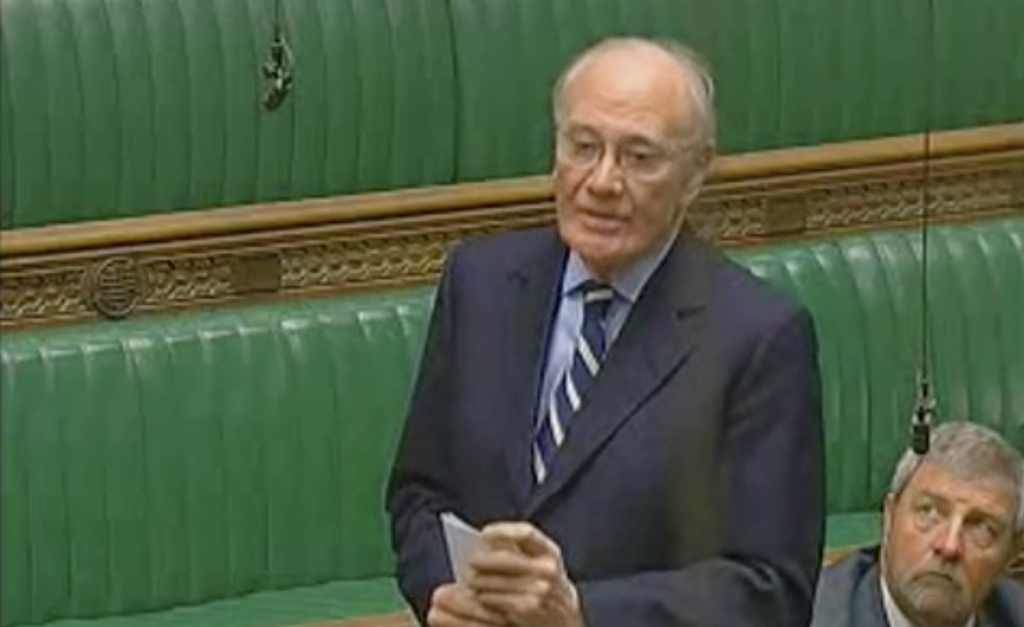
On 2 March 2006, Sir Menzies “Ming” Campbell was elected leader of the Liberal Democrats, bringing a turbulent two-month period for the party to a close. A respected party grandee and foreign affairs expert, Campbell was seen as a safe pair of hands to stabilise the party following the forced resignation of Charles Kennedy.
***
Kennedy, known as “Chatshow Charlie” for his affable media profile, had led the party since August 1999. Under Kennedy’s leadership, the Liberal Democrats won 62 seats and 22.0% of the vote in the 2005 general election. Kennedy’s tenure as Lib Dem leader is largely remembered for his principled opposition to the 2003 Iraq War – which distinguished the party from both Labour and the Conservatives.
The 2006 Liberal Democrat leadership contest was triggered after Kennedy admitted he had received treatment for an alcohol problem.
Concerns over Kennedy’s leadership were relatively longstanding and brought into finer relief by his performance during the 2005 general election campaign. He faced further pressure after David Cameron’s election as leader of the Conservative Party in December 2005.
Kennedy had previously denied a drink problem, but he called a leadership contest in January 2006 after admitting he had sought “professional help”. The Liberal Democrat leader initially indicated that he intended to stand for re-election.
In a statement, Kennedy said: “Over the past 18 months I’ve been coming to terms with and seeking to cope with a drink problem, and I’ve come to learn through that process that a drink problem is a serious problem indeed.
“It’s serious for yourself and it’s serious for those around you. I’ve sought professional help and I believe today that this issue is essentially resolved.”
The statement came as just over a half of Kennedy’s frontbench colleagues signed a letter saying they no longer had confidence in his leadership.
Some 48 hours later, Kennedy announced his resignation as Liberal Democrat leader. “It is clear now that such support is not reflected strongly enough across the parliamentary party in the House of Commons itself”, he said in a further statement.
Kennedy added: “The interests of our party have to come first. That is where my personal, my political and my constitutional duty lies.”
Campbell, after commending Kennedy for his “dignity and courage”, immediately announced his candidacy for the Liberal Democrat leadership. He had served as deputy leader of the Lib Dems since February 2003.
Campbell was challenged by the deputy Treasury spokesman, Chris Huhne, and the party president, Simon Hughes.
***
Despite his frontrunner status, Campbell’s leadership campaign was criticised in some quarters as uninspiring, with persistent questions raised about his age (64) and his ability to compete against Cameron, the significantly younger Conservative leader.
The contest was surprisingly close. Under the party’s alternative vote (AV) system, Campbell won in the second round after Hughes was eliminated.
Campbell secured 57.1% of the final vote to Huhne’s 41.6%. The turnout in the postal vote of party members was 72%, from a total membership of 73,000.
In his victory speech, Campbell pledged to “modernise” the party and lead it “back to government”.
He said: “Let me make it clear now that caution and consolidation will not do. Safe pair of hands yes, but ready to take risks, ready to challenge orthodoxy and ready to challenge the party too.”
He added: “Our task now is… to build a strong, effective, powerful Liberal Democrat party with the objective to ensure a greener, fairer, decentralised and democratic Britain, a Britain at peace with itself at home and admired abroad.”
It did not take long for concerns to arise over Campbell’s position. His performances at prime minister’s questions (PMQs) came under criticism, forcing Campbell to confirm he was “perfectly confident” of meeting the challenges of leadership.
During one session of PMQs, Campbell was subjected to a savage heckle regarding his age. After the Liberal Democrat leader called on the government to provide “accurate and complete information about pensions”, Conservative MP Eric Forth shouted back: “Declare your interest.”
https://x.com/JAHeale/status/1971553718169711067
As early as July 2006, rumours arose that Kennedy could return as Liberal Democrat leader. Kennedy, however, dismissed talk that he was preparing to mount a challenge for his old job as “fanciful”.
In the 2007 Scottish, Welsh and local council elections, the Liberal Democrats under Campbell’s leadership failed to make any significant breakthrough.
Criticism of Campbell and the customary comparisons to Cameron’s relative youth led to allegations of “ageism”. Gordon Lishman, the director general of Age Concern, argued that coverage of the Lib Dem leader “brought to light the age discrimination that is epidemic in the media and society.”
In September 2007, Nick Clegg, the Liberal Democrat home affairs spokesperson, vowed to stand for his party’s leadership whenever Campbell stood down.
Clegg said: “If you are asking me would I throw my hat in the ring if there was vacancy in the future, I probably would.”
Chris Huhne, Lib Dem environment spokesperson and another possible successor, responded that there was no vacancy to discuss.
Huhne said: “There is no vacancy, and it would be premature to even talk about the position of there being a vacancy.
“I’m not the kind of Michael Heseltine figure who plans their route to Downing Street from the day they came out of nappies. I wait for opportunities and then decide at the time.”
Leadership talk resumed after Gordon Brown, the prime minister, announced there would be no general election in 2007.
On 15 October, the deputy Liberal Democrat leader, Vince Cable, told BBC Radio 4 that Campbell’s position was “certainly under discussion”.
Cable stated: “It’s certainly under discussion. But I don’t think it’s under threat and I think the key point for all our activists and MPs and lords is that we shouldn’t panic in what is a very volatile political environment.”
At the same time, Chris Clarke, the party’s former leader at the Local Government Association, advised Campbell to “read the runes, go with dignity, go with the respect that you have [and] go back into the job you’ve been doing so well [as foreign affairs spokesperson].”
Later that day, Campbell announced he would stand down as Liberal Democrat leader.
In a statement, he conceded that “questions about leadership are getting in the way of further progress by the party.”
In October 2007, reflecting on his resignation, Campbell said he had “no sense there were people wanting to move against me.”
He added: “This was my decision, it was my conclusion based on my assessment of what my responsibility to the party might be.”
However, the Liberal Democrat veteran conceded that he was frustrated at “not getting the opportunity to lead the party in a general election, and I think our policies and our principles and our values would have been right at the very centre of the political agenda.”
He concluded: “When it’s time to leave the stage, leave the stage.”
***
Campbell’s resignation triggered a second Liberal Democrat leadership contest in as many years.
On 18 December 2007, Clegg was named the new leader of the Liberal Democrats, defeating Huhne by a margin of just 511 votes.
In his acceptance speech, Clegg declared: “My election as leader today marks a new beginning. Today is about two things: ambition and change.
“Renewed ambition for the Lib Dems, renewed ambition to reach out to the millions of people who I know share our instincts and values but do not yet vote for us.
“It is about renewed ambition for Britain.”
The Liberal Democrats won 57 seats, down five, at the 2010 general election. The party’s share of the vote (23%) represented a one point improvement on the 2005 election.

Politics.co.uk Newsletters
DAILY
Politics@Lunch
WEEKLY
Week in Review
