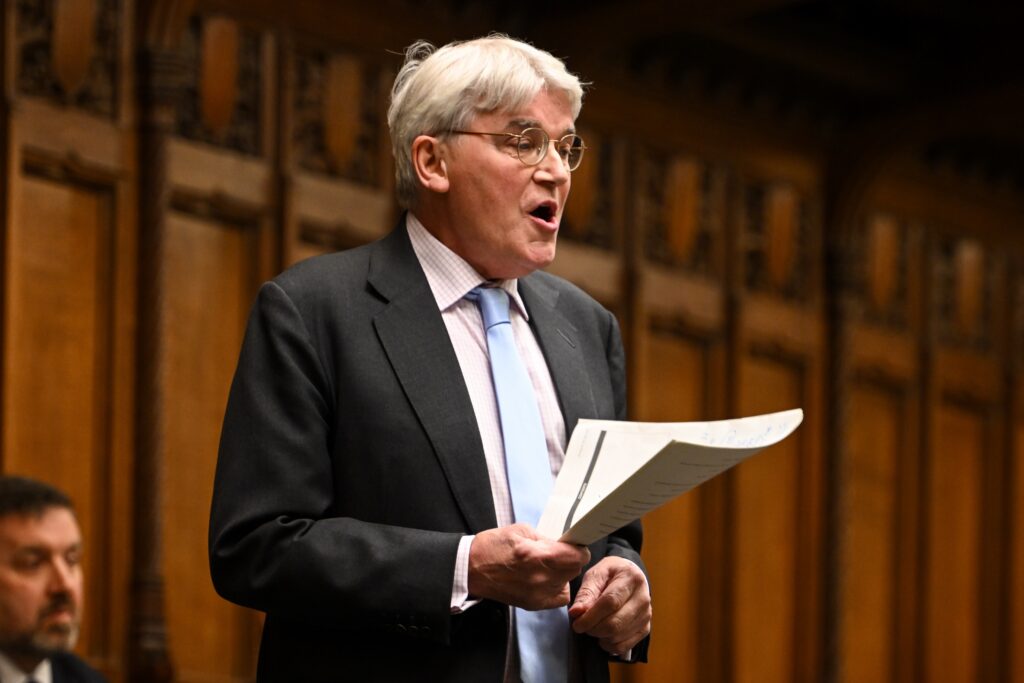

Sir John Curtice has told Conservative activists that their party is still polling below its 2024 general election result, the worst in its history, more than two years after its defeat.
Speaking at a Demos fringe event at Conservative conference in Birmingham, the polling expert said the party was averaging 20% in the polls. He told the audience that this “still leaves you four points below what was your worst ever performance”, adding that “20% is historically not a good number” for the party.
Jesse Norman described the standing-room-only briefing, titled “Back in the game?”, as “extremely sobering and interesting”. Norman, who spoke on the panel alongside Demos chief executive Polly Curtis, currently serves in the Conservative shadow cabinet as shadow leader of the House of Commons.
Curtice’s presentation said the Conservatives had made “modest progress” in certain areas, rising from 17% in the polls a year earlier. But he warned the party was still not profiting from the government’s difficulties, and was still losing much of “socially conservative, pro-Brexit Britain” to Reform UK.
Three MRP polls Curtice cited in his slides put the Conservatives below their 2024 vote share. The party was down three points with YouGov, four with Survation and two with More in Common.
Curtice did point to a decline in the standing of Reform UK, which is averaging 23% in the polls, down from a peak of 32% last September.
Curtice said: “Whereas you [the Conservatives] were well behind your principal competitor on the right 12 months ago, you are now at least within hailing distance, and certainly therefore you might be hoping that you can overtake them at some point. But you are not there yet.”
Curtice said that Labour is now averaging 27%. Measured against the point at which Keir Starmer left 10 Downing Street, he added, this suggests the so-called “Burnham bounce” is worth around 5 points.
“That is not exceptional. It is the case that virtually all people who have entered 10 Downing Street in the middle of a parliament have seen their entry into 10 Downing Street be accompanied by a rise in the support for their parties.
“Boris Johnson got a rise of around five/six points, so did Gordon Brown.”
Curtice suggested that “the one person” who did not receive such a boost was Liz Truss.
The polling guru said that the “Burnham bounce” had not had a measurable effect on the Conservatives, and that Labour’s gains came mainly at the expense of the Greens and the Liberal Democrats.
Curtice continued: “Still, that leaves you four points below what was your worst ever [general election performance in 2024]. Twenty per cent is historically not a good number for this party.”
Curtice’s slides showed 23% of 2024 Conservative voters now back Reform, down from 34% a year ago. The party is now retaining 68% of its 2024 vote, compared with 59% in September 2025.
“You are still losing nearly one in four of your people”, Curtice said. “That is an awful lot better than the one in three that you were losing 12 months ago.”
Curtice was clear that the most encouraging news for the Conservatives at present lies in the party leader’s personal ratings.
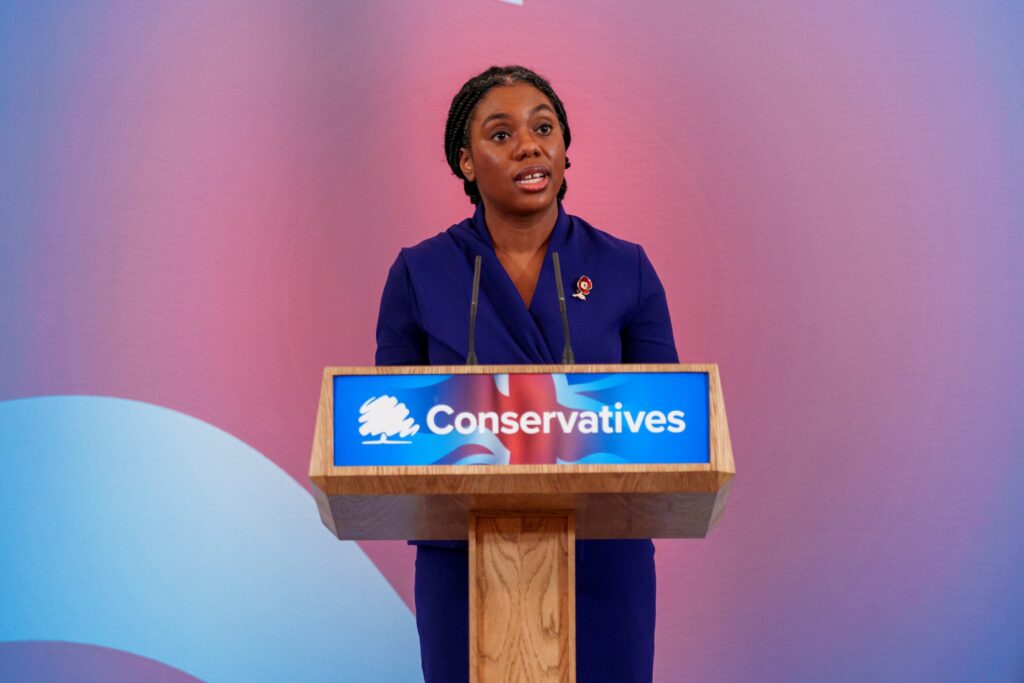
Kemi Badenoch‘s net favourability among the public has improved from -25 a year ago to -15 in September, according to YouGov data presented by Curtice. Among 2024 Conservative voters, it has risen from +27 to +55.
Curtice said that put Badenoch on a par with other party leaders among their own 2024 voters, alongside Nigel Farage (+54) and Andy Burnham (+58). She was ahead of Ed Davey (+35) and Zack Polanski (+40). “At least she is now competitive as a leader”, he said.
But he said the party itself still carried “a lot of baggage”. Its own net favourability stood at -33 in July.
Curtice added: “Basically, the downfall of Boris Johnson raised questions about ethics. The downfall of Liz Truss raised questions about competence.”
Curtice also indicated that the net rating of Conservative competence has improved to -13 among all voters, from -25 a year ago, according to Opinium data in Curtice’s slides. Among 2019 Conservative voters, the party is at +31.
Curtice said the party had made progress against Reform on competence among 2019 Tories. A year ago, those voters rated Reform as more competent (+16) than the Conservatives (+5). Now the Conservatives are at +31 and Reform at +2.
But Curtice said the party was still struggling to profit from voters’ discontent on the big domestic issues. British Election Study data from May showed that among 2024 Conservatives who think immigration has got “a lot higher”, only 51% still backed the party and 43% had moved to Reform. Among those who think it has stayed the same, 68% were still Conservative.
A similar pattern appeared on the economy and the NHS. Curtice said that either the party was “still getting the blame” for its record in government, or Reform was “simply speaking a language” that appealed more to those voters.
The Conservatives lead as the party best able to handle the economy, on 21% according to YouGov data, against Labour’s 19% and Reform’s 9%.
Boris Johnson’s Conservative Party wins historic 80-seat majority
Curtice also said Brexit continued to shape party support. Among Leave voters, the Conservatives are on 26%, down from 35% in 2024, while Reform is on 41%, up from 29%.
Curtice stated: “Essentially the fundamental structural problem you still face is that Nigel Farage took from underneath your feet, the coalition that elected Boris Johnson to ‘get Brexit done’ in 2019.
“You’ve made a bit of progress in getting it back, but there’s still a long way to go, and that still remains, in a sense, part of your fundamental challenge.”
At the end of his presentation, Curtice delivered some closing remarks.
He concluded: “Some progress [has been made], particularly so far as leadership is concerned. Some improvement in competence, but you’re still not profiting from the government’s difficulties…
“Reform has fallen back, but there’s still large segments of socially conservative, pro-Brexit Britain that Nigel Farage is gobbling up.”