Winston Churchill returns to power after first general election victory
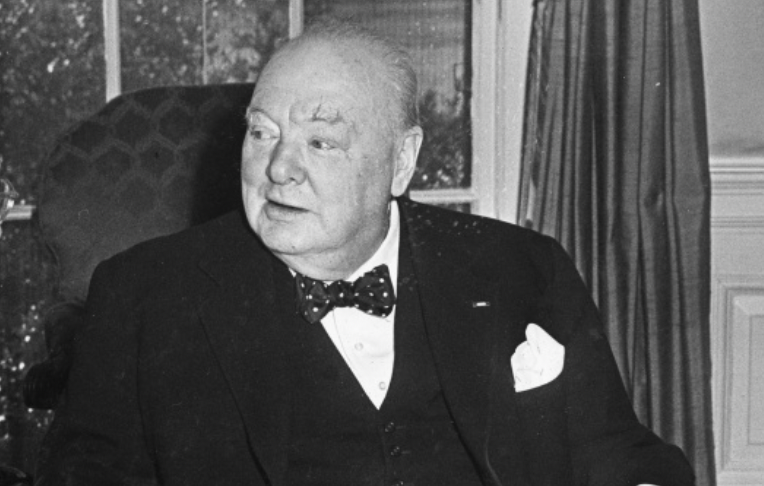
The Conservative Party under Winston Churchill’s leadership won the general election held on 25 October 1951, returning to power after six years in opposition.
The contest marked Churchill’s first general election victory, and the third and final general election to take place during the reign of King George VI. The Conservatives won 321 seats on 48.0% of the vote, securing a parliamentary majority of 17. Labour, despite finishing ahead by 230,000 votes (on 48.8%), won only 295 seats.
The 1951 general election was called by Clement Attlee as prime minister due to the increasing instability of his government. Labour’s majority had fallen to just five seats following the 1950 election – a marked drop from the party’s 1945 landslide victory.
Labour wins slim majority in 1950 general election
***
By 1951, the Labour government had thoroughly depleted its political energies.
The Labour frontbench had been weakened by the loss of key figures. Sir Stafford Cripps resigned as chancellor due to illness in 1950; Ernest Bevin, the foreign secretary, died in 1951.
Iron and Steel Act receives royal assent after constitutional battle
Most of its pledges set out in its 1945 manifesto, meanwhile, had been fulfilled.
Labour was also divided over the economic impact of the Korean War. Hugh Gaitskell, who had replaced Cripps as chancellor, responded by imposing prescription charges on glasses and false teeth. This provoked the resignations of Aneurin Bevan – who was credited with founding the National Health Service as health minister – and Harold Wilson, the president of the Board of Trade.
A schism between Bevanites and Gaitskellites – which Labour would inherit into opposition – thus emerged.
Labour was no longer the united force of crusading democratic socialists that had gone to the country in 1945.
The Conservative Party ran a bullish, efficient campaign, emphasising Churchill’s experience and a pledge to build 300,000 houses per year. (This policy would be overseen by Harold Macmillan as housing and local government minister.)
Macmillan becomes PM after Eden’s resignation on health grounds
When the election was called in September 1951, Churchill declared: “The British nation has now the opportunity of bringing a new view to bear upon our journey through these anxious and difficult times.
“It can, if it chooses, place in power a government which will try its best to solve our many problems at home and abroad without being biased by privilege or vested interests and without being misled by class warfare or doctrinal fallacies.”
The Tory manifesto called for a government that was “not biased by privilege or interest or cramped by doctrinal prejudices.”
A Conservative government, the manifesto maintained, would “labour for a united Europe, including in the course of time those unhappy countries still behind the iron curtain.”
Churchill says an ‘iron curtain’ has descended across Europe
Labour, weakened by internal splits, fought a defensive campaign. The party’s manifesto began: “Labour – proud of its record, sure in its policies – confidently asks the electors to renew its mandate.”
It added: “Four major tasks face our nation: to secure peace; to maintain full employment and increase production; to bring down the cost of living; to build a just society. Only with a Labour government can the British people achieve these aims.”
Churchill’s stance on the Cold War emerged as a key dividing line. Labour accused the former prime minister of being a warmonger.
The left-leaning newspaper, the Daily Mirror, questioned: “Whose finger [do you want on the trigger]?”
Its front page on polling day added: “Today your finger is on the trigger. See you defend peace with security and progress with fair shares. Vote for the party you can really trust.”
One Labour leaflet added: “A cross for the Tories means a cross in the graveyard.”
Churchill was enraged by the suggestions and sued the Mirror. “A writ has been issued on behalf of Mr Winston Churchill for alleged libel on page one of the Daily Mirror”, Conservative central office responded.
The former prime minister also dedicated his final speech of the campaign to the attacks. Speaking in Devonport, Plymouth, the former prime minister rubbished the central accusation as “cruel and ungrateful”.
He declared: “If I remain in public life at this juncture it is because, rightly or wrongly but sincerely, I believe that I may be able to make an important contribution to the prevention of a third world war, and to bringing nearer that lasting peace settlement which the masses of the people of every race and in every land fervently desire…
“Nothing could be worse for our country and nothing could be more injurious to the cause of world peace than for Mr Attlee to be returned dependent upon a sham reconciliation between the main body of the Socialist Party and the powerful and turbulent left-wing forces whom Mr Bevan represents.”
***
The election result precipitated Attlee’s resignation as prime minister. Churchill was subsequently invited by King George VI to form his second premiership.
Clement Attlee retires as Labour leader after two decades
The 16 seat Conservative majority, however, was viewed as a disappointment within the party given Labour’s woes.
The Liberals, having only fielded 109 candidates, secured just six seats with 2.5% of the vote – the worst result in the party’s history. The decline of the anti-socialist Liberals strengthened the Conservative Party and weakened Labour.
Significantly, Churchill’s government – the Conservative Party’s first since the Second World War – did not move to dismantle the welfare state constructed by Attlee’s government. The actions of the Conservative government after the 1951 election therefore served to consolidate the emerging post-war economic consensus.
Gaitskell was replaced as chancellor by Rab Butler. The economic consensus defined by the latter’s implicit deference to the former was termed ‘Butskellism’.
Churchill’s return also begged the question of succession. Aged 76, he was widely expected to hand over leadership to Anthony Eden within a few years.
Following the 1951 election, Churchill became the second oldest prime minister in history – second only to William Gladstone. The ‘Grand Old Man’ was 82 when he formed his last government in 1892.
Gladstone introduces Irish Home Rule Bill, splitting Liberal Party
Roy Jenkins referred to Churchill as “gloriously unfit for office” upon his election in 1951.
Eden was appointed prime minister on 6 April 1955.
Churchill’s resignation followed a dinner party held at 10 Downing Street attended by Queen Elizabeth II and the Duke of Edinburgh, alongside several of the prime minister’s past and present government colleagues. The wartime leader departed Downing Street for the final time at the age of 81.
Eden was the first of 15 British prime ministers appointed by Elizabeth II during her 70-year reign.
Anthony Eden becomes prime minister as Churchill era ends
Labour would remain locked out of power until the 1964 general election and Harold Wilson’s appointment as prime minister.
Churchill returned to the Conservative backbenches in 1955, and continued his service in parliament until 1964.
He died on 24 January 1965, aged 90.

Politics.co.uk Newsletters
DAILY
Politics@Lunch
WEEKLY
Week in Review
