Labour wins slim majority in 1950 general election
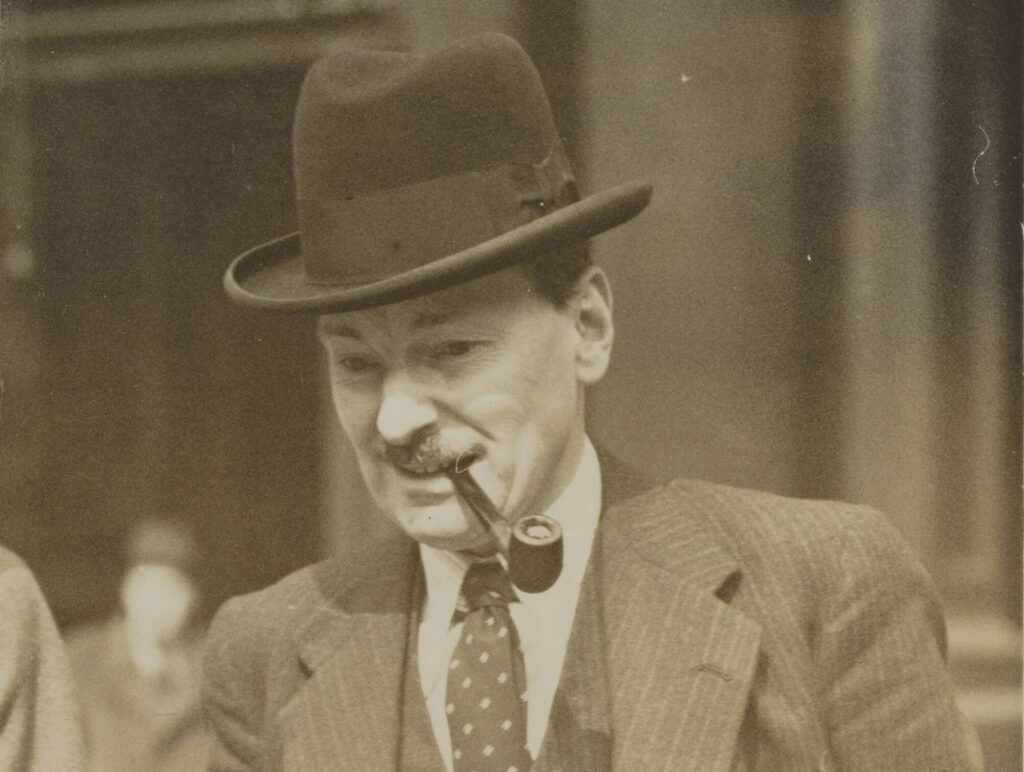
On 23 February 1950, Clement Attlee’s Labour government was returned to office but with its commanding post-war majority slashed to just five seats. The result of the UK’s first general election after a full parliamentary term for a Labour government produced one of the narrowest majorities in British political history.
In the 1945 general election, Labour secured a landslide majority of 146 seats. Over the next six years, the first majority Labour government established the National Health Service (NHS), created a “cradle to grave” welfare state, nationalised around 20% of the economy, constructed new towns, and began the process of decolonisation – most notably granting independence to India in 1947.
Under Attlee’s leadership, Britain was also one of the founding members of Nato in 1949.
***
The 1950 election represented the second consecutive election contest between Attlee and Churchill.
It was fought against a backdrop of post-war austerity, with rationing and conscription still in force. Key campaign issues included Labour’s programme of nationalisation, which the Conservatives opposed taking further; the future of rationing, which the Tories pledged to phase out; and the devaluation of sterling in 1949.
The Iron and Steel Act 1949 featured prominently as an issue in the 1950 contest. The legislation, which placed the nationalisation of the British steel industry on the statute book, was the result of a protracted political and constitutional struggle. But it had not come into force. The Conservative manifesto, This is the Road, made significant concessions to Labour’s programme of nationalisation, setting the terms of the post-war economic consensus. But the manifesto retained the right to “repeal the Iron and Steel Act before it can come into force”.
The Tory manifesto set out the party’s policy to “restore to our country her economic independence and to our citizens their full personal freedom and power of initiative.”
It argued that the socialists had “failed in their duty” with national resources “squandered” and individual effort “discouraged or suppressed”.
The manifesto added: “During these bleak years Britain has lurched from crisis to crisis and from makeshift to makeshift. Whatever temporary expedients have been used to create a false sense of well being, none has effected a permanent cure.
“Devaluation is not the last crisis nor have we seen the worst of it yet.”
It also called for the abolition of the “existing rationing system” as soon as a Conservative government could “ensure that the prime necessities of life are within the reach of every family and each individual”.
Labour’s manifesto, Let Us Win Through Together, vowed to go further with nationalisation, promising to bring the sugar, meat distribution and cement industries under public ownership. It also argued that the steel industry should be “responsible to the nation.”
The manifesto stated: “The choice for the electors is between the Labour Party – the party of positive action, of constructive progress, the true party of the nation – and the Conservative Party – the party of outdated ideas, of unemployment, of privilege.”
***
The election was the first to be held following the abolition of university constituencies and plural voting (dual votes for business owners) under the Representation of the People Act 1948. This meant the contest was the first election to be conducted universally according to first past the post (FPTP). Both the business premises vote and the university vote had historically benefitted the Conservatives.
After the votes were counted, Labour had won 315 seats, a loss of 78, while Churchill’s Conservatives gained 90 seats to finish on 298. The Liberal Party continued its decline, winning just nine seats (down 3). A total of 319 Liberal candidates lost their deposits – a record number. The Liberal Party struggled across a campaign that divided markedly along class lines.
The Times described the outcome of the campaign as “no decision”.
Despite winning nearly 1.5 million more votes than in its 1945 landslide, Labour’s share of the vote was reduced to 46.1% (down 3.6 points) to the Conservatives’ 43.4% (up 4.3 points).
Speaking from Conservative headquarters, Churchill responded: “Parliament will be in a very unstable condition whatever parliament results from this election.”
Turnout reached 83.9%, the highest ever recorded for a UK general election under universal suffrage. This represented an increase of 11.1 points from 72.8% turnout in 1945.
The contest was also the first to be covered on television, with Richard Dimbleby hosting the BBC’s coverage.
The precarious nature of Attlee’s five-seat majority made governing exceptionally difficult.
The months that followed the 1950 election campaign were characterised by ideological divisions within the Labour Party and recriminations over the cause of the party’s decline.
Hugh Gaitskell, who replaced Stafford Cripps as chancellor, responded to the Korean War by imposing prescription charges on glasses and false teeth in his spring 1951 budget. This provoked the resignations of Aneurin Bevan – who was credited with founding the National Health Service as health minister – and Harold Wilson, the president of the Board of Trade. A schism between Bevanites and Gaitskellites thus emerged.
Just 19 months after the 1950 campaign, Britain went to the polls again. The 1951 general election returned the Conservatives to power with Churchill as prime minister once more.
Attlee announced his resignation as leader of the Labour Party in December 1955.

Politics.co.uk Newsletters
DAILY
Politics@Lunch
WEEKLY
Week in Review