Andy Burnham has announced a new national commission on electoral reform, and pledged to put a commitment to change the voting system in Labour‘s next manifesto.
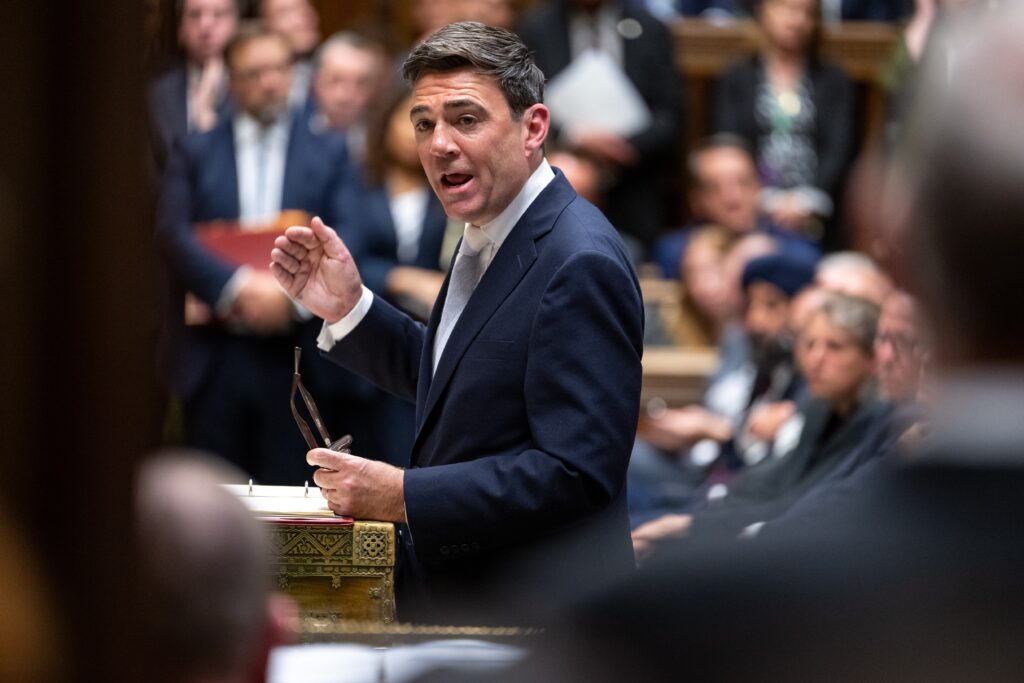
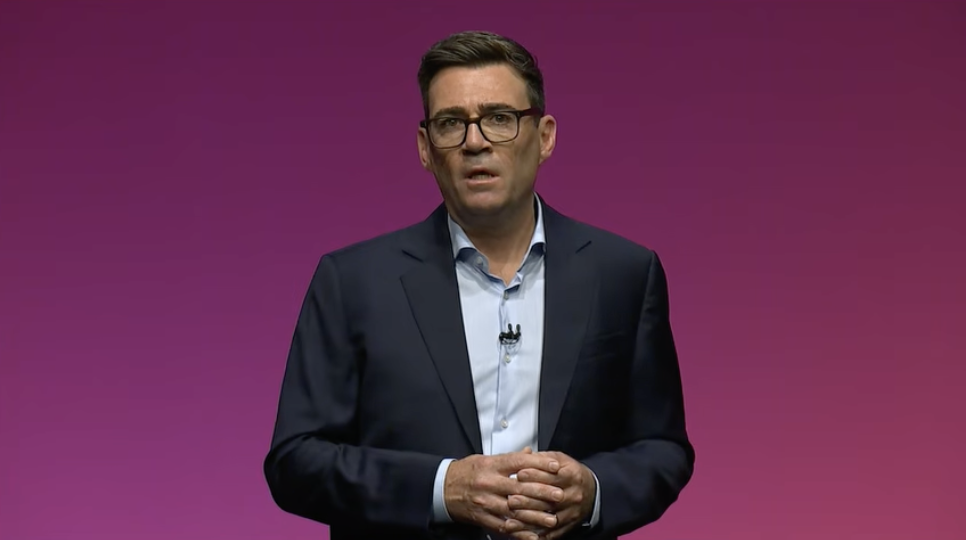
Speaking to Labour conference, the prime minister said: “Today, I am announcing a new national commission on electoral reform. I invite all the political parties to be part of its work.”
He added: “We will contest the next election with a manifesto commitment to change the electoral system, so that everyone’s vote counts and everyone’s voice is heard.”
All political parties, community groups, trade unions, businesses, faith groups and voters will be given the chance to participate in the commission.
Burnham noted Labour conference had voted twice in past years to support electoral reform. “I hear you. I agree with you”, he said.
He warned that under the current first past the post (FPTP) system a “divisive movement” could enter government on “less than 30% of the vote”, adding: “We shouldn’t do that, conference.”
The prime minister said Westminster “prizes point scoring over problem solving”, and that this was why “so many things have gone unfixed for so long”. He said changing Britain required politicians to “change ourselves”.
Burnham noted he was the seventh prime minister in 10 years, and argued that continued “political turbulence” risked Britain’s standing in the world.
He stated: “As you can see, what I am outlining is a more serious and thought-through prospectus for the future of Britain than people have been offered in a generation.”
Responding to Burnham’s pledge, Laura Parker from Labour for a New Democracy said: “This is fantastic news – and decisive leadership from a prime minister who understands we need to rebuild trust in democracy.
“Our voting system is bust. The public knows it, an overwhelming majority across Labour know it, and now a Labour prime minister has committed to doing something about it. Ensuring everyone – in every place – will have a vote that counts.”
In 2026, over 100 Labour MPs signed an amendment to the Representation of the People Bill, calling on the government to establish a national commission on electoral reform. Tabled by Alex Sobel as chair of the fair elections all-party parliamentary group (APPG), the amendment aimed to force a rethink of the first past the post voting system.
Sobel commented in light of Burnham’s announcement: “The Labour Party has always been the party of democratic reform, the prime minister is demonstrating why so many Labour MPs and members were right to put their faith in him.
“A national commission can look at all the issues, consult the public, experts and civil society, and make independent recommendations for how general elections should be run in modern Britain.”
Ellie Chowns, the Green Party leader in the House of Commons, called for electoral reform to be pursued in the current parliament.
She said: “I welcome the prime minister’s support for electoral reform today, as well as his announcement of a national commission on electoral reform and invitation for all political parties to participate.
“But there is a glaring contradiction at the heart of what the prime minister said today. Burnham warned that Labour will have ‘failed’ if they ‘open the doors of Number 10 to a divisive government with less than 30% of the vote’, yet simultaneously ruled out making changes to the voting system before the next general election – locking the promise of a fairer system behind his party winning another election under the very system he says needs to change.”
In 2022, Labour conference voted overwhelmingly to endorse proportional representation with the backing of the party’s affiliated trade unions. However, Labour’s manifesto in 2024 did not contain any commitments on the electoral system. While Burnham is a longstanding proponent of reform, Keir Starmer, his predecessor as prime minister, was a critic.
At the time of the 2022 conference vote on PR, Burnham said: “Under our antiquated political system, the Conservative party has been in power for more than two-thirds of the last century without ever winning a majority share of the popular vote”.
UK rejects electoral reform as AV referendum ends in landslide ‘No’ vote
The pressure for the government to reform the electoral system has increased over the course of this parliament.
In December 2024, the House of Commons voted in favour of the Elections (Proportional Representation) Bill – introduced by Liberal Democrat frontbencher Sarah Olney under the 10-minute rule procedure. The bill sought to “introduce a system of proportional representation for parliamentary elections and for local government elections in England”. A total of 138 MPs supported the bill – with 136 opposed. Notably, 59 Labour MPs backed Olney’s bill.
In January 2025, Rushanara Ali, the then democracy minister, told the commons that there are “no plans” to change the FPTP for national contests.
Ali said: “The [FPTP] system, while not perfect, provides for… a direct relationship between members of parliament and their local constituency.”
In September 2025, the APPG for fair elections published a “ready to go” blueprint for an independent review of the FPTP electoral system. The group’s chair, Labour MP and former frontbencher Alex Sobel, described its proposal as “a ready to go plan to independently review how parliament is elected, promote a national conversation, and build consensus on a way forward”.
At Labour’s annual conference in 2025, Burnham, then the mayor of Greater Manchester, said that moving to a more proportional electoral system “would lay the ground for a new politics [and] a better conversation with the public”.
Third Reform Act establishes uniform franchise after ‘Arlington Street compact’