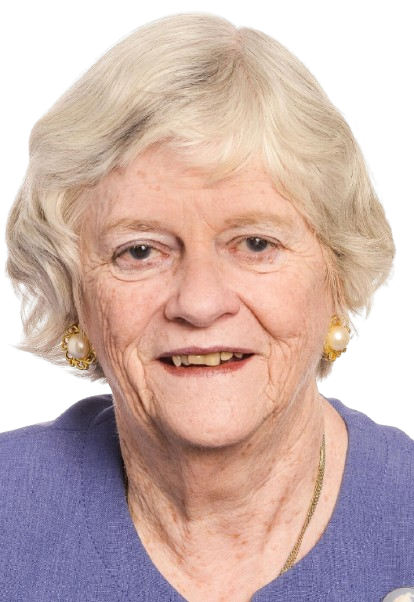
Ann Widdecombe served as the Conservative MP for Maidstone (later Maidstone and The Weald) for 23 years, from 1987 to 2010.
During her time as a member of parliament, Widdecombe held ministerial posts under John Major and served in William Hague’s shadow cabinet. She was a prominent convert to Roman Catholicism, leaving the Church of England in 1993 following its decision to allow the ordination of women priests.
After her long career as a Conservative MP ended in 2010, Widdecombe became a familiar figure in the media, appearing on reality television shows such as Strictly Come Dancing. She made a political comeback in 2019, being elected as a member of the European Parliament (MEP) for Nigel Farage’s Brexit Party.
Widdecombe was still described as “Reform UK spokesperson” as of June 2026 and campaigned in the sensational Makerfield by-election.
Widdecombe was found dead at her home on 9 July 2026, aged 78. Devon and Cornwall Police launched a murder investigation, which was later taken over by counter-terrorism police.
Widdecombe’s rise to prominence and ‘something of the night’ attack (1990-1997)
Widdecombe stood as a Conservative candidate in the 1979 (Burnley) and 1983 (Plymouth Devonport) general elections. She was first elected to parliament as the MP for Maidstone at the 1987 general election.
In November 1990, Widdecombe was appointed parliamentary under-secretary of state for social security in John Major’s government. She went on to serve as a parliamentary under-secretary of state for employment (1993-1994), as minister of state for employment (1994-1995) and as minister of state for prisons (1995-1997).
During her time in the Home Office, Widdecombe sometimes clashed with Michael Howard as home secretary. This tension burst into the open after the 1997 general election, which resulted in a Labour landslide and Tony Blair’s appointment as prime minister.
Widdecombe was angered by Howard’s 1995 dismissal of Derek Lewis, the director-general of the prison service following a series of escapes. She believed Howard had misled parliament and unfairly blamed Lewis for systemic failings. Shortly after the 1997 election, she delivered a quietly devastating personal attack, suggesting that there was “something of the night” about Howard.
Widdecombe delivered the comment during a phone call with the political editor of the Sunday Times, Michael Prescott. Her plan was to damage Howard’s candidacy in the 1997 Conservative leadership contest. Widdecombe reportedly repeated the phrase several times, and asked to be credited with it. The quote appeared in print on 11 May.
The immediate and devastating influence of the quip is difficult to recount. Commentators have suggested it captured, in an beguiling if intangible way, Howard’s abrasive character and political ruthlessness. It has also been seen as a thinly veiled reference to Howard’s Romanian roots.
Howard first addressed Widdecombe’s attack in an interview with the Spectator. The Conservative leadership candidate rejected the accusation he had misled the commons over Lewis’ sacking. He also joked that Widdecombe had pierced the “diabolic darkness of my own inner soul”.
An ally of Howard’s took a considerably more pointed approach when they told the Daily Mail that Lewis had wooed Widdecombe with flowers, chocolates and intimate dinner dates. “I think she fell in love with him. He flattered her vanity”, the Mail was told. “I don’t think she was used to that, poor girl. I’m not sure he didn’t do it deliberately because she was a useful ally. In the end it clouded her judgment.”
Howard reportedly responded by ringing the paper’s editor in an attempt to have the quote pulled from later editions, without success. The subsequent row forced the former home secretary into the media studios. In a notorious BBC Newsnight interview, Howard insisted that the Mail quotes had “not come from my campaign team”. Jeremy Paxman responded by drilling into the substance of the Lewis-Widdecombe row. Howard, alleged to have put pressure on Lewis to suspend the governor of Parkhurst jail, was asked: “Did you threaten to overrule him?”
The Conservative leadership candidate evaded. But Paxman refused to relent, challenging the ex-home secretary on the same question a full 13 times. The uncomfortable stalemate contributed to Howard’s dwindling standing in the Tory leadership campaign.
Widdecombe addressed the House of Commons six days later on 19 May 1997, during a debate on home affairs. In concluding her 40-minute speech, a comprehensive castigation of Howard’s conduct, Widdecombe called for the new prime minister and Conservative leader to “clean up parliament’s image in the eyes of the British people.” The Sun described Widdecombe’s speech as the “most savage attack ever seen in the commons”.
Howard also addressed the commons debate. Directing his remarks to the government frontbench, he accused Labour of mirroring the policies he pursued as home secretary.
He said: “It has been suggested that I have something of the night about my character.
“It is, of course, well known in folklore that creatures of the night have no reflection, so honourable members will understand my relief as I look across the dispatch box and see my reflection smiling back at me.”
Howard was eliminated from the Conservative leadership contest in fifth place, having secured the support of only 23 colleagues in the first round of voting. The “something of the night” quip cast a long shadow over Howard’s political career and was resurrected after he succeeded Iain Duncan Smith as Conservative leader in 2003.
In December 2009, Widdecombe admitted she prepared the phrase with the clear intention of damaging Howard’s political standing. Speaking to BBC Radio 4, Widdecombe was asked if she knew in advance that the phrase was a “humdinger” that would seize the public imagination.
She responded: “Yes. I had tested it out. I had this phrase in my head… and he had no idea I was doing that – on the permanent secretary at the Home Office at the time.”
Asked if she felt her attack had finished Howard politically, Widdecombe said: “It clearly didn’t, because he came back as leader of the opposition.
“Possibly at the time [it did], and that was the intention at the time. I wasn’t trying to be complimentary.”
Widdecombe’s late-political career: Brexit Party and Reform UK
William Hague, the winner of the 1997 Conservative leadership contest, appointed Widdecombe as shadow health secretary (1998-1999) and shadow home secretary (1999-2001).
Widdecombe reportedly considered running for the Conservative leadership after the 2001 election resulted in a second consecutive Labour landslide and Hague’s resignation. She found that despite indications of popularity among the grassroots party membership, she struggled to muster sufficient support amongst Conservative MPs.
In March 2003, Widdecombe voted in favour of the government motion authorising military action against Iraq. The vote, one of the most contentious in recent parliamentary history, gave the prime minister, Tony Blair, the authority to join the US-led invasion.
Widdecombe stood unsuccessfully for the position of speaker of the House of Commons in 2009 following the resignation of Michael Martin. She was eliminated in the second round, after her support declined from 44 to 30 MPs.
Widdecombe stood down as an MP at the 2010 general election, later quipping that she preferred “Countdown to question time”.
As a long-time favourite of the Conservative grassroots, owing to her forthright style and views, Widdecombe established herself as a staple of the after-dinner speaker circuit for local Conservative associations.
Widdecombe made a shock return to frontline politics in 2019 as the lead candidate for Nigel Farage’s newly formed Brexit Party in the South West England constituency for the European Parliament elections. In keeping with strong results nationally for the party, Widdecombe was elected as a Brexit Party MEP. She served in Brussels until Britain’s formal departure from the EU on 31 January 2020.
Widdecombe stood as the Brexit Party candidate for the Plymouth Sutton and Devonport constituency in the 2019 general election. She came a distant third behind the Labour and Conservative candidates with only 2,909 votes (5.5%).
The Brexit Party’s rebrand as “Reform UK” was approved by the Electoral Commission in January 2021.
Widdecombe: Strictly Come Dancing and reality TV
Widdecombe turned down multiple invitations to participate in the BBC’s popular entertainment show, Strictly Come Dancing, before finally relenting ahead of the 2010 series.
Partnered with professional dancer Anton du Beke, Widdecombe became a surprising audience favourite despite her obvious lack of technical dancing skill. Known for her comedic and often theatrical routines, she remained in the competition for 10 weeks.
In January 2018, Widdecombe participated in Channel 5’s Celebrity Big Brother, finishing as runner-up.
Widdecombe: death and tributes
On 9 July, police officers were called to Widdecombe’s home on Dartmoor, Devon, by the ambulance service after she was found dead in her home.
In a statement, Widdecombe’s management team said she “loved the cut and thrust of political debate” and was a “consummate professional”.
They added: “Her life and career were driven by her strong Christian values and commitment to public service.
“She loved the cut and thrust of political debate and, 16 years after leaving Parliament, was still actively campaigning for Reform UK and offering forthright views on the hot topics of the day across numerous radio and television programmes…
“A consummate professional and a delight to work with, indefatigable to the last, we know this news will come as a great shock to the many colleagues and friends she made along the way and our sympathies go to them and her family.”
The news of Widdecombe’s death sparked a wave of tributes.
Kemi Badenoch, the leader of the Conservative Party, described Widdecombe as “a formidable politician who was never afraid to speak her mind and fought hard for what she believed.”
She added: “Always true to herself, her politics were strongly guided by her faith and her values. Rest in Peace, Ann.”
Nigel Farage, the leader of Reform UK, said: “When Ann Widdecombe decided to stand for the Brexit Party in the snap 2019 European elections, it was a big moment and huge boost. The voters loved her.
“She played a decisive role in getting Brexit over the line and will be missed by us all.”
Michael Howard, the former home secretary, wrote about his and Widdecombe’s “disagreement” in a Telegraph article. Howard argued that Widdecombe’s famous barb did him something of a “favour”.
He stated: “I don’t think William Hague particularly enjoyed his time as leader during the very difficult period following our defeat in 1997, and I had my chance later…
“Ann and I later made up. She wasn’t able to accept the post I offered her in my shadow cabinet, but we spoke on the same side in some of the debates on Brexit, and were able to come to terms with the events which by then had begun to fade into the past.”
On the afternoon of 9 July, the police announced that they were launching a murder investigation.
Detective Chief Inspector Ilona Rosson said: “This is an extremely tragic incident, and our thoughts are very much with the family and friends of Ann Widdecombe at this difficult time.
“Our murder inquiry is in its early stages but moving at a significant pace. We are deploying all of the necessary resources to find out exactly what has happened and to locate the person responsible, who we believe to be a white male.”
Police said they believed Widdecombe had been killed at approximately 12.30 pm on 8 July.
Shabana Mahmood, the home secretary, said: “I am deeply saddened to hear of the death of Ann Widdecombe. The circumstances of her death are extremely distressing and my thoughts are with Ann’s family and loved ones.
“Ann’s dedication to public service was decades long, and she was a true servant of her constituents.”
At 5.45pm on 10 July, police said that a 26-year-old white man had been arrested on suspicion of murder. The following day, officers said the 26-year-old suspect had been released from custody without charge and that he was no longer part of the investigation.
Late on 11 July, police officers said a 28-year-old white British male had been arrested in South Yorkshire. “We were supported by counter-terrorism policing north-east and South Yorkshire police who carried out the arrest on behalf of Devon and Cornwall police”, they said.
After initially insisting that there was nothing to suggest Widdecombe’s death was politically motivated, it was announced on 13 July that counter terrorism police were now leading the investigation after “new information and evidence” came to light.
The announcement came after the suspect in the investigation was seen in CCTV footage appearing to get into a car in Yorkshire, hours before Widdecombe was thought to have been attacked in her home in Devon.
On 14 July, counter-terrorism police said they believed that Widdecombe had been killed as part of a “targeted attack”.
Head of counter terrorism policing, assistant commissioner Laurence Taylor, stated: “In terms of the preparation and planning, we are aware that there has been some preparation and planning. I don’t want to go into the details of the extent of that at this stage.”
Political views
Widdecombe was a staunch eurosceptic.
In her maiden speech to the European Parliament in July 2019, Widdecombe compared Brexit to historic struggles against oppression.
She stated: “There is a pattern consistent throughout history of oppressed people turning on the oppressors: slaves against their owners, the peasantry against their feudal barons – colonies, Mr Verhofstadt, against their empires. That is why Britain is leaving.
“It doesn’t matter which language you use, we are going, and we are glad to be going.”
Widdecombe also held firmly conservative views on social policy. She is strictly anti-abortion and opposed the legalisation of same-sex marriage.
In June 2019, Widdecombe told Sky News that science might “produce an answer” to being gay.
She said: “The fact that we now think it is quite impossible for people to switch sexuality doesn’t mean that science may not yet produce an answer at some stage.”
In 1999, she stated: “I do not think that [homosexuality] can be promoted as an equally valid lifestyle to marriage, but I would say the same about irregular heterosexual arrangements”.
In the same question and answer interview with BBC News, Widdecombe added: “Abortion is not just a religious belief. Some of my best work against abortion was done when I was an agnostic. It is not moral issue – if I come up and kill you, you do not say it’s a moral, individual issue. We are talking about taking life in the womb.
“Our laws now permit abortion up to birth itself. That means you can have two children in the womb, one of whom is protected and born with every civil liberty that there is and the other of whom is not wanted and can actually be aborted at the same age and gestation as the other child. That is profoundly wrong and it has nothing to do with sexual morality, or religion, or anything else.”
Widdecombe has expressed scepticism regarding the scientific consensus on man-made climate change. She was one of only five MPs to vote against the landmark Climate Change Act in 2008.
On the issue of fox hunting, Widdecombe was among the 20 prominent figures who signed a letter to MPs in 2015 urging them to vote against government plans to relax the fox-hunting ban in England and Wales.
Personal life
Widdecombe never married.
In a 2010 Irish Times interview, she stated: “Everybody else makes a damned issue of it but it’s not an issue.
“It was never a conscious choice. When I broke up with my first boyfriend, I assumed I would still marry somebody, but Mr Right never came along and it was never a big enough priority to go out looking for him.”
Widdecombe lived with her widowed mother, Rita, for many years until her death in 2007.
Before politics
Widdecombe grew up in Bath, Somerset. Her father was a senior civil servant at the Ministry of Defence.
Widdecombe studied philosophy, politics and economics (PPE) at Lady Margaret Hall, Oxford. During her time at university, she joined the Society for the Protection of Unborn Children (SPUC), and served as secretary (1971) and treasurer (1972) of the Oxford Union debating society.
Widdecombe worked as a marketing executive at Unilever (1973-1975) and in university administration at the University of London (1975-1987),
Widdecombe also served as a councillor on Runnymede District Council in Surrey (1976-1978).
Trivia: things you may not know about Ann Widdecombe
As a prominent Roman Catholic convert (known affectionately as “Popessa” to some friends), Widdecombe was offered the role of British ambassador to the Holy See (Vatican) by the Conservative-Liberal Democrat coalition government.
Widdecombe indicated she would not accept the post, partly due to needing treatment for a detached retina at the time. “I’m sure the Italians have wonderful hospitals”, Widdecombe later stated, “but they tend to speak Italian”.
Following her popular stint on Strictly Come Dancing, Widdecombe made several appearances in professional pantomimes, playing roles like the Wicked Queen or the Empress of China.
Widdecombe performed for seven nights in 2012 in a non-singing, non-dancing cameo role in Donizetti’s opera La Fille du Régiment at the Royal Opera House, London. Reviews of her operatic appearance were mixed. The Telegraph described her contribution as “Mortifyingly inept”.
Ann Widdecombe has not written for Politics.co.uk.