Winnie Ewing leads SNP to historic Hamilton by-election victory
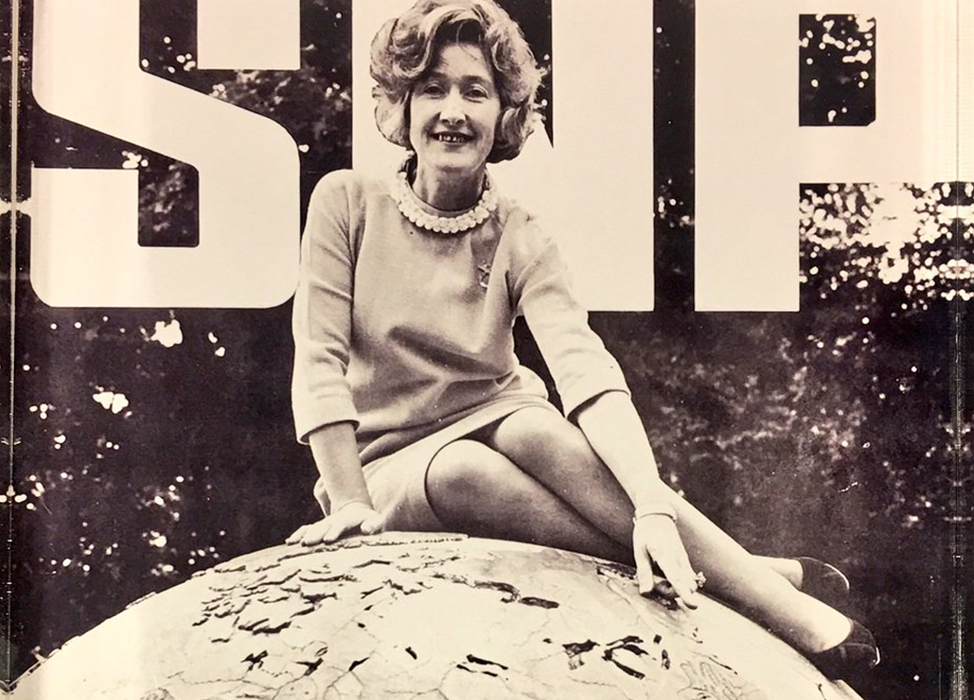
The 1967 Hamilton by-election, held on 2 November 1967, resulted in a stunning victory for the Scottish National Party (SNP) candidate Winifred “Winnie” Ewing. The result is widely credited with establishing the SNP as a serious political force.
The by-election was triggered by the resignation of Tom Fraser, the incumbent Labour MP. Fraser resigned his post to become chairman of the North of Scotland Hydro-Electric Board.
***
The Hamilton constituency in Lanarkshire had returned Labour MPs since its creation in 1918, with the party securing over two-thirds of the vote in every contest from 1945 to 1966. Fraser, the Labour MP for Hamilton since a 1943 by-election, secured 27,865 votes (71.17%) at the 1966 general election – a majority of 16,576.
At the time of the election, the SNP was still considered something of a peripheral force in Scottish politics. It did not stand a candidate in Hamilton at the 1966 election.
The SNP won its first parliamentary seat in 1945 when Dr Robert McIntyre was returned at the Motherwell by‐election. Following the death of the constituency’s previous MP, James Walker, the main parties agreed not to stand – owing to the unusual wartime conditions. The SNP and McIntyre, who led the SNP from 1947 to 1956, went on to lose Motherwell in the general election that followed 84 days later.
In the 1966 general election, the SNP won 5% of the vote across Scotland, having contested just 23 of the 71 Scottish seats. Ahead of the Hamilton by-election, the SNP leadership reportedly told Ewing merely to “try to come a good second in order to encourage the members.”
But in the mid-1960s, the ground was beginning to shift.
On 14 July 1966, Plaid Cymru achieved its first-ever parliamentary breakthrough when its president, Gwynfor Evans, won the Carmarthen by-election, overturning a substantial Labour majority. Evans had previously stood in Carmarthen at the 1964 and 1966 general elections, coming third on both occasions. He finished 13,805 votes behind Labour candidate Megan Lloyd George (daughter of the former Liberal prime minister) in the 1966 general election.
Plaid Cymru wins first parliamentary seat in Carmarthen by-election
The SNP recorded a strong showing at the Glasgow Pollok by-election, held on 9 March 1967. The party’s candidate, George Leslie, won 10,884 votes (28.16%). As was the case in Hamilton, the SNP had not stood a candidate in Glasgow Pollok at the 1966 election.
Ewing, a Glasgow solicitor, ran an energetic 18-month campaign in Hamilton. The result, announced in the early hours of 3 November, shocked the political establishment.
Ewing secured 18,397 votes (46.0%), defeating the Labour candidate, Alexander Wilson, who received 16,598 votes (41.5%).
The Conservative candidate, Ian Dyer, finished a distant third with 4,986 votes (12.5%) and lost his deposit.
The SNP won the seat with a majority of 1,799 votes – representing an enormous swing of nearly 38 points from Labour.
Speaking outside the by-election count, Ewing declared: “Stop the world, Scotland wants to get on.”
In her maiden speech, delivered to the commons on 20 November 1967, Ewing looked forward to the day when she would have “some colleagues to join me here”.
Ewing was an isolated figure in the commons from 1967 to 1970. She later referred to parliament as “a torture chamber where vicious critics threw endless insults.”
***
Ewing failed to retain Hamilton at the 1970 general election, losing by a majority of 8,582.
But her 1967 victory had an immediate impact. It provided the SNP with hitherto elusive electoral credibility and publicity, coming a full 22 years after McIntyre briefly secured Motherwell. In 1970, despite Ewing’s defeat, the SNP won its first seat in a general election. This came with Donald Stewart’s capture of the Western Isles constituency.
The Hamilton result also placed considerable pressure on the established parties. Within six months of the by-election, the Conservative leader Edward Heath provisionally committed the Tories to devolution at the party’s Perth conference. The so-called “Declaration of Perth”, issued on 18 May 1968, represented a remarkable – if ephemeral – development in unionist politics.
More significantly, the SNP’s breakthrough in Hamilton – considered alongside Plaid Cymru’s success in Carmarthen – led to the establishment of the Royal Commission on the Constitution (the Kilbrandon Commission) by the Labour government in 1969.
Kilbrandon Report recommends devolved assemblies for Scotland and Wales
The commission’s work constituted the first major study of the constitutional challenges posed by multi-national governance and rising national consciousness.
The majority report, which recommended legislative devolution for Scotland and Wales in the form of elected assemblies, began with a frank acknowledgment of the reasons for its establishment.
It said: “In 1969, when we were appointed, there was obviously some discontent with the workings of government, and the outward signs of that discontent seemed to reflect especially the frustrations of those living furthest from London.”
The report explicitly rejected independence for Scotland and Wales. But it found “ample evidence of the existence of [a] sense of nationhood” and identified “centralisation” as a source of political resentment.
The February 1974 election saw a surge in support for the nationalist parties. The SNP’s representation rose from one seat to seven seats; its share of the vote doubled to 21.9%. Plaid Cymru won seats (two) for the first time at a general election.
The October 1974 election returned Harold Wilson’s Labour government with a small majority, which withered over the course of the parliament. The SNP once again improved its standing, securing 11 MPs and 30% of the vote north of the border.
James Callaghan, who succeeded Wilson as prime minister in 1976, responded with the Scotland Act 1978 and the Wales Act 1978 – both of which provided for the establishment of devolved assemblies, subject to post-legislative referenda.
SNP MPs withdrew their support for James Callaghan’s minority Labour government in the aftermath of the 1979 Scottish devolution referendum – which was lost, effectively, on a technicality. A vote of no confidence followed, and with it the 1979 general election.
In that contest, the SNP was reduced to 9 seats.
Ewing later served as the SNP MP for Moray and Nairn from February 1974 to 1979. That same year she entered the European Parliament as MEP for the Highlands and Islands.
In her February 1974 campaign, Ewing unseated Gordon Campbell – the then-secretary of state for Scotland.
Ewing was among the first cohort of MSPs elected to the Scottish parliament in 1999.
As the new parliament’s oldest member, she presided over the chamber and the election of its first presiding officer (David Steel).
Once the new MSPs had been sworn in, she famously declared that “the Scottish parliament, which adjourned on March 25, 1707, is hereby reconvened.”
Scottish Parliament votes to ratify Act of Union
***
In 2007, on the 40th anniversary of Ewing’s victory, the then-SNP leader, Alex Salmond, described the Hamilton by-election victory as a “catalyst for reform” in Scottish politics.
He argued that the victory “forced the pace of change” and stated that without it, “the movement for a Scottish parliament would have been delayed still further.”
Reflecting on the significance of her victory 50 years later in 2017, Ewing said the by-election “dealt a strong blow to the soft underbelly of Labour’s supposedly invincible heartland”.
She added: “I remember the Nationalist thinker and wit, Oliver Brown, saying that it had ‘sent a shiver run along the Scottish Labour backbencher looking for a spine to run up’.
“The result of the by-election was a tremendous shock to Labour and to the political establishment, and it brought into being an SNP which would become the major opposition to Labour in Scotland in the closing decades of the twentieth century and into the twenty-first.
“It also confirmed the central question of modern Scottish politics would become that of independence, because my victory at Hamilton woke up Scotland and the Scots – worldwide – and made them start to think about their future…
“The eighteen-month campaign was supported by thousands of Scots…
“Many people have asked me over the years if I thought during the Hamilton campaign that I was going to win. I felt I was going to win from the beginning, but it was the motorcade on the Saturday prior to polling day that finally convinced me that it was not a fantasy: that motorcade took an hour to pass by.”
Ewing – an icon of the nationalist movement – died on 21 June 2023, aged 93.
Hamilton 1967 continues to occupy a prominent place in Scottish nationalist mythology.

Politics.co.uk Newsletters
DAILY
Politics@Lunch
WEEKLY
Week in Review
