Scottish Parliament votes to ratify Act of Union
On 16 January 1707, the Parliament of Scotland passed the Act of Union, ratifying the treaty that would formally unite the kingdoms of England and Scotland into a single state under one crown and with one parliament.
The measure was approved by 110 votes to 67, and then touched with the royal sceptre by Queensberry – the usual manner of signifying the sovereign’s approval of bills passed by the Scottish parliament.
On 28 January, having been presented with the Treaty of Union and the Scottish Act, the English Parliament passed the Union with Scotland Act 1706 (England). It approved the terms of the Scottish Act without amendment (the two Acts together being the Acts of Union).
The twin acts together established the Parliament of Great Britain at Westminster, with Scotland granted 45 members in the House of Commons and 16 representative peers in the House of Lords.
***
The road to union was complex and contentious. Since the Union of the Crowns in 1603, England and Scotland had shared a monarch but remained separate polities with their own parliaments. Legislative union had previously been considered but resisted in the political context created by the Glorious Revolution (1688): first in 1689, during the deliberations of the convention parliament in Edinburgh; and second in 1702, following the accession of Queen Anne to the thrones of Scotland and England.
For England, the primary motivation for a full political union was to secure the Protestant supremacy created by the Glorious Revolution and prevent a Catholic Stuart monarch from using Scotland as a base to reclaim the crown.
Article 2 of the Treaty of Union stated Scotland’s acceptance of the Hanoverian Succession (initially under George I), which followed the death of Queen Anne. The article thus ensured Great Britain’s commitment to Protestant monarchy.
For Scotland, the economic benefits of political union have been considered as a key motivation.
In 1698, the Scottish parliament succumbed to a disastrous failure in attempting to set up an entrepôt for the East and West Indies on the Panama Isthmus. The scheme was abandoned in 1700 and estimated to have cost £200,000 and some 2000 lives.
On top of this, the Alien Act of 1705 (passed by the Westminster parliament) stipulated that unless the Scottish parliament returned to negotiations over a political union, then Scots would be considered as “foreign nationals” and therefore prevented from trading with or in England.
Article 4 of the Treaty of Union duly stipulated that all subjects of the new Great Britain would enjoy the same rights – including rights to trade with the colonies that had been English but were now British. Under the Navigation Acts, Scotland had been excluded from the commercial benefits of the developing English empire.
***
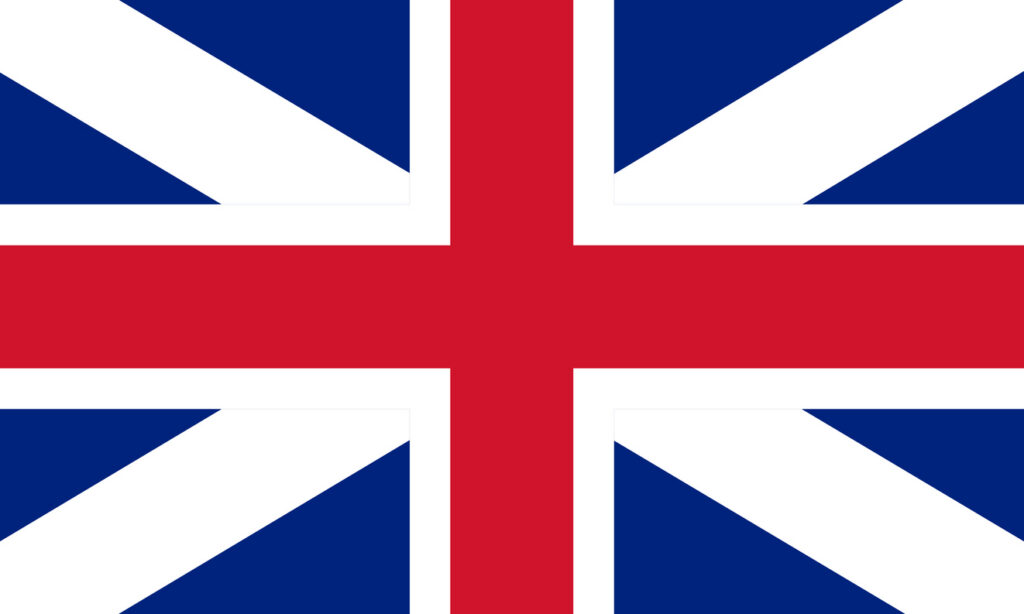
The Kingdom of Great Britain was constituted on 1 May 1707. The new state’s flag, the Union Flag, combined the English cross of St George and the Scottish saltire of St Andrew.
The nature of the union’s agreement was tainted from the outset by well-founded accusations of bribery.
Article 15 of the union has been characterised as a straightforward sweetener, whereby a significant sum of money was set out to compensate Scotland, nominally, for her adoption of England’s national debt. The treaty stated that this money was to be paid to shareholders in the Company of Scotland – the company that had overseen the failed scheme to build a colony in Darien. Union became a way for investors to claw back money lost on the abortive colonial venture.
Political union, therefore, was a product of a series of cross-cutting religious, military, financial and imperial imperatives – as well as corruption and ineptitude. Historians continue to debate the weight that should be ascribed to each factor, especially from the Scottish perspective.
The union has been described as conducted between equals, establishing a new entity at Westminster reflecting both English and Scottish political traditions – and whereby Scottish society maintained significant autonomy. On the other end of the spectrum, it has also been characterised as a grubby elite bargain, cooked up by an English political class and endorsed by self-interested, well-compensated Scottish MPs.
Shades of historiographical opinion exist in between these interpretations. Our contemporary politics, coloured by the rise of Scottish secessionism, means the Anglo-Scottish Union’s formation is still subject to significant controversy.
***
What is not doubted, however, is that political union became an immediate source of political and social unrest.
Initial disaffection within Scotland towards the Treaty of 1707 was soon enhanced by breaches in both the spirit and letter of the union.
This resentment led to a concerted effort by Scottish politicians at Westminster to dissolve the union. In 1713, one such effort failed by only four proxy votes in the House of Lords.
The foremost beneficiary of this disaffection was Jacobitism, a complex political and religious ideology united by a shared belief in restoring the deposed Stuart dynasty (James VII of Scotland and II of England, and his descendants).
Jacobite forces mounted two serious challenges to the Union in 1715 and 1745.

Politics.co.uk Newsletters
DAILY
Politics@Lunch
WEEKLY
Week in Review