The budget is the UK government’s annual statement on the nation’s finances and its proposals for changes to taxation and spending. It is presented to the House of Commons by the chancellor of the exchequer in a major speech that is one of the main set-piece events of the political calendar.
The speech is accompanied by the publication of the detailed Financial Statement and Budget Report, known as the “red book”. This is published alongside an array of supporting documentation including economic forecasts from the Office for Budget Responsibility (OBR)
All budget decisions must be based on the independent economic and fiscal forecasts produced by the OBR.
The budget cycle: two ‘fiscal events’ a year
By law, the government must commission at least two forecasts from the OBR each year. This has led to a regular cycle of two major fiscal events.
The term “fiscal event” has no precise definition, but it is generally used to describe any statement by the chancellor that sets out decisions on taxation and public spending.
The incumbent Labour government has opted for the following formulation.
The spring statement, typically held in March, provides an update on the health of the economy and the public finances. (This was previously known as the pre-budget report.) It responds to the latest OBR forecast and may provide the backdrop for the announcement of policy changes.
The autumn budget, typically held in November, is the main event for announcing specific tax measures that will be implemented in the new financial year, which begins in April. Budgets, being annual events, reflect the fact that income tax and corporation tax are annual taxes and must be renewed under legislation each year.
The previous Conservative government, led by Rishi Sunak from 2022 to 2024, held a spring budget and an autumn statement.
Budgets may be held twice within a single year. This can occur in the case of an “emergency budget”, introduced in response to a rapidly deteriorating economic situation, or in a general election year, when an incoming chancellor may choose to deliver a fresh fiscal statement reflecting the priorities of a new government.
The Office for Budget Responsibility (OBR)
The Office for Budget Responsibility is the United Kingdom’s independent fiscal watchdog. It is a non-departmental public body tasked with providing independent and authoritative analysis of the UK’s public finances.
The OBR was created by the Conservative-Liberal Democrat coalition government in 2010. Prior to its existence, HM Treasury was responsible for producing the official economic forecasts that underpinned its own budgets. Its analysis forms the basis for the government’s budget plans.
Budget day: the process and choreography
The delivery of the budget is accompanied by significant political ritual and tradition.
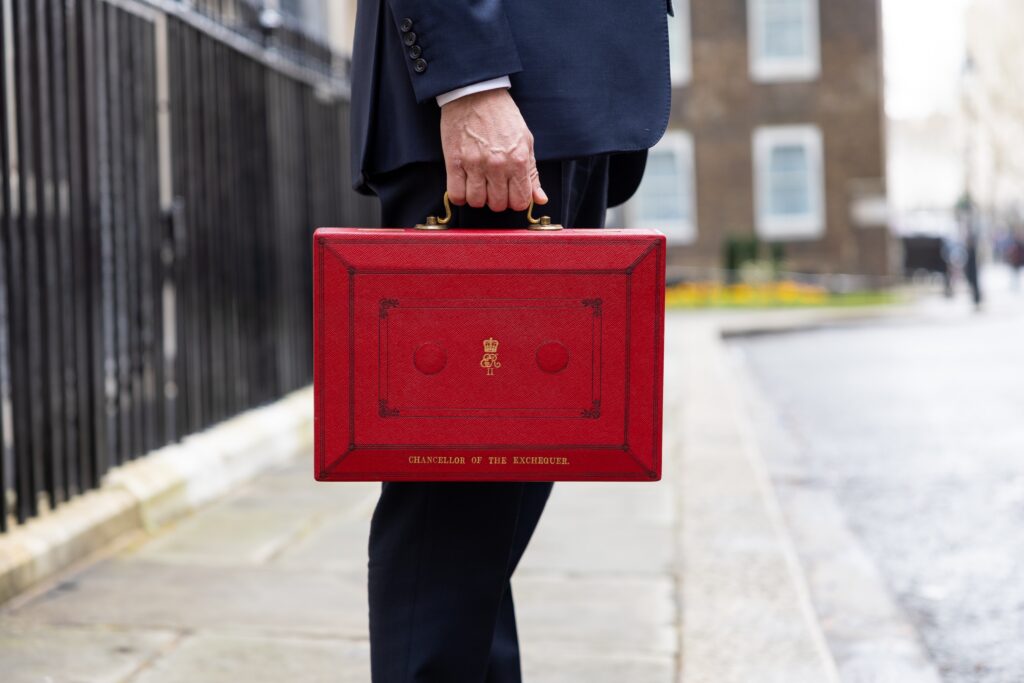
On the morning of the budget, the chancellor holds up the famous red leather budget box for a photo call outside 11 Downing Street before proceeding to the House of Commons.
The budget statement, delivered by the chancellor, takes place on a Wednesday after prime ministers’ questions (PMQs). It usually lasts around one hour. The senior deputy speaker, known as the chairman of ways and means, presides over the budget statement and debate.
After the chancellor finishes their speech, the chairman of ways and means puts a question to the House asking for its agreement on a provisional collection of taxes motion without debate. MPs are not given advance sight of the motion, as is standard procedure, to avoid risks associated with possible market manipulation. The motion is authorised by the Provisional Collection of Taxes Act 1968 (as amended by the Finance Act 2011).
This means budget changes can come into effect at 6:00 pm on budget day.
Erskine May, the authoritative account of parliamentary procedure, states: “The Provisional Collection of Taxes Act 1968 provides that provisional validity may be given to specified budget resolutions by means of a single motion…
“The budget resolutions thus given provisional force must be passed within the next ten days on which the House sits for their validity to be continued.”
The chancellor then moves a ways and means motion. This forms the basis of several days (usually four) of debate in the House of Commons. Each day of debate is led by a different cabinet minister and focuses on a different theme.
After the chancellor finishes speaking, the leader of the opposition gives an instant response.
The shadow chancellor responds to the budget on the second day of debate.
At the end of the fourth day of debate, the ways and means motion initially proposed by the chancellor is put to the House for a formal vote (division). After this first motion is dealt with, other such motions are put without further debate. Collectively, these ways and means motions provide parliamentary authority for most tax-raising measures. They must be approved within 10 days.
Once the ways and means motions are approved, the government can put the Finance Bill to the House.
Following the budget, the House of Commons Treasury select committee conducts an inquiry into the government’s package of proposals, publishing a report with its findings and recommendations. The government is expected to publish a report in response to these findings.
The Finance Bill
The tax measures announced in the budget cannot become law until they have been authorised by parliament. This is done through the passage of an annual Finance Bill.
The bill gives legal effect to the taxation proposals contained within the ways and means resolutions.
It mostly goes through all the normal legislative stages in the House of Commons. The only difference is that, during its consideration in committee, the bill is usually split. Some clauses are considered in a committee of the whole House, while some are scrutinised in a public bill committee.
The House of Lords can debate the Finance Bill but cannot block it.
The control of the commons over the Finance Bill is maintained by the long-standing convention of financial privilege. This convention operates as follows:
- The Finance Bill passes the House of Commons and is sent to the House of Lords.
- The House of Lords scrutinises the bill and it can pass amendments to it.
- The bill, with any Lords’ amendments, returns to the House of Commons.
- If the government objects to a Lords’ amendment on the grounds that it relates to taxation or spending, the commons will vote to disagree with the amendment, formally citing its financial privilege as its reason.
- The bill then returns to the Lords. By a long-established constitutional convention, the House of Lords will then not insist on its amendment and will accept the view taken by MPs.
This convention, while not a statutory block, is in effect politically binding and ensures that the House of Lords does not, in practice, interfere with the UK’s core financial and taxation policies.
As we have seen, some tax changes, such as duties on alcohol and tobacco, can take effect immediately from the day of the budget.
Traditions and trivia
The chancellor is the only MP allowed to consume an alcoholic drink in the chamber, and only while delivering the Budget speech. Former chancellors have chosen sherry and beaten egg (William Ewart Gladstone), whisky (Kenneth Clarke), spritzer (Nigel Lawson), brandy and water (Benjamin Disraeli), or gin and tonic (Geoffrey Howe).
More recent chancellors have opted for water.
The original red budget box was first made for William Gladstone in around 1860. Jim Callaghan, who served as chancellor from 1964 to 1967, broke with tradition and used a new box for his budget statement in 1965. Alistair Darling, the chancellor from 2007 to 2010, reverted to the old budget box in 2008. George Osborne used the Gladstone box for his first budget in 2010, before using a newer version in 2011.
The longest budget speech was delivered by Gladstone in 1853, lasting four hours and 45 minutes. The shortest is credited to Gladstone’s great rival, Disraeli, in 1867. Disraeli’s contribution lasted for 45 minutes. Disraeli delivered a speech lasting five hours in 1852, but required a break.
Reeves delivers first Labour budget in 14 years (2024)
On 30 October 2024, Rachel Reeves, the chancellor of the exchequer, delivered the first budget of the new Labour government. The fiscal event, presented just four months after the party’s landslide victory in the 2024 general election, was the first Labour budget since 2010 and the first in history to be delivered by a woman.
Reeves outlined a series of tax increases and spending commitments aimed at “restoring economic stability” and “rebuilding Britain.”
In late July 2024, Reeves accused the previous Conservative government of leaving a £22 billion fiscal “black hole” in the country’s finances. She said compensation payments for victims of the Post Office Horizon IT and infected blood scandals, as well as a series of other projects, had not been fully accounted for.
The chancellor responded with urgent spending cuts, controversially limiting the winter fuel payment. In her budget statement, Reeves accused the Conservatives of having “hid the reality of their public spending plans”.
The central feature of the budget was its package of tax increases, amounting to £40 billion. This figure made the 2024 autumn budget the largest tax-raising budget since 1993.
The rises created room for increased spending on public services and investment. Reeves announced the health budget would receive a £22.6 billion increase in day-to-day spending and a £3.1 billion increase in capital investment over the next two years. The core schools budget was increased by £2.3 billion.
The measures were also framed as a repudiation of previous austerity budgets. “I said there would be no return to austerity; that is the choice I have made today”, Reeves told MPs.
However, the budget’s tax-raising elements sparked a fraught political debate over whether Labour had broken pledges set out in its manifesto.
Overall, the budget left £9.9 billion worth of fiscal headroom – the buffer between the government’s fiscal rules and spending/tax plans, or money available for additional spending.
The narrow headroom established in the autumn was swiftly eliminated due to a worsening economic outlook.
At the spring statement in March 2025, the OBR revised the UK’s 2025 growth forecast down from 2% to 1%. This reversal of fortunes left the chancellor with a £4.1 billion fiscal gap and forced her to announce £14 billion worth of spending cuts – predominantly targeting the welfare and foreign aid budgets – to adhere to her own rules.
The plan to cut the welfare and disability benefits bill by nearly £5 billion, including a crackdown on eligibility for personal independence payment (PIP), triggered a significant backlash among Labour MPs.
The welfare debacle amounted to a major internal political crisis for the Labour government.
The Liz Truss ‘mini-budget’ (2022)
On 23 September 2022, the chancellor, Kwasi Kwarteng, unveiled his ‘Growth Plan’ to parliament. The fiscal package, dubbed the ‘mini-budget’, represented the flagship economic policy of the new prime minister, Liz Truss.
The mini-budget triggered immediate financial turmoil, a collapse in the pound and, ultimately, the fall of the Truss government.
Truss had assumed office 17 days earlier after winning the Conservative leadership contest on a platform of radical tax cuts. Truss secured 81,326 votes (57.4%) from the party membership, defeating her rival, Rishi Sunak, who won 60,399 votes (42.6%).
On 23 September, Kwarteng announced the largest package of unfunded tax cuts in 50 years, estimated at £45 billion. The measures included the abolition of the 45p top rate of income tax, a reversal of the April 2022 national insurance rise, bringing forward a 1p cut in the basic rate of income tax to 19%, the cancellation of the plan to increase corporation tax from 19% to 25%, and cuts to stamp duty.
The ‘mini-budget’ followed the announcement of a new “energy price guarantee”. Under the plan, the government would pay a subsidy to energy and gas suppliers in order to limit typical household energy costs to £2,500 per year. The Institute for Fiscal Studies (IFS) estimated its cost at over £100 billion per year.
Critically, the government bypassed the Office for Budget Responsibility. Kwarteng presented his statement without the customary independent forecast of its impact on public finances; a formal budget statement – which ‘The Growth Plan’ deliberately was not – would have required an independent forecast.
Evaluation question
To what extent did the 2022 “mini-budget” demonstrate the importance of independent fiscal forecasting for maintaining market confidence?
Kwarteng promised a “medium-term fiscal plan” in “due course” – when the Treasury would set out “a clear commitment to fiscal responsibility and reducing debt as a proportion of GDP over the medium term”. But the chancellor did not commit to a date.
Investors were spooked by the scale of the unfunded borrowing. On the day of Kwarteng’s statement, sterling fell by around 4% against the US dollar.
Kwarteng made matters worse – likely much worse – when he committed to more tax cuts during an interview on 25 September. “There’s more to come”, the chancellor vowed during an appearance on the BBC’s flagship Sunday politics programme.
On 26 September, sterling reached an all-time low against the dollar, plunging to $1.0327 (a fall of nearly 5%). The cost of government borrowing (gilt yields) spiked.
Analysts did point to challenging international factors. However, the existence of a “UK-specific component” or moron premium was widely accepted.
Also on 26 September, the Treasury announced that Kwarteng’s “medium-term fiscal plan” would be published on 23 November.
The market meltdown forced the Bank of England (BoE) to intervene on 28 September with an emergency £65 billion bond-buying programme. The BoE said its decision to buy government bonds was driven by concern over “a material risk to UK financial stability.”
The International Monetary Fund (IMF) also issued a rare rebuke, warning that “the nature of the UK measures will likely increase inequality”.
The political and financial backlash sparked a series of tortured U-turns. On 3 October, at the height of a funereal Conservative Party conference, Kwarteng announced the abolition of the 45p tax rate would be scrapped.
Then, on 14 October, Truss sacked Kwarteng as chancellor. In a subsequent press conference, Truss announced that the government would “keep the increase in corporation tax that was planned by the previous government.”
Kwarteng was replaced with Jeremy Hunt, seen as a significantly more moderate figure. Hunt, with Truss sat to his left, proceeded to dismantle “almost all” of the mini-budget’s measures in a commons statement.
Truss’ political authority collapsed in tandem with the Conservative Party’s economic credibility. After a further farce – a botched whipping operation over an ‘opposition day’ fracking vote – Truss announced her resignation on 20 October 2022.
The mini-budget had severe political consequences for the Conservative Party.
The ‘Barber boom’ budget (1972)
In January 1972, the number of people out of work and claiming benefits in the United Kingdom rose above one million for the first time since the 1930s. The announcement of the unadjusted figure – 1,023,583 – represented a significant psychological and political blow to Edward Heath’s Conservative government. The Conservative 1970 general election manifesto said the party would not “tolerate the human waste and suffering that accompany persistent unemployment, dereliction and decline.”
The announcement that unemployment had reached the one million threshold was politically explosive. The employment secretary, Robert Carr, responded that he was “not alarmed, but I am very worried”.
Heath, haunted by memories of the Great Depression and opposed to unemployment on moral grounds, undertook a famous U-turn. Heath responded with an audacious plan to reflate the economy. The 1972 “Barber boom” budget, set out by chancellor Anthony Barber on 21 March, pumped £2.5 billion into the economy through tax cuts and increased benefits.
Barber argued that economic growth was needed to “bring down the deplorably high level of unemployment and to increase the real wealth of our country.”
He stated: “We are right also to regard with profound concern the immediate problem of a level of unemployment which has persisted despite the unprecedented action to counter it which has been taken over the past year…
“There is universal agreement that the present high level of unemployment is on every ground – economic and social – one which no government could tolerate.”
Barber said his measures were “intended to ensure a growth of output at an annual rate of 5% between the second half of last year and the first half of next.”
He dismissed concerns about his forecast £3.4 billion public sector borrowing requirement.
The chancellor stated: “I do not believe that a stimulus to demand of the order I propose will be inimical to the fight against inflation.
“On the contrary, the business community has repeatedly said that the increase in productivity and profitability resulting from a faster growth of output is one of the most effective means of restraining price increases.”
The package marked a major reversal of the non-interventionist tenor of the Conservative Party’s 1970 manifesto.
Wilson said the budget was the “result of panic necessity to spend our way out of unemployment.”
GDP growth in 1973 hit a post-war high of 9.6%. But the “Barber boom” did not last.
Within months, Barber was forced to bring in a deflationary budget, announce a pay freeze that led to a major confrontation with the miners and float the pound. This latter measure, announced on 23 June, led to a sharp decrease in its value and further inflationary pressure on the economy.
Heath called a snap general election for 28 February 1974. “Who governs Britain?”, he asked. A minority Labour government, the electorate responded.
The fallout of the 1972 budget helped undermine the post-war Keynesian consensus, paving the way for the rise of Margaret Thatcher and her abandonment of “full employment” as an economic objective.
The Peoples’ Budget (1908/1909)
David Lloyd George, the Liberal chancellor of the exchequer, introduced the People’s Budget to the House of Commons on 29 April 1909. It was a radical fiscal package designed to fund naval expansion with the construction of new Dreadnought battleships, as well as sweeping new social welfare programmes.
Addressing MPs, Lloyd George declared that money had to be raised to ensure the “inviolability of our shores” and to “prevent unmerited distress within those shores”. He insisted that while it was necessary to provide for the defence of the country, it was “equally imperative that we should make it a country even better worth defending for all and by all.”
In 1908, the chancellor warned that he would have to “rob somebody’s hen roost next year”. He now revealed that the government was facing a larger than expected deficit of £15,762,000. The ‘People’s Budget’ thereby championed a series of controversial revenue-raising measures. To pay for his progressive budget measures and tackle the deficit, Lloyd George introduced a “supertax” on incomes over £5,000, hiked alcohol duties, increased ‘death duties’ (inheritance taxes) and levied new taxes on landowners.
In his budget statement, Lloyd George recognised the observation that no chancellor had ever imposed such “heavy taxes in a time of peace”. But he described his proposals as a “war budget” that would raise “money to wage implacable warfare against poverty and squalidness”.
He said that he hoped poverty would become “as remote to the people of this country as the wolves which once infested its forests.”
Lloyd George’s oration lasted a full five hours. The sitting was suspended for 30 minutes at around 6:00 pm to allow the chancellor to recuperate; the Liberal statesman returned to the commons floor having been supplied with a cup of beef tea.
The most contentious element of the People’s Budget was the introduction of land value duties. Lloyd George justified this measure by questioning whether it was really “unfair” or “inequitable” that the government should demand a contribution “from these fortunate [land] owners towards the defence of the country and the social needs of the unfortunate in the community, whose efforts have so materially contributed to the opulence which they are enjoying”.
In total, the Finance Bill was subjected to 70 days of debate and 554 divisions in the commons. Lloyd George, addressing the House at third reading, said he was pleased with the experiment “of carrying this bill through without anything in the nature of guillotine closure… although we are sitting here in the month of November, we have, at any rate, succeeded in doing that.”
On 4 November, some six months after Lloyd George’s budget statement, the Finance Bill cleared the commons by 379 votes to 149. It then made its way to the House of Lords.
The decision of the House of Lords to reject the budget, dismissing the financial privilege of the commons, precipitated a protracted constitutional crisis, defined two general election campaigns and culminated in the overhaul of the relationship between the two Houses of Parliament.
The budget was ultimately approved by the House of Lords after the January 1910 general election. But its obstinacy provoked the Parliament Act 1911, establishing the legislative supremacy of the commons.
Additional resources
- Budget 2025 in full: https://www.gov.uk/government/collections/budget-2025
- The Office for Budget Responsibility (OBR): https://obr.uk/
- UK Parliament – Frequently Asked Questions: The Budget https://www.parliament.uk/about/faqs/house-of-commons-faqs/budget/?words=Breivik?refresh