Suez ceasefire comes into effect after political crisis
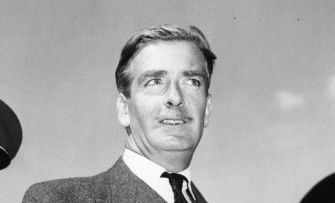
On 7 November 1956, a ceasefire came into effect in the Suez crisis, marking the immediate cessation of offensive operations by British and French forces in Egypt. The ceasefire represented British prime minister Anthony Eden and French president Guy Mollet’s reluctant acceptance of a United Nations-mandated withdrawal.
The Suez crisis was a political embarrassment and diplomatic debacle for the two European powers. Its outcome exposed the limits of their independent foreign policy in the face of international condemnation, effectively confirming their post-war status as a “second tier” world power.
It brought the so-called UK-US “special relationship” to the brink and plunged the House of Commons into chaos.
Moreover, the political, diplomatic and financial fallout effectively ended Eden’s government.
***
The immediate trigger of the crisis came when US president Dwight D. Eisenhower cancelled a promised grant, worth $56 million, towards the construction of the Aswan Dam project on the Nile River over Egypt’s increased ties to the Soviet Union.
In response, on 26 July 1956, Egyptian President Gamal Abdel Nasser announced the nationalisation of the Suez Canal Company, which had been jointly owned and operated by British and French interests since 1869. Nasser said the revenues from the canal would help to finance the Aswan project.
Eden addressed the House of Commons days later, on 30 July, about the crisis. He declared that the British government would not support any scheme for the future of the canal that would “leave it in the unfettered control of a single power which could, as recent events have shown, exploit it purely for purposes of national policy.”
Eden, whose reputation as a foreign policy specialist had been forged by his opposition to appeasement in the 1930s, identified Nasser’s actions with those of pre-war fascism. The prime minister also clung to the belief that Britain could carve out an independent foreign policy.
Britain and France secretly colluded with Israel, which invaded Egypt’s Sinai Peninsula on 29 October 1956. The Israeli incursion provided the pretext for an Anglo-French invasion of Suez. Following a joint ultimatum for a ceasefire that they knew Egypt would reject, Anglo-French forces launched Operation Musketeer.
The clandestine Anglo-French-Israeli alliance was an ultimate marriage of convenience.
The Israeli government wanted a preventive war following a string of border raids over the preceding months. Guy Mollet, France’s socialist prime minister, was desperate to stop Egypt backing the colonial rebellion in Algeria.
From Eden’s perspective, the Suez Canal provided Britain with a shorter sea route to its empire. He told his cabinet colleagues that he would not allow Nasser to “have his thumb on our windpipe”. The prime minister regarded the waterway as Britain’s “great imperial lifeline”.
Eden announced the ultimatum on 30 October.
He told MPs that Israel forces had penetrated deep into Egyptian territory” and were “not far from the banks of the Suez Canal”.
Warning that “very grave issues are at stake”, he said that unless hostilities were quickly stopped, “free passage through the canal will be jeopardised.”
Eden stated that France and Britain had addressed urgent communications to both Egypt and Israel, demanding they “stop all warlike action by land, sea and air forthwith and to withdraw their military forces to a distance of 10 miles from the canal.”
He defined the government’s policy as intending “to separate the belligerents and to guarantee freedom of transit through the canal.”
To achieve this separation, he said: “We have asked the Egyptian Government to agree that Anglo-French forces should move temporarily – I repeat, temporarily – into key positions at Port Said, Ismailia and Suez.”
The ultimatum required the governments of Egypt and Israel to answer within 12 hours. If compliance was not forthcoming, Eden warned: “British and French forces will intervene in whatever strength may be necessary to secure compliance.”
Hugh Gaitskell, the leader of the Labour Party, challenged the legality of this proposed action, asking “under what authority… he believes that British and French forces are justified in armed intervention in this matter before there has been any pronouncement by the United Nations upon it.”
Eden asserted that there was nothing in the UN charter which “abrogates the right of a government to take such steps as are essential to protect the lives of their citizens and vital rights such as are here at stake.”
***
Operation Musketeer, which began on 31 October, sparked an immediate international backlash.
Eisenhower was appalled by the attack and the US administration signalled its strenuous opposition. His opposition was parts ideological and pragmatic.
American policy was professedly anti-imperialist, and therefore could not support what it regarded as a cynical reassertion of colonial authority. Only days earlier, Washington had denounced the Soviet intervention in Hungary on similar grounds; the Suez operation risked undercutting the moral and strategic credibility of US policy.
The crisis was simply viewed in Washington as an unnecessary and damaging distraction from the Cold War.
But Eisenhower, otherwise occupied with the 1956 US presidential election, was also horrified that military operations had begun without his knowledge; he feared that the intervention would only strengthen Soviet influence in Egypt and across the wider region.
Addressing MPs on 31 October, Eden attempted to justify Britain’s decision to veto a UN resolution calling on Israel to withdraw its forces. The prime minister insisted he could not support the resolution as it represented “a condemnation of Israel as the aggressor in the events of the last few days.”
He added: “We felt that we could not associate ourselves with this and we said so through diplomatic channels both in London and in New York.”
Eden argued that the US response did not undermine the legitimacy of military intervention. He sought to explain away Eisenhower’s reaction, maintaining that the canal was “for them [the United States] not a matter of survival as it is to us and, indeed, to all Europe.”
He rejected the idea that the UK should “in all circumstances secure agreement from our American ally before we can act ourselves in what we know to be our own vital interests.”
Eden’s statements were rubbished as evasive by Labour MPs.
Gaitskell sought to establish whether, upon the expiration of the ultimatum, “instructions were given to the British and French forces to occupy the canal zone.”
Labour frontbencher Jim Callaghan was even more direct: “Are British troops engaged in Egypt at this moment?”
Reginald Paget asked on a point of order: “How can we debate a war when the government will not tell us whether it has started?”
In a masterful statement, Gaitskell accused the government of “an act of disastrous folly whose tragic consequences we shall regret for years.”
Facing protests from Conservative MPs, he added: “Yes, all of us will regret it, because it will have done irreparable harm to the prestige and reputation of our country.
“Sir, this action involves not only the abandonment but a positive assault upon the three principles which have governed British foreign policy for, at any rate, the last ten years – solidarity with the Commonwealth, the Anglo-American alliance and adherence to the charter of the United Nations.”
He noted press reports in the United States that referred to “collusion between the British and French governments and the government of Israel”.
Gaitskell concluded: “I must now tell the government and the country that we cannot support the action they have taken and that we shall feel bound by every constitutional means at our disposal to oppose it.”
Later in the debate, the foreign secretary, Selwyn Lloyd, responded to the reports of Anglo-French-Israeli collusion. He told MPs that there was “no prior agreement” with the Israelis.
“It is quite wrong to state that Israel was incited to this action by Her Majesty’s government”, Selwyn said.
***
On 2 November, a US resolution demanding a ceasefire, the withdrawal of all forces and the reopening of the Suez Canal, was passed in the UN by a majority of 64 to 5. The USSR was among the countries that supported it. Australia, New Zealand, Britain, France and Israel were opposed.
On 3 November, Anthony Nutting resigned as a junior minister at the Foreign Office over his discovery of the Anglo-French war plan. He later wrote of feeling suddenly “bereft of friends, a castaway adrift on a sea of anger and recrimination, an object of distrust, torn between loyalty to principle and loyalty to friends and associates.”
The House of Commons, meanwhile, descended into outright acrimony.
On 1 November, Aneurin Bevan, the shadow colonial secretary, likened the Anglo-French ultimatum to those employed by Adolf Hitler as a pretext for invasion.
Bevan told the House: “Every country that attempts to justify itself uses language of this sort. Indeed, I could quote almost all the ultimatums given by Hitler to countries that he invaded where he used exactly the same kind of language as the prime minister used the other day.
“The same language was used to Norway: ‘The Reich government therefore has today begun certain military operations, which will lead to the occupation of strategically important points on Norwegian territory… Any resistance would have to be and would be broken by all possible means by the German Forces employed.’”
Bevan added: “We have only to substitute Egypt for Norway, because what did the right hon. Gentleman say? He said that he expected the Egyptian government to peacefully permit the re-occupation of bases on the Canal by the British Forces, and if they resisted they would be overcome with all necessary force.”
R. A. Butler, the leader of the commons, said Bevan was in “one of his philosophic moods”.
In the same debate, Anthony Wedgwood Benn (Tony Benn) stated: “Egypt… was attacked, and under Article 51 [of the United Nations charter] she has the undoubted right to defend herself. What do the British government do? They send Egypt an ultimatum, telling her to desist from the right of self-defence.”
Conservative MP William Yates, who had previously served in the Foreign Office in the Middle East, working in military intelligence in the Suez Canal Zone, rose to address the House on a point of order.
Yates said he had come to the conclusion that the government was involved in an “international conspiracy”.
He said: “I am a young member of the House and I desire to have your advice, Mr Speaker. I have been to France and I have come to the conclusion that Her Majesty’s government have been involved in an international conspiracy.”
The government survived the division that followed – a motion of censure was defeated by 324 votes to 255. But it was badly wounded.
Speaking at a mass rally in Trafalgar Square on 4 November, Bevan ridiculed the government’s strategy and evolving motivations.
He declared: “Anthony Eden has been pretending that he is now invading Egypt in order to strengthen the United Nations. Every burglar of course could say the same thing; he could argue that he was entering the house to train the police.
“So, if Sir Anthony Eden is sincere in what he is saying, and he may be, then he is too stupid to be a prime minister.”
He added: “They have besmirched the name of Britain. They have made us ashamed of the things of which formerly we were proud. They have offended against every principle of decency and there is only way in which they can even begin to restore their tarnished reputation and that is to get out! Get out! Get out!”
On 8 November, Clement Attlee – now Earl Attlee – told the House of Lords that the action was “wrong” and “extraordinarily stupid”.
Attlee accused the government’s defenders of repeating “the same excuses for action as have been put up by every aggressor – by Austria in relation to the Yugoslavs in 1914; by Germany in respect of Belgium, and by Hitler in respect of Czechoslovakia.”
***
On 4 November, the United Nations adopted a resolution that called for the creation of an “emergency international United Nations Force to secure and supervise the cessation of hostilities in accordance with all the terms of General Assembly resolution 997 (ES-I) of 2 November 1956”.
On 5 November, the Soviet Union announced that it was prepared to use force to “crush the aggressors and restore peace” to the region.
Britain’s financial system, meanwhile, was coming under considerable speculative pressure. The Bank of England was forced to deplete its US dollar reserves to defend the value of sterling against the dollar.
In total, $280 million of foreign exchange reserves was lost seeking to defend sterling’s position.
Facing the threat of a forced devaluation or a shift to a floating exchange rate, the government turned to the International Monetary Fund (IMF) for help in the form of a loan.
But Eisenhower put pressure on the IMF to deny Britain any financial assistance. The US would only support sterling when the British government was “conforming to, rather than defying, the United Nations.”
Harold Macmillan, the chancellor of the exchequer and erstwhile supporter of military intervention, saw that the situation was desperate. In a cabinet meeting on 6 November, on the threat of resignation, Macmillan convinced his colleagues that a ceasefire was now imperative.
On 6 November, Eden informed the House that both Egypt and Israel had accepted the UN’s demand for an “unconditional ceasefire”, and that Egypt had agreed to a UN peacekeeping force replacing Anglo-French forces.
He then proceeded to recite the UK government’s official response: “If the secretary general can confirm that the Egyptian and Israeli governments have accepted an unconditional ceasefire and that the international force to be set up will be competent to secure and supervise the attainment of the objectives set out in the operative paragraphs of the resolution passed by the general assembly on 2nd November, Her Majesty’s government will agree to stop further military operations…
“Pending the confirmation of the above, Her Majesty’s government are ordering their forces to cease fire at midnight tonight.”
Eden presented the ceasefire as a victory for the British government’s policy.
He claimed that the intervention had made it “virtually certain, as far as it can, that the two parties [Egypt and Israel] shall not re-engage in conflict”.
Moreover, Eden insisted that the “action we took has been an essential condition for… a United Nations Force to come into the Canal Zone itself.”
The crisis, he concluded, could provide the foundation for a “real settlement of the problems of the Middle East.”
Eden also responded directly to the “charge that we have broken friendships in the Commonwealth and elsewhere”.
He declared: “I do not believe it. I believe that, as we emerge from this crisis and as the motives are more understood, both the Commonwealth and, let me add, our American friends, will understand the reasons which motivated us in taking the course we did.”
As Eden resumed his place on the government frontbench, he was met with cries of “Resign” from the opposition benches.
At midnight on 6-7 November, the ceasefire came into force. Over the following months, British and French forces – still not yet in control of the entire canal – were replaced by the United Nations Emergency Force (UNEF), the first large-scale UN peacekeeping force.
The prime minister’s protestations could not disguise the fact that Britain’s war aims were unrealised.
Eden had relayed the government’s true objectives to cabinet on 24 October: to “destroy” the Egyptian air force within two days, to secure “control over [the] Canal” from day five onwards, and, ultimately, to “bring Nasser down”.
But the Suez Canal remained in Egyptian hands, and was now obstructed by scuttled ships. Nasser remained in power, with his prestige enhanced by what he presented as a victory over the Anglo-French operation.
Nasser leveraged his new status to urge Arab nations to reduce oil exports to Western Europe.
Petrol rationing was introduced in Britain on 17 December. The rationing scheme saw drivers issued with books of coupons for each vehicle.
The crisis also placed the ‘special relationship’ under acute strain, while diverting attention from the Soviet Union’s brutal suppression of the Hungarian uprising.
In a debate on 5 December, Bevan captured what he regarded as the absurdity of Britain’s policy: “After having outraged our friends, after having insulted the United States, after having affronted all our friends in the commonwealth, after having driven the whole of the Arab world into one solid phalanx, at least for the moment, behind Nasser, we were then going to deal with all the outstanding problems in the Middle East.”
***
Eden’s reputation as a statesman was now in tatters.
On 18 December, he addressed the 1922 committee of Conservative backbenchers. The prime minister was unapologetic, declaring that “as long as I live, I shall never apologise for what we did”.
Two days later, on 20 December, Eden appeared in the commons for the final time as prime minister. He forcefully denied any prior knowledge by Britain of Israel’s attack on Egypt.
He said it was “completely untrue” that the government had been engaged in a “dishonourable conspiracy.”
He added: “I want to say this on the question of foreknowledge, and to say it quite bluntly to the House, that there was not foreknowledge that Israel would attack Egypt – there was not.”
But Gaitskell and Yates among others were right to be sceptical. The British government, with Eden at its head, had colluded with Israel to create a pretext for an invasion of Egypt.
The key meetings came between 22-24 October, at Sèvres, outside Paris – where Israel’s prime minister, David Ben-Gurion, met with Selwyn Lloyd and Christian Pineau, the French foreign minister.
It was agreed that on the evening of 29 October 1956, Israeli forces would launch a “large scale attack on the Egyptian forces with the aim of reaching the Canal Zone the following day”.
The British and French would then “respectively and simultaneously” appeal to the Egyptian and Israeli governments to “withdraw all its troops ten miles from the canal” and “accept temporary occupation of key positions on the canal by the Anglo-French forces to guarantee freedom of passage through the canal by vessels of all nations until a final settlement.”
Cabinet meeting minutes from 20 November 1956, released under the Freedom of Information Act 2000, showed ministers discussed a collective position on allegations that they helped plan the initial Israeli invasion.
Viscount Eccles, the minister for education, asked: “What line do we take on ‘collusion’?”
Butler suggested the minister should refer to Lloyd’s statement in the House of Commons on 31 October.
Iain Macleod, the minister for Labour, replied: “Could we not say more in defence?”
“The ‘evidence’ is pretty shoddy. Could we not say: of course we knew of Israel’s intentions and took precautions accordingly. But no prior agreement, no promise of territorial changes, no incitement to Israel to attack?”
Butler said ministers should avoid further statements in the commons until a position had been agreed.
Revelations since 1957 have also exposed the government’s attempted – and ultimately unsuccessful – cover-up.
On 20 December, Norman Brook, the cabinet secretary, rushed to destroy the records of any Anglo-French-Israeli coordination.
Edward Heath, the government chief whip, recorded an interaction with the cabinet secretary.
Heath wrote: “We paused, as Brook said, ‘He’s told me to destroy all the relevant documents. I must go and get it.’
“With that, Sir Norman, loyal as always to his prime minister, went off to destroy the Sèvres Protocol and other documents which confirmed the collusion of Britain, France, and Israel over Suez.”
***
In time, the canal was reopened (on 24 April 1957) and the “special relationship” repaired.
But the crisis amounted to a symbolic concession on the part of Britain and France that the international community – and the superpowers who steered it – now held primacy over their perceived military interests.
On 2 October 1956, Konrad Adenauer, the West German Chancellor, said the Suez crisis had shown that “no single European state, not even England, is any longer a great power in the former sense of the word.”
The events that followed only served to confirm this assessment. Historians now widely view the Suez Crisis as marking the definitive end of Britain’s role as a major, independent global power.
The immediate political fallout led to Eden’s resignation on 10 January 1957 on the grounds of ill health. A doctor’s report found that “his health will no longer enable him to sustain the heavy burdens inseparable from the office of prime minister”.
Eden also stood down as an MP. In July 1961, he was elevated to the House of Lords as the 1st Earl of Avon.
Eden was succeeded by Harold Macmillan, whose support for military intervention – and subsequent conversion to the cause of ceasefire – ran ahead of the prime minister.
Harold Wilson, the future PM, would later describe Macmillan as “first in, first out” during the Suez crisis.
On 12 November 1956, Wilson told the commons that Macmillan, “far from being a restraining influence, was in the van of those who since July have been calling for war”.
William Clark, press secretary to Eden, was even more scathing. In a 1979 interview, he referred to Macmillan as “the man who pushed us really over the edge into Suez”.
The end of petrol rationing came just a few months into Macmillan’s premiership on 14 May 1957. The end of the scheme was announced in commons by the paymaster general, Reginald Maudling, and simultaneously in the House of Lords by the minister of power, Lord Mills.
Speaking in the commons, Maudling stated: “Petrol stocks in this country are at a satisfactory level, and now that interim arrangements have been made for the resumption of traffic through the Suez Canal the Government have decided that petrol rationing can be brought to an end.
“My noble friend the minister of power [Lord Mills] has today made an order giving effect to this decision from tomorrow.”
The announcement was met with ironic cheers.
***
The Suez debacle, however, did not cause significant electoral damage to the Conservative Party.
Indeed, the crisis was generally seen as a net positive for the Conservative Party when it contested the 1959 election. Macmillan was returned as prime minister with a landslide 100-seat Tory majority.
The Suez crisis is also believed to have accelerated decolonisation, a process closely associated with Macmillan’s premiership.
In a 1967 interview with the New York Times, Eden addressed the Suez crisis.
He declared: “I am still unrepentant about Suez. People never look at what would have happened if we had done nothing. There is a parallel with the 30s. If you allow people to break agreements with impunity, the appetite grows to feed on such things.
“I don’t see what other we ought to have done. One cannot dodge. It is hard to act rather than dodge.”
Eden also acknowledged secret dealings with the French and “intimations” of the Israeli attack
He insisted, however, that “the joint enterprise and the preparations for it were justified in the light of the wrongs it [the Anglo‐French invasion] was designed to prevent.
The former prime minister declared: “I have no apologies to offer”.
Eden died on 14 January 1977, aged 79.
His obituary in the Times described him as “the last prime minister to believe Britain was a great power and the first to confront a crisis which proved she was not”.

Politics.co.uk Newsletters
DAILY
Politics@Lunch
WEEKLY
Week in Review