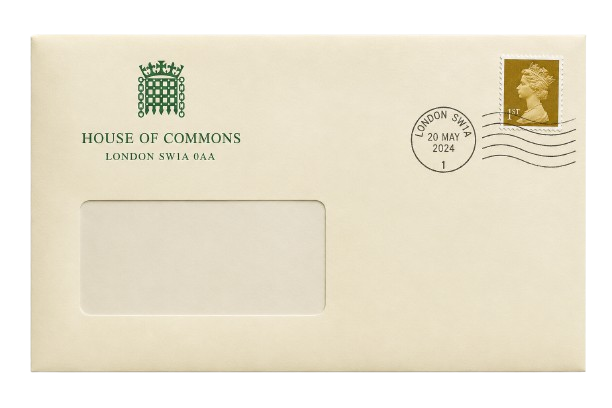
A parliamentary e-petition is a formal request from a member of the public asking the UK government or the House of Commons to take action on a specific issue. It is a direct way for citizens to raise issues with parliament and the government.
All official e-petitions are hosted on the petition.parliament.uk website, which is overseen by the House of Commons petitions committee. If a petition receives enough signatures, it can trigger an official government response or be considered for a debate by MPs.
How do e-petitions work?
Any UK citizen or resident can create or sign a petition.
The petition must call for a specific action and meet certain standards. For example, it cannot address a legal case that’s active in the UK courts or matters outside the responsibility of the UK parliament or government. They also cannot name people working in public bodies (except for senior management).
Once submitted, it must gain the support of at least five other people before being reviewed by petitions committee staff and published.
Any UK citizen or resident can sign a petition by providing their name, postcode and a valid email address.
At 10,000 signatures, the government is obliged to provide a formal, written response to the petition. This response is published on the petition’s webpage.
At 100,000 signatures, the petition will be considered for a debate in parliament.
The role of the petitions committee
The petitions committee is a select committee of 11 cross-party MPs that oversees the e-petitions system. As with all select committees, the membership is reflective of the House of Commons as a whole. The chair is elected by the whole House.
Liberal Democrat MP Jamie Stone was elected as chair in September 2024.
The committee’s main role is to consider every petition that reaches the 100,000-signature threshold and decide whether to schedule it for a debate. While there is no absolute obligation, the committee almost always grants a debate for petitions that meet this level of support. The committee retains the right to reject petitions that pass 100,000 signatures if they have already been debated recently or there is a debate scheduled for the near future. The e-petitions website lists the criteria which govern whether the committee accepts a petition.
These debates take place in Westminster Hall, the second debating chamber of the House of Commons. They provide an opportunity for MPs to discuss the issue raised by the petition, with a government minister required to attend and respond on behalf of the government.
These debates do not end with a binding vote. Proponents say they serve to raise awareness and put public pressure on the government.
Evaluation question
To what extent do Westminster Hall e-petition debates function as an effective mechanism for popular engagement, given that they do not result in binding votes?
Evaluation question
How far can the parliamentary e-petition system be defended as an avenue for meaningful democratic engagement, against critics who dismiss it as superficial “slacktivism”?
Is the e-petitions system effective?
While a petition and its subsequent debate may not lead directly to a change in the law, they can place issues on the political agenda. A well-supported petition can attract significant media coverage and, in triggering a debate in Westminster Hall, force the government to publicly justify its position on an issue.
Notable petitions have led to debates on topics ranging from the funding of brain tumour research to the Hillsborough disaster. This would potentially point to the power of the system to voice public concern.
The most-signed petition on the site, calling for the revocation of Article 50 and for the United Kingdom to remain in the European Union (EU), garnered over six million signatures. The petition’s popularity led to the e-petition website crashing multiple times. The petitions committee responded that “rate of signing is the highest the site has ever had to deal with and we have had to make some changes to ensure the site remains stable and open for signatures and new petitions.”
Recall petitions: how are they different?
A so-called “recall petition” is an entirely separate process.
The Recall of MPs Act 2015 allows voters to remove their MP and trigger a by-election. A recall petition is initiated if an MP is imprisoned, suspended from the House of Commons for at least 10 sitting days, or convicted of providing false expenses claims. If the petition is signed by 10% of eligible voters in the constituency within six weeks, the seat becomes vacant.
The e-petition opposing Donald Trump’s state visit (2017)
In January 2017, an e-petition entitled “Prevent Donald Trump from making a state visit to the United Kingdom” became the centre of a campaign opposing the US president’s planned trip.
The petition was created after Theresa May, the then prime minister, extended an invitation for a full state visit to the newly inaugurated US president. May invited Trump to Britain seven days after his inauguration when she became the first foreign leader to visit him in the White House.
The petition in question argued that Trump should not receive a full state visit, including audiences with the royal family, “because it would cause embarrassment to Her Majesty the Queen”.
It stated: “Donald Trump should be allowed to enter the UK in his capacity as head of the US government, but he should not be invited to make an official state visit because it would cause embarrassment to Her Majesty the Queen.”
The petition also came after Trump imposed a ban on people from several Muslim-majority countries entering the US, even if they held valid visas.
Upon passing the 10,000-signature mark, the government responded with a statement, confirming the state visit would go ahead.
The response, published on 13 February, read: “HM Government recognises the strong views expressed by the many signatories of this petition, but does not support this petition.
“During her visit to the United States on 27 January 2017, the prime minister, on behalf of Her Majesty the Queen, invited President Trump for a state visit to the UK later this year. The invitation was accepted. This invitation reflects the importance of the relationship between the United States of America and the United Kingdom. At this stage, final dates have not yet been agreed for the state visit.”
Alongside the e-petition, a number of early day motions (EDMs) tabled in the House of Commons attracted significant support.
Meanwhile, a counter-petition that support Trump’s proposed state visit garnered 317,542 signatures.
Both this petition and the original petition were debated in Westminster Hall on 20 February 2017.
Labour MP Paul Flynn, as a member of the petitions committee, was responsible for leading and introducing the debate.
Labour MP David Lammy spoke in support of the original petition, declaring: “Is this great country so desperate for a trade deal that we would throw all of our own history out of the window?… I think my children deserve better than that. I think my daughter deserves better than that.”
Scottish National Party (SNP) MP Alex Salmond called Theresa May’s invitation of a state visit “desperation for a trade deal”.
Conservative MP Nigel Evans responded: “To those who are finding it difficult to understand that the American people voted for Donald Trump, I say get over it, because he is president of the United States.”
Conservative MP James Cartlidge stated: “We will gain nothing if we withdraw the offer. I can tell members who will win – there is one man, Vladimir Putin.
“There will be smiles all round the Kremlin… because the one thing it wants above all else is to divide the west.”
Conservative MP Jacob Rees-Mogg said if in the past leaders such as Japanese Emperor Hirohito had been given state visits, Trump should be invited too.
The debate was heard in a packed chamber and lasted for three full hours. It coincided with a protest in Parliament Square by supporters of the petition, attended by a reported 2,000 people.
The minister’s response, delivered by junior Foreign Office minister Alan Duncan, presented an opportunity for MPs to question the government’s position.
Duncan concluded: “This is a special moment for the special relationship. The visit should happen, the visit will happen, and when it does I trust that the United Kingdom will extend a polite and generous welcome to president Donald Trump.”
The petition and surrounding campaign was successful to an extent. In June 2017, Trump reportedly told the prime minister that he did not want to go ahead with the state visit until hew saw evidence of support for it in Britain.
The visit was initially delayed until 2018 and then until 2019. It took place from 3-5 June 2019 amid large protests.
History of the petitioning system
Petitioning is one of the oldest forms of political participation in the UK, predating the establishment of modern democracy.
Two resolutions passed by the House of Commons in 1669 established the “inherent right” of every commoner to present petitions to the House. This right was further solidified by the 1689 Bill of Rights, which protected the right to petition.
By the 18th and 19th centuries, petitions became a tool for demanding radical social change. In 1788, the abolitionist movement collected over 100,000 signatures to spark parliamentary debate on ending the transatlantic slave trade.
In March 1832, the radical MP Henry ‘Orator’ Hunt introduced a petition calling for a select committee to investigate the “military execution” of peaceably assembled people at Manchester in August 1819 (Peterloo). The Peterloo massacre came after poorly trained, sabre-wielding yeomanry charged on an estimated 60,000 men, women and children gathered peacefully at St Peter’s Field to petition for reform of the corrupt and unrepresentative parliamentary system. Hunt, who had been the main speaker at the mass rally, hoped the government would investigate the “grossest misrepresentations” made of that day.
In August 1832, Hunt presented the first recorded petition to the House of Commons specifically calling for women to be granted the parliamentary vote. The petition, submitted on behalf of Mary Smith, from Stanmore in Yorkshire, arrived just months after the passage of the Great Reform Act, which had expanded the male electorate but explicitly excluded women by defining voters as “male persons”. Mary Smith’s petition argued that, as a property owner who paid taxes and was subject to the laws of the land, including its punishments, she was unjustly denied representation.
In April 1834, Daniel O’Connell brought the issue of repealing the 1800 Acts of Union before the commons via a petition. The Irish Liberator moved for a parliamentary select committee to investigate the union as a “first step to national independence”.
In the Victorian era, petitioning reached unprecedented levels. Between 1837 and 1841, the average number of petitions presented annually reached nearly 17,600. A total of 34,000 petitions were presented in 1843.
Between 1839 and 1843, the Anti-Corn Law League (ACLL) was the most persistent petitioner of the House of Commons. Across this period, there were 16,351 petitions for repealing the protectionist Corn Laws tabled in the House – an average of 3270 petitions and 1,153,690 signatures per session.
In June 1839, the first national Chartist petition, a document calling for radical democratic reform, was presented to the House of Commons by the Birmingham MP, Thomas Attwood. The petition, which was almost three miles long, contained the signatures of 1,280,958 people from across the country.
Between 1866 and 1918, over 16,000 petitions were presented to parliament calling for the enfranchisement of women. In 1866, the Women’s Suffrage Petition Committee led by Barbara Bodichon collected 1521 signatures on a petition calling for the elective franchise to be extended to all householders “without distinction of sex”. The petition referred to the “evident anomaly that some holders of property are allowed to use their right, while others, forming no less a constituent part of the nation, and equally qualified by law to hold property, are not able to exercise this privilege.”
However, with demands on the time of the House of Commons increasing, new rules were adopted in 1842. These reforms turned the presentation of petitions into a formal proceeding, largely removing the possibility that they would prompt instant discussion in the House.
In the 20th century, the number of petitions presented to parliament reduced markedly.
In November 2006, the Blair government launched the 10 Downing Street e-petitions system. Its most famous petition, opposing the government’s proposal to introduce road pricing to reduce road congestion in 2007, garnered 1.7 million signatures.
The prime minister responded to the petition, writing: “We want to continue this debate, so that we can build a consensus around the best way to reduce congestion, protect the environment and support our businesses. If you want to find out more, please visit the attached links to more detailed information, and which also give opportunities to engage in further debate.”
A November 2008 petition, calling on the government to allow all retired Gurkhas the right to settle, was signed by 250,000 people and delivered to Downing Street. On 20 November 2008, actress and model Joanna Lumley led a group of Gurkhas, campaigners and cross-party MPs from Parliament Square to 10 Downing Street, where they delivered the petition.
In May 2007, the House of Commons procedure committee expressed the view that parliament should be the “primary recipient of petitions from the public”. The committee published proposals to this effect in 2008.
The Conservative-Liberal Democrat government, which entered office in 2010, promised to “ensure that any petition that secures 100,000 signatures will be eligible for formal debate in parliament.” This pledge was featured in the coalition’s formal policy programme.
In 2012, a new feature was introduced, meaning petitions with 10,000 signatures would trigger a formal government response.
Following further recommendations from the procedure committee, the current system was launched on 21 July 2015. For the first time, it was a joint venture between the government and parliament, overseen by a dedicated petitions committee.
Additional resources
- The e-petitions website: https://petition.parliament.uk/
- The petitions committee: https://committees.parliament.uk/committee/326/petitions-committee/