A cabinet reshuffle is the process by which a prime minister changes the composition of their top ministerial team. The power to appoint, dismiss and move ministers between departments is one of an incumbent prime minister’s most significant personal powers, known as the power of patronage.
A major reshuffle can involve a large number of ministers changing roles, while a smaller ‘mini-reshuffle’ may occur following the unexpected resignation of a single minister. Larger reshuffles are generally regarded as high-stakes political events; they generate intense media speculation and offer insight into the prime minister’s priorities, authority and strategic direction.
In particular, a cabinet reshuffle of a prime minister’s top team is a major political event.
Why do prime ministers reshuffle their government?
A prime minister will conduct a reshuffle for a number of strategic and political reasons.
Upon taking office
When a new prime minister takes office, their first act is usually to conduct a major reshuffle to form a government in their own image. This is the case if a prime minister has been appointed following a general election or as the result of an internal party leadership election.
In the former case, the whole cabinet is replaced by the incoming prime minister so ministerial posts are occupied by MPs and peers from the new governing party.
In the latter case, key allies of the new prime minister, who worked with them on their leadership campaigns, are often rewarded with top jobs, such as foreign secretary and chancellor.
Refreshing the government
A prime minister may choose to reshuffle their top ministerial team mid-way through a parliamentary term as part of a “refresh” or political “reset”.
They will be aiming to rejuvenate a tired-looking administration, usually by promoting a new generation of MPs. Reshuffles come with a political signal. A prime minister conducting a reshuffle to refresh the government will be hoping to signal a renewed energy and purpose.
Responding to events and perceived failure
Reshuffles may also be reactive, allowing the prime minister to respond to events by removing ministers who have underperformed, become embroiled in scandal or proved politically problematic.
For instance, if a particular government policy is failing, the prime minister may move the responsible minister and bring in a new one to signal a clear change in approach.
The nature of cabinet government means that a single resignation or dismissal can trigger a wider reshuffle. If one minister leaves office, another may be moved sideways to take over their brief – creating a vacancy elsewhere that must in turn be filled. In this way, one departure can set off a chain reaction across government.
Party management
For any prime minister, a reshuffle and patronage more generally is a key tool for managing the parliamentary party.
While the prime minister may reward loyal supporters with promotion, they will also seek to ensure that different factions and ideological wings of the party are represented in government to maintain unity. The prime minister may prefer to have possible critics “inside the tent” than outside.
Evaluation question
To what extent does considering party unity during a cabinet reshuffle compromise a prime minister’s ability to appoint the most competent ministers to key departments?
How do reshuffles happen? The process and choreography
Whose responsibility is a reshuffle?
The decision on who to appoint, move or dismiss rests solely with the prime minister.
The reshuffle process is therefore managed by the prime minister, usually from 10 Downing Street. Reshuffle may be conducted in close consultation with the chief whip, whose knowledge of party management and internal factional dynamics may be crucial in determining who is promoted, shifted or dismissed. That is assuming, of course, that the chief whip is not one of those being reshuffled.
When do reshuffles happen? Timing
The timing of a reshuffle can vary depending on whether it is reactive – triggered by a resignation, scandal or crisis – or planned in advance as part of a broader political strategy.
Historically, prime ministers have often favoured conducting major reshuffles in the summer, shortly before the long parliamentary recess. This gives newly appointed ministers time to familiarise themselves with their briefs before parliament returns and before the party conference season begins.
The period around a year before a general election is also considered prime time for a reshuffle. At that point, a prime minister may seek to present a refreshed frontbench team and, in some cases, to wrongfoot political opponents.
Cabinet reshuffle choreography
Cabinet reshuffles are highly stage-managed pieces of political theatre.
They usually begin with the prime minister calling ministers one by one into their office in No 10 or the House of Commons. Reshuffle may start in the commons, where ministers are informed that they are being dismissed or moved, and then continue in Downing Street as the process of making new appointments unfolds.
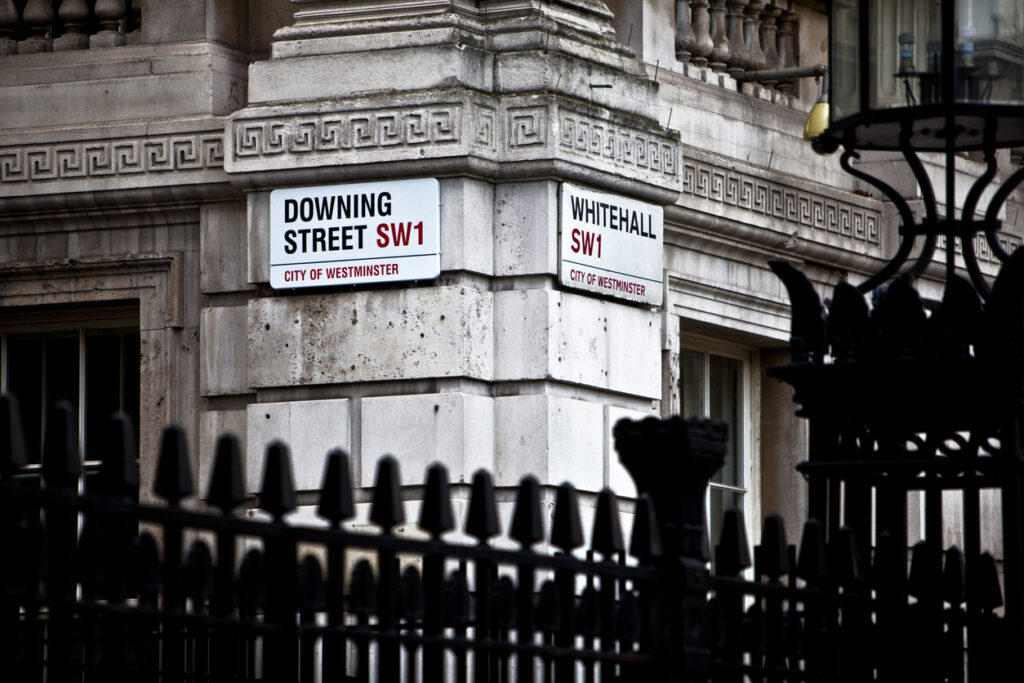
The media will gather along Downing Street to watch ministers arriving and leaving. If a minister arrives on Downing Street, it is highly likely they are remaining in their post, being shifted sideways to a similar-ranking post or receiving a promotion.
Those who are being dismissed are typically spared the ritual humiliation of arriving at 10 Downing Street, in the full glare of television cameras, to receive bad news.
Meanwhile, official announcements are made via press releases to accredited journalists and on social media. The announcements usually begin with the most senior cabinet positions. Reshuffles may be spread over several days, with cabinet positions filled on the first days and junior ministerial positions filled as a result of negotiations over the following days.
Reshuffles can unfold over several days. Cabinet positions are often settled first, with junior ministerial posts filled subsequently, often following negotiations. Reshuffles that follow general elections and a change of government can take longer still; new prime ministers must appoint a full ministerial team from scratch (there is often continuity between an incoming prime minister’s shadow frontbench and first ministerial team).
Can reshuffles go wrong? How?
Protracted discussions can delay the process of a reshuffle. Long delays between announcements are sometimes a signal that a reshuffle is not progressing according to plan. If a minister refuses to move sideways or accept a demotion, a prime minister’s plan of action can be derailed. For this reason, reshuffles typically involve extensive “wargaming” by the prime minister’s team in advance, with multiple scenarios mapped out and contingency options prepared to ensure that the final outcome remains politically workable.
Evaluation question
To what extent can a cabinet reshuffle be interpreted as a sign of executive vulnerability rather than strength?
The post-reshuffle stage-management
Once a minister has accepted a new role, their appointment is formally made by the monarch on the advice of the prime minister.
The new minister will then typically visit their new department for the first time to meet their new permanent secretary and senior civil servants. Although the department’s political head, its secretary of state, may change as a result of a reshuffle, the permanent secretary remains in post.
Ministers who have been dismissed are sometimes mollified with a “gong” – such as a damehood, knighthood or a peerage.
Harold Macmillan ‘Night of the Long Knives’ reshuffle (1962)
On 13 July 1962, the prime minister, Harold Macmillan, carried out what is often cited as the most brutal cabinet reshuffle in modern British political history, sacking seven senior ministers – a third of his cabinet – in a single day. The purge, which became known as the ‘Night of the Long Knives’, was a gamble to revitalise his increasingly unpopular Conservative government.
The ‘Night of the Long Knives’ title referred to Adolf Hitler’s 1934 purge of his political opponents in Ernst Röhm’s paramilitary SA.
By mid-1962, Macmillan’s government, in power since 1957, was facing mounting political difficulties. A series of poor by-election results had culminated in the loss of Leicester North East to Labour on 12 July; the Conservative share of the vote dropped from 48.1% in 1959 to 24.2%, landing the party in third behind Labour and the Liberals.
Macmillan felt radical action was needed to refresh the government’s image ahead of the next general election. His primary target was the chancellor, Selwyn Lloyd, whose unpopular deflationary economic policy – symbolised by the ‘pay pause’ of July 1961 – was widely blamed for the government’s slump. Macmillan intended to replace him with Reginald Maudling, who favoured a more expansionist approach.
Macmillan agreed the details of the reshuffle with Rab Butler, the home secretary, and Iain Macleod, commons leader and Conservative Party chairman.
However, the reshuffle was thrown into turmoil after Butler leaked the details of “Mac’s Master Plan” to the Daily Mail. The prime minister felt compelled to press ahead with the ministerial changes, fearful of a conspiracy to undermine his premiership. Lloyd, then in attendance at a Buckingham Palace reception, was summoned and summarily sacked.
Over the course of Friday 13 July, Macmillan summoned the targeted ministers to Admiralty House (Downing Street was under renovation) and summarily dismissed them. Alongside Lloyd, those dismissed from cabinet were the lord chancellor, Viscount Kilmuir; the education minister, Sir David Eccles; the defence minister, Harold Watkinson; the secretary of state for Scotland, John Maclay; and Lord Mills as a minister without portfolio.
The speed and scale of the changes shocked Westminster. Liberal leader Jeremy Thorpe observed that “Greater love hath no man than this, that he lay down his friends for his life”.
Macmillan, nicknamed ‘Supermac’ for his calm demeanour, was now dubbed ‘Mac the Knife’.
Macleod suggested that the reshuffle was necessary as outgoing ministers had displayed “all the signs of tiredness that are not surprising when we have been in office so long.”
But Lloyd was widely viewed to have been treated badly. The former chancellor was cheered upon entering the commons on 17 July, a lowly backbencher in the wake of his sacking. The prime minister’s reception from Conservative MPs was rather cooler.
The Labour frontbench responded with a motion of censure against Macmillan, which was debated on 26 July. In that debate, Hugh Gaitskell argued the reshuffle was a “convincing confession of failure” driven by a series of by-election defeats.
Macmillan’s personal approval ratings declined in the immediate aftermath of the sweeping changes. But his standing, among his party and the public, recovered over time. Indeed, despite the immediate political damage, the reshuffle achieved its core objective. Maudling became chancellor and promptly reversed his predecessor’s austerity measures. The government’s reflationary policy has been linked to the decline in Liberal fortunes – which had peaked at the 1962 Orpington by-election.
With his reshuffle, Macmillan had also constructed a markedly younger, more energetic cabinet. The PM lasted another 18 months in Downing Street. He resigned in October 1963, following a period of ill-health, and the shocking revelations of the Vassal and Profumo scandals.
Margaret Thatcher’s ‘purge of the wets’ (1981)
On 14 September 1981, prime minister Margaret Thatcher conducted a ruthless cabinet reshuffle. She dismissed senior moderate ministers (‘wets’) and promoted loyalists (‘dries’) who shared her economic convictions.
The “purge of the wets” reshuffle is remembered as a remarkable – and ultimately successful – expression of prime ministerial authority. Significantly, at a time of economic hardship and immense political difficulties, the reshuffle was a singular declaration that Thatcher would not U-turn over her economic approach.
By the autumn of 1981, Thatcher’s premiership was at its lowest ebb. Her monetarist policies, designed to curb inflation, were driving unemployment towards three million. Riots in Brixton, Toxteth, and Moss Side raised the spectre of social upheaval. The new SDP-Liberal Alliance, meanwhile, was seen as a potentially existential threat to the deeply unpopular Conservative Party.
The “purge of the wets” marked the second reshuffle of 1981 – a clear signal of internal division. In January 1981, John Biffen was moved from his post of chief secretary to the Treasury due to tension over Thatcher’s economic policy.
The September 1981 reshuffle was also a long-trailed event, with the ruthless character of the reshuffle generally anticipated.
Ian Gow, Thatcher’s parliamentary private secretary and close political ally, told Tory MP Alan Clark on 21 July to expect a “major reshuffle in the autumn and that The Lady would be bringing in many of her friends”.
Thatcher’s “purge of the wets” responded to internal discontent by isolating it.
Among the most prominent casualties were Sir Ian Gilmour, the lord privy seal and deputy foreign secretary; Mark Carlisle, the education secretary; and Lord Soames, the leader of the Lords.
Gilmour was understandably unhappy with his dismissal, and the reshuffle more generally. He responded: “I have been sacked because I am in disagreement with the government’s economic policy.”
Francis Pym, a leading ‘wet’, was shuffled into the vacant lord privy seal position. He had previously been appointed as chancellor of the Duchy of Lancaster in the January 1981 reshuffle.
However, the most significant move was the demotion of James Prior, the employment secretary. Prior, having resisted Thatcher’s trade union reforms, was exiled to the post of Northern Ireland secretary.
Prior was also appeased by the promise he could keep his place on the cabinet’s economic strategy committee. Prior was replaced by Norman Tebbit, a loyalist figure; he would implement the government’s employment legislation as an enthusiastic Thatcherite enforcer.
Labour described Tebbit’s appointment as “the clearest possible signal to the unions that she is out for confrontation over industrial relations, and to the three million unemployed that they can expect no quarter and no hope.”
Nigel Lawson and Cecil Parkinson, notable ‘dries’, were also promoted. Lawson, a key ally and future chancellor, joined the cabinet as energy secretary. Parkinson was appointed party chairman, replacing leading ‘wet’ figure Lord Thorneycroft.
Thatcher’s decision to double down was not immediately successful. On 25 November, a group of 21 Conservative ‘wets’ – referred to as the ‘gang of 25’ – signed a letter threatening to vote against the government’s latest round of monetarist measures delivered at the autumn statement.
That said, the reshuffle cemented Thatcher’s control over her cabinet. The formation of a new, more ideologically disciplined executive set the stage for the industrial confrontations and free-market reforms that would define her tenure.
The intervention of the Falklands War in April 1982 revolutionised Thatcher’s standing in the country. Britain’s decisive victory forged Thatcher’s reputation as the ‘Iron Lady’, and proved a significant factor in the Conservative Party’s landslide victory at the 1983 general election.
Francis Pym, who replaced Lord Carrington as foreign secretary at the beginning of the Falklands War, was sacked after the 1983 general election. He had suggested that “landslides don’t on the whole produce successful governments”.
Theresa May and the ‘night of the blunt stiletto’ (2018)
On 8 January 2018, prime minister Theresa May attempted a cabinet reshuffle intended to reassert her ailing authority and refresh her frontbench. However, the reshuffle rapidly degenerated into a political farce, with senior ministers stubbornly refusing to move.
The 2017 general election produced a hung parliament and a minority Conservative government, dependent on a confidence and supply agreement with the Democratic Unionist Party (DUP). May was severely weakened by her decision to call the snap election and the disastrous campaign that followed.
The reshuffle was framed as an attempt by May to build back political capital after a bruising year. A ministerial rejig had been anticipated at least since December 2017, when Damian Green, a key ally of the prime minister, resigned as first secretary of state.
The day of 8 January 2018 began chaotically when the Conservative Party’s official Twitter (now X) account announced Chris Grayling as the new party chairman. The post was hastily deleted, with Brandon Lewis later announced as Tory chair and “minister without porfolio [sic]”.
The health secretary, Jeremy Hunt, was then called to Downing Street, reportedly to be shifted to the Department for Business, Energy and Industrial Strategy (BEIS). He refused to accept the new brief and, after a lengthy meeting, successfully negotiated to remain in his post with an expanded remit.
Hunt emerged from No 10 Downing Street as secretary of state for health and social care.
Justine Greening, the education secretary, was told she would be shuffled into the Department for Work and Pensions. But Greening chose to resign from the government rather than take up the role.
She posted to Twitter: “Honour and privilege to serve in government since 2010. Social mobility matters to me and our country more than my ministerial career. I’ll continue to do everything I can to create a country that has equality of opportunity for young people”.
The comments were interpreted as criticism of May’s grammar schools policy.
Greening’s treatment, especially when compared to that of Jeremy Hunt, was met with cross-party criticism. Hunt later apologised for liking a Twitter post about Greening’s sacking, saying: “Like button pressed by accident”.
https://x.com/wikiguido/status/950460518434856961
Damian Hinds was appointed as education secretary, Greening’s replacement. Esther McVey secured the work and pensions brief.
Matt Hancock was promoted to the cabinet as culture secretary.
David Gauke, Karen Bradley and David Lidington were all shuffled sideways – to the positions of justice secretary, Northern Ireland secretary and chancellor of the Duchy of Lancaster respectively.
After all was said and done, 20 of May’s 29 cabinet attendees held effectively the same portfolio as before.
Significantly, the most senior ‘great offices of state’ remained unchanged. Philip Hammond (chancellor) and Amber Rudd (home secretary) kept their seat at the cabinet table. Boris Johnson stayed on as foreign secretary despite his well-evidenced proclivity for embarrassing gaffes and diplomatic faux pas.
David Davis, notwithstanding reports of internal friction, survived as secretary of state for exiting the European Union (Brexit secretary).
In the end, May showed that she was in far too weak a position politically to risk upsetting the cabinet’s fragile Brexit balance. The episode was dubbed the “night of the blunt stiletto” – a reference to a far more ruthless and wide-ranging reshuffle.
Evaluation question
Does a poorly executed cabinet reshuffle expose the reality that a prime minister’s power of patronage is dictated by their existing political capital?
Nicholas Soames, the veteran Conservative MP, responded to May’s reshuffle with the observation: “Is that it?”
Some commentators referred back to May’s widely mocked statement during the 2017 election campaign, delivered after modifying plans for social care (the so-called dementia tax), that “nothing has changed.”
In an Evening Standard editorial, published 9 January 2018, former chancellor George Osborne described Theresa May’s botched reshuffle as the “worst in modern history”.
Osborne wrote: “You have to hand it to this prime minister: she’s given us the hat-trick of the worst reshuffle, the worst party conference speech and the worst manifesto in modern history. If they were not facing one of the worst oppositions we’ve ever had, the Tories would be finished.
“As it is, because the Corbynista alternative is so unpalatable to many mainstream voters, there is still hope…
“Still unresolved is the big issue of the premiership itself: the Conservative Party assumes Mrs May will go at some point; Mrs May, as she made clear on Sunday, intends to stay. How that biggest of all potential reshuffles is resolved remains unclear.
“This week’s farce will not have dampened the speculation or expectation in Westminster.”
May’s reshuffle, intended to demonstrate strength, thus reinforced the perception of a weakened prime minister unable to impose her will. This narrative would crystallise over the remaining months of May’s premiership as she tried and failed to pass her Brexit deal through parliament.
Both David Davis and Boris Johnson would resign from the cabinet in July 2018 in protest at the government’s Brexit strategy.
Cameron sacks Gove in ‘cull of the pale, male, and stale’ (2014)
On 15 July 2014, prime minister David Cameron conducted a wide-ranging cabinet reshuffle, which featured the demotion of Michael Gove from his post as education secretary. The changes were seen as an attempt to freshen the government image ahead of the 2015 general election.
Gove had served as education secretary since the Conservative-Liberal Democrat coalition government took office in 2010, overseeing a programme of school reforms. Lauded by the government and Gove’s allies as transformative, his tenure had nonetheless been marked by conflict with teaching unions. The education secretary was accused of taking a deliberately confrontational stance in his struggles with “The Blob” – the name he and his allies gave to the educational establishment.
Gove’s appointment as chief whip, a backroom party-management position, meant his removal from the political frontline. He was replaced as education secretary by Nicky Morgan, previously financial secretary to the treasury. Her promotion was part of an effort by Cameron to increase female representation at the cabinet table, and adopt a more congenial stance on education policy.
The removal of Gove was deeply politically sensitive. In his memoirs, Cameron relates that he told the education secretary of his plans at the start of July. He initially acquiesced; writing some years later, Cameron recalled an earlier conversation in which Gove said he would “love to be chief whip”.
But Gove is said to have changed his mind. Cameron sensed the influence of his former adviser, Dominic Cummings.
Upon receiving Gove’s second thoughts, the PM responded: “I don’t accept your email. You have agreed to do this job. I’ve told you everything we’re planning. I accept your withdrawal of the email, and I expect to speak to you later on today about how we are going to finalise the reshuffle.”
He added: “You must realise that I divide the world into team players and w*****s. You’ve always been a team player. Please don’t become a w*****.”
Gove’s private misgivings manifested in public when his wife, Daily Mail columnist Sarah Vine, shared an op-ed on social media which described the reshuffle as a “shabby day’s work” and the headline demotion as “worse than a crime”.
Allies of the new chief whip were also said to have been angered by reports that Lynton Crosby, the Conservative campaign director, warned No 10 that Gove was “toxic” in polls.
Cummings accused the prime minister of surrendering to the education establishment. “We got away with subverting every [Whitehall and] No 10 process, & it took [Cameron] 4 yrs to surrender”, he blogged.
Publicly, both Gove and Cameron downplayed that it was a demotion. But it was plain that the former had, at least, mixed emotions over the move. He told the BBC that it was a “wrench” to leave his education post but whether you called it “demotion, emotion, locomotion” it was “exciting to be given a role at the heart of government”.
Gove is said to have been bruised by the fact his new role only attended cabinet, rather than being a full member. It also involved a £36,000 pay cut.
The reshuffle also saw a change in one of the great offices of state, with Philip Hammond moving from defence secretary to foreign secretary, replacing William Hague. Hague stepped down from the Foreign Office to become leader of the House of Commons. The former Conservative Party leader also announced he would leave parliament altogether at the 2015 election.
Other significant changes included the departure of party grandee Ken Clarke from government and the promotion of Liz Truss.
The cabinet reshuffle was dubbed the “cull of the pale, male, and stale” by commentators, who noted Cameron’s continued attempts to change the face of British Conservatism. Among those who were deprived of ministerial office included Clarke (minister without portfolio), Owen Paterson (environment secretary), David Jones (Wales secretary), Andrew Lansley (commons leader), George Young (chief whip), Dominic Grieve (attorney general), and Damian Green (policing minister).
The Daily Mail seized upon the promotion of women in the reshuffle with a widely condemned report on the “Downing St catwalk” – a reference to ministers journeying to No 10 to hear news of their appointments.
To smooth the way for some sackings, three ousted ex-ministers (Alan Duncan, Hugh Robertson, and Solicitor General Oliver Heald) were awarded knighthoods.
The reshuffle was double-edged in many respects. It was successful in the short-term, but as Cameron records in his memoir, “tensions and unhappiness were on the rise, and the long-term consequences would be very serious indeed.”
Gove famously and very publicly supported the Leave campaign in the 2016 Brexit referendum.
Boris Johnson’s reshuffle blunders (2020-2022)
In February 2020, Boris Johnson’s first major cabinet reshuffle since the 2019 general election resulted in the resignation of Sajid Javid as chancellor. Javid had been ordered to dismiss his entire team of special advisers and replace them with ones selected by 10 Downing Street.
The ultimatum was widely seen as an attempt by the prime minister’s then-chief adviser, Dominic Cummings, to diminish the Treasury’s traditional independence and political influence. Cummings, the former director of Vote Leave at the time of the 2016 Brexit referendum, was an integral and controversial staple of Johnson’s inner circle during this period. In his resignation letter, Javid said he could not accept “the conditions attached to the reappointment”.
In other reshuffle moves, Suella Braverman was made attorney general, replacing Geoffrey Cox. In his letter of resignation, Cox made it clear that he had been removed on Johnson’s request. He referred moreover to his efforts to deliver “candid and independent” advice to the prime minister.
In June 2021, Johnson was forced to reappoint Javid to the position of health secretary. This came after the previous incumbent, Matt Hancock, resigned for breaching social distancing guidance by kissing a colleague.
In September 2021, in a more wide-ranging reshuffle, Johnson dismissed Gavin Williamson as education secretary. Williamson was replaced by Nadhim Zahawi, the former vaccines minister. This move followed the government’s major U-turn on the grading of A-level and GCSE results in England.
On top of this, Dominic Raab, the foreign secretary, was demoted to the role of justice secretary. This move followed the fall of Kabul to the Taliban on 15 August 2021, and the subsequent chaotic evacuation of British nationals and newly vulnerable Afghans. Raab was on holiday in Crete as the Taliban were advancing across Afghanistan. Throughout the crisis and its aftermath, he was roundly criticised for staying there until after Kabul fell, returning at 1:40 am on 16 August.
In the surrounding cabinet reshuffle, Raab was also made deputy prime minister – an appointment that cushioned his fall from the Foreign Office.
A year later, in February 2022, Johnson attempted to save his embattled premiership with a mini cabinet reshuffle. The ministerial rejig followed the resignation of four of Johnson’s most senior Downing Street aides within hours of each other. The exodus of staff coincided with the political fallout from the developing “partygate” scandal and a comment Johnson delivered in the House of Commons, linking the Labour leader, Keir Starmer, to the failure to prosecute the sex offender Jimmy Savile.
The Downing Street overhaul formed part of a broader effort to stabilise Johnson’s position – an initiative styled as “Operation Save Big Dog” by allies of the prime minister.
Jacob Rees-Mogg was appointed to the newly created post of minister for Brexit opportunities and government efficiency. Although his role was at the minister of state level, it was confirmed that he would attend cabinet meetings. Rees-Mogg, a prominent Brexiteer, would be responsible for driving “forward the changes we are able to make now that we have left the EU, delivering on our post-Brexit agenda across Whitehall”, a Downing Street spokesperson said.
Mark Spencer moved from chief whip to become the new leader of the House. Chris Heaton-Harris was tasked with imposing greater discipline on the parliamentary party as the new chief whip.
Notably, the reshuffle also saw the promotion of Christopher Pincher, another staunch Johnson ally, to deputy chief whip.
Operation save big dog, of course, failed to secure Johnson’s position as prime minister. On 6 June 2022, Johnson survived a vote of no confidence in his leadership of the Conservative Party by 211 votes to 148. On 30 June 2022, Pincher resigned as deputy chief whip following allegations that he had drunkenly groped two men at the Carlton Club in London.
Initially, Downing Street insisted that the prime minister considered the matter closed and that Pincher would remain a Conservative MP, having lost only his government job. But as Downing Street’s initial position unraveled, Sajid Javid and Rishi Sunak resigned as health secretary and chancellor respectively.
Johnson initially resisted calls to resign. He conducted a cabinet reshuffle that saw Zahawi replace Sunak as chancellor, and Steve Barclay appointed health secretary.
With the chaos still escalating, Michelle Donelan, who had been appointed as education secretary in the recent reshuffle, stepped down. Her tenure lasted just two days. Michael Gove, the levelling up secretary, was sacked for “disloyalty”. Suella Braverman, the serving attorney general, announced her candidacy for a post-Johnson leadership election. And Zahawi said the situation was “not sustainable and will only get worse” in a public statement.
But the wave of resignations that followed forced Johnson to announce his own departure, against his obstinate wish to remain in office, on 7 July.
The prime minister subsequently conducted a cabinet reshuffle to fill the gaps in his interim/caretaker government. Greg Clark and Robert Buckland, longstanding Johnson critics, were appointed as levelling up secretary and secretary of state for Wales respectively.
Sunak appoints Cameron as foreign secretary (2023)
On 13 November 2023, Rishi Sunak executed his second and final cabinet reshuffle as prime minister.
The catalyst for the reshuffle was the conduct and dismissal of Suella Braverman, whom Sunak had appointed as home secretary in October 2022. Tensions between Braverman and Downing Street had been rising for some months when, in an article for the Times, she stated there was a “perception that senior police officers play favourites when it comes to protesters” and were tougher on right-wing protesters than pro-Palestinian demonstrations.
According to reports, Downing Street requested edits to the article that were not implemented.
The most surprising and historically significant element of the reshuffle was the return to frontline politics of David Cameron, prime minister from 2010 to 2016. Cameron had resigned from parliament in the wake of the referendum on Britain’s membership of the European Union (EU).
He was therefore granted a life peerage and elevated to the House of Lords as Baron Cameron of Chipping Norton. Cameron was the first former prime minister to return to the cabinet since Alec Douglas-Home, who served as prime minister from 1963 to 1964 and foreign secretary from 1970 to 1974.
In total, Cameron was the fifth ex-PM to be reappointed to the cabinet since 1900.
Sunak shuffled James Cleverly, the incumbent foreign secretary, into the Home Office as Braverman’s replacement. Meanwhile, Thérèse Coffey – the deputy prime minister during the brief and tumultuous Liz Truss premiership – left her role as environment secretary.
Sunak was also seen to promote a series of allies, including Victoria Atkins as health secretary, Laura Trott as chief secretary to the Treasury, and Richard Holden as Conservative chairman.
Esther McVey, a figure associated with the Conservative right, was promoted as minister without portfolio in the Cabinet Office. Downing Street subsequently briefed that McVey had taken up the post as the government’s de facto “minister for common sense”.
Unsurprisingly, Cameron’s appointment attracted the largest share of attention.
Critics suggested the move undermined Sunak’s declaration at the recent Conservative conference that he was the “change candidate”. The Labour Party’s campaign chief, Pat McFadden, responded: “This puts to bed the prime minister’s laughable claim to offer change from 13 years of Tory failure.”
Cameron’s involvement with the collapsed speciality finance group, Greensill Capital, was also raised by critics and commentators. Cameron was accused of lobbying ministers to secure preferential treatment for Greensill during the Covid-19 pandemic.
Lord Cameron’s appointment also sparked questions over accountability and parliamentary scrutiny. As a peer, he would not appear in the House of Commons to face questioning from MPs, as his predecessor, James Cleverly, had done.
The speaker of the commons, Lindsay Hoyle, expressed some concern in this regard, highlighting the “gravity of the current international situation”.
Suella Braverman, meanwhile, did not go quietly.
On 14 November, she sent a scathing letter to Sunak, her former boss, suggesting he had reneged on the terms of a deal the two had agreed during the October 2022 Conservative leadership contest.
Braverman wrote: “As you know, I accepted your offer to serve as home secretary in October 2022 on certain conditions.
“Despite you having been rejected by a majority of party members during the summer leadership contest and thus having no personal mandate to be prime minister, I agreed to support you because of the firm assurances you gave me on key policy priorities.”
Braverman’s sacking was reported to have riled the Conservative right, and even elicited a ‘letter of no confidence’ – courtesy of longstanding Boris Johnson ally Andrea Jenkyns.
The missive, addressed to Graham Brady as chair of the 1922 committee of Conservative backbenchers, was riddled with rudimentary grammatical and spelling mistakes.
Jenkyns wrote: “Enough is enough. If it wasn’t bad enough that we have a party leader that the party members rejected, the polls demonstrate that the public reject him, and I am in full agreement. It is time for Rishi Sunak to go.”
Quotes
“I don’t like the expression sacked. I prefer replaced. But I thought in the new economic situation we wanted a less tired mind. Selwyn [Lloyd] had been a splendid minister for a solid eight years. I felt he was not creative any more, therefore I wanted a new man at the Treasury and a younger man.” – Harold Macmillan, speaking about the Night of the Long Knives, 1962
“This task, to which I have set my hand is the most absorbing and fascinating in the world. But sometimes it is lonely as one struggles to take the right decision.” – Margaret Thatcher, after the ‘Purge of the Wets’, 1981
“I don’t mean to be rude or to be seen to be disloyal but there needs to be a major improvement to the Reshuffle tomorrow” – Nicholas Soames, Conservative MP commenting on Theresa May’s 2018 reshuffle, highlighting how the reshuffle failed to project strength and leadership
Additional resources
- GOV.UK – List of Government Ministers: https://www.gov.uk/government/ministers
- Ministerial Appointments: September 2025 – https://www.gov.uk/government/news/ministerial-appointments-5-september-2025
- Ministerial appointments: February 2020 – https://www.gov.uk/government/news/latest-updates-on-ministerial-appointments-13-february-2020
- Ministerial Appointments – July 2024: https://www.gov.uk/government/news/ministerial-appointments-july-2024
- Ministerial Appointments – July 2014: https://www.gov.uk/government/news/ministerial-appointments-july-2014