Thatcher conducts ‘purge of the wets’ reshuffle
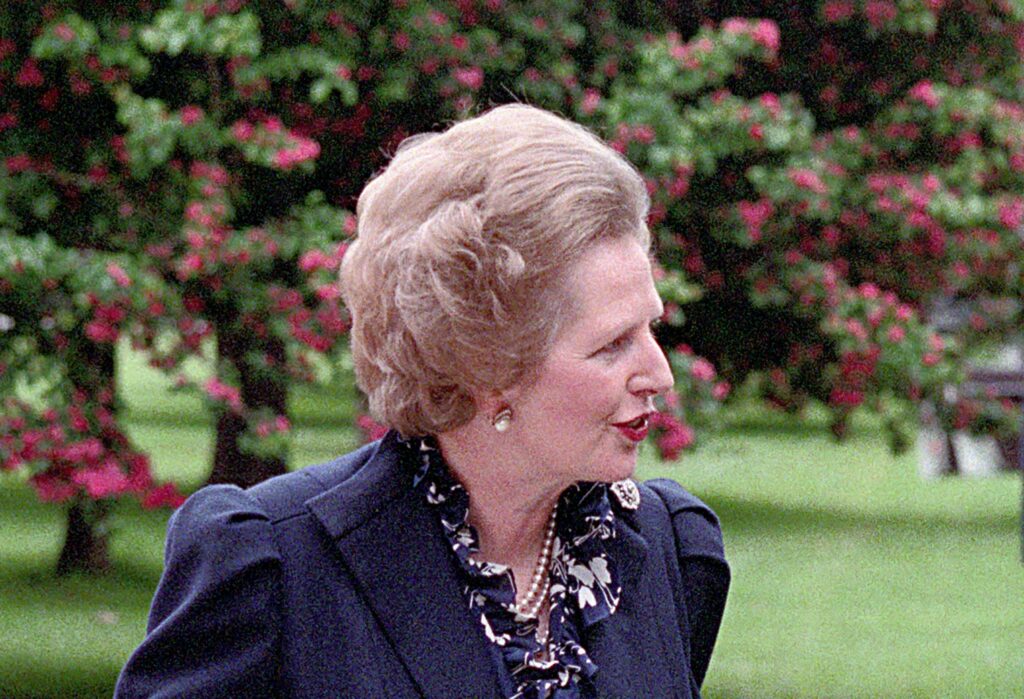
On 14 September 1981, prime minister Margaret Thatcher conducted a ruthless cabinet reshuffle. She dismissed senior moderate ministers (‘wets’) and promoted loyalists (‘dries’) who shared her economic convictions.
The “purge of the wets” reshuffle is remembered as a remarkable – and ultimately successful – expression of prime ministerial authority. Significantly, at a time of economic hardship and immense political difficulties, the reshuffle was a singular declaration that Thatcher would not U-turn over her economic approach.
***
By the autumn of 1981, Thatcher’s premiership was at its lowest ebb. Her monetarist policies, designed to curb inflation, were driving unemployment towards three million. Riots in Brixton, Toxteth, and Moss Side raised the spectre of social upheaval. The new SDP-Liberal Alliance, meanwhile, was seen as a potentially existential threat to the deeply unpopular Conservative Party.
Christopher Brocklebank-Fowler, the MP for North West Norfolk, had recently defected from the Conservatives to the SDP. With the new Alliance polling strongly, there were fears more could follow.
Brocklebank-Fowler announced his intention “to join the Council for Social Democracy” during a commons debate on the spring 1981 budget, a monetarist package. He stated his support for a “programme for stability, national unity and national renewal”.
He declared: “The country, industry and the public at large want and deserve a new deal.”
At the same time, senior “wet” cabinet ministers – those from the one nation wing of the party – urged the prime minister to moderate her economic agenda and adopt a more conciliatory political approach.
Thatcher refused to change course – in line with her famous declaration at the 1980 Conservative Party conference. “You turn if you want to”, she asserted, “The lady’s not for turning.”
But the situation had worsened, not improved, since Thatcher issued that proclamation.
Indeed, the “purge of the wets” marked the second reshuffle of 1981 – a clear signal of internal division. In January 1981, John Biffen was moved from his post of chief secretary to the Treasury due to tension over Thatcher’s economic policy.
The September 1981 reshuffle was also a long-trailed event, with the ruthless character of the reshuffle generally anticipated. Ian Gow, Thatcher’s parliamentary private secretary and close political ally, told Tory MP Alan Clark on 21 July to expect a “major reshuffle in the autumn and that The Lady would be bringing in many of her friends”.
***
Thatcher’s “purge of the wets” responded to internal discontent by isolating it.
Among the most prominent casualties were Sir Ian Gilmour, the lord privy seal and deputy foreign secretary; Mark Carlisle, the education secretary; and Lord Soames, the leader of the Lords.
Gilmour was understandably unhappy with his dismissal, and the reshuffle more generally. He responded: “I have been sacked because I am in disagreement with the government’s economic policy.
“Certainly there is no harm in throwing an occasional man overboard, but it does not do much good if you are steering full speed ahead for the rocks, and that is what the government is now doing.”
Francis Pym, a leading ‘wet’, was shuffled into the vacant lord privy seal position. He had previously been appointed as chancellor of the Duchy of Lancaster in the January 1981 reshuffle.
However, the most significant move was the demotion of James Prior, the employment secretary. Prior, having resisted Thatcher’s trade union reforms, was exiled to the post of Northern Ireland secretary.
Prior was also appeased by the promise he could keep his place on the cabinet’s economic strategy committee. Prior was replaced by Norman Tebbit, a loyalist figure; he would implement the government’s employment legislation as an enthusiastic Thatcherite enforcer.
Labour described Tebbit’s appointment as “the clearest possible signal to the unions that she is out for confrontation over industrial relations, and to the three million unemployed that they can expect no quarter and no hope.”
Nigel Lawson and Cecil Parkinson, notable ‘dries’, were also promoted. Lawson, a key ally and future chancellor, joined the cabinet as energy secretary. Parkinson was appointed party chairman, replacing leading ‘wet’ figure Lord Thorneycroft.
***
Thatcher’s decision to double down was not immediately successful.
On 25 November, a group of 21 Conservative ‘wets’ – referred to as the ‘gang of 25’ – signed a letter threatening to vote against the government’s latest round of monetarist measures delivered at the autumn statement.
The letter stated: “Most of us have written to you individually, some of us many times, to express our fundamental disagreement with the government’s economic analysis, but we do not believe that these representations have been effective.
“We are therefore now writing collectively to warn you that we have decided that were the government to present an economic package to the House of Commons during this winter, the effect of which was to deflate aggregate demand in the economy, we would all vote against any consequent measures presented to the House.”
Gilmour was a leading member of the ‘gang of 25’ (named after the SDP’s ‘gang of four’).
Keith Speed, another signatory, had been sacked in May 1981. It was widely rumoured that Stephen Dorrell, a gang of 25 rebel, would follow Brocklebank-Fowler in defecting to the SDP.
In the end, the rebel MPs did not follow through on their threat in voting against the autumn statement – but the episode spoke to the Conservative Party’s deep divisions.
In October and November, the Conservatives lost two by-elections in Croydon North West and Crosby – both to Alliance (SDP-Liberal) candidates. The contests came after the deaths of serving Tory MPs in supposedly ‘safe’ constituencies.
That said, the reshuffle cemented Thatcher’s control over her cabinet. The formation of a new, more ideologically disciplined executive set the stage for the industrial confrontations and free-market reforms that would define her tenure.
***
The intervention of the Falklands War in April 1982 revolutionised Thatcher’s standing in the country. Britain’s decisive victory forged Thatcher’s reputation as the ‘Iron Lady’, and proved a significant factor in the Conservative Party’s landslide victory at the 1983 general election.
The prime minister’s authority to see out her economic programme had been secured, in effect, by her response to overseas developments.
Francis Pym, who replaced Lord Carrington as foreign secretary at the beginning of the Falklands War, was sacked after the 1983 general election. He had suggested that “landslides don’t on the whole produce successful governments”.
Dorrell joined the Liberal Democrats in 2019, having first stood as a Change UK candidate at the 2019 European parliament election. He served as health secretary from 1995 to 1997, during John Major’s tenure as prime minister.
Anthony Meyer, a fellow ‘gang of 25’ member, later stood against Thatcher as a ‘stalking horse’ candidate in 1989. He went on to join the Pro-Euro Conservative Party and then the Liberal Democrats.

Politics.co.uk Newsletters
DAILY
Politics@Lunch
WEEKLY
Week in Review