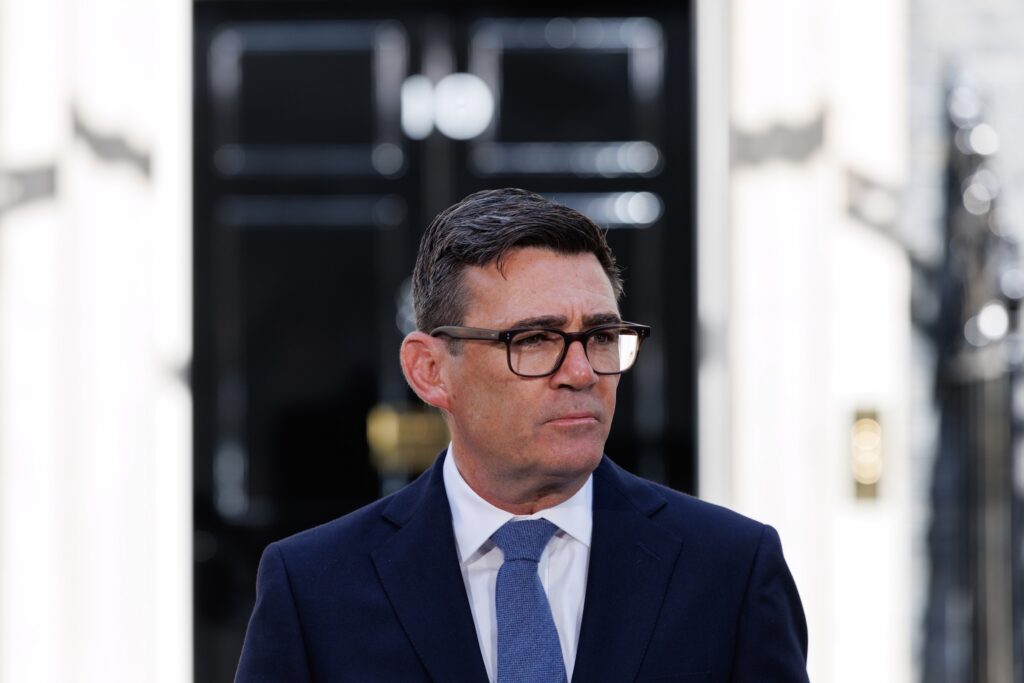
Prime minister Andy Burnham has called Brexit one of the “wrong turns” taken in recent decades. His government will seek closer links between Britain and the European Union – rescheduling this November’s summit. New research from British Future finds public support for that direction of travel, but uncertainty about quite how far that should go. It also shows how re-opening Britain’s debate on Europe will require both sides to overturn their assumptions and take a fresh approach if they wish to prevail.
Burnham’s own post-Brexit journey reflects the cross-pressures of the British debate. A decade ago, he worried that calls for a second referendum before leaving the EU would only deepen public disdain for an out-of-touch political class. As mayor of Greater Manchester, he wanted the government to be more open about the damage – and aspired to see the UK rejoin again in his lifetime. He put that on the back burner when running to return for parliament in Leave-voting Makerfield. Now, as prime minister, Burnham must determine what direction to take and negotiate with his EU counterparts.
A new youth mobility deal should be achievable and has public support. But the new research finds Burnham could also go further too – though it does not find a consensus on where people would like to end up.
Two fifths of the public are at the poles of this debate: an “all in” group of 22% who would like a referendum as soon as possible to overturn the 2016 result, and another fifth who are against closer links. But most lie in between or are undecided: a quarter of the public are contingent pro-Europeans, who would like to join the single market at least, but retain doubts about free movement. A similar-sized group of pragmatic sceptics favour practical cooperation on many issues, without rejoining the single market or the EU itself. There is also a large group, often younger, who are disengaged from the whole debate.


As Burnham arrived in Downing Street through an internal party coronation, his government is constrained, at least for this parliament, by the ‘Red lines’ of the 2024 Labour manifesto: no bid to rejoin, and no membership of the single market, customs union or freedom of movement. Yet the new research shows that most of the public do now support a closer relationship than these ‘red lines’ would allow.
For the government, getting practical may be part of the solution. Increasing pragmatic cooperation with the EU in this parliament, especially on youth mobility, defence and asylum, will be popular with voters. Beyond November’s summit, Burnham will need a strategy to dissolve or redraw his red lines, while being clear that the Brexit decision itself could not be undone without a future referendum.
Yet for a decade, Britain’s two Brexit tribes have mostly been refighting the last referendum. They often sound happiest to carry on doing so. Dominic Cummings, the strategist behind the Leave victory, believes “tell them again” would be the winning slogan in a new vote. Those who lost in 2016 believe the tide has turned in their favour. The research shows that both tribes may need to look beyond the 2016 referendum trenches to persuade the public about the choices in the decade to come.
Generational change is a challenge for both sides. Leave won most strongly among over-65s, and its voters were significantly older than those for Remain. Demographic change has removed the Leave majority of 2016, even if nobody had changed their minds. By the time of the next general election, one in five of the public – everybody under 30 – will have been too young to vote in that referendum. Few believe there have been benefits from Brexit, but nor can pro-Europeans take their support for granted. We found the under-30s least aware of the issues or invested in the arguments. Complaints about how the public were misled a decade ago will leave cold those who may have been in primary school at the time.
So those pushing to go further and closer should not be complacent that young people’s dissatisfaction with Brexit, and demographic changes as older Leave voters pass away, will give them a winning hand.
Supporters of Brexit need a forward vision too, of how the UK charts a course through global uncertainty and an unreliable ally in the US. And with most of the public supporting pragmatic alignment with Europe on trade, defence and other issues, blanket opposition will win few friends beyond a shrinking core.
The popularity of Boris Johnson’s “Get Brexit Done” reflected a public exhaustion with the divisions of this subject. So there are mixed views about future referendums. But we are going to have to talk about Europe again – and both sides of the debate may need to move on if they hope to connect with voters in 2026 and beyond.