The Conservatives and Reform UK have both restated their support for the pension triple lock, after Andy Burnham announced plans to change it from 2030 to help fund a National Care Service.
Conservative Party chair Kevin Hollinrake said keeping the triple lock was the party’s plan, while Reform UK leader Nigel Farage said his party would “always protect our pensioners and maintain the triple lock”.
Asked whether the Conservatives would go into the next general election committed to the triple lock in its current form, Hollinrake said: “That is our plan today. We’ve not written our manifesto yet. That’ll come before the election, but I would assume that would be in the manifesto because that is our plan.”
The Conservative chair told BBC Breakfast that the party wanted to recognise the contribution of those who had paid into the system “by making sure they have a decent standard of earnings in their retirement”.
“We don’t think it’s right to tackle that part of the welfare system”, Hollinrake said.
When it was put to him that the government expects its changes to save £15 billion a year by the end of the 2030s, Hollinrake said the money was being used to part-fund the national care service. “We don’t know what his plans are, what it’s going to cost, but effectively, he’s robbing Peter to pay Paul”, he said. “He’s taking that £15 billion, as you put it, out of the pockets of pensioners and using it elsewhere in the system.”
The comments came after the Conservatives launched a campaign attacking the prime minister’s plans.
A post from the party’s official account on X claimed “Andy Burnham wants to scrap the triple lock”, alongside a graphic stating “Labour are cutting pensions for millions of people rather than cutting benefits”.
The post directs users to ProtectPensioners.com. The site urges supporters to sign a petition telling Burnham “to cut welfare, not the triple lock.”
The Conservatives claim Burnham’s plans are designed “not to fix social care” but “to distract from the tax rises he knows are coming”. The party adds that the Conservatives “invented the triple lock”, which was introduced by the Conservative-Liberal Democrat coalition government in 2010.
In a statement, Farage accused the prime minister of turning on pensioners. “By potentially scrapping the triple lock, Andy Burnham will abdicate his responsibility to British pensioners”, he said.
“Instead of cutting our bloated benefits bill, stopping migrants from accessing benefits, or slashing foreign aid, he’s considering launching an offensive against our elderly.”
The Reform UK leader added: “If he is so desperate to pick a fight with pensioners, he should get on with it, call a general election now, and let the public decide.”
Reform UK’s Treasury spokesperson Robert Jenrick said: “It’s official: Andy Burnham wants to cut your pension. It’s just mean. Why is it always pensioners who are asked to be the first to make sacrifices?”
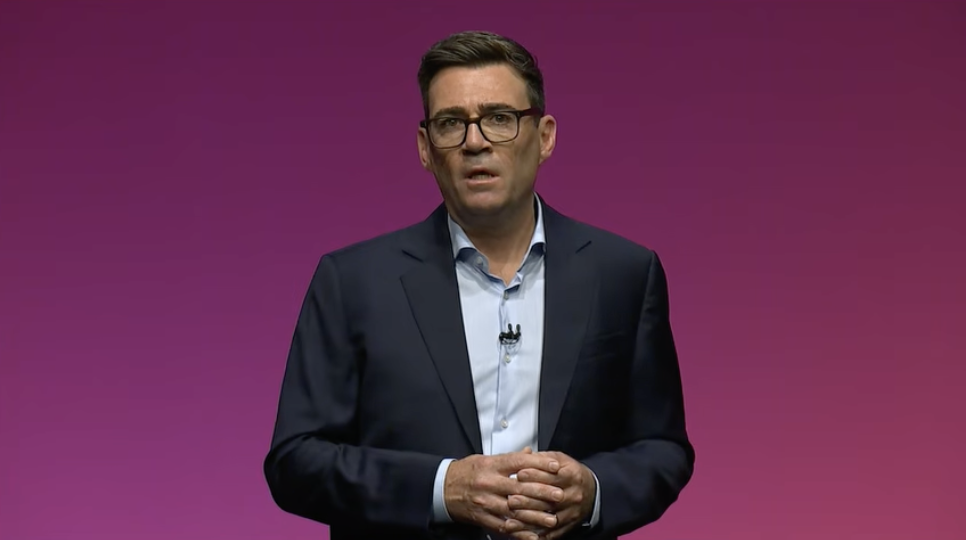
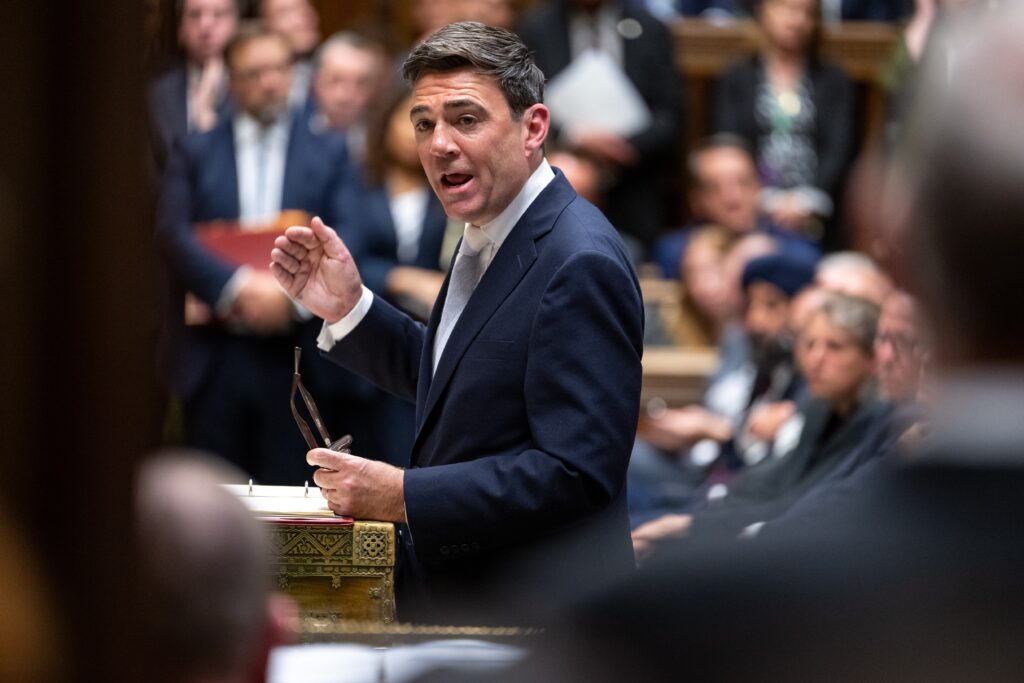
In his speech to Labour conference, Burnham said the triple lock would remain unchanged for the rest of this parliament. From April 2030, the state pension will rise every year “at least by prices, or 2.5%”, and “hold its value relative to earnings over time”. The savings will contribute towards funding a national care service.
Burnham to change pension triple lock from 2030 to fund National Care Service
The triple lock currently guarantees that the state pension rises each year in line with inflation (prices), earnings or by 2.5 per cent – whichever is highest.
Senior Conservative politicians have previously expressed scepticism about the long-term sustainability of the pension triple lock.
In October 2025, Conservative MP Tom Tugendhat argued that his party need to stop defending the pensions triple lock if it wanted to gain support from young people.
Addressing a fringe event at 2025 Tory conference, Tugendhat compared the British economy to a “Ponzi system”.
He said the impact of the system could be seen in the way “we are still defending the triple lock when it is simply not sustainable over the next 20 or 30 years in a way that means it is in any way applicable to anybody under the age of 50.”
A month later, Tugendhat intervened on a speech delivered by Reform UK MP Richard Tice during the budget debate. Tice observed that “welfare spending will increase by £70 billion per annum”, arguing the fact showed “this is not a budget for workers; it is a budget for those on welfare.”
Tugendhat responded: “I am interested to hear the honourable gentleman using the figure of £70 billion, and I agree with him. He knows that £30 billion of that results from the rise in the triple lock, so does he agree that the triple lock is simply not affordable?”
Delivering a speech later in the debate, Tugendhat added: “Let me be honest and lay it on the line. The demographics of this country are going against us. We do not have enough young people for an ageing population. That means, I am afraid, that we do need to look at the triple lock.
“I know that those on my party’s frontbench do not agree with me, but I have been clear that we simply cannot afford the level of welfare payments we are making. We need to be clear that health and pensions are now costing too much. We need to be clear that the security situation has changed.”
Kemi Badenoch appointed Tugendhat as shadow foreign secretary in her August/September 2026 reshuffle.
Your shadow foreign secretary saw sense less than a year ago 👇 https://t.co/d7bn5sznXw pic.twitter.com/aSl9R3JGne
— Tali Fraser (@TaliFraser) September 30, 2026
Both Sir Jeremy Hunt and Michael Gove, senior figures in the government that introduced the triple lock, have also called on ministers to axe it.
In June 2026, Hunt described the triple lock as an “anchor drag” on economic growth.
The former chancellor told City AM that “the cost of above-inflation rises in the state pension, as opposed to just inflation rises, is partly being funded by debt”, adding that the arrangement is “very bad for economic growth because we have to pay for that debt through [the] £110 billion a year that the exchequer pays for that interest.”
In April 2026, Lord Gove said the policy was “not defensible”.
He told BBC Newsnight: “One of the quid pro quos for that is I would also say that, for young people who are suffering at the moment, we will find a way of dealing with your student debt. And we should do that by looking at the triple lock.”
Asked why frontline politicians opposed abolishing the triple lock, Gove said: “I think again because of who votes.
“But critically, I think that if we’re going to make sure that our economy is in the right place, then we do need to think about those who are hit hardest and those who were hit hardest.
“Those who are suffering most, particularly from the prospect of unemployment at the moment, are younger people. And that’s partly because of regulatory rigidities in the labour market, but it’s partly also because of the burden of debt that so many of them face.”
Badenoch, the leader of the Conservative Party, once suggested her party would consider a proposal to means-test the triple lock. During a phone-in on LBC in January 2025, Badenoch was asked whether she would “look at” the triple-lock, to which she replied: “We’re going to look at means testing. Means testing is something which we don’t do properly here.”
However, Badenoch has since recommitted to the existing policy.
In September 2025, Badenoch wrote that if “Labour hadn’t made such a mess of our economy, no one would be discussing the viability of the triple lock.”
Speaking on Good Morning Britain earlier this month, Badenoch said: “One of the reasons why the triple lock was put in place is because when the Conservative coalition came in, in 2010, there was a lot of pensioner poverty.
“If you take that money away, you’ll probably just end up subsidising it with benefits.”