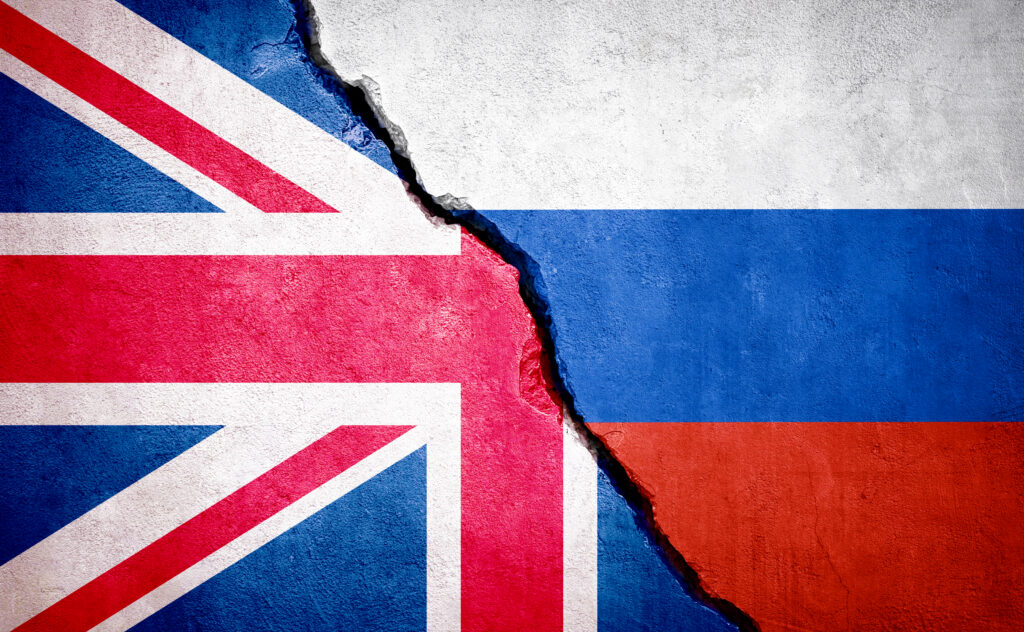
Foreign Office minister Stephen Doughty has said Russia tried but failed to interfere in the 2016 referendum on Britain’s membership of the European Union (EU), after Andy Burnham said he had been told there was Russian interference in the vote.
Speaking to Sky News, Doughty said the security minister, Dan Jarvis, had been “very clear that they’ve attempted to, [but] they haven’t succeeded”.
Asked whether the interference meant the referendum result was unsafe, he said: “No, I mean, the result is the result.”
Doughty said Burnham had been making the broader point that Russia had tried to interfere in “a series of democratic events in this country and indeed across Europe”.
The comments come after Burnham told The Rest Is Politics podcast that, on arriving in Downing Street this summer, he asked whether Russia had interfered in the referendum. “I’ve had the clear answer that yes, there was”, he said.
Burnham, who campaigned to remain in the EU, did not say whether any interference changed the outcome.
The prime minister said he thought it important to put the matter “clearly on the record”, because it could help voters in Germany and France “understand that some of this politics is instigated via our enemies, namely Russia”.
He added: “I think we’ve been too much on the back foot on that actually.”
Speaking on Monday morning, Doughty said Russia was spending £1.5 billion a year on “disinformation and attempts to undermine democracy”.
He said: “This is information warfare. They are attempting to destabilise economies and societies across the world. We need to make sure that we’ve got the defences in place to respond to that.”
Burnham used his speech to the UN General Assembly last month to announce a National Centre for Information Defence, to detect and counter AI-enabled disinformation campaigns by hostile states.
He said Russian agencies had used bots, fake websites and forged branding of 28 British organisations as part of a coordinated campaign to spread disinformation. He also referred to the 2019 general election, in which the government has previously said Russia almost certainly sought to interfere.
Burnham stated: “We’re talking about an insidious campaign that reaches into people’s homes and twists what they feel about their own country and community – creating a narrative of decline, stoking division and sowing despair.
“On top of that, we have seen cyber-attacks on our companies and institutions. And we know that AI will multiply the threat.”
At the time, Reform UK leader Nigel Farage accused the government of using bot activity from Russia and India as an “excuse” to “clamp down on free speech”.
In 2020, parliament’s intelligence and security committee found that the government had failed to fully assess the impact on the referendum of accounts run by Russian state-backed media and “troll” accounts.