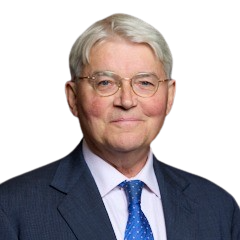
Sir Andrew Mitchell is the Conservative MP for Sutton Coldfield, having represented the seat since 2001. He previously served as MP for Gedling from 1987 to 1997.
In the 2024 general election, Mitchell won 18,502 votes, representing 38.3% of the vote. The Labour candidate, Rob Pocock, received 15,959 votes (33.0%), while the Reform UK candidate, Mark Hoath, secured 8,213 votes (17.0%). Mitchell was duly elected with a majority of 2,543 votes.
The Sutton Coldfield constituency is located in the West Midlands, north of Birmingham. It is considered one of the safest Conservative seats in the country, held by the party continuously since its creation in 1945 (and predecessor seats since 1885). The 2024 election was the first time the Conservative vote share fell below 50% in the seat’s history.
Political Career
Mitchell served as shadow foreign secretary from July 2024 until November 2024 on the interim/caretaker frontbench constructed by Rishi Sunak following the general election of that year. This appointment came after Lord (David) Cameron announced he would step back from frontline politics.
Prior to the 2024 general election, which saw the Conservatives ejected from government, Mitchell held the honorific title of deputy foreign secretary from April 2024 to July 2024. In this capacity, Mitchell was the lead Foreign Office minister in the House of Commons. Lord Cameron answered for the government in the Lords.
Mitchell attended cabinet from October 2022 to July 2024 officially as minister of state for development and Africa in the Foreign Office.
In January 2022, following the publication of the Sue Gray report into Partygate, Mitchell publicly withdrew his support for Boris Johnson as prime minister. Speaking at the time, the senior Conservative MP said he had previously given Johnson his “full-throated support”.
He told the House: “I am deeply concerned by these events and very concerned indeed by some of the things he has said from that despatch box and has said to the British public and our constituents.
“When he kindly invited me to see him 10 days ago, I told him that I thought he should think very carefully about what was now in the best interests of our country and of the Conservative Party, and I have to tell him he no longer enjoys my support.”
He added: “I must tell him respectfully, my right honourable friend, great though the admiration is that I have of him, I simply think that he is mistaken in his views and urge him to reconsider upon full consideration of the inquiry.”
Mitchell previously served as secretary of state for international development (2010-2012) and government chief whip (September – October 2012). His earlier ministerial roles came under John Major as parliamentary under-secretary of state for social security (1995-1997), lord commissioner of the Treasury (a whip role) (1994-1995) and assistant whip (1992-1994).
Mitchell was also vice-chair of the Conservative Party from 1992 to 1993.
Mitchell resigned as chief whip on 19 October 2012 over the so-called Plebgate scandal. The controversy stemmed from an apparent altercation between the senior Conservative and police officers outside the main gates of Downing Street on 19 September 2012. Having attempted to cycle out of Downing Street, Mitchell was refused permission by the police officers on duty, who referred him to the adjacent pedestrian gate instead. An angry verbal exchange is said to have followed. A police log detailing the incident was leaked to the Sun, which reported that Mitchell had sworn at officers and told them to know their “f***ing place”. The report alleged that Mitchell had used the pejorative term “pleb” to describe the police officers.
Mitchell publicly apologised for using inappropriate language, but vehemently and repeatedly denied using the word “pleb”. Mitchell resigned a month after reports emerged of the incident. In his letter addressed to Cameron, he wrote that “whatever the rights and wrongs of the matter I will not be able to fulfil my duties as we both would wish.”
Plebgate, however, did not end with Mitchell’s resignation. The Metropolitan Police later launched an investigation, known as Operation Alice, after questions arose about the authenticity of the police log and subsequent corroborating evidence. This included an email supposedly sent by a member of the public, which was later revealed to have been sent by a police officer who had not been present.
In total, seven police officers were found to have committed misconduct in relation to Plebgate.
Mitchell sued News Group Newspapers for libel in 2014 over the Sun newspaper’s Plebgate coverage.
The presiding judge ruled that “at least on the balance of probabilities… Mr Mitchell did speak the words attributed to him, or so close to them as to amount to the same, the politically toxic word pleb.”
Responding to the verdict, Mitchell said: “Obviously I am bitterly disappointed by the result of the judgment today.
“This has been a miserable two years but we now need to bring this matter to a close and move on with our lives.”
Mitchell is a leading voice in parliament over international development and has called on successive governments to commit to spending 0.7% of gross national income (GNI) on overseas development assistance.
In June 2021, Mitchell described the Johnson government’s decision to cut the budget for international development to 0.5% of GNI as “terrible”.
In February 2025, Mitchell further criticised the government led by Keir Starmer which announced it would fund a rise in defence spending from 2.3% to 2.5% of GDP by cutting the UK’s aid budget to 0.3% in 2027.
Mitchell criticised Starmer’s plan as “short-sighted and damaging”. He subsequently welcomed the resignation of Anneliese Dodds as international development minister. In a letter to the prime minister, Dodds said the cuts to international aid would “remove food and healthcare from desperate people – deeply harming the UK’s reputation.”
Mitchell said Dodds had “done the right thing”.
He posted on X: “Labour’s disgraceful and cynical actions demean the Labour Party’s reputation as they balance the books on the backs of the poorest people in the world.
“Shame on them and kudos to a politician of decency and principle.”
During the Conservative Party’s last stint in opposition, Mitchell served as shadow international development secretary (2005-2010), shadow home affairs minister (2004-2005) and shadow Treasury minister (2003-2004).
Mitchel was a member of the House of Commons work and pensions committee from 2001 to 2003.
Mitchell is listed as a member of the all-party parliamentary groups (APPGs) for Abraham Accords, aid match, trafficked Britons in Syria and West Midlands.
Mitchell delivered his maiden speech as the MP for Gedling on 20 July 1987.
In it, he said: “It was a Conservative prime minister returning to office in 1951 who reflected in the House that the nation required time to allow certain socialist legislation to reach its full fruition.
“Although the positions are not comparable, I hope that the opposition will accept how great has been the revolution in the spread of choice and ownership within society as well as in personal responsibilities keenly grasped. It is time for the opposition to embrace these verities.”
He added: “The House may be aware that I am not the first member of my family to have taken his seat in this House; indeed, I am at least the fourth to have done so. Nevertheless, over the past three weeks I have come to the confident conclusion that not since Lloyd George have so many people known my father.”
Political views
Leadership elections and loyalty
Tory leadership 2024: Mitchell supported Tom Tugendhat’s candidacy in the 2024 Conservative Party leadership election. The contest was triggered by the resignation of Rishi Sunak following the party’s defeat in the 2024 general election. Tugendhat, the then-shadow security minister, was eliminated in the third parliamentary ballot on 8 October 2024 after receiving 20 votes.
Mitchell went on to support Kemi Badenoch’s candidacy. Badenoch, the then-shadow housing secretary, was seen as a leading figure on the party’s right wing. After finishing first in the final parliamentary ballot with 42 votes, she defeated Robert Jenrick in the membership vote with 53,806 votes (56.5%). Badenoch was declared Conservative leader on 2 November.
Tory leadership 2022 (I): Mitchell supported Jeremy Hunt’s candidacy in the Conservative Party’s July-September 2022 leadership election.The contest was triggered by the resignation of Boris Johnson following the mass exodus of more than 60 frontbenchers.
Hunt, a former foreign secretary, campaigned as a unity candidate – pledging to appoint Esther McVey as his deputy prime minister. Hunt was eliminated in the first parliamentary ballot on 13 July 2022 after receiving only 18 votes.
Mitchell went on to support Rishi Sunak’s candidacy. Sunak, the former chancellor, warned against “comforting fairytales” regarding unfunded tax cuts. Although he won every round of the parliamentary ballots, securing 137 votes in the final stage, Sunak was defeated by Liz Truss in the membership vote, finishing with 60,399 votes (42.6%).
Tory leadership 2022 (II): Mitchell again supported Sunak’s candidacy in the Conservative Party’s October 2022 leadership election. The contest was triggered by the resignation of Truss after just 45 days in office, following the financial and political tailspin triggered by her “mini-budget”.
Unlike the summer contest, this election featured an expedited process requiring each candidate to secure at least 100 nominations from MPs to proceed. Sunak, having emerged as the clear frontrunner, was declared leader of the Conservative Party unopposed on 24 October.
Tory leadership 2019: Mitchell supported Boris Johnson for the party’s leadership in 2019. The election was triggered by the resignation of Theresa May following her inability to secure a Brexit deal acceptable to the Conservative Party.
Johnson, the former foreign secretary and mayor of London, campaigned on the central pledge to “deliver Brexit” by 31 October 2019, “deal or no deal”. He thereby positioned himself as the candidate best-placed to break the parliamentary deadlock. Johnson secured 114 votes in the first parliamentary ballot, and reached 160 votes in the final MP round. In the subsequent ballot of the party membership, Johnson won a decisive victory with 92,153 votes (66.4%).
Tory leadership 2016: Mitchell supported Michael Gove during the party’s leadership election in July 2016. The contest was triggered by the resignation of David Cameron following the UK’s vote to leave the European Union.
Gove, then the justice secretary, had been expected to manage Boris Johnson’s campaign but made the surprise announcement that he would run for the leadership himself. Gove secured 48 votes in the first ballot, placing third, but his support fell to 46 votes in the second ballot on 7 July. As the candidate with the fewest votes in that round, Gove was eliminated from the contest.
Factional identity and party tradition
Conservative Environment Network: Mitchell is listed as a member of the Conservative Environment Network (CEN) parliamentary caucus. CEN is an independent forum for conservatives that supports conservation and decarbonisation. It calls for the environment to be given a higher profile at the heart of policy making, describing “biodiversity loss, climate change, and wasteful resource use are threats to our national security”, and promotes “market-based policies” to environmental challenges. Members of its parliamentary caucus, such as Mitchell, are thought to generally align with the group’s “green” message and environmentalism.
Bright Blue: Mitchell has been listed as a parliamentary supporter of Bright Blue, an independent centre-right think tank and membership organisation that champions liberal conservatism in the UK. Since its founding in 2014, the organisation has expanded its reach through a new cross-party strategy.
Brexit and Europe
Brexit referendum: Mitchell supported Remain in the 2016 Brexit referendum, and therefore disagreed with a majority of his constituents, 51.7% of whom voted to Leave.
Article 50: In February 2017, Mitchell voted in favour of the European Union (Notification of Withdrawal) Bill. The legislation empowered the prime minister to notify the Council of the European Union of the UK’s intention to withdraw, formally triggering the process set out in Article 50 of the Treaty on European Union. MPs supported the bill by 498 votes to 114 at second reading.
Customs union vote (2025): In December 2025, Mitchell voted against the UK-EU Customs Union (Duty to Negotiate) Bill. The bill, introduced under the ten-minute rule procedure by Liberal Democrat Europe spokesperson Al Pinkerton, sought to mandate the government to enter into negotiations with the European Union to establish a bespoke customs union.
Assisted dying
Mitchell voted in favour of the Terminally Ill Adults (End of Life) Bill, better known as the assisted dying bill, at both second reading (November 2024) and third reading (June 2025).
Social values and conscience issues
Abortion decriminalisation (2025): Mitchell voted in favour of a backbench amendment to the Crime and Policing Bill that sought to decriminalise abortion in England and Wales in June 2025. The amendment, which was passed by a majority of 242 votes, removed women from the threat of prosecution for ending a pregnancy at any stage. As an issue of conscience, MPs were allowed to vote according to their personal beliefs.
Same-sex marriage (2013): In February 2013, Mitchell was one of the 131 Conservative MPs to vote in favour of the Marriage (Same Sex Couples) Bill at its second reading. The landmark piece of legislation, which received its second reading by 400 votes to 175, legalised marriage for same-sex couples in England and Wales.
Foreign policy and security
Trident renewal (2016): Mitchell voted in favour of a government motion calling for the renewal of the Trident nuclear deterrent system in July 2016. The motion, which was passed by 472 votes to 117, committed the UK to constructing a new fleet of submarines to carry the nation’s nuclear weapons.
Syria airstrikes (2015): Mitchell voted in favour of a government motion to extend UK airstrikes against Isis from Iraq into Syria in December 2015. The motion, which was passed by 397 votes to 223 after a ten-hour debate in the House of Commons, authorised the RAF to conduct strikes against Isis targets in Syria.
Syria airstrikes (2013): Mitchell voted in favour of the government’s motion on the principle of military intervention in Syria in August 2013. The government motion was defeated by 285 votes to 272, a move which effectively ruled out UK participation in any US-led military strikes.
Iraq War authorisation vote (2003): In March 2003, Mitchell voted in favour of the government motion authorising military action against Iraq. The vote, one of the most contentious in recent parliamentary history, gave the prime minister, Tony Blair, the authority to join the US-led invasion.
Sanctioned (Russia): In April 2022, Mitchell was among the group of MPs placed on a sanctions list by the Russian government. The measure barred them from entering Russia and was presented by Moscow as a retaliatory response to the UK’s stance on the invasion of Ukraine.
Civil liberties
Covid passes campaign (2021): Mitchell was one of over 70 MPs and peers who launched a cross-party campaign against the “divisive and discriminatory use” of Covid passes in April 2021. The campaign was triggered by government reviews into “vaccine passports”, which signatories argued would create a two-tier society and infringe upon fundamental civil liberties.
Before Politics
Born Andrew John Bower Mitchell in Hampstead, London on 23 March 1956, his father, Sir David Mitchell, was also a Conservative MP and minister.
Mitchell was educated at Rugby School and Jesus College, Cambridge, where he studied History (BA, 1978) and was president of the Cambridge Union. He served briefly as a commissioned officer in the Royal Tank Regiment (1975), including UN peacekeeping duties in Cyprus.
Before entering parliament, he worked for the investment bank Lazard.
After losing his Gedling seat in 1997, he returned to Lazard as a senior adviser and held other directorships before being re-elected for Sutton Coldfield in 2001.
Personal Life
Mitchell married Dr Sharon Bennett, a GP, in 1985. They have two daughters, born December 1987 and December 1990.
He lives primarily in Islington, London, and maintains a residence in his constituency.
Trivia
Mitchell’s memoirs are titled Beyond a Fringe: Tales from a Reformed Establishment lackey (2021).
Andrew Mitchell has not written for Politics.co.uk.