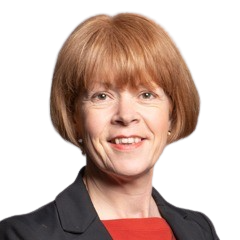
Wendy Morton is the Conservative MP for Aldridge-Brownhills, having first been elected to parliament at the 2015 general election.
In the 2024 general election, Morton won 15,901 votes, representing 38.9% of the vote. The Labour candidate, Luke Davies, received 11,607 votes (28.4%), while the Reform UK candidate, Graham Eardley, secured 9,903 votes (24.2%). Morton was duly elected with a majority of 4,294 votes.
The Aldridge-Brownhills constituency is located in the West Midlands, north of Walsall. It is considered a safe Conservative seat, held by the party since 1979.
Political Career
Morton currently serves as shadow minister of state for Foreign, Commonwealth and Development Office affairs on the Conservative frontbench appointed by Kemi Badenoch (since November 2024).
Prior to the 2024 general election, which saw the Conservatives ejected from government, Morton held a series of government roles. Most notably, she was parliamentary secretary to the Treasury (chief whip) from September to October 2022 under prime minister Liz Truss. This made Morton the first female Conservative chief whip.
As government chief whip, Morton was implicated in the collapse of the Truss government.
On 19 October 2022, the government, which had recently lifted the moratorium on fracking, faced an “opposition day” debate on this topic tabled by the Labour Party. The official opposition triggered a debate on the issue in order to drive a wedge between the government and anti-fracking Conservative MPs, who, after all, had been elected on a 2019 manifesto that pledged to keep the ban.
The Labour motion effectively forced Conservative MPs to either back fracking or rebel against their government. In response, the government attempted to maximise pressure on backbench MPs to prevent any rebellion. Senior government figures briefed that the vote was being treated as a vote of confidence in the prime minister. Under such terms, any Conservative MP who abstained or voted with Labour would likely face expulsion from the parliamentary party.
This strategy led to chaos on the floor of the commons. Shortly before the vote, the climate minister, Graham Stuart, announced that “quite clearly, this is not a confidence vote”. The calculated intervention directly contradicted the instruction delivered by the whips, causing widespread confusion.
This was followed by angry scenes in the voting lobbies. One Labour MP, Chris Bryant, alleged that he saw Tory MPs being “physically manhandled” into the government voting lobby. The government defeated the Labour motion by 326 votes to 230. However, in the immediate aftermath, both Morton, and her deputy, Craig Whittaker, were widely reported to have resigned. They were then reported to have un-resigned, following conversations with and pressure from Downing Street.
Veteran Conservative backbencher Charles Walker famously voiced his anger at the perceived incompetence of the government.
He told BBC News: “I’m livid and I really shouldn’t say this but all those people that put Liz Truss in No 10, I hope it was worth it, it was worth it for the ministerial red box, as it was worth it to sit round the cabinet table, because the damage they have done to our party is extraordinary.”
Morton, who was a key political ally of Truss, later said that the vote amounted to “chaos”.
She said she initially resigned as chief whip “on the basis that No 10 were interfering” in the vote.
Morton added: “I feel so strongly about the integrity of the chief whip and the red lines that I have… But the prime minister would not accept my resignation so I continued.”
In November 2022, Sir Graham Brady, the influential chair of the 1922 committee of Conservative backbenchers, said he had decided to call Downing Street to tell Truss her position was “unsustainable” following the “utter chaos” in the commons.
Morton also served as minister of state for transport (February – September 2022), parliamentary under-secretary of state for transport (2021-2022), parliamentary under-secretary of state at the Foreign, Commonwealth and Development Office (2020-21), and parliamentary under-secretary of state at the Ministry of Justice (2019-20). She also served as an assistant government whip (2018-19).
In June 2022, Morton publicly declared their loyalty to the prime minister, Boris Johnson, ahead of a Conservative “no-confidence” in his leadership. The vote was triggered by discontent within the parliamentary party following the “partygate” scandal and the publication of the Sue Gray report. While the prime minister ultimately won the vote, the scale of the rebellion against him, with 148 of his own MPs voting to remove him, severely weakened his authority and presaged his resignation the following month.
At the time, Morton posted to social media: “Boris delivered Brexit and delivered the Covid-19 vaccine rollout. It’s time to stay focussed and united on the issues that matter to our country. I will be backing the PM.”
Morton has sponsored two private members’ bills that have successfully passed into law, namely the NHS (Charitable Trusts Etc) Act 2016 and the Local Audit (Public Access to Documents) Act 2017.
Morton was a member of the backbench business committee (2016 and 2022-2024), the regulatory reform committee (2015-2017) and the international development committee (2015-2017).
Morton is listed as a member of the all-party parliamentary groups (APPGs) for Belarus, Gibraltar, Kosovo and Albania, North Macedonia, Serbia and waterways.
Morton delivered her maiden speech on 3 June 2015 during a debate on devolution and growth across Britain.
In it, she said: “Aldridge-Brownhills is a wonderful and very special constituency. It sits between Cannock Chase to the north, Birmingham to the south, Sutton Coldfield to the east and Walsall to the west, and it is crossed by that great Roman road, Watling Street. It is also a very warm and a very welcoming place.”
She added: “My passion for social action and community action, and my belief in hard work, enterprise and opportunity for all, remain my drivers. If we truly want communities to lead communities, and businesses to flourish, we must continue to support them.”
Before entering parliament, Morton served as a Conservative councillor on Richmondshire District Council. She stood unsuccessfully as the Conservative candidate for Newcastle upon Tyne Central in 2005 and Tynemouth in 2010.
In October 2014, she ran to be the Conservative candidate for Richmond but lost to Rishi Sunak.
Political views
Leadership elections and loyalty
Tory leadership 2024: Morton supported Priti Patel’s candidacy in the 2024 Conservative Party leadership election. The contest was triggered by the resignation of Rishi Sunak following the party’s defeat in the 2024 general election. Patel, the former home secretary, was eliminated in the first parliamentary ballot on 4 September after receiving 14 votes.
Morton went on to support Robert Jenrick’s candidacy. Jenrick, a former immigration minister, positioned himself on the right wing of the party, advocating for the UK to leave the European Convention on Human Rights (ECHR). He emerged as an early frontrunner, topping the first two parliamentary ballots. After reaching the final two, he was defeated in the membership vote by Kemi Badenoch, receiving 41,388 votes (43.5%) compared to Badenoch’s 53,806 (56.5%).
Tory leadership 2022 (I): Morton supported Liz Truss’ candidacy in the Conservative Party’s July-September 2022 leadership election. The contest was triggered by the resignation of Boris Johnson, following the mass exodus of more than 60 frontbenchers.
Truss, the then-foreign secretary, campaigned on a platform of sweeping tax cuts. After finishing second in the final parliamentary ballot with 113 votes, she won the subsequent vote of the party membership with 81,326 votes (57.4%) and was appointed prime minister on 6 September.
Tory leadership 2019: Morton supported Jeremy Hunt, the then-foreign secretary, for the party’s leadership in 2019. The election was triggered by the resignation of Theresa May following her inability to secure a Brexit deal acceptable to the Conservative Party.
Hunt, campaigning as a “unity candidate”, secured 77 votes from MPs in the final parliamentary round and thereby reached the final head-to-head ballot against Boris Johnson. In the subsequent vote by the party membership, Hunt finished as runner-up with 46,656 votes (33.6%) compared to Johnson’s 92,153 (66.4%).
Tory leadership 2016: Morton supported Theresa May for the party’s leadership in July 2016. The contest was triggered by the resignation of David Cameron following the UK’s vote to leave the European Union.
May, the then-home secretary, secured a commanding lead in the parliamentary stages, receiving 165 votes in the first ballot and 199 in the second. Following the withdrawal of her final rival, Andrea Leadsom, on 11 July, May was declared leader unopposed and was appointed prime minister two days later.
Factional identity and party tradition
Rwanda rebellion (amendments): In January 2024, Morton was one of around 60 Conservative MPs who supported amendments to the government’s Safety of Rwanda (Asylum and Immigration) Bill. The amendments, proposed by Conservative MPs Sir Bill Cash and Robert Jenrick, sought to strengthen the proposed legislation by limiting the ability of individual asylum seekers to prevent their deportation to Rwanda, under the terms of the government’s flagship removals scheme. The rebellion was composed of Tory MPs on the right of the party.
Brexit and Europe
Brexit referendum: Morton supported Remain in the 2016 Brexit referendum, and therefore disagreed with a majority of her constituents, 67.8% of whom voted to Leave.
Article 50: In February 2017, Morton voted in favour of the European Union (Notification of Withdrawal) Bill. The legislation empowered the prime minister to notify the Council of the European Union of the UK’s intention to withdraw, formally triggering the process set out in Article 50 of the Treaty on European Union. MPs supported the bill by 498 votes to 114 at second reading.
Customs union vote (2025): In December 2025, Morton voted against the UK-EU Customs Union (Duty to Negotiate) Bill. The bill, introduced under the ten-minute rule procedure by Liberal Democrat Europe spokesperson Al Pinkerton, sought to mandate the government to enter into negotiations with the European Union to establish a bespoke customs union.
Assisted dying
Morton voted against the Terminally Ill Adults (End of Life) Bill, better known as the assisted dying bill, at both second reading (November 2024) and third reading (June 2025).
Social values and conscience issues
Abortion decriminalisation (2025): Morton voted against a backbench amendment to the Crime and Policing Bill that sought to decriminalise abortion in England and Wales in June 2025. The amendment, which was passed by a majority of 242 votes, removed women from the threat of prosecution for ending a pregnancy at any stage. As an issue of conscience, MPs were allowed to vote according to their personal beliefs.
Foreign policy and security
Trident renewal (2016): Morton voted in favour of a government motion calling for the renewal of the Trident nuclear deterrent system in July 2016. The motion, which was passed by 472 votes to 117, committed the UK to constructing a new fleet of submarines to carry the nation’s nuclear weapons.
Syria airstrikes (2015): Morton voted in favour of a government motion to extend UK airstrikes against Isis from Iraq into Syria in December 2015. The motion, which was passed by 397 votes to 223 after a ten-hour debate in the House of Commons, authorised the RAF to conduct strikes against Isis targets in Syria.
Before Politics
Born Wendy Morton in Northallerton, North Yorkshire on 9 November 1967, her father was a farmer. She attended The Wensleydale School in Leyburn.
She later gained an MBA from the Open University.
Morton’s early career was in HM Diplomatic Service at the Foreign and Commonwealth Office (1987-1989).
She subsequently worked in sales and marketing before co-founding DM Electronics Ltd, an electronics design and manufacturing company serving the agricultural industry, with her husband.
Personal Life
Morton is married to David Morton.
David is also a former Conservative councillor. Both he and Wendy reportedly stood down from Richmondshire District Council after David Morton swore at a political opponent during a meeting.
Trivia
Morton collects Art Deco ceramics. She is a member of Rotary.
Wendy Morton has not written for Politics.co.uk.