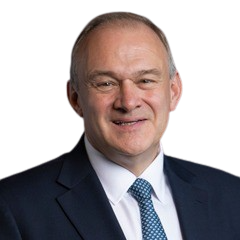
Michael Denzil Xavier Portillo is a prominent British broadcaster, journalist and former Conservative politician.
Portillo was elected as the Conservative MP for Enfield Southgate in 1984 and rose rapidly to serve in the cabinet under John Major throughout much of the mid-1990s. He held prominent posts including chief secretary to the Treasury, employment secretary and defence secretary.
During this time, Portillo was widely considered a potential future party leader and prime minister. However, his trajectory changed dramatically when he lost his seat in the 1997 Labour landslide – an episode that gave rise to the phrase “Portillo moment”.
Portillo returned to parliament in 1999 and served as shadow chancellor under William Hague. However, he stood down as an MP in 2005, having stood in the 2001 and 2003 Conservative leadership elections.
In recent years, Portillo has developed a career in the media, primarily as the presenter of popular railway documentaries and as a political commentator, including as the host of his own show on GB News.
He maintains a strong interest in the arts and serves as Chairman of the Board of Trustees of the Federation of British Artists, an educational arts charity.
Michael Portillo previous offices
Portillo has held a series of high-profile political offices, having risen up the ranks under Margaret Thatcher and John Major.
Under Thatcher, Portillo served as a government whip (1986-1987) and parliamentary under-secretary of state for social security (1987-1988), before being promoted to minister of state for transport (1988-1990). He held this role at the time of the Marchioness disaster on the Thames in August 1989, which resulted in the deaths of 51 people.
Portillo then served as minister of state for local government and inner cities (1990-1992), overseeing aspects of the implementation of the unpopular community charge (often called the ‘poll tax’).
Under John Major, Portillo sat in the cabinet from 1992 until 1997. He became a member of the privy council in 1992. He served as chief secretary to the Treasury (1992-1994), secretary of state for employment (1994-1995), and secretary of state for defence (1995-1997).
Throughout this period, Portillo was seen as a leading figure on the Thatcherite right of the Conservative party and was frequently discussed as a potential successor to John Major.
Is Michael Portillo married?
Portillo married Carolyn Eadie in 1982.
The couple have now been married for over 40 years.
Carolyn Eadie has worked as an executive recruitment consultant and previously owned her own recruitment company in London.
In a notable interview with the Times in 1999, during his campaign to return to parliament, Portillo addressed long-standing rumours about his private life by confirming he had experienced “some homosexual experiences” while a student at Cambridge University.
Michael Portillo’s political career
Portillo served as a special adviser to Conservative ministers David Howell and Cecil Parkinson, and then to chancellor Nigel Lawson (1983-1984).
He first stood for parliament in the safe Labour seat of Birmingham Perry Barr in the 1983 general election, losing as expected. He was then selected to contest the safe Conservative seat of Enfield Southgate in a 1984 by-election, caused by the murder of the incumbent MP Sir Anthony Berry in the IRA bombing of the Grand Hotel during that year’s Conservative Party conference in Brighton. Portillo won the by-election comfortably.
As an MP, Portillo established himself as a strong supporter of Margaret Thatcher and her political project, rising through the junior ministerial ranks under her leadership. He urged her to fight on during the 1990 Conservative leadership challenge that ultimately led to her resignation. Thatcher reportedly told Portillo upon her departure that, “great things are expected of you” and that “you will not disappoint us”.
After Thatcher was ousted, Portillo was appointed as a cabinet minister under John Major in 1992. Portillo was a staple of Major’s administration, representing the Eurosceptic right wing of the party. However, persistent rumours circulated about his loyalty and ambition, with speculation about a potential Portillo-led leadership challenge.
In 1993, unaware that microphones were still live after a television interview, Major referred to three eurosceptic cabinet colleagues as “bastards”. He was widely understood to be referring to Michael Howard, the home secretary; Peter Lilley, the social security secretary; and Portillo, then the chief secretary to the Treasury.
In 1995, under pressure form internal critics, Major triggered a contest in his own leadership, daring rebels to “put up or shut up”.
Portillo considered challenging Major but ultimately decided against it. This left John Redwood to unsuccessfully challenge the incumbent prime minister from the right. The Sun newspaper endorsed Redwood’s candidacy, running the front-page headline: “Redwood versus Deadwood”.
To win on the first ballot, Major needed to secure 50% of those eligible to vote, as well as a 15 point margin of victory. It was speculated that a second ballot would prompt Major’s resignation and the entrance of further candidates, such as Portillo, into the race. This was the pattern Thatcher’s defenestration followed in November 1990.
Portillo was long considered a potential future prime minister and Conservative Party Leader. However, his political ambitions were dramatically derailed when he unexpectedly lost his Enfield Southgate seat to Labour’s Stephen Twigg in the landslide Labour victory of the 1997 general election.
Portillo’s defeat in Enfield South became a symbol of the New Labour landslide win. The question “Were you still up for Portillo?” crossed the lips of many an astonished politico on 2 May. High-profile electoral scalps are now often discussed in reference to this original “Portillo moment”.
After 1997, Portillo never held government office again.
Portillo’s defeat also had major implications for the forthcoming Conservative leadership contest. His surprise defenestration cleared the field of the favourite to succeed Major. William Hague was elected leader of the Conservative Party in June, becoming, at the age of 36, its youngest leader since William Pitt the Younger in 1783.
Following his election defeat, Portillo reflected on his political standing. During his time out of parliament (1997-1999), his previously staunch Thatcherite views appeared to soften somewhat, leading to a period sometimes referred to as “New Portillo” (after New Labour).
Portillo returned to parliament as the MP for the safe Conservative seat of Kensington and Chelsea in a by-election in November 1999. During the campaign, Portillo sought to “clear the decks” in an interview with the Times. He said he had “homosexual experiences as a young person.”
The interview followed years of speculation about his sexuality. Explaining his decision to address the speculation, Portillo said: “I’m only prepared to return to public life on my terms. That means getting these things straight.
“I’m not going to go back to public life dogged by false rumours. I’ve always intended to do that.”
In the end, Portillo secured 11,004 votes (56.4%) – a majority of 6,706 over the Labour candidate, Robert Atkinson. His victory, however, was somewhat dampened by a dismal turnout of only 29.8%. The low figure was attributed by Conservative Party officials to the negative political atmosphere, as well as the affluent constituency’s mobile population.
Portillo’s comeback was completed when, mere months later, he was appointed to the shadow cabinet as deputy Conservative leader and shadow chancellor. The appointment was widely seen as a calculated move by Hague to bring a serious internal rival into the frontbencher tent.
Portillo contested the 2001 Conservative leadership election following Hague’s resignation after another election defeat. He was initially seen as a strong contender but finished third in the MPs’ ballot behind Kenneth Clarke and the eventual winner, Iain Duncan Smith.
During the campaign, Portillo was seen as representing the “modernising” wing of the party. He was supported by Theresa May among others. In the end, Portillo chose not to serve on Duncan Smith’s frontbench, instead emerging as a tacit and sometimes explicit critic of his leadership.
After this final defeat, Portillo announced in 2003 that he would not seek re-election to parliament at the next general election.
In March 2003, Portillo voted in favour of the government motion authorising military action against Iraq. The vote, one of the most contentious in recent parliamentary history, gave the prime minister, Tony Blair, the authority to join the US-led invasion.
Portillo left the House of Commons for good in 2005.
Michael Portillo and trains
From 2002 onwards, Portillo developed an active and highly successful career in the media, initially as a political commentator, but most notably as the presenter of numerous popular railway documentaries.
Beginning in 2009 with the BBC Two series Great British Railway Journeys, Portillo used George Bradshaw’s 19th-century railway guides to explore the history and landscape of the UK by train. The format proved exceptionally popular, leading to multiple further series and numerous international spin-offs, including Great Continental Railway Journeys, Great American Railroad Journeys, Great Indian Railway Journeys, Great Alaskan and Canadian Railroad Journeys, Great Australian Railway Journeys, and series exploring Asia and Iberia. While originally broadcast on the BBC, more recent series (since around 2020) have typically premiered on Channel 5 in the UK.
Portillo has often spoken of his passion for railways, particularly steam trains. He frequently cites his role, as minister of state for Transport in the late 1980s, in reversing the planned closure of the scenic Settle to Carlisle railway line as his greatest political achievement. He has since served as president of the Friends of the Settle-Carlisle Line supporters group.
Portillo’s media career extends beyond transport. He has fronted political documentaries, such as Channel 5’s Portillo: The Trouble with the Tories (2019), and contributed to arts programmes. In 2022, he begin hosting a weekly political discussion show, Portillo, on GB News.
Michael Portillo and Diane Abbott
Between 2003 and the show’s end in 2019, Portillo was a regular panellist on the BBC’s late-night political discussion programme, This Week, hosted by Andrew Neil. From 2003 to 2010, his regular sparring partner on the panel was the Labour MP Diane Abbott. Their contrasting political views became a feature of the programme.
Portillo and Abbott attended neighbouring grammar schools in Harrow during their youth and once appeared together as teenagers in a joint school production of Romeo and Juliet (though not in the title roles).
Michael Portillo: did he support Brexit?
Despite his extensive European travels for his railway documentaries, Portillo was an early and consistent supporter of Brexit. As early as 2013, he publicly followed his former boss, Lord Lawson, in calling for Britain’s withdrawal from the European Union, arguing primarily on grounds of sovereignty and democratic control.
He supported the Leave campaign in the 2016 referendum.
Michael Portillo early years
Portillo was born in Bushey, Hertfordshire, on 26 May 1953. His father, Luis Gabriel Portillo (1907-1993), was an exiled Spanish Republican politician and academic who fled Franco’s regime and settled in Britain. His mother was Cora Waldegrave (née Blyth).
After attending Stanburn Primary School and Harrow County School for Boys (a grammar school), Portillo won a scholarship to Peterhouse, Cambridge University, where he studied history, obtaining a first class degree in 1975. While at Cambridge, he was active in Conservative student politics.
Michael Portillo: Ribena child star
In 1961, an 8-year-old Portillo appeared as a child actor in a television advertisement for the blackcurrant cordial drink, Ribena.
Michael Portillo has not written for Politics.co.uk.