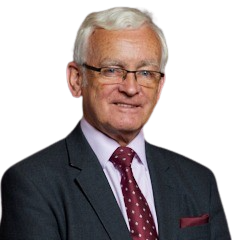
Martin Vickers is the Conservative MP for Brigg and Immingham, having first been elected to parliament for the predecessor seat of Cleethorpes at the 2010 general election.
In the 2024 general election, Vickers won 15,905 votes, representing 37.4% of the vote. The Labour candidate, Najmul Hussain, received 12,662 votes (29.8%), while the Reform UK candidate, Paul Ladlow, secured 10,594 votes (24.9%). Vickers was duly elected with a majority of 3,243 votes.
The Brigg and Immingham constituency was newly created for the 2024 election, primarily from the abolished Cleethorpes seat and parts of Brigg and Goole. It covers parts of North Lincolnshire and North East Lincolnshire, including towns like Brigg, Immingham and Barton-upon-Humber. The predecessor Cleethorpes seat was held by Labour (Shona McIsaac) between 1997 and 2010 before Vickers gained it for the Conservatives.
Political Career
Vickers is a member of the House of Commons business committee (since December 2024). The backbench business committee is a select committee of the House of Commons that has the responsibility for scheduling debates on days set aside for “backbench business”. Established in 2010 as part of the Wright reforms, its creation helped transfer some control of the parliamentary timetable from the government to backbench MPs for the first time.
Vickers is also a member of the panel of chairs (since October 2022). The panel of chairs is made up of MPs chosen by the House of Commons speaker, typically at the beginning of every parliament, to chair public bill committees and other commons general committees. In this capacity, Vickers may chair debates in Westminster Hall and may also act as temporary chair during a committee of the whole House.
Vickers was a critic of the Liz Truss “mini-budget”. In October 2022, he described the fiscal package as a “foolish error”, adding: “All we’ve done is supply ammunition to our political opponents.”
He stated: “I’m not arguing about the direction of travel. But it was too much too soon. It has clearly spooked the markets and is causing unnecessary distress and concern to my constituents.”
In June 2022, Vickers publicly declared their loyalty to the prime minister, Boris Johnson, ahead of a Conservative “no-confidence” in his leadership. The vote was triggered by discontent within the parliamentary party following the “partygate” scandal and the publication of the Sue Gray report. While the prime minister ultimately won the vote, the scale of the rebellion against him, with 148 of his own MPs voting to remove him, severely weakened his authority and presaged his resignation the following month.
In May 2020, Vickers criticised the actions of Boris Johnson’s then-chief adviser, Dominic Cummings, over his journeys during the first national lockdown. The actions of Cummings, which included a trip from London to County Durham and a subsequent drive to Barnard Castle, were seen by many as a breach of the government’s own “stay at home” guidance.
At the time, Vickers told Sky News that Cummings’ actions “undermine” the government message and that he “should have done the decent thing and stood down”.
Vickers was a member of the House of Commons international trade committee (2020-2023), the health and social care committee (2018-2019), the transport committee (2013-2018), the procedure committee (2012-2015) and the home affairs committee (2022-2022).
Vickers is listed as a member of the all-party parliamentary groups (APPGs) for Channel Islands. Gibraltar, Kosovo and Albania, Poland, rail and steel and metals-related industries.
Vickers delivered his maiden speech on 17 June 2010 during a debate on building a high-skilled economy.
In it, he said: “We must develop further a high-skilled economy that will benefit my constituency and the whole country. We can then progress out of this economic downturn more fully. We need to set the foundations for the future success that our young people deserve. It is our younger generations who will be the backbone on which the future of businesses relies.”
He added: “It is, of course, a great privilege to be elected to the House, particularly for me as I represent the constituency that bears the name of my home town. That makes me both a Lincolnshire yellowbelly and a meggie.
“The explanations behind those terms are somewhat dubious, and although I appreciate that members are on tenterhooks to know them, I shall leave that for another day.”
Before entering parliament, Vickers served as a Conservative councillor on Great Grimsby Borough Council and North East Lincolnshire Council. He unsuccessfully contested the Brigg and Cleethorpes constituency at the 2005 general election.
Political views
Leadership elections and loyalty
Tory leadership 2022 (II): Vickers supported Rishi Sunak’s candidacy in the Conservative Party’s October 2022 leadership election. The contest was triggered by the resignation of Liz Truss after just 45 days in office, following the financial and political tailspin triggered by her “mini-budget”.
Sunak, the former chancellor, had finished second to Truss in the previous contest. Unlike the summer contest, this election featured an expedited process requiring each candidate to secure at least 100 nominations from MPs to proceed. Sunak, having emerged as the clear frontrunner, was declared leader of the Conservative Party unopposed on 24 October.
Tory leadership 2019: Vickers supported Boris Johnson for the party’s leadership in 2019. The election was triggered by the resignation of Theresa May following her inability to secure a Brexit deal acceptable to the Conservative Party.
Johnson, the former foreign secretary and mayor of London, campaigned on the central pledge to “deliver Brexit” by 31 October 2019, “deal or no deal”. He thereby positioned himself as the candidate best-placed to break the parliamentary deadlock. Johnson secured 114 votes in the first parliamentary ballot, and reached 160 votes in the final MP round. In the subsequent ballot of the party membership, Johnson won a decisive victory with 92,153 votes (66.4%).
Tory leadership 2016: Vickers supported Andrea Leadsom for the party’s leadership in July 2016. The election was triggered by the resignation of David Cameron following the UK’s vote to leave the European Union.
Leadsom, the minister of state for energy and climate change, emerged as a leading “Leave” candidate, securing 66 votes in the first ballot and 84 in the second. She withdrew from the contest on 11 July before the membership vote could take place.
Factional identity and party tradition
Common sense group: In the 2019-2024 parliament, Vickers was associated with the Common Sense Group (CSG) of socially conservative MPs. The CSG’s principal focus was to combat what it described as “woke” ideology. In 2021, it published a manifesto, Common Sense: Conservative Thinking for a Post-Liberal Age, which took aim at the Equality Act 2010, the supreme court, British broadcasters and environmentalist direct action group Extinction Rebellion. Veteran Conservative MP Sir John Hayes served as the group’s chair.
In a 2020 open letter published in the Daily Telegraph, MPs of the Common Sense Group said the faction had formed to “speak for the silent majority of voters tired of being patronised by elitist bourgeois liberals whenever issues such as immigration or law and order are raised.”
European Research Group: Vickers has been associated with the European Research Group (ERG). During the Conservative Party’s last stint in government, the ERG emerged as a highly influential Tory faction composed of staunchly eurosceptic MPs. Founded in 1993, the group played a pivotal role in shaping the UK’s exit from the European Union, consistently advocating for a “hard” Brexit.
Its members were generally and often stridently critical of the withdrawal agreement negotiated by Theresa May. Chaired variously by Mark Francois, Jacob Rees-Mogg, Steve Baker and Suella Braverman, the group proved instrumental in May’s downfall as prime minister.
Blue Collar Conservatives: Vickers was previously listed as a member of the Blue Collar Conservatives group. This faction within the Conservative party was founded in 2012 by the former cabinet minister Esther McVey, but came to greater prominence following the 2019 general election. The group aimed to “champion working people and develop a conservative agenda to benefit the voters and communities most neglected by Labour”. In October 2022, McVey was succeeded by Lee Anderson as the group’s chair.
Cornerstone Group: Vickers was also a member of the Cornerstone Group, a highly traditionalist and socially conservative faction of Conservative MPs. Its political philosophy was summarised by its motto: “Faith, Flag, and Family”. In July 2005, the group published a pamphlet that accused the-leader Michael Howard of running a general election campaign that was too “timid” about tax cuts, public service reform and family values.
Conservative Environment Network: Vickers is listed as a member of the Conservative Environment Network (CEN) parliamentary caucus. CEN is an independent forum for conservatives that supports conservation and decarbonisation. It calls for the environment to be given a higher profile at the heart of policy making, describing “biodiversity loss, climate change, and wasteful resource use are threats to our national security”, and promotes “market-based policies” to environmental challenges. Members of its parliamentary caucus, such as Vickers, are thought to generally align with the group’s “green” message and environmentalism.
Brexit and Europe
Brexit referendum: Vickers supported Leave in the 2016 Brexit referendum, and therefore agreed with a majority of his constituents, 69.5% of whom also voted to Leave.
Article 50: In February 2017, Vickers voted in favour of the European Union (Notification of Withdrawal) Bill. The legislation empowered the prime minister to notify the Council of the European Union of the UK’s intention to withdraw, formally triggering the process set out in Article 50 of the Treaty on European Union. MPs supported the bill by 498 votes to 114 at second reading.
Customs union vote (2025): In December 2025, Vickers voted against the UK-EU Customs Union (Duty to Negotiate) Bill. The bill, introduced under the ten-minute rule procedure by Liberal Democrat Europe spokesperson Al Pinkerton, sought to mandate the government to enter into negotiations with the European Union to establish a bespoke customs union.
Assisted dying
Vickers voted against the Terminally Ill Adults (End of Life) Bill, better known as the assisted dying bill, at both second reading (November 2024) and third reading (June 2025).
Social values and conscience issues
Abortion decriminalisation (2025): Vickers voted against a backbench amendment to the Crime and Policing Bill that sought to decriminalise abortion in England and Wales in June 2025. The amendment, which was passed by a majority of 242 votes, removed women from the threat of prosecution for ending a pregnancy at any stage. As an issue of conscience, MPs were allowed to vote according to their personal beliefs.
Same-sex marriage (2013): In February 2013, Vickers was one of the 139 Conservative MPs to vote against the Marriage (Same Sex Couples) Bill at its second reading. The landmark piece of legislation, which received its second reading by 400 votes to 175, legalised marriage for same-sex couples in England and Wales.
Foreign policy and security
Trident renewal (2016): Vickers voted in favour of a government motion calling for the renewal of the Trident nuclear deterrent system in July 2016. The motion, which was passed by 472 votes to 117, committed the UK to constructing a new fleet of submarines to carry the nation’s nuclear weapons.
Syria airstrikes (2013): Vickers voted against the government’s motion on the principle of military intervention in Syria in August 2013. The government motion was defeated by 285 votes to 272, a move which effectively ruled out UK participation in any US-led military strikes.
Sanctioned (Russia): In April 2022, Vickers was among the group of MPs placed on a sanctions list by the Russian government. The measure barred them from entering Russia and was presented by Moscow as a retaliatory response to the UK’s stance on the invasion of Ukraine.
Palestine
Palestinian recognition letter (June 2025): In June 2025, Vickers was among a group of eight Conservative MPs who attempted to deliver a letter to 10 Downing Street calling on the government to recognise a Palestinian state.
The letter read: “We write to express our strong support should the government recognise a Palestinian state… This decision would be a substantive act of diplomacy and a statement of commitment to equality and peace.”
“Successive UK governments have affirmed support for two states living side by side in peace and security, but without meaningful action, that vision is rapidly slipping away. Settlement expansion, the ongoing disproportionate destruction in Gaza, and political deadlock, are making a viable two-state solution harder to achieve with each passing day.”
Sir Edward Leigh, one of the letter’s signatories, stated that they were “locked out of Downing Street”.
Palestinian recognition vote (2014): In October 2014, Vickers was one of 39 Conservative MPs who voted in favour of recognising Palestine as a state. The motion, passed by 274 votes to 12 after it was roundly supported by Labour MPs, called on the government to “recognise the state of Palestine alongside the state of Israel as a contribution to securing a negotiated two-state solution”.
Before Politics
Born Martin John Vickers in Cleethorpes, Lincolnshire on 13 September 1950, he attended Havelock School and Grimsby College. He later studied part-time, graduating with a politics degree from the University of Lincoln in 2004.
Vickers worked in the printing industry and the retail trade before becoming constituency agent for Conservative MP Sir Edward Leigh in 1994.
Personal Life
Vickers is married to Ann Gill. They have one daughter and live in Cleethorpes.
Trivia
Vickers’s interests include reading, football, cricket, travel, railways and music.
Martin Vickers has not written for Politics.co.uk.