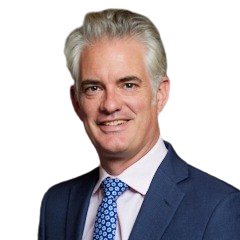
John Glen is the Conservative MP for Salisbury, having first been elected at the 2010 general election.
In the 2024 general election, Glen received 17,110 votes (34.1%). The Labour candidate received 13,303 votes (26.5%), and the Liberal Democrat candidate secured 11,825 votes (23.6%). Glen was duly elected with a majority of 3,807.
The Salisbury constituency covers the city of Salisbury and a large rural area in the south-west of Wiltshire, bordering Hampshire and Dorset. It includes much of Salisbury Plain, with a significant Ministry of Defence presence, and the Stonehenge UNESCO World Heritage site.
Salisbury has been held continuously by the Conservative Party since 1924 and is considered historically safe. The constituency received international attention following the Novichok nerve agent attack in the city in 2018.
Political Career
Glen was appointed parliamentary private secretary (PPS) to Kemi Badenoch, the leader of the opposition, as part of the shadow frontbench reshuffle conducted in July 2025. A PPS acts as an unpaid parliamentary assistant, providing a link between the senior frontbencher and backbench MPs.
Glen is also a member of the House of Commons treasury select committee (since October 2024) – the committee tasked with scrutinising His Majesty’s Treasury and government policy on taxation and public spending. The committee’s remit also extends to scrutinising major financial institutions that shape the UK economy, including the Bank of England, the Financial Conduct Authority (FCA), and the tax authority, HM Revenue and Customs (HMRC).
At the beginning of the parliament elected in 2024, Glen stood unsuccessfully for election as chair of the public accounts committee. In the contest, the results of which were announced in September 2024, Glen secured 147 votes, placing third. They were eliminated in the first round. They were ultimately defeated by Sir Geoffrey Clifton-Brown, who won the support of 301 colleagues.
Glen was previously a member of the interim/caretaker shadow cabinet constructed after the 2024 general election as shadow paymaster general from July to November 2024.
Prior to the 2024 general election, which saw the Conservatives ejected from government, Glen held several senior government positions under prime minister Rishi Sunak, serving as paymaster general and minister for the Cabinet Office (November 2023 – July 2024) and as chief secretary to the Treasury (October 2022 – November 2023).
Glen served as economic secretary to the Treasury and city minister for a record tenure of four and a half years (January 2018 – July 2022). He resigned from this post in July 2022 as part of the mass walkout of ministers that ultimately forced Boris Johnson to announce his own resignation.
In his resignation letter, Glen expressed his “complete lack of confidence” in Johnson’s leadership.
He wrote: “Looking back over my tenure, I am proud to have helped steer the City of London through a period of uncertainty following our decision to leave the EU. I also gratefully acknowledge the unstinting hard work and brilliance of my team of civil servants in the Treasury.
“However, recent events concerning the handling of the appointment of the former deputy chief whip [Chris Pincher], and the poor judgement you have shown, have made it impossible for me to square continued service with my conscience.
“The country deserves better, and I must return to the backbenches to dedicate myself to the service of the people of Salisbury and South Wiltshire.”
https://x.com/JohnGlenUK/status/1544623825307959300
Glen’s first ministerial role was as parliamentary under-secretary of state for arts, heritage and tourism at the Department for Digital, Culture, Media and Sport (June 2017 – January 2018). Before becoming a minister, he served as PPS to Eric Pickles as communities secretary, Sajid Javid as business secretary and later to Philip Hammond as chancellor of the exchequer.
In November 2021, upon receiving a promotion to the rank of minister of state – a role that would have entitled him to a £31,680 top-up on his base salary as an MP – Glen elected to become an unpaid minister. Glen told City AM at the time: “I love the job and I am privileged to continue to serve in this role [economic secretary to the Treasury] as a minister of state.
“I always hoped and believed that my reward will be in heaven.”
Glen presented a private members’ bill in October 2012 aimed at reforming the system for paying court fines. His Unpaid Work Orders (Pilot Scheme) Bill sought to create a system where financial penalties could be paid off through unpaid community work, providing an alternative to imprisonment for fine defaulters.
Introducing the bill to parliament, under the 10-minute rule procedure, Glen said: “I think it is time to look again at unpaid work orders as an additional means of compliance with sentences.
“The number and total of unpaid fines is so large, and the cost of enforcement so significant, that we should try a new means of ensuring that justice is served and fines really are paid, whether through straightforward monetary payment or, when it becomes clear that that is unlikely to happen, through unpaid work that benefits a local community.”
Glen was a member of the work and pensions committee from July 2015 to December 2016, the committees on arms export controls from July 2010 to November 2012, and the defence committee from July 2010 to November 2012.
In 2014, Glen sat on the Downing Street Policy Board with responsibility for home affairs and constitutional reform – a key issue in the wake of the Scottish independence referendum.
Glen was ranked as the second most responsive MP in parliament in a 2014 survey.
Glen is listed as a member of the all-party parliamentary groups (APPGs) for cyber innovation, debt and financial inclusion, food banks, PANS PANDAS, spinal cord injury, and stem cell transplantation and advanced cellular therapies.
Glen delivered his maiden speech on 27 May 2010 during a debate on energy and the environment. In it, he said: “I believe that what is required more than anything else at this challenging economic time for rural Britain is a recognition that rural poverty needs to be addressed directly and urgently.
“We often forget that many of the lowest-paid members of our society are part of the rural economy and rely on a vibrant food-producing sector to survive.
“Whatever else I am asked to tackle or may achieve in the House, I hope that, like [my immediate predecessor] Robert Key, I will serve my constituents faithfully, determinedly and selflessly, and fight for the interests of the vulnerable, the suffering and the insecure.”
Glen previously stood unsuccessfully as the Conservative candidate for Plymouth Devonport in the 2001 general election, finishing second to Labour’s David Jamieson on 11,289 votes (27.1%).
Political Views
Leadership elections and loyalty
Tory leadership 2022 (I): Glen supported Rishi Sunak’s candidacy in the Conservative Party’s July-September 2022 leadership election. The contest was triggered by the resignation of Boris Johnson, following the mass exodus of more than 60 frontbenchers.
Sunak, the former chancellor, warned against “comforting fairytales” regarding unfunded tax cuts. Although he won every round of the parliamentary ballots, securing 137 votes in the final stage, Sunak was defeated by Liz Truss in the membership vote, finishing with 60,399 votes (42.6%).
Tory leadership 2022 (II): Glen also supported Sunak’s candidacy in the Conservative Party’s October 2022 leadership election. The contest was triggered by the resignation of Liz Truss after just 45 days in office, following the financial and political tailspin triggered by her “mini-budget”.
Unlike the summer contest, this election featured an expedited process requiring each candidate to secure at least 100 nominations from MPs to proceed. Sunak, having emerged as the clear frontrunner, was declared leader of the Conservative Party unopposed on 24 October.
Tory leadership 2019: Glen supported Sajid Javid for the party’s leadership in 2019. The election was triggered by the resignation of Theresa May following her inability to secure a Brexit deal acceptable to the Conservative Party.
Javid, the then-home secretary, successfully reached the final four of the parliamentary stages, but was eliminated in the fourth ballot on 20 June after receiving 34 votes.
Tory leadership 2016: Glen was one of the 34 Conservative MPs who voted for Stephen Crabb in the first ballot of the party’s leadership election in July 2016. The contest was triggered by the resignation of David Cameron following the UK’s vote to leave the European Union.
Crabb, the work and pensions secretary, was the first candidate to formally declare his candidacy, running on a joint ticket with business secretary Sajid Javid as his intended chancellor. Crabb withdrew from the race after the first ballot and endorsed Theresa May, the contest’s eventual winner.
Factional identity and party tradition
Bright Blue: Glen has been listed as a parliamentary supporter of Bright Blue, an independent centre-right think tank and membership organisation that champions liberal conservatism in the UK. Since its founding in 2014, the organisation has expanded its reach through a new cross-party strategy.
Free Enterprise Group: Glen was a member of the Free Enterprise Group (FEG) of Conservative MPs – a parliamentary caucus, founded in 2011 by Liz Truss, that championed free-market, libertarian economic policies. The group, seen as a standard-bearer for the Thatcherite wing of the party, is most notable for the political ascent of its founding members. Key figures in the FEG included Truss, Kwasi Kwarteng, Priti Patel, Dominic Raab, and Chris Skidmore. The 2012 book, Britannia Unchained, served as the group’s unofficial manifesto for radical free-market reform. It was effectively succeeded by the Free Market Forum, which was launched in 2021.
In February 2013, in his capacity as a member of the FEG, Glen penned a policy paper arguing for significant changes to funding of undergraduate degrees.
In a Telegraph article, published January 2013, Glen wrote: “We need to find a sustainable funding solution. The sector is often stifled by unnecessary government regulation and misguided interventions from quangos. There are still many areas where universities should be given greater freedom and independence to allow the higher education sector to flourish.
“That’s why today I have published a paper as a member of the Free Enterprise Group of MPs to suggest ways that a future Conservative government could deliver further reform of the higher education sector.”
He added: “Many will portray these ideas as a crusade to ‘privatise’ higher education, or stamp out any recognition of its wider public benefit. This is not my intention. It is vital that the public benefit of higher education in the UK continues, and that its unique shape and character is preserved.
“But this means we must move away from government intervention, and give universities the freedom and independence to compete on the world stage.”
Blue Collar Conservatives: Glen was previously listed as a member of the Blue Collar Conservatives group. This faction within the Conservative party was founded in 2012 by the former cabinet minister Esther McVey, but came to greater prominence following the 2019 general election. The group aimed to “champion working people and develop a conservative agenda to benefit the voters and communities most neglected by Labour”. In October 2022, McVey was succeeded by Lee Anderson as the group’s chair.
Brexit and Europe
Brexit referendum: Glen supported the Remain campaign in the 2016 referendum on Britain’s membership of the European Union (EU), and therefore agreed with a majority of his constituents, 50.1% of whom voted also to Remain.
In a statement, issued June 2016, Glen said he would “reluctantly” vote for Remain.
He wrote: “I retain my long-standing scepticism for the integration of European economies, the euro, and the suboptimal way that European political institutions work… I have been dismayed with the rhetoric on both sides of this debate. I recognise that we could survive outside of the EU.
“However, at this time the risks and the cost of uncertainty is not worth taking… I couldn’t vote to remain in the EU if there was any threat that we would be forced to join the euro or be part of further integration. But the prime minister’s deal explicitly ruled these out…
“I remain sceptical about the relative favourability of the terms of any relationship if we were to leave the EU, and the costs associated with the considerable period of uncertainty that it would bring.
“For that reason, I will reluctantly be voting to remain.”
Article 50: In February 2017, Glen voted in favour of the European Union (Notification of Withdrawal) Bill. The legislation empowered the prime minister to notify the Council of the European Union of the UK’s intention to withdraw, formally triggering the process set out in Article 50 of the Treaty on European Union. MPs supported the bill by 498 votes to 114 at second reading.
Customs union vote (2025): In December 2025, Glen voted against the UK-EU Customs Union (Duty to Negotiate) Bill. The bill, introduced under the ten-minute rule procedure by Liberal Democrat Europe spokesperson Al Pinkerton, sought to mandate the government to enter into negotiations with the European Union to establish a bespoke customs union.
Assisted dying
Glen voted against the Terminally Ill Adults (End of Life) Bill, better known as the assisted dying bill, at both second reading (November 2024) and third reading (June 2025).
In an article for the Salisbury Journal, published 12 June, Glen wrote: “While I never want to see those towards the end of their life suffering unnecessarily, I have grave concerns about the efficacy of safeguards and the inevitability of future liberalisation.
“There has already been ‘slippage’ in the safeguards that were debated in the House at second reading, and I am acutely aware of anxiety amongst many groups who are already vulnerable.”
https://x.com/JohnGlenUK/status/1936053672028369139
Social values and conscience issues
Abortion decriminalisation (2025): Glen voted against a backbench amendment to the Crime and Policing Bill that sought to decriminalise abortion in England and Wales in June 2025. The amendment, which was passed by a majority of 242 votes, removed women from the threat of prosecution for ending a pregnancy at any stage. As an issue of conscience, MPs were allowed to vote according to their personal beliefs.
Same-sex marriage (2013): In February 2013, Glen was one of the 139 Conservative MPs to vote against the Marriage (Same Sex Couples) Bill at its second reading. The landmark piece of legislation, which received its second reading by 400 votes to 175, legalised marriage for same-sex couples in England and Wales.
At the time, Glen signed a cross-party open letter protesting that the government had no mandate to “redefine marriage”.
The letter stated: “We are sceptical that the proposed protections will prevent the erosion of liberties of religion and conscience. The proposed redefinition of marriage is unnecessary, given the legal rights established through civil partnerships.
“We understand some parliamentarians support freedom for same sex couples to marry, but we support a freedom from the state being able to redefine the meaning of marriage.”
Speaking during the bill’s second reading debate, Glen told the House: “I am very disappointed to have to rise to oppose the bill. I never imagined that I would be put in a position where I have, by virtue of standing up for marriage, been characterised variously as a ‘homophobic bigot’, a ‘religious nutter’, a product of the dark ages, or, as I see in this weekend’s press, on the brink of making ‘a tragic mistake’ that I will have many years to regret.”
He added: “Huge numbers of Conservative supporters feel grave disappointment and alienation at the decision to pursue this legislation. The government will say that they are strengthening marriage by widening it, but in doing so they are redefining it and in redefining it they are undermining it.
“If the government want to strengthen marriage, I respectfully submit that they should leave it alone.”
In 2012, it was reported that Glen employed interns from the Christian Action Research and Education (CARE) charity. In 2009, CARE backed an event which held talks on “therapeutic approaches to and understandings of same-sex attraction” and “mentoring the sexually broken”. More than 9,900 people signed a petition calling on Glen and 12 other MPs to cut ties with CARE.
Glen, who was reportedly a CARE intern himself, responded: “CARE did not use this term ‘gay cure’, they wouldn’t use that term nor would my intern nor would I, so we’re not going to be bullied into giving up links with an organisation that does a great deal of good on the basis of a smear campaign.
“I’m not going to back down on something I think is the right thing to do.”
He is a committed Christian and served as chairman of the Conservative Christian Fellowship in 2016.
Foreign policy and security
Trident renewal (2016): Glen voted in favour of a government motion calling for the renewal of the Trident nuclear deterrent system in July 2016. The motion, which was passed by 472 votes to 117, committed the UK to constructing a new fleet of submarines to carry the nation’s nuclear weapons.
Syria airstrikes (2015): Glen voted in favour of a government motion to extend UK airstrikes against Isis from Iraq into Syria in December 2015. The motion, which was passed by 397 votes to 223 after a ten-hour debate in the House of Commons, authorised the RAF to conduct strikes against Isis targets in Syria.
Syria airstrikes (2013): Glen voted in favour of the government’s motion on the principle of military intervention in Syria in August 2013. The government motion was defeated by 285 votes to 272, a move which effectively ruled out UK participation in any US-led military strikes.
Sanctioned (Russia): In April 2022, Glen was among the group of MPs placed on a sanctions list by the Russian government. The measure barred them from entering Russia and was presented by Moscow as a retaliatory response to the UK’s stance on the invasion of Ukraine.
Before Politics
Born in Bath on 1 April 1974, John Glen grew up in rural North Wiltshire, where his family ran a horticultural business. He was educated at King Edward’s School, Bath, where he was head boy.
He studied modern history at Mansfield College, Oxford University (1993-1996), serving as JCR president, and was the first in his family to attend university. He later gained an MBA from Fitzwilliam College, Cambridge University (2002-2003).
After university, Glen worked for two government ministers in the last year of the Conservative administration (1996-1997).
After three years spent working as a management consultant for Accenture, in 2000, he joined then-Conservative leader William Hague’s team. As head of the political section of the Conservative Research Department, he helped prepare Hague for prime minister’s questions and briefed the shadow cabinet for media appearances.
In 2003, Glen briefly returned to Accenture.
In 2004, Glen worked as deputy director of the Conservative Research Department. He then became director of the department and set up the secretariat for the policy review that was established after David Cameron became Tory leader.
Between 2006 and 2010, Glen again returned to Accenture to manage the company’s relationship with the World Economic Forum. He attended the annual WEF meeting in Davos in 2007, 2008 and 2009.
Glen was a magistrate (JP) at Horseferry Road, Westminster from 2006 to 2012.
Personal Life
John Glen married Emma Glen in 2008. He has two step-children. He is a practising Christian.
Trivia
In September 2021, Glen became the longest-serving economic secretary to the Treasury (city minister) since the post’s creation in 1947.
In 2014, while an MP, Glen undertook a course with the Royal College of Defence Studies alongside serving officers. Simultaneously, he also studied for a masters degree in international security and strategy at King’s College London – later graduating with distinction.
John Glen has not written for Politics.co.uk.