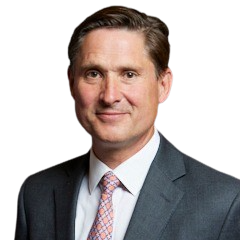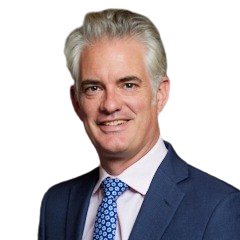
James Cartlidge is the Conservative Party MP for South Suffolk, and was first elected at the 2015 general election.
In the 2024 general election, Cartlidge received 16,082 votes in South Suffolk, representing 33% of the vote share. The Labour Party candidate, Emma Bishton, received 13,035 votes (26.7%), while the Reform UK candidate, Beverley England, secured 9,252 votes (19%). Cartlidge was duly elected with a majority of 3,047.
The South Suffolk constituency is predominantly rural, located along Suffolk’s southern border with Essex. It includes the market towns of Sudbury and Hadleigh, large villages like Great Cornard, and parts of the southwestern outskirts of Ipswich. The seat, characterised by agriculture and commuter populations, has been held by the Conservative Party since its creation in 1983. Cartlidge’s immediate predecessor was Tim Yeo.
Political Career
Cartlidge is currently shadow secretary of state for defence (since July 2024). He first took up this post on the interim/caretaker shadow frontbench created after the general election of that year under Rishi Sunak’s leadership. He was retained in the post by Kemi Badenoch after her election as Conservative leader (November 2024) and her July 2025 shadow ministerial reshuffle.
Prior to the 2024 general election, which saw the Conservatives ejected from government, Cartlidge held a series of ministerial roles. During Rishi Sunak’s tenure as prime minister, he served as exchequer secretary to the Treasury from October 2022 to April 2023. Considered a Sunak ally, he was then appointed minister of state for defence procurement at the Ministry of Defence, a role he held until the 2024 general election.
Cartlidge’s first ministerial appointment was as parliamentary under-secretary of state at the Ministry of Justice from September 2021. He resigned from this position in July 2022 as part of the mass walkout of ministers that ultimately forced Boris Johnson to announce his own resignation.
Cartilage also served as an assistant government whip from September 2021 to July 2022.
In his letter of resignation, Cartlidge described the then-prime minister’s position as “clearly untenable.”
He added: “I felt duty bound to remain in the post given the very challenging circumstances facing the criminal courts.
“I took the view there had to be some semblance of government in this crucial arm of our constitution. But the position is clearly untenable.
https://x.com/jcartlidgemp/status/1544941714925912065
Prior to ministerial roles, Cartlidge served as parliamentary private secretary (PPS) to then-health secretary Jeremy Hunt, staying with Hunt upon his appointment as foreign secretary in 2018; Ben Wallace as defence secretary; and finally to Sunak, then in post as chancellor. A PPS acts as an unpaid assistant to a minister, providing a link between the senior frontbencher and backbench MPs.
Cartlidge was previously a member of the public accounts committee (2022-2023) and the work and pensions committee (2016-2017).
Cartlidge delivered his maiden speech on 3 June 2015 during a debate on devolution and growth across Britain. In it, he referred to himself as a “one nation Conservative” in his 2015 maiden speech.
He added: “We have a very great history as a constituency, but I am confident that we have a great future as well, and the key to it is the diversity of our economy, which includes not only tourism to ‘Lovejoy’ country and the rest of it, and acres and acres of arable agriculture, but seriously top-end manufacturers and exporters like Philips Avent and Celotex in Hadleigh.”
He added: “I took great pleasure in seeing in the [Queen’s speech] measures that will help our firms go forward, cutting red tape, cutting taxes and continuing to push for full employment, because I am a one nation Conservative, and for me that means not going back to dark and divisive days of high unemployment.”
Before entering parliament, Cartlidge served as a district councillor for Little Cornard ward on Babergh District Council until 2015.
He previously stood unsuccessfully as the Conservative candidate for Lewisham in the 2005 general election, finishing third on 3,773 votes (12.4%).
Political Views
Leadership elections and loyalty
Tory leadership 2024: Cartlidge supported Kemi Badenoch’s candidacy in the 2024 Conservative Party leadership election. The contest was triggered by the resignation of Rishi Sunak following the party’s defeat in the 2024 general election.
Badenoch, the then-shadow housing secretary, was seen as a leading figure on the party’s right wing. After finishing first in the final parliamentary ballot with 42 votes, she defeated Robert Jenrick in the membership vote on with 53,806 votes (56.5%). Badenoch was declared Conservative leader on 2 November.
In an article for the Telegraph, co-written with fellow frontbencher Kevin Hollinrake and published September 2024, Cartlidge argued Badenoch could communicate with the public so the party’s message “cuts through”.
He said Badenoch deserved to win because she combined “star quality, moral strength and sound principles”.
He added: “It is not enough for us to criticise. We can rage at Labour’s actions, but the public won’t listen to our narrative – unless we have a leader who can communicate.
“Kemi Badenoch is that person. She is blessed with that rare gift in politics: the X-factor that means she can not only communicate but achieve an all-important ‘cut through’, so that the public actually notices.”
https://x.com/KemiBadenoch/status/1833160630074790375
Tory leadership 2022 (I): Cartlidge supported Rishi Sunak’s candidacy in the Conservative Party’s July-September 2022 leadership election. The contest was triggered by the resignation of Boris Johnson, following the mass exodus of more than 60 frontbenchers.
Sunak, the former chancellor, warned against “comforting fairytales” regarding unfunded tax cuts. Although he won every round of the parliamentary ballots, securing 137 votes in the final stage, Sunak was defeated by Liz Truss in the membership vote, finishing with 60,399 votes (42.6%).
Tory leadership 2022 (II): Cartlidge supported Sunak’s candidacy in the Conservative Party’s October 2022 leadership election. The contest was triggered by the resignation of Liz Truss after just 45 days in office, following the financial and political tailspin triggered by her “mini-budget”.
Sunak, the former chancellor, had finished second to Truss in the previous contest. Unlike the summer contest, this election featured an expedited process requiring each candidate to secure at least 100 nominations from MPs to proceed. Sunak, having emerged as the clear frontrunner, was declared leader of the Conservative Party unopposed on 24 October.
Johnson confidence vote: In June 2022, Cartlidge publicly declared their loyalty to the prime minister, Boris Johnson, ahead of a vote of no confidence in his leadership. The vote was triggered by discontent within the parliamentary party following the “partygate” scandal and the publication of the Sue Gray report. While the prime minister ultimately won the vote, the scale of the rebellion against him, with 148 of his own MPs voting to remove him, severely weakened his authority and presaged his resignation the following month.
Tory leadership 2019: Cartlidge supported Jeremy Hunt, the then-foreign secretary, for the party’s leadership in 2019. The election was triggered by the resignation of Theresa May following her inability to secure a Brexit deal acceptable to the Conservative Party.
Hunt, campaigning as a “unity candidate”, secured 77 votes from MPs in the final parliamentary round and thereby reached the final head-to-head ballot against Johnson. In the subsequent vote by the party membership, Hunt finished as runner-up with 46,656 votes (33.6%) compared to Johnson’s 92,153 (66.4%).
Tory leadership 2016: Cartlidge supported May for the party’s leadership in July 2016. The contest was triggered by the resignation of David Cameron following the UK’s vote to leave the European Union.
May, the then-home secretary, secured a commanding lead in the parliamentary stages, receiving 165 votes in the first ballot and 199 in the second. Following the withdrawal of her final rival, Andrea Leadsom, on 11 July, May was declared leader unopposed and was appointed prime minister two days later.
Factional identity and party tradition
Conservative Environment Network: Cartlidge is listed as a member of the Conservative Environment Network (CEN) parliamentary caucus. CEN is an independent forum for conservatives that supports conservation and decarbonisation. It calls for the environment to be given a higher profile at the heart of policy making, describing “biodiversity loss, climate change, and wasteful resource use are threats to our national security”, and promotes “market-based policies” to environmental challenges. Members of its parliamentary caucus, such as Cartlidge, are thought to generally align with the group’s “green” message and environmentalism.
Brexit and Europe
Brexit referendum: Cartlidge campaigned to remain in the 2016 referendum on Britain’s membership of the European Union (EU), and therefore disagreed with a majority of constituents, 54% of whom voted to Leave.
Article 50: In February 2017, Cartlidge voted in favour of the European Union (Notification of Withdrawal) Bill. The legislation empowered the prime minister to notify the Council of the European Union of the UK’s intention to withdraw, formally triggering the process set out in Article 50 of the Treaty on European Union. MPs supported the bill by 498 votes to 114 at second reading.
Customs union vote (2025): In December 2025, Cartlidge voted against the UK-EU Customs Union (Duty to Negotiate) Bill. The bill, introduced under the ten-minute rule procedure by Liberal Democrat Europe spokesperson Al Pinkerton, sought to mandate the government to enter into negotiations with the European Union to establish a bespoke customs union.
Assisted dying
Cartlidge voted in favour of the Terminally Ill Adults (End of Life) Bill, better known as the assisted dying bill, at second reading (November 2024) and third reading (June 2025).
In a statement setting out his position, Cartlidge said: “Whilst I am clear that to pressure someone into assisted dying, or to act nefariously in this area must be dealt with by the criminal courts, I am now of the view that it should not be a crime to assist in ending suffering through assisted dying in exceptional circumstances for compassionate reasons – given the stronger safeguards now in place.
“To explain, let us imagine a hypothetical scenario: namely, a member of our World War Two Special Operations Executive (SOE), dropped behind enemy lines and captured. They are being horrifically tortured by the Gestapo – indeed, being tortured to death.
“The resistance cannot rescue this brave soul from their Gestapo cell. But they can smuggle in a cyanide pill for the captive to bite down on and end their suffering.
“As the SOE commander back in Britain, what order would one give, to supply the pill or not? To me, there is only one answer: the humane one – to end the pain.”
Cartlidge was one of six shadow cabinet members and 20 Tory MPs to back the assisted dying bill at third reading.
https://x.com/jcartlidgemp/status/1862469545950085429
Social values and conscience issues
Abortion decriminalisation (2025): Cartlidge voted against a backbench amendment to the Crime and Policing Bill that sought to decriminalise abortion in England and Wales in June 2025. The amendment, which was passed by a majority of 242 votes, removed women from the threat of prosecution for ending a pregnancy at any stage. As an issue of conscience, MPs were allowed to vote according to their personal beliefs.
In July 2019, Cartlidge was one of 73 MPs to vote against equal marriage in Northern Ireland. In a statement, Cartlidge said that he “strongly” supported “the current position on equal marriage that applies in England”, but opposed the change on constitutional grounds. He argued that the law should not be imposed by Westminster while the Northern Ireland Assembly was suspended.
He stated: “I felt the question of equal marriage in Northern Ireland should be decided by the Northern Ireland Assembly, not by the UK parliament ‘in absentia’ (given that the Assembly was not sitting at the time). In other words, my position was based on respect for the current agreed devolution settlement rather than on the substantive matter of equal marriage itself.”
Foreign policy and security
Sanctioned (Russia): In April 2022, Cartlidge was among the group of MPs placed on a sanctions list by the Russian government. The measure barred them from entering Russia and was presented by Moscow as a retaliatory response to the UK’s stance on the invasion of Ukraine.
Trident renewal (2016): Cartlidge voted in favour of a government motion calling for the renewal of the Trident nuclear deterrent system in July 2016. The motion, which was passed by 472 votes to 117, committed the UK to constructing a new fleet of submarines to carry the nation’s nuclear weapons.
Syria airstrikes (2015): Cartlidge voted in favour of a government motion to extend UK airstrikes against Isis from Iraq into Syria in December 2015. The motion, which was passed by 397 votes to 223 after a ten-hour debate in the House of Commons, authorised the RAF to conduct strikes against Isis targets in Syria.
Before Politics
Cartlidge was born in 1974 and attended Queen Elizabeth’s School, Barnet, before studying Economics at the University of Manchester.
Prior to entering politics, he worked as a mortgage broker and later founded Share to Buy, an online property portal specialising in shared ownership homes for first-time buyers, and host of the London Home Show, an event focused on first-time buyers.
Personal Life
Cartlidge is married to Emily Howarth, the couple have four children and he revealed in his 2015 maiden speech that his wife had recently given birth to twins.
His father-in-law is Sir Gerald Howarth, who served as a Conservative MP from 1983-1992 and 1997-2017. Sir Gerald’s parliamentary career overlapped with Cartlidge’s in the 2015-2017 parliament. They sat on opposite sides of the Brexit debate, the defining issue of that parliament.
Trivia
Cartlidge is a keen drummer and plays in a band. He performed a brief drum solo live on Times Radio in 2020.
After his 2015 election, he brought a barrel of local beer from his constituency into the House of Commons to drink with his new parliamentary colleagues.
James Cartlidge has not written for Politics.co.uk.