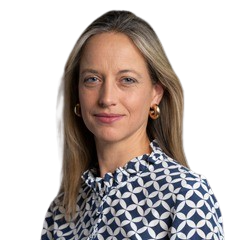
Helen Whately is the Conservative MP for Faversham and Mid Kent, having first been elected to parliament at the 2015 general election.
In the 2024 general election for Faversham and Mid Kent, Whately received 14,816 votes, representing 31.8% of the vote share. The Labour candidate, Mel Dawkins, came second with 13,347 votes (28.6%), while the Reform UK candidate, Maxwell Harrison, secured 9,884 votes (21.2%). Whately was duly elected with a significantly reduced majority of 1,469.
Political Career
Whately currently serves on the Conservative frontbench as shadow secretary of state for work and pensions (since November 2024). She previously served as shadow secretary of state for transport from July to November 2024 on the Conservative frontbench appointed by Rishi Sunak after the general election of the same year.
As shadow work and pensions secretary, Whately had a front row seat as the government abandoned the reforms contained in the Universal Credit and Personal Independence Payment Bill in the face of a significant Labour rebellion.
Addressing the commons in July 2025, Whately remarked that the bill had “more or less disintegrated”. She called the proposed legislation a “rushed and chaotic compromise that would harm disabled people and create a two-tier benefit system”.
Prior to the 2024 general election, which saw the Conservatives ejected from government, served in several ministerial roles. She was minister for health and social care on two occasions from February 2020 to September 2021 and October 2022 to July 2024, exchequer secretary to the Treasury from September 2021 to July 2022, and parliamentary under-secretary for the department for digital, culture, media and sport from September 2019 to February 2020.
Whately’s service as minister for health and social care coincided with the Covid-19 pandemic. During this time, as a regular presence in the media studios, Whately sometimes faced criticism over the government’s Covid policies and response.
In April 2020, Ofcom, the media regulator, received more than 3,200 complaints after Whately clashed with Piers Morgan on two episodes of ITV’s Good Morning Britain programme. Morgan repeatedly pressed Whately about how many care home residents had died of coronavirus and why politicians had been tested when care workers had not. At the time, Whately accused Morgan of “shouting at me and not giving me a chance to answer your questions” and “attempting to score points”.
Ofcom ultimately cleared Morgan, who was seen as the main aggressor.
In a post to social media at the time, Morgan stated: “Apparently nearly 2000 people have now complained to Ofcom about me grilling care minister Helen Whateley too ‘unfairly’ when she couldn’t answer even basic questions.”
He added: “If you think I should continue grilling ministers in the way I’ve been doing, please tell Ofcom. Thanks.”
Ofcom later received a further 221 complaints after Morgan stuck his fingers in his ears and refused to listen to a government statement regarding a purported ministerial “boycott” of Good Morning Britain.
In June 2022, Whately publicly declared their loyalty to the prime minister, Boris Johnson, ahead of a Conservative “no-confidence” in his leadership. The vote was triggered by discontent within the parliamentary party following the “partygate” scandal and the publication of the Sue Gray report. While the prime minister ultimately won the vote, the scale of the rebellion against him, with 148 of his own MPs voting to remove him, severely weakened his authority and presaged his resignation the following month.
In a post to social media at the time, Whately stated: “I will be voting in support of Boris Johnson this afternoon. He steered us through the pandemic, set us on the path to recovery and stood up to Putin in Ukraine. In 2019 he won a mandate to lead our country. We live in tough times and now is the time to get on with the job.”
However, Whately went on to resign as exchequer secretary in July 2022 as part of the mass walkout of ministers that ultimately forced Boris Johnson to announce his own resignation.
In her letter of resignation, Whately wrote: “Within days of becoming care minister the pandemic struck. I will always be full of sadness for those who died and for the suffering of families and staff.
“I also know that we created a support system for social care where none existed before and put in place mental health support for NHS staff. This was possible thanks to your backing.”
She added: “I have argued that you should continue as prime minister many times in recent months, but there are only so many times you can apologise and move on. That point has been reached.”
Previously, Whately served as vice-chair of the Conservative party from April to September 2019.
During her time as a backbencher, Whately has sat as a member of the House of Commons health and social care committee (2022 and 2015-2017) and the public accounts committee (2021-2022)..
Whately delivered her maiden speech on 2 June 2015.
In it, she said: “My constituency is a truly great place to live and work, but all is not as it could and should be. While unemployment is low, some people cannot get jobs, and there are too many people on low wages. We have excellent schools, including outstanding grammar schools, but some children leave school without good qualifications.”
She added: “Most people get excellent healthcare most of the time, but local hospitals face serious problems, GPs are overwhelmed and the future of Faversham cottage hospital is an ongoing worry. Residents of villages earmarked for development are fearful of the impact of new houses on their communities, although everyone recognises that we need more homes.
“During the election campaign, I promised to tackle these problems, and I will keep that promise.”
Whately first stood for parliament unsuccessfully in the Kingston and Surbiton constituency at the 2010 general election.
Political Views
Leadership elections and loyalty
Tory leadership 2024: Whately supported Kemi Badenoch’s candidacy in the 2024 Conservative Party leadership election. The contest was triggered by the resignation of Rishi Sunak following the party’s defeat in the 2024 general election.
Badenoch, the then-shadow housing secretary, was seen as a leading figure on the party’s right wing. After finishing first in the final parliamentary ballot with 42 votes, she defeated Robert Jenrick in the membership vote with 53,806 votes (56.5%). Badenoch was declared Conservative leader on 2 November.
Tory leadership 2022 (I): Whately supported Rishi Sunak’s candidacy in the Conservative Party’s July-September 2022 leadership election. The contest was triggered by the resignation of Boris Johnson, following the mass exodus of more than 60 frontbenchers.
Sunak, the former chancellor, warned against “comforting fairytales” regarding unfunded tax cuts. Although he won every round of the parliamentary ballots, securing 137 votes in the final stage, Sunak was defeated by Liz Truss in the membership vote, finishing with 60,399 votes (42.6%).
Tory leadership 2022 (II): Whately again supported Sunak’s candidacy in the Conservative Party’s October 2022 leadership election. The contest was triggered by the resignation of Truss after just 45 days in office, following the financial and political tailspin triggered by her “mini-budget”.
Unlike the summer contest, this election featured an expedited process requiring each candidate to secure at least 100 nominations from MPs to proceed. Sunak, having emerged as the clear frontrunner, was declared leader of the Conservative Party unopposed on 24 October.
Tory leadership 2019: Whately supported Jeremy Hunt, the then-foreign secretary, for the party’s leadership in 2019. The election was triggered by the resignation of Theresa May following her inability to secure a Brexit deal acceptable to the Conservative Party.
Hunt, campaigning as a “unity candidate”, secured 77 votes from MPs in the final parliamentary round and thereby reached the final head-to-head ballot against Boris Johnson. In the subsequent vote by the party membership, Hunt finished as runner-up with 46,656 votes (33.6%) compared to Johnson’s 92,153 (66.4%).
Tory leadership 2016: Whately supported Theresa May for the party’s leadership in July 2016. The contest was triggered by the resignation of David Cameron following the UK’s vote to leave the European Union.
May, the then-home secretary, secured a commanding lead in the parliamentary stages, receiving 165 votes in the first ballot and 199 in the second. Following the withdrawal of her final rival, Andrea Leadsom, on 11 July, May was declared leader unopposed and was appointed prime minister two days later.
Factional identity and party tradition
Conservative Environment Network: Whately is listed as a member of the Conservative Environment Network (CEN) parliamentary caucus. CEN is an independent forum for conservatives that supports conservation and decarbonisation. It calls for the environment to be given a higher profile at the heart of policy making, describing “biodiversity loss, climate change, and wasteful resource use are threats to our national security”, and promotes “market-based policies” to environmental challenges. Members of its parliamentary caucus, such as Whately, are thought to generally align with the group’s “green” message and environmentalism.
Bright Blue: Whately has been listed as a parliamentary supporter of Bright Blue, an independent centre-right think tank and membership organisation that champions liberal conservatism in the UK. Since its founding in 2014, the organisation has expanded its reach through a new cross-party strategy.
Brexit and Europe
Brexit referendum: Whately supported Remain in the 2016 Brexit referendum, and therefore disagreed with a majority of her constituents, 58.7% of whom voted to Leave.
Article 50: In February 2017, Whately voted in favour of the European Union (Notification of Withdrawal) Bill. The legislation empowered the prime minister to notify the Council of the European Union of the UK’s intention to withdraw, formally triggering the process set out in Article 50 of the Treaty on European Union. MPs supported the bill by 498 votes to 114 at second reading.
Customs union vote (2025): In December 2025, Whately voted against the UK-EU Customs Union (Duty to Negotiate) Bill. The bill, introduced under the ten-minute rule procedure by Liberal Democrat Europe spokesperson Al Pinkerton, sought to mandate the government to enter into negotiations with the European Union to establish a bespoke customs union.
Assisted dying
Whately voted against the Terminally Ill Adults (End of Life) Bill, better known as the assisted dying bill, at both second reading (November 2024) and third reading (June 2025).
In a statement setting out her position, issued shortly after the bill’s second reading, Whately said: “As an MP I want to make life better for the people I serve. And as a Conservative I believe that people should be free to make their own choices. But we should also look out for people. The world can be cruel. Not everyone is kind or good.
“I support assisted dying in principle. I am lucky that my own experiences of death have not been traumatic, but I know about horrific deaths that no amount of palliative care could alleviate.”
She added: “Despite that, I voted against today’s assisted dying bill. The bill is not good enough. It is not good law. It is not the product of good lawmaking. And crucially, the safeguards are not really safeguards.”
Social values and conscience issues
Abortion decriminalisation (2025): Whately voted against a backbench amendment to the Crime and Policing Bill that sought to decriminalise abortion in England and Wales in June 2025. The amendment, which was passed by a majority of 242 votes, removed women from the threat of prosecution for ending a pregnancy at any stage. As an issue of conscience, MPs were allowed to vote according to their personal beliefs.
Foreign policy and security
Trident renewal (2016): Whately voted in favour of a government motion calling for the renewal of the Trident nuclear deterrent system in July 2016. The motion, which was passed by 472 votes to 117, committed the UK to constructing a new fleet of submarines to carry the nation’s nuclear weapons.
Syria airstrikes (2015): Whately voted in favour of a government motion to extend UK airstrikes against Isis from Iraq into Syria in December 2015. The motion, which was passed by 397 votes to 223 after a 10-hour debate in the House of Commons, authorised the RAF to conduct strikes against Isis targets in Syria.
Sanctioned (Russia): In April 2022, Whately was among the group of MPs placed on a sanctions list by the Russian government. The measure barred them from entering Russia and was presented by Moscow as a retaliatory response to the UK’s stance on the invasion of Ukraine.
Before Politics
Born Helen Lightwood in Norwich on 23 June 1976, she grew up near Redhill, Surrey. Her parents were both doctors. She was educated at Woldingham School and Westminster School. After school, she spent a year teaching English in rural Nepal.
Whately studied philosophy, politics and economics (PPE) at Lady Margaret Hall, Oxford. After graduating, she trained as a management accountant at PriceWaterhouseCoopers (PwC) for two years before working at AOL Time Warner, where she was involved in setting up its internet film service.
From 2007 to 2015, she worked as a management consultant at McKinsey & Company, specialising in their healthcare practice, advising NHS organisations and regulators. She also worked briefly as a media policy adviser for Conservative MP Hugo Swire as shadow secretary of state for culture, media and sport.
Personal Life
Whately met her husband, Marcus Whately, the founder of an energy company, while they were students at the University of Oxford. They married in 2005 and have three children.
Trivia
Whately is an accomplished horse rider. She was a member of the British Junior Eventing Squad in her youth and captained the riding team at Oxford University, where she was awarded two half-blue.
Helen Whately has not written for Politics.co.uk.