
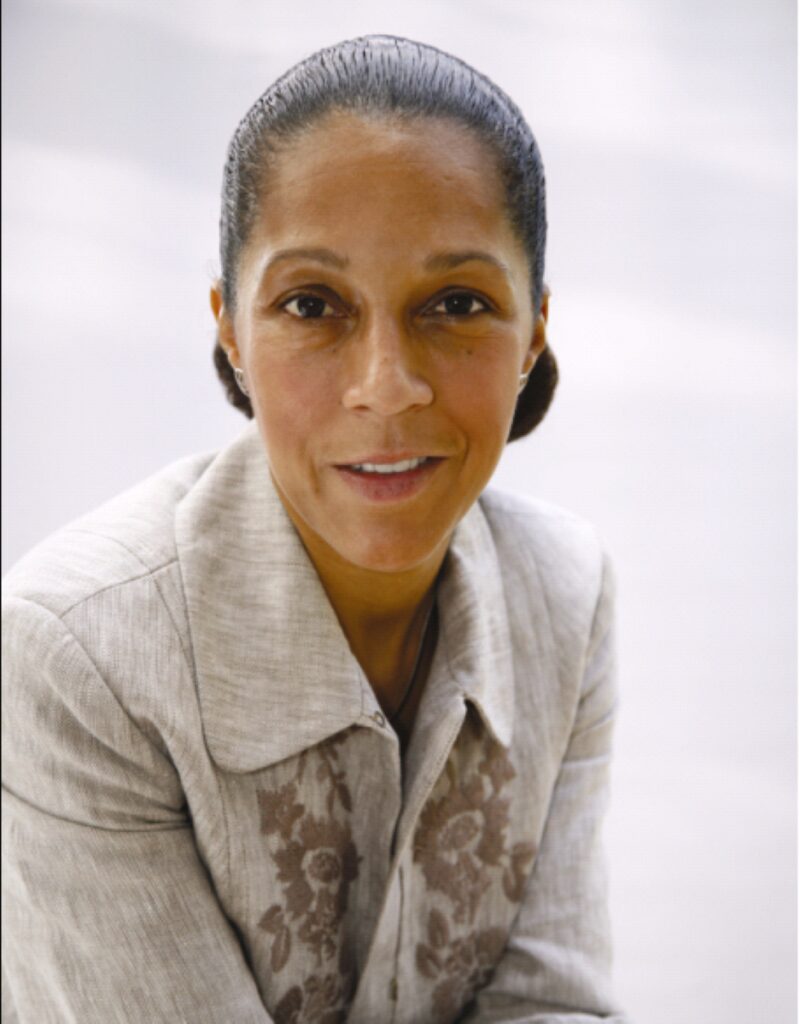
Helen Grant OBE is the Conservative MP for Maidstone and Malling, having first been elected to parliament at the 2010 general election.
In the 2024 general election for the new Maidstone and Malling constituency, Grant received 14,146 votes (30.5%). The Labour candidate received 12,472 votes (26.9%), and the Reform UK candidate secured 9,316 votes (20.1%). Grant was duly elected with a majority of 1,674.
The Maidstone and Malling constituency is located in Kent, centred around the county town of Maidstone and including areas such as West Malling. The seat was created for the 2024 election, largely replacing Maidstone and The Weald, which was held by the Conservatives since its creation in 1997 (represented previously by Ann Widdecombe from 1997 to 2010). While historically considered safe Conservative territory, the majority was significantly reduced in the 2024 general election.
Political Career
Grant served as shadow solicitor general from November 2024 to September 2026. She stepped down from the frontbench after announcing in July 2026 that she intended to leave parliament at the next general election.
Grant explained that, while she remained healthy and cancer-free following major surgery and treatment from 2023 to 2024, the illness had reinforced her view that the time had come to hand over to a successor. She thanked Kemi Badenoch for her leadership and friendship during “one of the most fulfilling periods” of her parliamentary career.
Grant stood as a candidate in the House of Commons contest for deputy speaker following the 2024 general election. She won the support of senior parliamentarians Jeremy Hunt, Andrew Mitchell and Chi Onwurah among others.
Grant said her style in the chair would be “respectful yet gently firm”.
In her pitch to colleagues, she added: “If you elect me, you will have broken yet another important glass ceiling, taking a significant step toward further diversification and inclusivity and sending a clear message to the generations who will follow us here.
“I am certain I can bring much to this role, and I promise to serve with justice, fairness and independence, which are at the core of my personal values.”
During the Conservative government under David Cameron, she served as parliamentary under-secretary for sport and civil society at the Department for Culture, Media and Sport from October 2013 to March 2015, and jointly as parliamentary under-secretary of state for courts and victims (2012 – 2013) and parliamentary under-secretary of state for women and equalities (2012 – 2013).
Grant was the first ever justice and victims minister. Of her role, Grant wrote in 2012: “I look after the interests of victims and witnesses of any crime, including domestic violence, sexual violence and rape.
“I’ll be called on to speak about a number of issues, from the opening of new rape support centres to government plans to stop bailiffs taking advantage of people.”
As equalities minister, Grant was one of the three frontbenchers responsible for taking the Marriage (Same Sex Couples) Bill through the House of Commons. The bill legalised same-sex marriage in England and Wales.
Grant served as vice-chair of the Conservative party for communities from 2018 to 2020. Under prime minister Boris Johnson, she was appointed UK trade envoy to Nigeria (August 2020 – July 2024) and the prime minister’s special envoy for girls’ education (January 2021 – March 2025).
Upon her appointment to the latter role, Grant said: “It is an honour to be appointed as the prime minister’s envoy on girls’ education and to have the opportunity to lead the UK’s important international outreach on this issue.
“Ensuring all girls get 12 years of quality education is rightly a priority for the government. High quality female education empowers women, reduces poverty and unleashes economic growth.
“I will be making it my mission to encourage a more ambitious approach to girls’ education from the international community as we seek to build back better from the Covid crisis.”
In January 2021, Grant presented the Football (Regulation) Bill to parliament under the 10-minute rule procedure. Introduced in the wake of financial crises, such as the collapse of Bury FC, the bill called for the creation of an independent regulator to oversee club finances, ensure a fairer distribution of money throughout the football pyramid, and reform the governance of the Football Association.
The Banknote Diversity Bill, which Grant introduced in April 2019, sought to address the fact that no historical ethnic minority figure had ever featured on a UK banknote. The bill would have placed a legal duty on the Bank of England to ensure such representation on future currency designs.
Introducing this latter bill, again under the 10-minute rule procedure, Grant told the House: “Like everywhere else around the globe, the UK population will become ever more diverse in the coming decades.
“We talk so much of cohesion and integration and of active, engaged citizens, but for this to be achieved people and communities need to see that their stake in Britain – in its past, present and future – is universally recognised.
“To include a person of diversity on our banknotes would show a fundamental shift from a national stereotype to a modern, socially inclusive attitude in one of our oldest and most traditional institutions.”
Grant was a member of the House of Commons committees on arms export controls from February 2016 to October 2016, the international development committee from July 2015 to October 2016, and the justice committee from July 2010 to October 2011.
Grant is listed as a member of the all-party parliamentary groups (APPGs) for Jamaica, Maldives, race and community, tennis and women’s football
Grant delivered her maiden speech on 28 June 2010 during one capital gains tax. In it, she said: “The constituency of Maidstone and The Weald is the perfect mix of rural and urban life.”
She added: “I came from a pretty humble start, but I was allowed to progress in life because I had the good fortune to engage with people who instilled in me the importance of working hard and aiming high.”
In the 2005 to 2010 parliament, Grant was added to the Tory “A-List” of prospective parliamentary candidates (PPCs), drawn up by Conservative Central Office at the behest of then-party leader David Cameron. The A-List was a centrally-approved priority list of around 100-150 PPCs created as part of Cameron’s bid to modernise the party’s image. The primary goal was to increase the diversity of Conservative MPs by fast-tracking more women and candidates from ethnic minority backgrounds into safe and winnable seats.
Grant was ultimately the first black woman to be selected to defend a Conservative seat. Maidstone and The Weald constituency had a 14,856-vote Conservative majority at the time. Her election in 2010 made her the Conservative Party’s first black woman MP.
Anne Widdecombe, Grant’s immediate predecessor, described her as someone with “the makings of an excellent parliamentarian and stateswoman, someone I think our people will be very proud of in the years to come.”
Grant was awarded an OBE in the 2023 New Year Honours for political and public service.
Political Views
Grant initially joined the Labour Party in 2004. In 2008, she denied claims in the Mail on Sunday that she put herself forward as a Labour candidate in Croydon in 2004 for elections in 2006.
Grant said: “I was approached by Croydon Labour party and I did consider transferring membership to them but I never received any response…
“I was seduced by Labour for about five minutes but quickly realised what a complete shower they really were. The only party I have only ever voted for is the Conservatives.”
Commenting on her decision to enter politics Grant told the Guardian in a 2008 interview: “My children weren’t babies any longer and the practice had become established… I almost felt – at last, I’m ready for public service.”
Grant said she joined Labour as they were seen as the champions of social justice. She offered legal services to the party prior to the 2005 general election, but rapidly became disillusioned. Of her experience in Labour, she said: “It was almost looking in the biscuit barrel, not liking the look of the biscuits, and slamming the lid shut.”
Grant joined the Conservative party in 2006, describing David Cameron as the decisive factor.
She said: “I heard one of his speeches when he said he recognised there was a whole generation of people who worked hard, who wanted nice things themselves, but who also believed in social justice. I thought, that’s me. Yes, we are business people. We do want to make money, we do want to do well, but we really care about looking after each other.”
Grant was excited by Barack Obama’s “message of hope and action and change” in the United States.
Asked if she would vote for Obama, Grant told the Guardian: “If we’re removing party politics completely – just the man, and what he has to offer, and what he’s doing at the moment for America – I think he would make a very, very good president.”
Leadership elections and loyalty
Tory leadership 2024: Grant supported Kemi Badenoch’s candidacy in the 2024 Conservative Party leadership election. The contest was triggered by the resignation of Rishi Sunak following the party’s defeat in the 2024 general election.
Badenoch, the then-shadow housing secretary, was seen as a leading figure on the party’s right wing. After finishing first in the final parliamentary ballot with 42 votes, she defeated Robert Jenrick in the membership vote on with 53,806 votes (56.5%). Badenoch was declared Conservative leader on 2 November.
During the campaign, Grant said Badenoch had “that X-factor we rarely see in our politicians”.
She added: “Kemi’s approach is very soundly based on fundamental principles rather than popular short-term policies or fanciful ideologies; the principles of truth, personal responsibility, citizenship, equality under the law, and family.
“These principles will form the bedrock of our campaigning in the next local, regional and general elections. That is why I am proud to be supporting my friend and colleague, Kemi Badenoch.”
Tory leadership 2022 (II): Grant supported Rishi Sunak’s candidacy in the Conservative Party’s October 2022 leadership election. The contest was triggered by the resignation of Liz Truss after just 45 days in office, following the financial and political tailspin triggered by her “mini-budget”.
Sunak, the former chancellor, had finished second to Truss in initial Conservative 2022 leadership contest. Unlike the summer contest, this election featured an expedited process requiring each candidate to secure at least 100 nominations from MPs to proceed. Sunak, having emerged as the clear frontrunner, was declared leader of the Conservative Party unopposed on 24 October.
Tory leadership 2019: Grant supported Dominic Raab’s candidacy for the party’s leadership in May 2019. The election was triggered by the resignation of Theresa May following her inability to secure a Brexit deal acceptable to the Conservative Party.
Raab, the former Brexit secretary, argued that the UK must be prepared to leave the EU without a deal on 31 October. He notably refused to rule out the prorogation of parliament to prevent MPs from blocking a no-deal exit. Raab was eliminated in the second parliamentary ballot on 18 June 2019, after securing 30 votes.
Grant subsequently supported Boris Johnson’s successful candidacy. In the ballot of the party membership, Johnson won a decisive victory with 92,153 votes (66.4%).
Tory leadership 2016: Grant supported May for the party’s leadership in July 2016. The contest was triggered by the resignation of David Cameron following the UK’s vote to leave the European Union.
May, the then-home secretary, secured a commanding lead in the parliamentary stages, receiving 165 votes in the first ballot and 199 in the second. Following the withdrawal of her final rival, Andrea Leadsom, on 11 July, May was declared leader unopposed and was appointed prime minister two days later.
Brexit and Europe
Brexit referendum: Grant supported the Remain campaign in the 2016 referendum on Britain’s membership of the European Union (EU), and therefore disagreed with a majority of her constituents, 55.9% of whom voted to Leave.
Article 50: In February 2017, Grant voted in favour of the European Union (Notification of Withdrawal) Bill. The legislation empowered the prime minister to notify the Council of the European Union of the UK’s intention to withdraw, formally triggering the process set out in Article 50 of the Treaty on European Union. MPs supported the bill by 498 votes to 114 at second reading.
Customs union vote (2025): In December 2025, Grant voted against the UK-EU Customs Union (Duty to Negotiate) Bill. The bill, introduced under the ten-minute rule procedure by Liberal Democrat Europe spokesperson Al Pinkerton, sought to mandate the government to enter into negotiations with the European Union to establish a bespoke customs union.
Assisted dying
Grant voted against the Terminally Ill Adults (End of Life) Bill, better known as the assisted dying bill, at both second reading (November 2024) and third reading (June 2025).
In a statement setting out her position, issued after the bill’s third reading, Grant said: “This decision was one of the hardest I have faced in politics, and I recognise that desire to change the law on assisted dying comes from a place of compassion. I also understand the desire for autonomy and choice.
“One of my chief duties as a legislator, however, is to pass safe laws that protect the most vulnerable from coercion and abuse. I do not consider the amendments in The Bill sufficient to address my concerns about the safety and effectiveness of assisted dying.
“I am, however, convinced that, for people who are dying, it is critical they have reliable access to high quality, specialist palliative care. This is not currently available to all who need it and is something for which I will continue to advocate.”
Social values and conscience issues
Same-sex marriage (2013): In February 2013, Grant was one of the 131 Conservative MPs to vote in favour of the Marriage (Same Sex Couples) Bill at its second reading. The landmark piece of legislation, which received its second reading by 400 votes to 175, legalised marriage for same-sex couples in England and Wales.
Foreign policy and security
Trident renewal (2016): Grant voted in favour of a government motion calling for the renewal of the Trident nuclear deterrent system in July 2016. The motion, which was passed by 472 votes to 117, committed the UK to constructing a new fleet of submarines to carry the nation’s nuclear weapons.
Syria airstrikes (2015): Grant voted in favour of a government motion to extend UK airstrikes against Isis from Iraq into Syria in December 2015. The motion, which was passed by 397 votes to 223 after a ten-hour debate in the House of Commons, authorised the RAF to conduct strikes against Isis targets in Syria.
Syria airstrikes (2013): Grant voted in favour of the government’s motion on the principle of military intervention in Syria in August 2013. The government motion was defeated by 285 votes to 272, a move which effectively ruled out UK participation in any US-led military strikes.
Before Politics
Born Helen Okuboye in Willesden, London on 28 September 1961, Grant grew up on the Raffles council estate in Carlisle in a single-parent family. Her mother was English and her father Nigerian. Grant’s mother, Gladys Spedding, was a nurse.
She attended Trinity School in Carlisle. She obtained a law degree (LLB) from the University of Hull and completed her solicitor qualification at the College of Law in Guildford.
Grant qualified as a solicitor in 1988. After working for law firms in Carlisle and London, she established her own specialist family law firm, Grants Solicitors LLP, in Croydon in 1996.
She was appointed to the Conservative social justice policy group in 2006.
Personal Life
Grant is married to Simon Grant. They have two sons.
Grant’s husband, Simon, is employed as her senior parliamentary assistant and office manager, according to the Register of Members’ Financial Interests (published June 2025).
In March 2022, it was reported that Grant’s eldest son, Ben, a former Royal Marine, was among a group of British ex-servicemen to have joined the war in Ukraine.
Ben Grant told the Guardian: “I haven’t been sent, nothing to do with the government, nothing to do with my mother. Just wanna make that clear, completely off my own back, I decided to do this. I didn’t even tell my mum, but it is what it is.”
He added: “I thought, I am a father of three, and if that was my kids I know what I would do, I would go and fight. Then I thought I would want another load of people who might be skilled enough to help me come and help me, come and help me, save my family.”
Trivia
Grant was the first Black woman elected as a Conservative MP.
She wrote in 2012: “I’m the first black, female Tory minister but it’s not something I think about too much. I don’t think my sex or colour should matter, but some people find it interesting. If it breaks through one more glass ceiling, then that’s a good thing.”
Grant switched her political affiliation from Labour to Conservative in 2006. Grant was selected as a Conservative candidate just two years later.
In her youth, Grant gained county honours at hockey, tennis and athletics. She later became under-16 Judo champion in the north of England and southern Scotland.

Channel 4 is a game-changer for disability and sport
29 September 2021