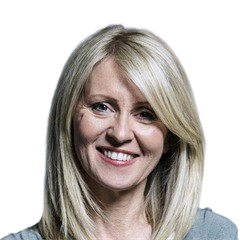
Esther McVey is the Conservative MP for Tatton, having first been elected for the seat in 2017. She previously served as the Conservative MP for Wirral West from 2010 to 2015.
In the 2024 general election, McVey received 19,956 votes, representing 38.4% of the vote share. The Labour candidate, Ryan Jude, received 18,820 votes (36.3%), while the Reform UK candidate, Oliver Speakman, secured 5,948 votes (11.5%). McVey was duly re-elected with a majority of 1,136 votes.
The Tatton constituency is located in northern Cheshire, bordering Greater Manchester. It includes affluent towns such as Knutsford, Wilmslow, and Alderley Edge, alongside smaller villages. It is considered one of the wealthiest constituencies in the North West.
Tatton is historically one of the safest Conservative seats in the UK. It secured national attention in 1997 when independent candidate Martin Bell defeated Neil Hamilton, the incumbent Conservative MP at the centre of the “cash for questions” scandal. The seat returned to the Conservative column in 2001. George Osborne, who served as chancellor of the exchequer from 2010 to 2016, represented the seat from 2001 to 2017.
McVey was selected as the Conservative candidate for Tatton following Osborne’s resignation and her defeat as the MP for Wirral West at the 2015 general election.
Political Career
McVey is a member of the panel of chairs (since November 2024). The panel of chairs is made up of MPs chosen by the House of Commons speaker, typically at the beginning of every parliament, to chair public bill committees and other commons general committees. In this capacity, McVey also chairs debates in Westminster Hall and may also act as temporary chair during a committee of the whole House.
Prior to the 2024 general election, which saw the Conservatives ejected from government, McVey held several ministerial positions. Most recently, she served as minister without portfolio in the Cabinet Office from November 2023 to July 2024 under Rishi Sunak. This role was often described as coordinating the government’s “anti-woke” or “common sense” agenda.
During this period, McVey was described as the minister for common sense.
In her first appearance at the dispatch box in this capacity, McVey said she was committed to “delivering common sense decisions such as delaying the ban on petrol and diesel cars, delaying the ban on oil and gas boards, scrapping HS2, Birmingham to Manchester, reducing the overseas budget – all common sense policies that those on the opposite benches have voted against.”
She added: “This side of the House is full of common sense and I’m building on all those policies”.
Former Conservative cabinet minister Jacob Rees-Mogg dismissed McVey’s appointment as the “tsar for wokedom” as “tokenistic flimflam”.
He told Channel 4 News: “What is a ‘tsar for wokedom’? What does it mean? I don’t believe in tokenistic phrases for government posts… We got this in the [Tony] Blair years where we started talking about government departments in nice to do language. And I’ve always thought this is flim flam”.
McVey previously served as minister of state for housing and planning (July 2019 – February 2020) under Boris Johnson.
During Theresa May’s tenure as prime minister, she was secretary of state for work and pensions (January – November 2018) and deputy chief whip (treasurer of the household) (November 2017 – January 2018).
McVey resigned as work and pensions secretary in November 2018 in protest at May’s proposed Brexit withdrawal agreement.
In her resignation letter, McVey said the agreement would trap the UK “in a customs union, despite you specifically promising the British people we wouldn’t be.”
She added: “It will bind the hands of not only this, but future governments in pursuing genuine free trade policies. We wouldn’t be taking back control, we would be handing over control to the EU and even to a third country for arbitration.”
During the Conservative-Liberal Democrat coalition government, McVey served as minister of state for employment (October 2013 – May 2015, attending cabinet from July 2014) and parliamentary under-secretary of state for disabled people (September 2012 – October 2013).
McVey stood in the 2019 Conservative Party leadership election. At her campaign launch, McVey posed next to a photo of Margaret Thatcher, who served as prime minister from 1979 to 1990. She vowed that, under her leadership, Britain would leave the European Union with or without a deal.
McVey told her campaign launch event, hosted by the eurosceptic Bruges Group: “Unite the country. Make sure we stand up for democracy too – the biggest ever democratic vote to get us out of the EU so that we can be a strong, sovereign nation who can proudly be on that global stage.”
McVey also described the Brexit negotiations to date as a “national embarrassment”.
McVey was eliminated in the first ballot after securing the support of only nine MPs.
During the July-September 2022 Conservative leadership contest, McVey was styled by the Jeremy Hunt campaign as their candidate for deputy prime minister. Hunt and McVey therefore ran on a joint ticket.
At the time, Hunt told BBC One’s Sunday Morning show: “I also recognise that the leader of a political party has to win elections, and that means a broad appeal, so just as Tony Blair had John Prescott to broaden his appeal as his deputy prime minister, I will have Esther McVey as my deputy prime minister.
“She has won a lot of elections against Labour in the north, I have won them against Lib Dems in the south and I think we will be a formidable campaigning team.”
However, Hunt, a former foreign secretary, was eliminated in the first parliamentary ballot on 13 July 2022 after receiving only 18 votes.
McVey founded the Blue Collar Conservatives group in 2012. The faction came to greater prominence following the 2019 general election, aiming to “champion working people and develop a conservative agenda to benefit the voters and communities most neglected by Labour”. In October 2022, McVey was succeeded by Lee Anderson as the group’s chair.
McVey was a member of the panel of chairs (2020-2023) and the House of Commons home affairs committee (2017-2017).
McVey is listed as a member of the all-party parliamentary groups (APPGs) for customer service, pandemic response and recovery, Primodos and West Coast Main Line.
McVey delivered her maiden speech on 1 July 2010 during a debate on global poverty.
In it, she said: “All of us come here with the desire to help others and, ultimately, to enable them to help themselves, but different times – and we are living in different times – require different solutions. We are living in a financial downturn and at a time of financial restraint.
“We have inherited a record deficit, so we have to do things differently. We have to have a different strategy but, that said, we must work together and use and acknowledge the successes of past parliaments.”
In the 2005 to 2010 parliament, McVey was added to the Tory “A-List” of prospective parliamentary candidates (PPCs), drawn up by Conservative Central Office at the behest of then-party leader David Cameron. The A-List was a centrally-approved priority list of around 100-150 PPCs created as part of Cameron’s bid to modernise the party’s image. The primary goal was to increase the diversity of Conservative MPs by fast-tracking more women and candidates from ethnic minority backgrounds into safe and winnable seats.
Political Views
Leadership elections and loyalty
Tory leadership 2024: McVey supported Robert Jenrick’s candidacy in the 2024 Conservative Party leadership election. The contest was triggered by the resignation of Rishi Sunak following the party’s defeat in the 2024 general election.
Jenrick, a former immigration minister, positioned himself on the right wing of the party, advocating for the UK to leave the European Convention on Human Rights (ECHR). He emerged as an early frontrunner, topping the first two parliamentary ballots. After reaching the final two, he was defeated in the membership vote by Kemi Badenoch, receiving 41,388 votes (43.5%) compared to Badenoch’s 53,806 (56.5%).
Tory leadership 2019: McVey initially backed her own candidacy in the 2019 Conservative leadership contest. Upon withdrawing from the race, she supported Boris Johnson for the party’s leadership.
Johnson, the former foreign secretary and mayor of London, campaigned on the central pledge to “deliver Brexit” by 31 October 2019, “deal or no deal”. He thereby positioned himself as the candidate best-placed to break the parliamentary deadlock. Johnson secured 114 votes in the first parliamentary ballot, and reached 160 votes in the final MP round. In the subsequent ballot of the party membership, Johnson won a decisive victory with 92,153 votes (66.4%).
Factional identity and party tradition
European Research Group: McVey has been associated with the European Research Group (ERG). During the Conservative Party’s last stint in government, the ERG emerged as a highly influential Tory faction composed of staunchly eurosceptic MPs. Founded in 1993, the group played a pivotal role in shaping the UK’s exit from the European Union, consistently advocating for a “hard” Brexit.
Its members were generally and often stridently critical of the withdrawal agreement negotiated by Theresa May. Chaired variously by Mark Francois, Jacob Rees-Mogg, Steve Baker and Suella Braverman, the group proved instrumental in May’s downfall as prime minister.
Northern Research Group: In the 2019-2024 parliament, McVey was listed as a member of the Northern Research Group (NRG). The NRG was a faction within the Conservative Party composed of MPs representing constituencies across the north of England. It was founded by Jake Berry, who served as minister of state for the northern powerhouse and local growth from 2017 to 2020. The group’s stated aim was to pressure the Conservative government to deliver on its “levelling up” agenda.
Net Zero Scrutiny Group: In the 2019-2024 parliament, McVey was associated with the Net Zero Scrutiny Group (NZSG), a faction within the Conservative Party that questioned the cost and feasibility of the UK’s climate targets. The group, which came to prominence in 2022, sought to link the then-Conservative government’s commitment to net zero with the cost-of-living crisis. In a 2022 open letter published in the Daily Telegraph, the group urged the government to scrap green levies and drill for more fossil fuels in the North Sea to lower energy bills. The COP26 climate conference in 2021 was said to have been a catalyst for the group’s formation.
Conservative Environment Network: McVey is also listed as a member of the Conservative Environment Network (CEN) parliamentary caucus. CEN is an independent forum for conservatives that supports conservation and decarbonisation. It calls for the environment to be given a higher profile at the heart of policy making, describing “biodiversity loss, climate change, and wasteful resource use are threats to our national security”, and promotes “market-based policies” to environmental challenges. Members of its parliamentary caucus, such as McVey, are thought to generally align with the group’s “green” message and environmentalism.
Conservative Way Forward: McVey has been associated with the Conservative Way Forward (CWF) grouping of Thatcherite MPs. CWF was founded in 1991 by supporters of Margaret Thatcher, aiming to “defend and build upon [her] achievements… and to adapt the principles of her era in government to modern concerns and challenges”. In July 2022, the group was relaunched by Tory MP Steve Baker.
Brexit and Europe
Brexit referendum: McVey supported Leave in the 2016 Brexit referendum, and therefore disagreed with a majority of her constituents, 54.4% of whom voted to Remain.
Customs union vote (2025): In December 2025, McVey voted against the UK-EU Customs Union (Duty to Negotiate) Bill. The bill, introduced under the ten-minute rule procedure by Liberal Democrat Europe spokesperson Al Pinkerton, sought to mandate the government to enter into negotiations with the European Union to establish a bespoke customs union.
Assisted dying
McVey voted against the Terminally Ill Adults (End of Life) Bill, better known as the assisted dying bill, at the second reading (November 2024). On the third reading of the Terminally Ill Adults (End of Life) Bill (Assisted Dying Bill) in June 2025, McVey did not record a vote.
Social values and conscience issues
Same-sex marriage (2013): In February 2013, McVey was one of the 139 Conservative MPs to vote against the Marriage (Same Sex Couples) Bill at its second reading. The landmark piece of legislation, which received its second reading by 400 votes to 175, legalised marriage for same-sex couples in England and Wales.
Foreign policy and security
IPAC: McVey is a member of the Inter-Parliamentary Alliance on China (IPAC) – an international, cross-party network of legislators from democratic countries focused on relations with the People’s Republic of China. The alliance, established on 4 June 2020, the anniversary of the 1989 Tiananmen Square protests and massacre, was formed to unite “lawmakers worldwide, promoting democracy and addressing threats to the rules-based and human rights systems posed by the rise of China.”
Syria airstrikes (2013): McVey voted in favour of the government’s motion on the principle of military intervention in Syria in August 2013. The government motion was defeated by 285 votes to 272, a move which effectively ruled out UK participation in any US-led military strikes.
Sanctioned (Russia): In April 2022, McVey was among the group of MPs placed on a sanctions list by the Russian government. The measure barred them from entering Russia and was presented by Moscow as a retaliatory response to the UK’s stance on the invasion of Ukraine.
Civil liberties
Covid passes vote (2021): McVey was one of 99 Conservative MPs to vote against Covid passes in England in December 2021.
Covid passes campaign (2021): McVey was one of over 70 MPs and peers who launched a cross-party campaign against the “divisive and discriminatory use” of Covid passes in April 2021. The campaign was triggered by government reviews into “vaccine passports”, which signatories argued would create a two-tier society and infringe upon fundamental civil liberties.
Before Politics
Born Esther Louise McVey in Liverpool on 24 October 1967, she spent the first two years of her life in foster care with Barnardo’s.
She was educated at The Belvedere school in Liverpool. She studied law (LLB) at Queen Mary university of London, followed by an MA in radio journalism at City, university of London.
In 2009, she obtained an MSc in corporate governance from Liverpool John Moores university.
McVey had a career as a television presenter and producer, including co-presenting GMTV and working on children’s BBC programmes like But First This.
She founded and ran her own business, Making It, providing training and marketing services.
She was also a director in her father’s construction company, J. G. McVey & co., between 2000 and 2006.
Outside parliament between 2015 and 2017, she served as chair of the British Transport Police Authority.
Personal Life
McVey married fellow Conservative MP Philip Davies in September 2020.
Trivia
McVey co-hosted a weekly programme on GB News with Davies between 2020 and 2023.
She has written careers books, which were adapted into plays with the National Youth Theatre.
Esther McVey has not written for Politics.co.uk.