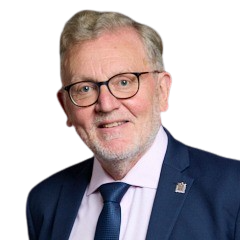
David Mundell is the Conservative MP for Dumfriesshire, Clydesdale and Tweeddale, having first been elected to parliament at the 2005 general election.
In the 2024 general election, Mundell won 14,999 votes, representing 33.9% of the vote. The Scottish National Party (SNP) candidate, Kim Marshall, received 10,757 votes (24.3%), while the Labour candidate, Daniel Coleman, secured 10,140 votes (22.9%). Mundell was duly elected with a majority of 4,242 votes.
The Dumfriesshire, Clydesdale and Tweeddale constituency is a large rural seat covering parts of Dumfries and Galloway, South Lanarkshire, and the Scottish Borders. It has been held by the Conservatives since its creation in 2005.
Political Career
Mundell is a member of the House of Commons international development select committee (since November 2022) – the committee responsible for scrutinising the work of the Foreign, Commonwealth & Development Office (FCDO) in respect of aid policy.
Mundell is also a member of the panel of chairs (since March 2020). The panel of chairs is made up of MPs chosen by the House of Commons speaker, typically at the beginning of every parliament, to chair public bill committees and other commons general committees. In this capacity, Mundell may chair debates in Westminster Hall and may also act as temporary chair during a committee of the whole House.
At the beginning of the parliament elected in 2024, Mundell stood unsuccessfully for election as chair of the home affairs committee. In the contest, the results of which were announced in September 2024, Mundell secured 246 votes, placing second. They were ultimately defeated by Dame Karen Bradley, who won the support of 294 colleagues.
Mundell previously served in the cabinet as secretary of state for Scotland from May 2015 until July 2019. Prior to this, he was parliamentary under-secretary of state for Scotland from May 2010 to May 2015.
As secretary of state for Scotland during the fraught Brexit period, Mundell was charged with managing the relationship between the UK government and the devolved Scottish administration.
In a statement on 14 June 2018, Mundell, delivered a commons statement in the commons on the application of the Sewel convention. This non-binding rule states that the UK parliament will “not normally” legislate on a matter that is devolved without first seeking the consent of the relevant devolved legislature. In his statement, Mundell argued that the UK government has followed the “spirit and letter of the devolution settlement at every stage.”
The comments came after the Scottish Parliament refused to refused to agree to the European Union (Withdrawal) Bill, which was designed to provide a legal framework for the UK’s exit from the European Union, triggered a protracted dispute over the boundaries of devolved authority. It turned existing EU law into domestic UK law, creating “retained EU law”.
Mundell told the commons: “The bill is about ensuring that the whole of the United Kingdom has a functioning statute book on exit day, and about providing legal certainty for businesses and individuals throughout the country.”
Turning to the convention, Mundell maintained: “These are not normal times.”
He added: “We are now therefore faced with the reality that the Scottish parliament has not given consent for this critically important legislation that provides certainty across the UK. That is not a situation that any of us would have chosen. It is not, however, a crisis, nor is it unforeseen.
“While the devolution settlements did not predict EU exit, they did explicitly provide that in situations of disagreement the UK parliament may be required to legislate without the consent of devolved legislatures.”
The UK government thereby stated its intention to override the explicitly stated will of the Scottish parliament.
The EU (Withdrawal) Act received royal assent on 26 June 2018. This marked the first time Westminster had legislated without the consent of the Scottish parliament after having recognised that a bill fell within the scope of the Sewell convention.
During the Conservative party’s last period in opposition, he was shadow secretary of state for Scotland (2005-2010).
Mundell was appointed as a trade envoy to New Zealand in August 2021. Appointed by the trade secretary, envoys are tasked with boosting British exports and attracting foreign investment. An envoy’s duties typically involve leading trade delegations, lobbying host governments on market access issues, and building relationships with overseas businesses
Mundell resigned as a trade envoy in July 2022 as part of the mass walkout of ministers that ultimately forced Boris Johnson to announce his own resignation.
In a post to social media, Mundell stated: “I am very disappointed that the prime minister has not listened to the counsel of colleagues and stood down voluntarily in the interests of the country.
“Earlier this week I wrote to the chairman of the 1922 committee confirming I had no confidence in the prime minister and asking that a further vote of confidence be held. I hope this can now take place as a matter of urgency.
“Clearly such views are not compatible with holding a government role and accordingly I have stood down as UK Trade Envoy to New Zealand.”
Mundell was previously a member of the House of Commons public administration and constitutional affairs committee (2020-2022) and the Scottish affairs committee (2005-2010).
Mundell is listed as a member of the all-party parliamentary groups (APPGs) for HIV, Aids and sexual health, Latin America, nuclear energy, nutrition for development, United Nations global goals and war crimes.
Mundell delivered his maiden speech on 24 May 2005 during a debate on health and education.
In it, he said: “[My] constituency begins at the English border at Gretna, now as famous in Scotland for its football club as for being a location to marry. The constituency stretches along the route of the M74 beyond Coalburn.
“To the west lie the communities of Thornhill, Kirkconnel, Sanquhar and Upper Nithsdale, which still has unemployment rates well beyond the national average. I am committed to working with our local MSP, local councillors and relevant organisations to increase employment opportunities in the area.”
He added: “I am the first serving member of the Scottish Parliament to be elected to this place. The Scottish Parliament has had a difficult birth and continuing growing pains, and faces many challenges if it is to live up to the expectations of the people who voted for its establishment in 1997.
“However, we should never forget that it is the settled will of the people of Scotland that the parliament should exist in its present form, and there is not a shred of evidence to suggest that they have changed their view on that matter. However, devolution is a process, not an event.”
Before entering Westminster, Mundell served as a Conservative member of the Scottish Parliament (MSP) for the South of Scotland region from 1999 to 2005.
Political views
Leadership elections and loyalty
Tory leadership 2022 (I): Mundell supported Liz Truss’ candidacy in the Conservative Party’s July-September 2022 leadership election. The contest was triggered by the resignation of Boris Johnson, following the mass exodus of more than 60 frontbenchers.
Truss, the then-foreign secretary, campaigned on a platform of sweeping tax cuts. After finishing second in the final parliamentary ballot with 113 votes, she won the subsequent vote of the party membership with 81,326 votes (57.4%) and was appointed prime minister on 6 September.
Tory leadership 2022 (II): Mundell supported Rishi Sunak’s candidacy in the Conservative Party’s October 2022 leadership election. The contest was triggered by the resignation of Liz Truss after just 45 days in office, following the financial and political tailspin triggered by her “mini-budget”.
Sunak, the former chancellor, had finished second to Truss in the previous contest. Unlike the summer contest, this election featured an expedited process requiring each candidate to secure at least 100 nominations from MPs to proceed. Sunak, having emerged as the clear frontrunner, was declared leader of the Conservative Party unopposed on 24 October.
Tory leadership 2019: Mundell supported Michael Gove for the party’s leadership in 2019. The election was triggered by the resignation of Theresa May following her inability to secure a Brexit deal acceptable to parliament.
Gove, then the environment secretary, reached the final three of the parliamentary ballots. He was ultimately eliminated in the fifth ballot on 20 June, receiving 75 votes – just two fewer than Jeremy Hunt.
Tory leadership 2016: Mundell supported May for the party’s leadership in July 2016. The contest was triggered by the resignation of David Cameron following the UK’s vote to leave the European Union.
May, the then-home secretary, secured a commanding lead in the parliamentary stages, receiving 165 votes in the first ballot and 199 in the second. Following the withdrawal of her final rival, Andrea Leadsom, on 11 July, May was declared leader unopposed and was appointed prime minister two days later.
Factional identity and party tradition
One Nation Conservative: Mundell has been listed as a member of the One Nation Conservatives caucus of moderate Tory MPs. The group was established in 2019 to provide a voice for the party’s more pragmatic and professedly “moderate” elements – a factional counter-weight to its ideological free-market, eurosceptic and socially conservative groups. In the 2019 to 2024 parliament, the group was chaired by former first secretary of state Damian Green, who went on to lose his seat at the 2024 general election.
Northern Research Group: In the 2019-2024 parliament, Mundell was listed as a member of the Northern Research Group (NRG). The NRG was a faction within the Conservative Party composed of MPs representing constituencies across the north of England. It was founded by Jake Berry, who served as minister of state for the northern powerhouse and local growth from 2017 to 2020. The group’s stated aim was to pressure the Conservative government to deliver on its “levelling up” agenda.
Bright Blue: Mundell has been listed as a parliamentary supporter of Bright Blue, an independent centre-right think tank and membership organisation that champions liberal conservatism in the UK. Since its founding in 2014, the organisation has expanded its reach through a new cross-party strategy.
Brexit and Europe
Brexit referendum: Mundell supported Remain in the 2016 Brexit referendum, and therefore agreed with a majority of constituents, 55.4% of whom voted to Remain.
Article 50: In February 2017, Mundell voted in favour of the European Union (Notification of Withdrawal) Bill. The legislation empowered the prime minister to notify the Council of the European Union of the UK’s intention to withdraw, formally triggering the process set out in Article 50 of the Treaty on European Union. MPs supported the bill by 498 votes to 114 at second reading.
Customs union vote (2025): In December 2025, Mundell voted against the UK-EU Customs Union (Duty to Negotiate) Bill. The bill, introduced under the ten-minute rule procedure by Liberal Democrat Europe spokesperson Al Pinkerton, sought to mandate the government to enter into negotiations with the European Union to establish a bespoke customs union.
Assisted dying
Mundell voted against the Terminally Ill Adults (End of Life) Bill, better known as the assisted dying bill, at both second reading (November 2024) and third reading (June 2025).
Social values and conscience issues
Same-sex marriage (2013): In February 2013, Mundell was one of the 131 Conservative MPs to vote in favour of the Marriage (Same Sex Couples) Bill at its second reading. The landmark piece of legislation, which received its second reading by 400 votes to 175, legalised marriage for same-sex couples in England and Wales.
Foreign policy and security
Trident renewal (2016): Mundell voted in favour of a government motion calling for the renewal of the Trident nuclear deterrent system in July 2016. The motion, which was passed by 472 votes to 117, committed the UK to constructing a new fleet of submarines to carry the nation’s nuclear weapons.
Syria airstrikes (2015): Mundell voted in favour of a government motion to extend UK airstrikes against Isis from Iraq into Syria in December 2015. The motion, which was passed by 397 votes to 223 after a ten-hour debate in the House of Commons, authorised the RAF to conduct strikes against Isis targets in Syria.
Syria airstrikes (2013): Mundell voted in favour of the government’s motion on the principle of military intervention in Syria in August 2013. The government motion was defeated by 285 votes to 272, a move which effectively ruled out UK participation in any US-led military strikes.
Sanctioned (Russia): In April 2022, Mundell was among the group of MPs placed on a sanctions list by the Russian government. The measure barred them from entering Russia and was presented by Moscow as a retaliatory response to the UK’s stance on the invasion of Ukraine.
Before Politics
Born David Gordon Mundell in Dumfries on 27 May 1962, he grew up in Lockerbie and Newton Wamphray. He attended Lockerbie academy.
Mundell joined the Conservative Party aged 14. He studied law (MA and diploma in legal practice) at the University of Edinburgh and later gained an MBA from the University of Strathclyde business school.
During the 1980s, while a student, he served as a local councillor for the Social Democratic Party (SDP) on Annandale and Eskdale district council (1984-86) and Dumfries and Galloway regional council (1986-87). He rejoined the Conservative Party in 1988.
Mundell worked as a solicitor before joining BT in 1991, becoming head of national affairs for BT Scotland.
Personal Life
David Mundell was married to Lynda Carmichael from 1987 until their divorce in 2012. They have three children. His son, Oliver Mundell, was elected as the Conservative member of the Scottish Parliament (MSP) for Dumfriesshire in 2016.
In 2024, PinkNews listed David Mundell among a number of out LGBTQ+ parliamentarians.
Mundell came out as gay in January 2016, becoming the first openly gay Conservative cabinet minister.
In a statement at the time, Mundell said: “I so admire the many people, young and old, who are doing this every day, uncertain of the reaction. I have been very fortunate and couldn’t have had more love and support from my family and friends.
“However, making this public is something I have had to do myself. I don’t know what the wider reaction will be, but I know it’s the right thing for me to do.”
In making this statement, Mundell, who was the secretary of state for Scotland at the time, became the first openly gay Conservative cabinet minister.
David Cameron’s spokesman responded: “The PM is very pleased. It is clearly a very personal statement but the PM is delighted that he has been in a position to take this step. It is very encouraging to see.”
Mundell is a patron of LGBT+ Conservatives – the official LGBTQ wing of the Conservative Party.
Trivia
Mundell was the only Conservative MP representing a Scottish constituency between 2005 and 2017.
He was also the first serving member of the Scottish Parliament to be elected to the House of Commons.
David Mundell has not written for Politics.co.uk.